
HX offers expedition cruises to Antarctica, Svalbard, Greenland and other remote destinations. But what exactly do you get for your money, and how different is the experience from a regular cruise?
If you've researched a cruise to Antarctica, Greenland or Svalbard, there's a good chance you've come across the name HX.
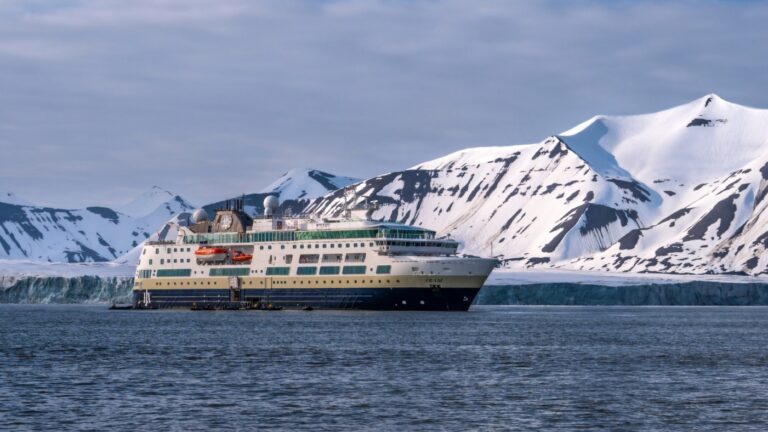
Formerly known as Hurtigruten Expeditions, HX specialises in expedition cruising: smaller ships, remote destinations, wildlife, small-boat landings and an onboard programme built around learning rather than entertainment.
Its Norwegian origins are still obvious, from the names of several ships to the Scandinavian-style interiors. But there has been a significant change behind the scenes. HX and Hurtigruten are no longer the same company.
The separation of the expedition business from Hurtigruten's Norwegian coastal operation was completed in 2025. HX is now a standalone company headquartered in London and backed by a separate group of investors.
That's also why HX ships no longer carry the familiar red-and-black Hurtigruten colours.
The expedition fleet has been adopting a new visual identity based around indigo blue and sand, making the distinction between the two companies much clearer. So, what should travellers know about HX today?
First of all, what is an expedition cruise?
An expedition cruise is less about the ship itself and more about what happens when you leave it.
On a conventional cruise, you might sail between established ports, spend the day sightseeing independently or on an organised excursion, then return for dinner, a theatre show and some live music.
An expedition voyage works differently. Ships often travel to places without conventional cruise terminals. Guests may board small expedition boats to reach shore, join guided walks or simply cruise among icebergs, cliffs and wildlife.
There is also a strong educational component. Instead of a traditional entertainment team, expedition ships carry specialists in subjects such as wildlife, geology, history and photography.
On HX ships, much of this activity revolves around the onboard Science Centre and Expedition Team. Lectures, demonstrations and citizen science projects are part of the experience.
That distinction matters. If your ideal cruise involves Broadway-style shows, multiple entertainment venues and a packed programme lasting late into the night, HX probably isn't the obvious choice.
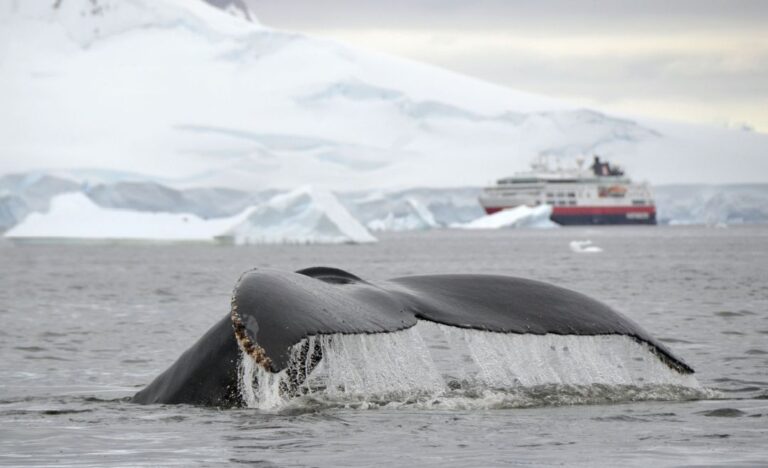
If you would rather spend an evening listening to a talk about glaciers or looking through photographs from that day's wildlife sightings, you're much closer to the target audience.
Where does HX go?
The polar regions remain at the heart of the HX programme. Antarctica is one of its biggest destinations, alongside Greenland, Svalbard and the Northwest Passage.
The company also operates expeditions in Alaska, Iceland, Norway, the British Isles and parts of South America. One ship, MS Santa Cruz II, is dedicated to expeditions in the Galápagos Islands.
The programme changes from season to season, and some voyages link several regions together. Current HX itineraries range from relatively short voyages to lengthy expeditions through some of the world's most isolated waters.
For travellers considering HX, the destination should probably be the starting point rather than the ship.
This is almost the opposite of mainstream cruising, where people may choose Royal Caribbean for its enormous ships or Cunard because they specifically want the Queen Mary 2 ocean liner experience.
With expedition cruising, the better question is often: where do I want to go, and which ship is best suited to taking me there?
HX has a surprisingly varied fleet
That's important because there isn't really one standard HX ship experience. At the time of writing, HX lists five ships in the fleet.
MS Roald Amundsen and MS Fridtjof Nansen are the newest and largest, carrying up to 490 guests. Both were purpose-built for expedition cruising and use hybrid propulsion technology.
They feel closer to modern premium cruise ships than you might expect, with large observation areas, several restaurants and comfortable Scandinavian-inspired interiors.
MS Fram is considerably smaller, carrying around 200 guests following a major refurbishment in 2025. MS Spitsbergen is smaller still, with capacity for approximately 150.
Then there's MS Santa Cruz II. Used exclusively in the Galápagos, it carries just 90 guests.

That's a huge range. A voyage with fewer than 100 people can feel very different from one with almost 500, even if both carry the HX logo. When comparing itineraries, I would pay close attention not only to the price and destination but also to the ship operating the voyage.
Incidentally, anyone familiar with the old Hurtigruten Expeditions fleet may notice one significant absence. MS Maud is no longer an HX ship.
It has returned permanently to Hurtigruten under its former name MS Midnatsol and now operates the company's premium Signature voyages along the Norwegian coast and to Svalbard.
What is life onboard an HX ship like?
Casual. That single word probably sums things up better than anything else. There are no formal nights and no expectation that you'll dress up for dinner. Expedition gear is far more important than evening wear.
Public spaces are designed primarily for watching the scenery, learning about the destination and meeting other passengers.
The Science Centre is a particularly important part of the newer HX ships. The Expedition Team uses it for presentations and demonstrations, while guests can get involved with some scientific activities themselves.
There are still plenty of opportunities to relax. Depending on the ship, facilities include saunas, hot tubs, fitness rooms, pools and comfortable observation lounges.
Dining is also more substantial than the word “expedition” might suggest. Larger ships have multiple restaurants, while menus combine international dishes with Scandinavian influences.
But the emphasis remains on what is happening outside. On a good expedition voyage, spotting a whale from the window is far more likely to empty a restaurant than the beginning of an evening show.
HX is now much more inclusive
One useful change for comparing prices is that HX has moved towards an all-inclusive model.
On most voyages, the fare includes breakfast, lunch and dinner together with coffee, tea, soft drinks and a selection of alcoholic drinks. Wi-Fi is included, although anyone travelling into genuinely remote areas should expect limitations.
Guests also receive a windproof and waterproof expedition jacket, while standard expedition activities such as Zodiac cruising, landings and the onboard lecture programme are generally included.
That doesn't mean you can leave your wallet at home, though. Optional activities can still cost extra. Depending on the destination, these might include kayaking, specialist hikes, camping in Antarctica or excursions operated by local partners.
Flights and hotels are included on some itineraries but not others, especially where charter flights are required to reach or leave remote embarkation ports.
For that reason, don't compare expedition cruise prices purely on the headline fare. Look carefully at exactly what's included on the specific itinerary.
Be prepared for the itinerary to change
This is perhaps the single most important thing for first-time expedition cruisers to understand. The itinerary is not a promise.
Weather, wind, sea conditions, wildlife, sea ice and local restrictions can all affect where the ship goes and whether a planned landing takes place.
HX explicitly states that planned activities are subject to conditions. In places such as Antarctica and Greenland, this isn't an occasional inconvenience. Flexibility is fundamental to the product.
The captain and Expedition Team may change plans because another landing site has better conditions, because ice blocks the intended route or because it simply isn't safe to put passengers ashore.
That uncertainty is part of the attraction for some people. For others, it could be incredibly frustrating.
If you've always dreamed of visiting one very specific place shown on the itinerary, read the wording carefully before booking. Expedition cruising works best when you're excited about exploring a region rather than ticking off individual ports.
Don't book primarily for wildlife sightings
The same applies to wildlife. Polar bears, whales, penguins and other wildlife feature prominently in expedition cruise marketing for obvious reasons. But wildlife doesn't operate to a cruise schedule.
A good Expedition Team knows where animals are commonly found and will be watching for them, but nobody can guarantee a specific encounter.
This is especially important in destinations such as Svalbard, where seeing a polar bear is entirely possible but far from certain.
Think of wildlife sightings as part of the expedition rather than a checklist of guaranteed attractions.
Who is an HX cruise best for?
HX makes most sense for travellers who place the destination ahead of the ship.
It's particularly well suited to curious travellers who enjoy nature, photography, science and history, and who are comfortable changing plans when conditions demand it.
It may also appeal to regular cruisers who want to visit places that conventional cruise ships simply cannot reach.
The relatively casual onboard atmosphere will be another advantage for people who have little interest in dressing up or traditional cruise entertainment.
There is another consideration: price. Expedition cruising is expensive. Smaller ships, specialist crews and equipment, remote logistics and limited capacity all push prices well above those of many mainstream cruises.
That doesn't necessarily mean poor value. But the value comes from access, expertise and the expedition programme rather than from having an enormous ship full of facilities.
HX or Hurtigruten?
This question used to be confusing. It's much easier to answer today. Choose Hurtigruten primarily because you want to experience the Norwegian coast. Choose HX because you want an expedition cruise.
There is some overlap. HX operates expedition voyages in Norway, while Hurtigruten's Signature voyages include more enrichment and expedition-style activities, but fundamentally they are now different companies selling different kinds of trips.
The difference is even visible from the quayside: Hurtigruten retains its familiar red-and-black identity, while HX has moved to its distinctive indigo and sand branding.
If exploration matters more to you than entertainment, and unpredictability sounds exciting rather than irritating, HX could be a very good fit.


The best cruise to Antarctica is the one that doesn’t go there. Unfortunately, this segment of Hurtigruten group is no better than others. Their impact is still considerable.