
Red barns, yellow farmhouses and white wooden homes are a familiar sight across Norway. Their colours tell a surprisingly rich story of money, materials and changing architectural fashion.
Travel around Norway for long enough and you may start to notice a pattern.
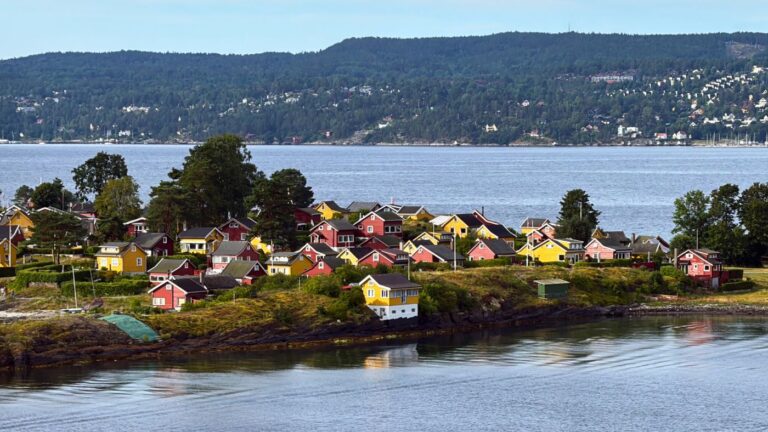
A red wooden barn stands beside a white farmhouse. A row of white houses lines the waterfront of a southern coastal town. Elsewhere, cottages and older homes appear in deep red or warm yellow ochre.
Of course, modern Norwegian houses come in just about every colour imaginable. Dark grey and black have become especially noticeable in recent years. Yet red, yellow and white remain firmly associated with traditional Norwegian architecture.
That's not simply a matter of taste. Historically, the colour of a building could say something about the cost of the paint, the purpose of the building and even the wealth of its owner.
To understand why, we need to go back to a time when most Norwegian houses weren't painted at all.
Norwegian houses weren't always colourful
For centuries, timber was the obvious building material across much of Norway. But the dark, weathered appearance we now associate with very old farm buildings was once the norm.
Before around 1700, relatively few Norwegian houses had exterior wooden panelling. Buildings were commonly left untreated or protected with tar.
As panelled timber buildings became more fashionable in towns and larger settlements during the 18th century, painting them became increasingly common.
There was a practical reason for doing so. Paint protects timber from sunlight, moisture and the effects of Norway's often unforgiving climate.
But paint also changed the appearance of a building, and that created another possibility. Your house could now tell the neighbours something about you.
Why were so many buildings painted red?
If there's one colour associated with the Scandinavian countryside, it's surely red.
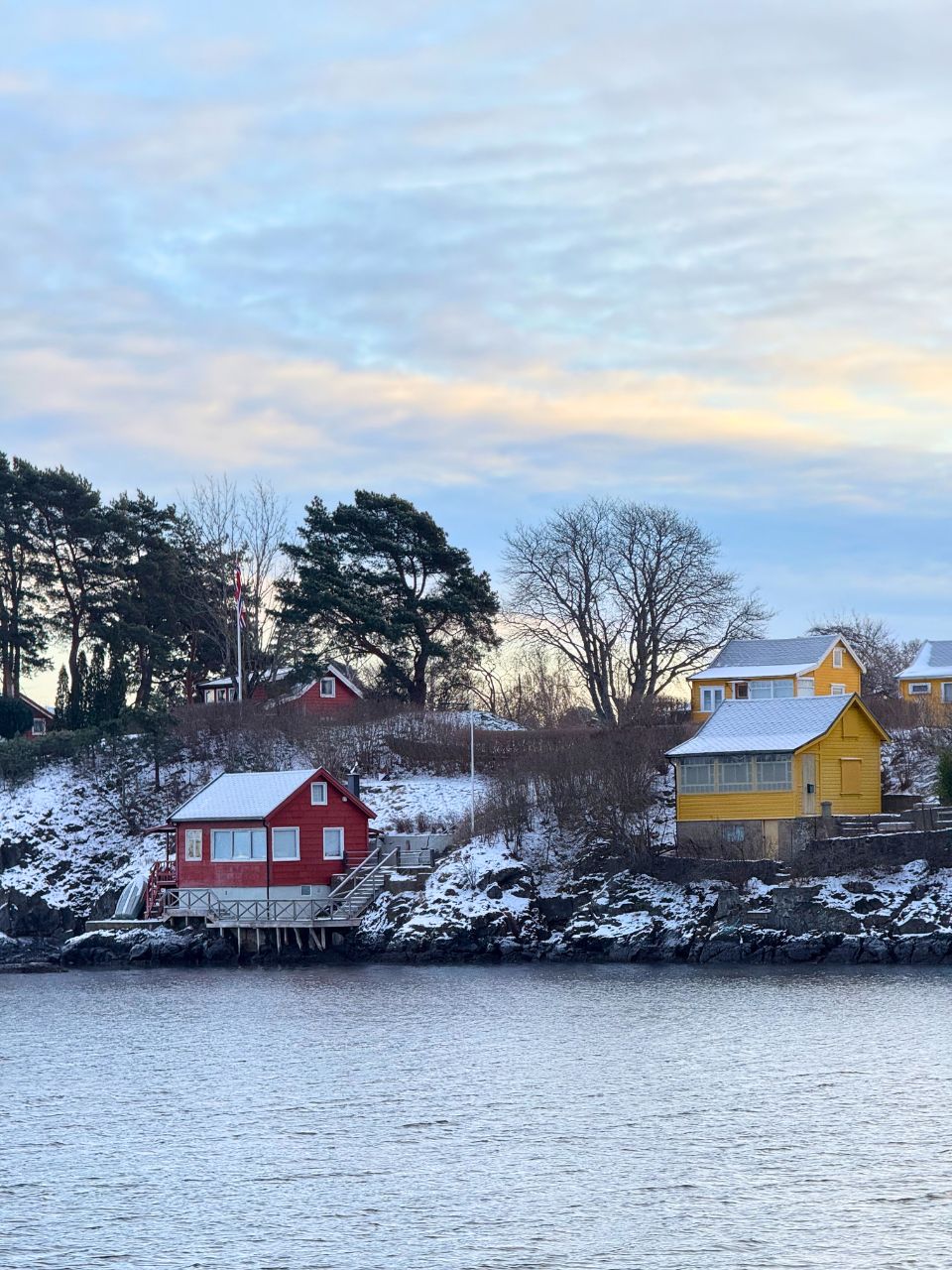
Drive through rural Norway and you'll still see countless red barns, sheds, cabins and farm buildings. Red is especially noticeable on traditional waterfront buildings too, including boathouses and the rorbuer of northern Norwegian fishing villages.
Historically, one of the main reasons was very simple: red pigment could be cheap.
Earth pigments based on iron oxide were readily available and much less expensive than some alternative colours. Red paint therefore became a practical option for ordinary homes and especially for secondary buildings such as barns, storehouses and boathouses.
In coastal Norway, one traditional form of paint used tran—oil obtained from fish—as the binding ingredient. Mixed with inexpensive pigments such as red iron oxide or yellow ochre, it provided a relatively affordable way to protect wooden buildings.
This helps explain an image that remains familiar today: a farm with a lighter-coloured main house surrounded by red outbuildings.
Is Norwegian red the same as Sweden's famous Falu red?
Not necessarily. Anyone familiar with Sweden will probably have heard of Falu rödfärg, the distinctive deep red paint associated with Swedish cottages.
The pigment takes its name from the copper mine at Falun in central Sweden, where material left over from mining was processed into the characteristic red pigment. Production developed over several centuries and the colour eventually became one of the defining images of rural Sweden.
Similar red shades became widespread elsewhere in Scandinavia, including Norway, but it's misleading to assume every traditional red Norwegian house was painted with pigment from Falun.
Norwegian historical sources also refer to inexpensive red earth pigments and engelskrødt, or English red. What they shared was their practicality. These earthy reds were relatively inexpensive and worked well on wooden buildings. Over time, practicality became tradition.
Yellow came from the earth too
The second colour you'll frequently encounter on older Norwegian houses is yellow, often a warm, muted shade rather than a bright modern yellow.
Again, the explanation begins with pigment. Yellow ochre is another naturally occurring earth pigment containing iron compounds. Like many traditional red pigments, it was comparatively inexpensive and accessible.
During the 18th and 19th centuries, shades of ochre became common on wooden buildings throughout Norway.
The exact fashion changed with the times. During the baroque period, red, brown and ochre were widespread. Later architectural fashions introduced lighter yellows, greys and other shades intended to imitate stone buildings found elsewhere in Europe.
That's an important point: Norwegian wooden architecture didn't develop in isolation.
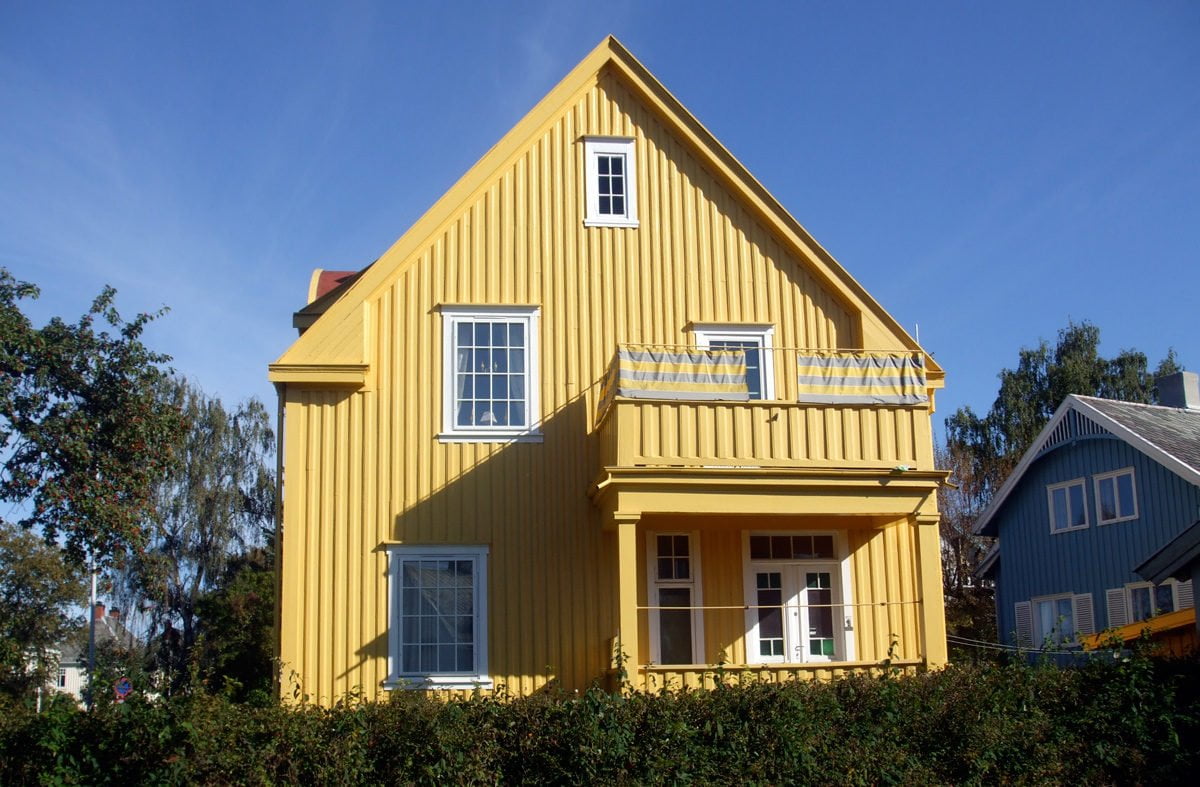
Owners of fashionable houses often wanted timber to resemble more prestigious materials such as stone, limestone or brick. Paint offered an affordable way to create the impression.
White was another matter
Today, white paint seems utterly ordinary. Historically, it wasn't.
Producing a strong white exterior paint required expensive pigments. White paint was therefore considerably more costly than basic red or yellow earth colours. That made a white house a potential display of wealth.
This was especially noticeable along the coast of Southern Norway. Sailors and merchants travelled extensively and encountered fashionable white-painted buildings elsewhere in Europe. Imported white paint, including expensive lead-based paint from England, began appearing on prosperous Norwegian homes.
Over time, white wooden houses became a defining feature of southern coastal towns such as Risør, Grimstad, Lillesand and parts of Kristiansand.
The effect today is beautiful: narrow streets lined with almost uniformly white timber homes, often decorated with colourful flowers during summer. Yet what now looks like a charming regional tradition once sent a rather different message: I can afford this.
Sometimes only the front was expensive
Here's where the story gets especially interesting. Not everyone who wanted the appearance of wealth necessarily wanted—or could afford—to paint an entire house with expensive pigment.
Historical colour research has found examples of buildings where the prestigious façade facing the street or harbour was painted in an expensive light colour, while less visible walls were painted with cheaper red or ochre pigments.
In other words, appearances mattered. Visitors approaching the house saw the fashionable façade. The backyard told a slightly different story.
You can still spot traces of this history in some older Norwegian towns, where restored buildings reveal considerably more colour in courtyards and rear façades than the predominantly white streets might suggest.
The famous “white towns” of Southern Norway weren't always quite as white as they look today.
What about blue and green houses?
Blue and green certainly existed, and anyone travelling around Norway today will see plenty of both.
Historically, however, some pigments were much more expensive than others. That mattered in an era when paint wasn't something you simply selected from several thousand shades at a DIY store.
The earliest and cheapest colours tended to rely on readily available mineral and earth pigments. As industrial production developed and new pigments became affordable, the colour palette expanded considerably.
Architectural fashion played a role too. By the late 19th and early 20th centuries, Norwegian houses could be surprisingly colourful, featuring greens, greys, blues, yellows and contrasting details.
So the idea that old Norwegian houses were always red, yellow or white is far too simplistic. Those are simply the colours that became especially persistent.
Colour could tell you what a building was for
Cost also helped create another visual tradition that remains obvious across Norway. On traditional farms, the main farmhouse might be painted white or yellow while barns and outbuildings were red.
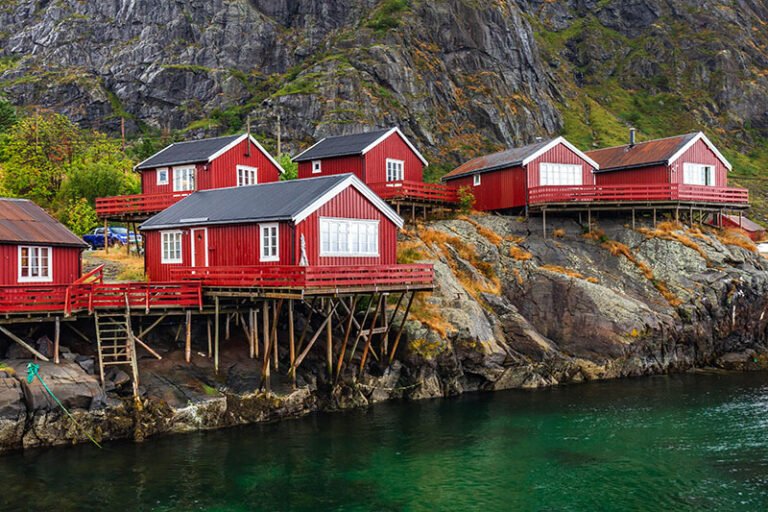
Along the coast, practical boathouses and fishing buildings were frequently painted inexpensive red shades, while prosperous homes in nearby towns increasingly became white.
Colour therefore became a useful visual distinction between the building where people lived and the buildings where they worked, stored food or kept animals.
Eventually, those choices became part of the Norwegian landscape even after the original economic reasons disappeared.
A modern homeowner isn't choosing between red and white because one pigment is beyond their budget.
But centuries of seeing certain colours associated with certain buildings have shaped what simply looks “right”.
Norway's colourful houses today
There is no longer anything unusual about painting a Norwegian home blue, green, grey or black.
Take a walk through almost any modern residential neighbourhood and you'll see a far broader palette than the traditional red, yellow and white. Even so, history has a surprisingly strong influence.
Deep red remains a natural choice for barns, cabins and traditional buildings. Warm ochre yellows complement wooden architecture particularly well. White continues to dominate many historic coastal communities.
In protected historic areas, maintaining an appropriate colour scheme can also be an important part of preserving the character of the buildings and streetscape.
But perhaps the best places to appreciate Norway's traditional colours are simply the places where they have accumulated over generations.
The white wooden towns of Southern Norway are an obvious example. So too are the fishing villages of Lofoten, where red waterfront cabins sit beneath enormous mountains, or rural valleys where red farm buildings and yellow or white houses punctuate an otherwise green landscape.
More than a pretty colour palette
It's easy to look at Norway's traditional wooden buildings and assume their colours were chosen simply because they look attractive together.
In reality, today's familiar palette is the result of centuries of practical decisions.
People used what pigments they could obtain. They protected valuable wooden buildings from the weather. They copied architectural fashions from elsewhere in Europe. Those who could afford expensive colours sometimes used them to advertise the fact.
Red and yellow were practical. White was prestigious. Eventually, all three became traditional. So the next time you pass a red barn beside a white Norwegian farmhouse, you're seeing a faint trace of who could once afford what.