
From northern lights hunting and dog sledding to an extraordinary ice hotel, Alta offers some of Norway’s most memorable winter adventures. Here’s how to choose the right experiences for your visit.
I've seen the northern lights more often in Alta than I have in Tromsø. That's perhaps surprising, given Tromsø's reputation as one of the world's great northern lights destinations.
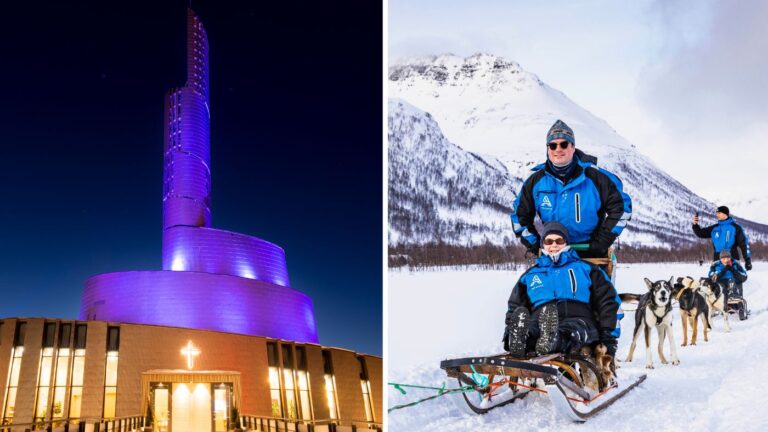
Of course, that's just my personal experience. The northern lights are never guaranteed, wherever you go. But Alta has an extraordinary connection with the aurora, and there's a good reason it's known as the City of the Northern Lights.
Located in Finnmark, northern Norway's vast northeastern region, Alta is surrounded by a landscape that becomes a winter playground once the snow arrives.
The enormous Finnmarksvidda plateau stretches away to the south, while the Altafjord provides a connection to the Arctic coastline. This combination of landscapes creates opportunities for everything from snowmobiling and dog sledding to northern lights hunting and whale watching.
Alta is also an increasingly popular cruise destination, especially during the winter months. Some ships even stay overnight, giving passengers the opportunity to experience both daytime activities and the northern lights.
But which experiences are actually worth booking? Having visited Alta several times, including during the famous Finnmarksløpet dog sledding race, here's what I recommend considering.
Affiliate disclosure: This article contains affiliate links. If you book a tour or experience through one of these links, Life in Norway may receive a small commission at no additional cost to you.
1. Northern Lights Tours
For many people, seeing the northern lights will be the main reason to visit Alta in winter.
Alta's connection with the aurora goes back much further than the modern tourism industry. In 1899, the world's first permanent northern lights observatory was established on Mount Haldde, overlooking the area.
Alta's location also offers some advantages. Although no Arctic destination can promise clear skies, Alta has a somewhat more sheltered position than coastal Tromsø, and guides can travel towards either the coastline or the Finnmark plateau depending on conditions.
If seeing the northern lights is your priority, I'd recommend booking a dedicated northern lights chase.
These tours typically use minibuses or smaller vehicles to search for clear skies, rather than taking everyone to one fixed location and hoping for the best.
Some excursions include photography assistance, hot drinks, snacks, or time around a campfire. It's worth comparing the details rather than choosing purely on price.
Which northern lights experience should you book?
A mobile northern lights chase is the sensible choice if maximising your chances of a sighting is your main goal. However, a fixed-location wilderness experience can be more enjoyable if you'd prefer a relaxed evening outdoors.
There are also combination experiences involving reindeer, snowmobiles, or dog sledding. These can be wonderful, but remember that the primary activity will take up much of the evening.
For cruise passengers staying overnight, a northern lights tour is an obvious way to make the most of the extended port call. Just make sure the tour's return time fits your ship's schedule.
David’s recommendation: Check out this small group northern lights hunt on Viator.
2. Sami Culture and Reindeer Experiences
One of Alta's greatest strengths as a winter destination is its proximity to the traditional reindeer herding areas of Finnmark.
The Sami are the Indigenous people of northern Scandinavia, Finland and parts of Russia's Kola Peninsula. Reindeer herding remains an important part of Sami life and culture, although Sami livelihoods and traditions are far more diverse than reindeer herding alone.
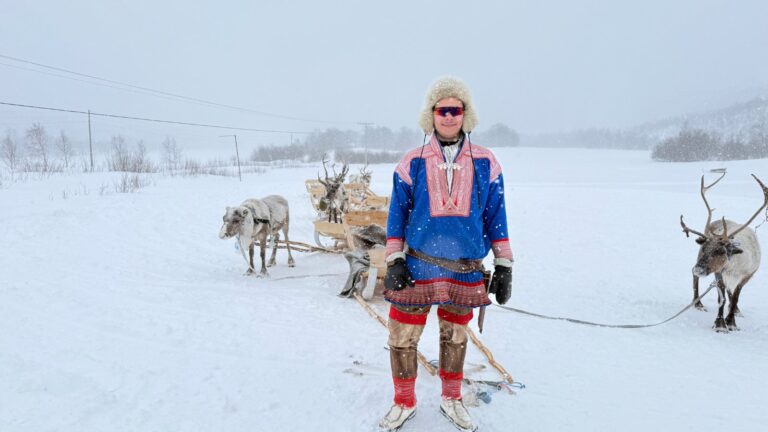
For visitors, a Sami cultural experience provides an opportunity to learn about this connection directly from Sami hosts.
Experiences vary considerably. Some focus on meeting and feeding reindeer, while others include traditional storytelling, food, handicrafts, joik singing, or a reindeer sleigh ride.
One option near Alta is Sami Siida, a family-run business offering cultural experiences that explain reindeer herding and its place in contemporary Sami life.
Some excursions take place in a traditional lavvu, where visitors gather around a fire while listening to stories about life in northern Norway.
It's also possible to book reindeer sledding experiences during the evening, with the possibility of seeing the northern lights overhead.
My advice: Look beyond the reindeer photographs when choosing an excursion. The most valuable experiences are those that give you time to hear from Sami hosts about their culture, history, and everyday lives.
David’s recommendation: Discover Sami culture with a visit to Sami Siida.
3. Snowmobiling on the Finnmark Plateau
If you're looking for an exhilarating Arctic adventure, snowmobiling deserves serious consideration.
Alta is one of the gateways to Finnmarksvidda, the enormous mountain plateau covering much of inland Finnmark.
It's difficult to appreciate the scale of this landscape until you leave the town behind. Frozen lakes, snow-covered forests, and vast open expanses create a completely different environment from the coastal scenery associated with much of northern Norway.
Snowmobile tours typically begin with instruction and a safety briefing before heading out onto designated routes.
Shorter excursions provide a taste of the experience, while longer adventures venture further into the wilderness, sometimes incorporating lunch at a mountain lodge or another outdoor activity.
Some operators also offer northern lights snowmobile excursions.
Which snowmobile tour should you choose?
For a first-time rider or someone visiting Alta for a single day, I'd lean towards a shorter excursion lasting three or four hours.
However, if you have several days in Alta and want to make the most of the region's unique geography, consider a longer journey onto Finnmarksvidda.
Check the driving licence requirements, minimum ages, whether you'll share a snowmobile, and what winter clothing is provided. The full excursion duration often includes transfers and instruction, not just driving time.
David’s recommendation: Explore a snowmobile safari on Finnmarksvidda with Viator
David’s recommendation: Book this thrilling Finnmarksvidda snowmobile safari.
4. Dog Sledding in Alta
Dog sledding is popular across northern Norway, but Alta has a particularly strong connection with the activity.
The region's cold winters, extensive trail network, and access to Finnmarksvidda have helped establish it as one of Europe's important centres for sled dog racing.
Several kennels around Alta offer tours for visitors, from relatively short rides through snow-covered forests to multi-day expeditions into the wilderness.
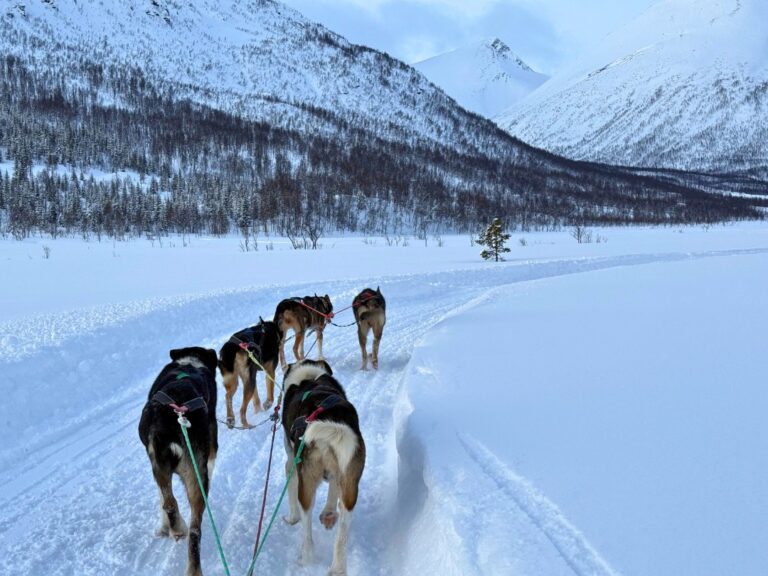
The experience itself can be quite different depending on what you book.
On some tours, you sit in a sled while an experienced musher takes control. Others give you the chance to drive your own team of dogs, following instructions from a guide.
If you've never tried dog sledding before, driving a team can be a memorable experience. However, it can also be physically demanding, especially when helping the dogs on uphill sections.
I'd also recommend choosing a kennel that takes the time to explain its approach to caring for and training the dogs.
David’s recommendation: Enjoy this thrilling four-hour dog sledding adventure in the Gargia Valley.
A Wonderful Time to Visit: Finnmarksløpet
One of my favourite memories of Alta has nothing to do with a booked excursion.
I've been lucky enough to visit Alta twice on cruises in March while Finnmarksløpet, Europe's longest sled dog race, was taking place. The atmosphere in town was wonderful.
Alta is relatively small, but during the race it takes on a completely different personality. On my visits, there were ice sculptures, excited schoolchildren watching the racers cross the finish line, and a real buzz around the streets.
What impressed me most, though, was the relationship between the mushers and their dogs.
After crossing the finish line, I watched mushers immediately turn their attention to their dogs, checking on them and caring for them before celebrating their own achievements or speaking to the waiting media.
It was a lovely thing to witness, and gave me an even greater appreciation for the dedication involved in long-distance dog sledding.
Finnmarksløpet takes place every March, with the races starting and finishing in central Alta.
If you're planning a winter holiday in northern Norway, it's well worth considering a visit during the event. Even if you don't have time to book a dog sledding excursion yourself, you can experience an important part of local life.
The 2027 event is scheduled to begin on March 5, with finishes expected over the following week. Exact finishing times depend on conditions, so check the official Finnmarksløpet programme before planning around a particular race.
5. Visit or Stay at Sorrisniva Igloo Hotel
One of Alta's most unusual winter attractions is the spectacular Sorrisniva Igloo Hotel. Every winter, an entirely new hotel is built from snow and ice beside the Alta River, a short drive from the town.
Inside, you'll discover intricately carved ice sculptures, atmospheric lighting, an ice chapel, and bedrooms made almost entirely from frozen materials.
The hotel has a different artistic theme each year, which means even returning visitors can discover something new. And yes, you really can spend the night here!
Guests sleep in specially designed cold-weather sleeping bags, surrounded by ice walls and sculptures. It's certainly an unusual experience, but perhaps not for everyone.
Fortunately, you don't have to stay overnight to appreciate the hotel. Day visitors can explore the ice hotel, admire the artwork, and visit the ice bar. There are also guided tours for those interested in the construction process and the stories behind the sculptures.
Is staying overnight worth it?
That depends on how much you value the experience of sleeping in an ice room!
For most cruise visitors, I'd suggest a daytime visit, either independently or as part of an organised excursion. For independent travellers planning a special Arctic holiday, however, spending a night at Sorrisniva could be a real highlight.
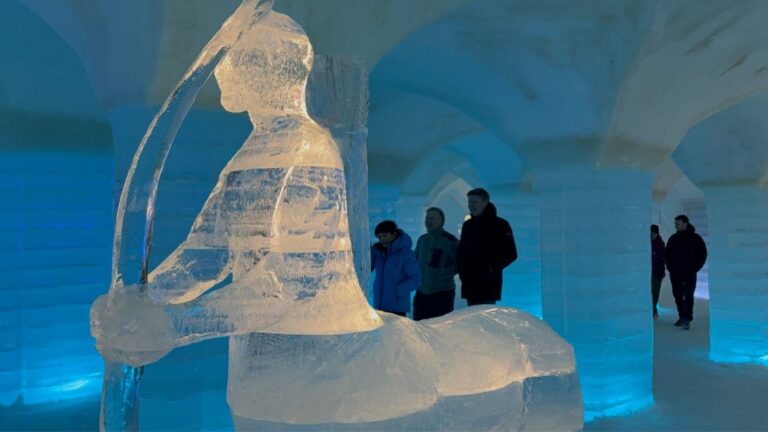
The Igloo Hotel is seasonal, generally opening on December 20 and closing around the beginning of April. Those arriving earlier in winter should check carefully before booking.
David’s recommendation: Check out the official Sorrisniva website to help you choose between a visit or an overnight stay.
6. Snowshoeing and Ice Fishing
Not every Arctic adventure needs to involve an engine or a team of energetic huskies. If you'd prefer something quieter, snowshoeing and ice fishing offer a wonderful way to experience the winter landscape around Alta.
Snowshoes make it easier to walk through deep snow, allowing guided groups to explore forest trails and areas that would otherwise be difficult to reach on foot.
Many excursions include time around a campfire, warm drinks, and opportunities to learn about the surrounding nature. Some combine a snowshoe walk with ice fishing on a frozen lake.
Ice fishing is a popular winter pastime in Finnmark. Your guide will typically provide the equipment and explain how to drill through the ice before you try your luck catching fish such as Arctic char or trout.
Of course, catching anything is never guaranteed! The appeal is as much about the experience of being outdoors in the Arctic winter as the fishing itself.
These excursions can be particularly appealing to people travelling as a family or those who want a nature-based experience without the intensity of snowmobiling.
David’s recommendation: Check out all the tours on Viator to see the combinations, but start with this guided snowshoe hike.
7. Whale Watching and Winter Fjord Cruises
Although Alta is especially associated with snow-covered landscapes, don't forget that the town sits beside the Altafjord.
Boat trips provide a completely different perspective on the region.
Winter fjord excursions can offer beautiful views of the coastline, snow-covered mountains, and the small communities scattered along the water.
Depending on when you're visiting, whale watching may also be possible.
Orcas and humpback whales are among the species that can be seen in the waters around Alta, particularly when herring attract whales into the fjords.
However, whale watching is a more seasonal and unpredictable choice than many of Alta's land-based activities.
The presence of whales depends on their movements and food supply, while boat excursions are also subject to weather and sea conditions.
If you're visiting during the earlier part of winter, it's certainly worth investigating. For a March visit, I would prioritise the more dependable snow-based activities unless a suitable whale-watching excursion is specifically operating.
David’s recommendation: It depends on the time of your visit, but this small group whale watching tour is a great place to start.
8. Explore Alta Itself
With so many outdoor adventures available, it's easy to overlook the town of Alta. However, it's worth leaving a little time to explore, particularly if you're arriving on a cruise or spending several days in the area.
The most distinctive building in town is the Northern Lights Cathedral, an eye-catching modern church inspired by the flowing shapes of the aurora.
Its unusual architecture makes it one of Alta's best-known landmarks, and there's also a northern lights exhibition within the building.
Another worthwhile stop is Alta Museum, home to exhibitions about local history and the UNESCO-listed rock art of Alta.
There's one important distinction for winter visitors. Although the museum remains open, the famous outdoor rock-carving trails are normally closed during winter because of snow and ice. However, you can still see original rock art inside the museum.
Both attractions provide a welcome alternative when the weather is less appealing for outdoor excursions. Or simply take some time to enjoy central Alta, especially if you're lucky enough to be visiting during Finnmarksløpet.
Choosing Winter Tours in Alta: Advice for Cruise Passengers
Alta is becoming an increasingly popular stop on winter cruises along the Norwegian coast. However, cruise passengers face some different challenges from those staying in the region independently.
The cruise harbour is approximately five kilometres from central Alta, which means you'll need to consider transport arrangements before booking an independent excursion.
Some operators provide pickup from the cruise terminal, while others expect visitors to meet in town or at a specific hotel. Don't assume that a tour described as departing from Alta includes transportation from your ship.
For a short daytime port call: Choose one main excursion rather than trying to squeeze in several. Dog sledding, Sami culture, or a visit to Sorrisniva are all possibilities, depending on availability and timings.
For a full day in Alta: A snowmobile adventure or another substantial wilderness experience could be an excellent use of your time.
For an overnight cruise stop: This is when Alta really comes into its own. Consider a daytime outdoor activity followed by a dedicated northern lights tour in the evening.
Remember to check the ship's departure time carefully, especially when booking evening activities independently. Allow some flexibility for winter driving conditions, too.
When Is the Best Time to Visit Alta in Winter?
The winter tourism season in Alta stretches across several months, but the experience changes significantly throughout that period.
November: Northern lights hunting is already well underway, although some snow-based activities may not yet be operating. Whale watching may be an attractive option.
December and January: The darkest months bring the polar night, when the sun doesn't rise above the horizon for several weeks. However, this doesn't mean complete darkness throughout the day. Around midday, there's often a beautiful period of blue and pink twilight.
February: A great month for combining snowy landscapes, returning daylight, northern lights opportunities, and established winter activities.
March: My personal favourite time to visit. Daylight hours are increasing, there's still plenty of snow in a typical winter, and the northern lights remain a possibility after dark. The Finnmarksløpet race adds another reason to consider a visit.
Of course, the precise operating season varies between excursions. Don't assume every activity is available throughout the winter.
Alta doesn't have quite the same big-city atmosphere or extensive range of attractions as Tromsø, but that's part of its appeal. For me, the real attraction of Alta is the opportunity to experience the wilderness and culture of Finnmark.