
Norway is moving towards a new cruise passenger tax, potentially adding to the cost of visiting the country by sea from 2027.
Norway is one of the world's most popular cruise destinations. It's not hard to see why. Epic fjords and seemingly endless coastline provide attractions well beyond the ports themselves.
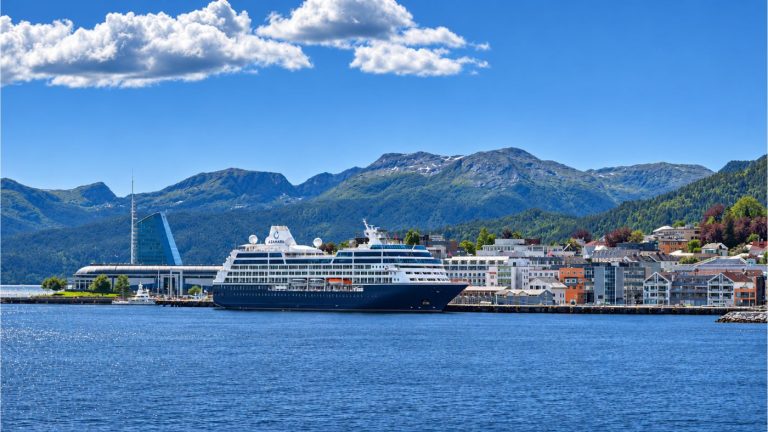
But there's a problem. Overtourism in small places isn't just an issue in the Mediterranean. Ports in Norway can suffer greatly when large cruise ships are in.
As a result, people on Norway cruises may soon be subject to a cruise passenger tax, albeit one paid by the cruise line. But it is not a nationwide charge and the final rules are not yet in place. Here's what you need to know about the proposals.
Instead, the proposal would allow individual Norwegian municipalities facing heavy tourism pressure to collect money from visiting cruise ships. Here is how the system is expected to work.
Why is Norway proposing a cruise tax?
Norway’s parliament approved a visitor contribution law in June 2025, which came into force on 1 July 2026. The idea is to help popular destinations pay for public facilities and infrastructure that see extra use because of tourism.
Cruise tourism is a particular focus. Norway’s ports recorded more than 6.3 million cruise passenger visits in 2025, although that figure counts visits at individual ports rather than unique travellers.
The law also provides for a separate 3% tax on paid overnight accommodation in eligible municipalities. That is not the same as the proposed cruise charge.
How much would cruise passengers pay?
The government has proposed a charge of NOK 100 per passenger for every commenced 24-hour period a ship spends in a municipality’s port or puts passengers ashore there.
For a typical daytime call, that means NOK 100 per passenger. A ship staying for more than 24 hours could trigger a second charge.
The fee would apply separately in each municipality that adopts it. For example, a cruise visiting four Norwegian ports, all in different municipalities charging the proposed rate, could incur NOK 400 per passenger in total. That is an illustration, not a confirmed charge for any particular itinerary.
Importantly, travellers would not have to queue up and pay when stepping ashore. Under the draft rules, the ship’s owner, operator and agent would be jointly responsible for paying the municipality.
Cruise lines could pass on the expense through fares or port charges, but how they would do so remains their decision.
Curious about seeing Norway on a cruise? Check out my in-depth guide to Norway cruises, from the types of ships available to the itineraries to watch out for.
Which ships and passengers would be affected?
The proposed rules cover passenger ships longer than 100 metres operating an advertised itinerary lasting at least 24 hours.
That includes most conventional ocean-going cruise ships but would leave many smaller expedition vessels outside the scheme.
The charge would be calculated using the passenger count declared in the ship’s arrival notification, not simply the number who disembark. Staying aboard for a port call would therefore not necessarily avoid the cost.
International ferries operating fixed routes would be excluded.
Norway’s coastal route, operated by Hurtigruten and Havila, is treated differently: passengers using it for point-to-point transport would be excluded from the calculation, while those travelling on organised cruise itineraries could be included.
Where might the tax apply?
The crucial point is that municipalities would choose whether to introduce it. They must be able to document an especially heavy burden from tourism and have an approved plan for using the money.
Oslo has announced plans for a cruise levy from 2027 and estimated potential annual revenue of around NOK 40 million. Read our report on Oslo’s proposal.
Bergen is working towards visitor contributions covering both accommodation and cruise traffic during 2027. Tromsø also says it intends to introduce a cruise charge once the national regulations are ready.
That does not mean every Norwegian cruise port will charge the tax, or that all participating ports will begin on the same date.
What would the money be spent on?
Revenue must finance tourism-related public goods, rather than simply boosting a municipality’s general budget.
Possible uses include public toilets, waste collection, visitor information, maintenance of walking trails and natural areas, and other shared facilities under pressure from growing visitor numbers.
Supporters argue that this allows cruise visitors to contribute more directly to the places they visit.
Critics question whether the proposed NOK 100 level is too high. Vestland county supports the principle but has warned that a large fee could make Norwegian ports less attractive to cruise operators.
When will Norway introduce the cruise tax?
The national proposal went out for consultation in March 2026, with responses closing in June. As of November 2026, the final cruise regulation has not been adopted.
In an October parliamentary answer, the government said it still aimed for the national rules to take effect on 1 January 2027, with municipalities able to begin collecting the charge during 2027.
For anyone booking a Norwegian cruise, the practical message is simple: the charge is possible, but it is not yet a certainty at every port. Check your cruise line’s policy on taxes and fees, especially if travelling in 2027.