
Cruise ships visiting Oslo could face a new charge of NOK 100 per passenger as Norway’s capital looks for new ways to fund the infrastructure used by a growing number of tourists.
Oslo’s city government wants to introduce a new charge on cruise tourism from 2027, potentially raising around NOK 40 million each year.
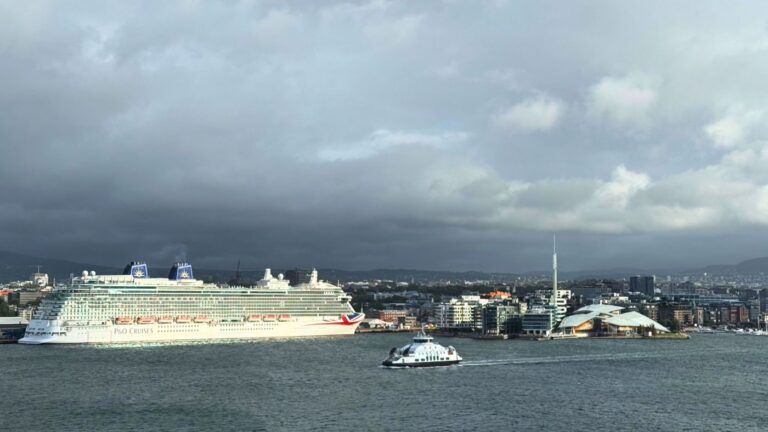
The proposal comes as Norway prepares new national rules allowing municipalities experiencing significant pressure from tourism to introduce a specific levy on cruise traffic.
Under the national proposal, municipalities would be permitted to charge NOK 100 per passenger for every commenced 24-hour period that a cruise ship spends in port or puts passengers ashore in the municipality.
Oslo officials say the additional revenue would help cover some of the costs that come with increasing numbers of visitors, including public toilets, cleaning and maintenance of parks, paths and other shared spaces.
“We are getting more and more tourists in our city,” Oslo’s environment and transport commissioner Marit Vea told Avisa Oslo. She said the growth was welcome, but also brought increased demand for facilities and greater wear on public areas.
The Oslo city government estimates the cruise levy could generate approximately NOK 40 million per year.
Cruise tourism is growing in Oslo
Oslo has become an increasingly important cruise destination, even though its visitor numbers remain considerably lower than Norway’s busiest fjord ports.
Official figures from the Port of Oslo show that 331,241 cruise passengers visited the port in 2025, an increase of around 26% from the previous year.
Cruise traffic has continued strongly in 2026. During the first quarter alone, Oslo recorded 73,051 cruise passengers from 23 ship calls, compared with 41,156 passengers from 11 calls during the same period of 2025.
Cruise ships currently use two main terminals in the Norwegian capital.
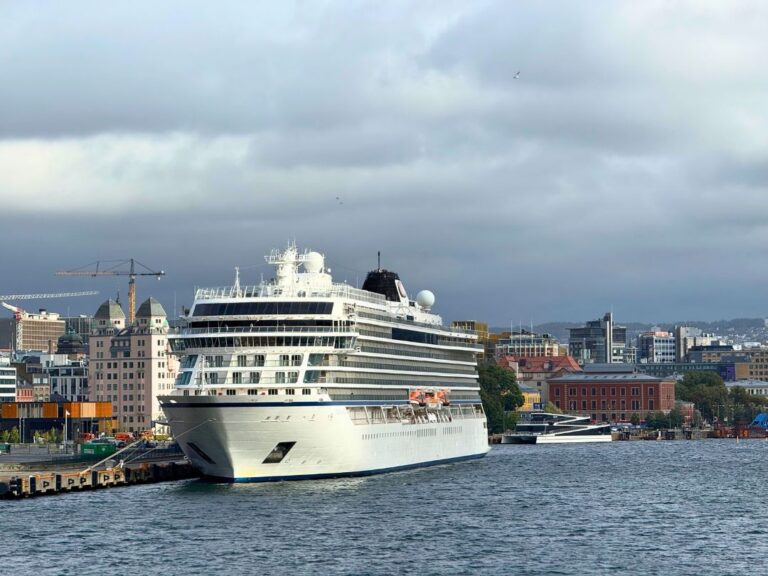
Revierkaia, close to the city centre, is Oslo’s primary cruise berth and already offers shore power. Filipstad, beside the waterfront development at Tjuvholmen, is also used for cruise traffic, with shore power being established there in 2026.
For visitors, both locations provide relatively easy access to popular things to do in central Oslo. But from the city’s perspective, large numbers of short-term visitors also use public spaces and services without staying overnight.
That distinction is important to understanding why Oslo is interested in a cruise charge.
Norway’s new tourist tax system
The possibility of a cruise levy is part of a much wider change in the way Norway handles tourism.
In 2025, the Norwegian parliament approved a new law on visitor contributions. The legislation came into force on July 1, 2026, and allows municipalities facing particularly heavy pressure from tourism to introduce charges designed to fund tourism-related public facilities.
One part of the system concerns overnight accommodation. Eligible municipalities can introduce a 3% charge on accommodation from 2027, provided they meet the requirements and receive approval for their plans.
Cruise tourism is being handled separately. The Norwegian government proposed a maximum cruise charge of NOK 100 per passenger per commenced 24-hour period. Only municipalities able to demonstrate a particularly high burden from tourism would be permitted to introduce it.
The government has said it wants the national cruise regulations to take effect in 2027, with municipalities potentially able to begin collecting the levy during the first half of the year.
However, the regulations have not yet completed the process, so the precise timetable remains subject to change.
Who would actually pay the cruise tax?
Despite frequently being described as a passenger tax, individual visitors would not be expected to arrive in Oslo and pay NOK 100 at the quayside. Under the national proposal, the ship’s owner, operator and agent would be jointly responsible for paying the charge to the municipality.
Cruise companies could ultimately choose to incorporate that cost into fares or passenger fees, but exactly how individual cruise lines would handle the charge would be a commercial decision.
For a conventional daytime port call lasting less than 24 hours, the proposed rate would amount to NOK 100 for each passenger.
Because the charge is proposed for every commenced 24-hour period, a ship remaining in the same municipality beyond 24 hours could incur a second charge.
That could be particularly relevant to the growing number of itineraries featuring overnight stays in Norwegian ports.
What would Oslo spend the money on?
The new system is not intended to provide unrestricted income for municipal budgets.
Municipalities introducing a visitor contribution must prepare a plan explaining how the revenue will be spent on tourism-related public goods and why the charge is justified by the burden created by visitors. Businesses affected by the scheme must also be given an opportunity to provide input.
Examples given by the government include infrastructure, public facilities and other services where demand increases substantially because of tourism.
In Oslo, officials have specifically highlighted toilets, cleaning and wear on parks and recreational areas as areas where increasing visitor numbers create additional costs.
Not everyone supports the NOK 100 rate
The principle of a cruise contribution has received support from several Norwegian destinations, but the proposed NOK 100 maximum has also attracted criticism.
Vestland county, home to many of Norway’s busiest cruise destinations, supported giving municipalities the ability to introduce a cruise levy but argued that NOK 100 per passenger was too high.
County officials warned that a high charge could make Norwegian ports less attractive and potentially encourage cruise lines to choose destinations elsewhere.
The national government has described the proposed amount as moderate, arguing that visitors who place additional demands on local infrastructure should contribute towards the facilities they use.
If the necessary national and local approvals fall into place, cruise passengers arriving in the Norwegian capital could begin contributing to that cost from 2027.