
Norwegian low-cost long-haul airline Norse Atlantic Airways has collapsed, leaving passengers around the world scrambling to make alternative travel arrangements just weeks before Christmas.
Five years after its launch was announced amid much optimism about the future of affordable long-haul travel, Norse Atlantic Airways has grounded its entire fleet.
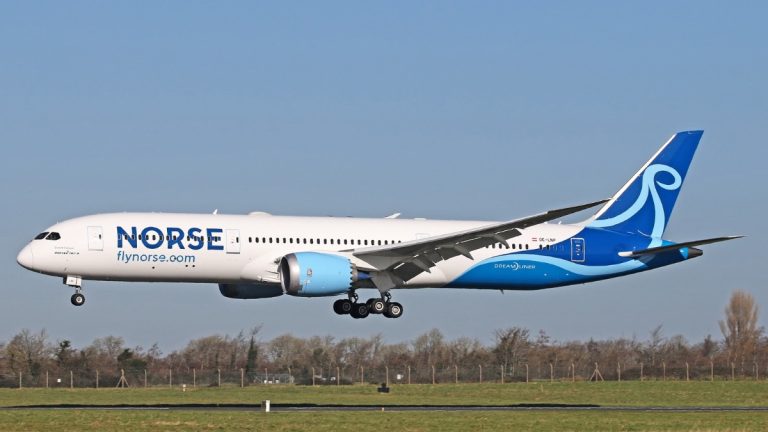
On Friday, 27 November, the airline's Norwegian operating company filed for bankruptcy after failing to secure emergency funding. All Norse flights have been cancelled and ticket sales have stopped.
For passengers with upcoming bookings, including those already overseas with return tickets, the news means considerable uncertainty, potentially expensive replacement flights and no guarantee of getting their money back.
What happened to Norse Atlantic Airways?
Founded in 2021, Norse Atlantic was established in the wake of Norwegian Air's withdrawal from the long-haul market.
With a fleet of Boeing 787 Dreamliner aircraft, the new airline promised to make long-distance travel more affordable. Its first commercial flight, from Oslo to New York, took place in June 2022.
The airline subsequently expanded its operations beyond Norway, serving destinations across North America, Europe, Asia and South Africa, while also providing aircraft and crews to other airlines.
However, financial difficulties have plagued the airline for much of its short existence. A sharp rise in aviation fuel prices this year added further pressure to an already challenging financial situation.
On Wednesday, the company warned investors that its financial position had become critical. Flights were suspended the following day as management attempted to secure emergency funding.
The company also received notices terminating the leasing agreements covering its entire fleet of 12 Dreamliners, although Norse disputed the validity of those notices.
By Friday afternoon, the board of its Norwegian operating company had decided to file for bankruptcy with Agder District Court.
“We are deeply sorry for the impact this has on our passengers, employees and partners,” said Norse Atlantic CEO Eivind Roald in a stock exchange announcement.
According to Norwegian business newspaper E24, court documents reveal debts of approximately NOK 6.3 billion, against assets valued at around NOK 4 billion.
What happens to passengers with Norse tickets?
All Norse flights have been cancelled, including those operated by its British subsidiary, which is not currently part of the Norwegian bankruptcy proceedings.
Passengers should not travel to the airport in the expectation that their Norse flight will operate. This applies equally to outbound and return flights.
For those already overseas, the immediate priority is finding an alternative way home. Unfortunately, passengers who booked directly with Norse will generally need to make their own arrangements.
The timing is particularly unfortunate for Scandinavians spending the winter in Thailand, where Norse had been offering direct flights from Norway and Sweden.
With the busy Christmas travel period approaching, replacement tickets could be considerably more expensive than the original Norse fares.
Passengers who booked through a travel agency or as part of a package holiday should contact their travel provider before making alternative arrangements. Package travel regulations may offer additional protection.
Norse's collapse also affects some charter services operated on behalf of other travel companies. Passengers in this situation should contact the company from which they purchased their trip.
Can Norse passengers get their money back?
Norway's Consumer Council (Forbrukerrådet) has published guidance for affected passengers.
Although passengers would ordinarily be entitled to a refund for cancelled flights, recovering money directly from a bankrupt airline is difficult. Individual passengers typically find themselves well down the list of creditors.
However, those who paid for their tickets using a credit or debit card may have another option.
The Consumer Council recommends submitting a refund claim to the airline's bankruptcy estate and then contacting the bank or card provider with a copy of that claim.
International passengers should check the consumer protection rules applicable in their own country and contact their card issuer promptly, as time limits may apply.
The UK's Civil Aviation Authority has issued similar advice to British passengers.
Unfortunately, recovering the additional costs of replacement flights, accommodation or missed holiday bookings is likely to prove more difficult.
Travellers should also check their travel insurance policies. Standard Norwegian travel insurance does not generally cover airline bankruptcy, although some international policies include specific protection against airline failure.
Is this the end of Norse Atlantic?
Technically, the entire Norse Atlantic group has not yet gone bankrupt. The bankruptcy concerns the Norwegian operating company, Norse Atlantic Airways AS, rather than the listed parent company, Norse Atlantic ASA, or its British subsidiary.
Management is exploring options that could allow parts of the business to continue operating. However, with all flights cancelled and the future of its aircraft fleet uncertain, passengers should not rely on any resumption of services.
The collapse marks another major setback for low-cost long-haul aviation. Just a few years after Norwegian abandoned its ambitious intercontinental network, the airline established to follow in its footsteps has encountered many of the same challenges.
The situation means one less source of competition on long-haul routes and, potentially, fewer opportunities to find affordable direct flights between Scandinavia and destinations further afield.