
At the very top of Denmark, Skagen is known for its yellow houses, artistic heritage, sandy landscapes and the meeting of two seas. Here’s what to expect from a visit.
As much as I love exploring Norway, I also spend a lot of time visiting destinations around Scandinavia and the Nordic region. Today I want to talk about somewhere you may not have heard much about.
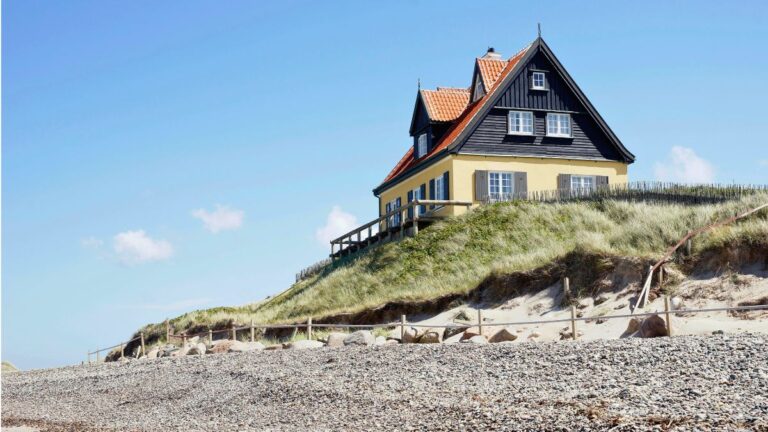
I've visited Skagen a couple of times this year, both while working as a cruise ship enrichment speaker. My experiences could hardly have been more different.
On one visit, the weather was thoroughly miserable. Grey skies, rain and a stiff coastal wind made Skagen feel every bit like an exposed town perched at the northern end of Denmark.
Then I returned on a warm, sunny summer day. Suddenly, I understood Skagen.
The streets were full of people, bicycles were everywhere, restaurant terraces spilled out around the harbour, and the town's distinctive yellow buildings seemed made for the bright blue sky.
Of course, you can't order sunshine when planning a trip to Scandinavia. But Skagen is certainly a town that comes alive on a summer day.
There's also much more going on here than its attractive appearance suggests.
Skagen sits at the northern tip of Jutland, where the landscape is shaped by wind, sand and sea. For generations it was a remote fishing community. Then, in the late 19th century, artists began arriving in search of landscapes, local characters and especially the distinctive coastal light.
Today, Skagen is one of Denmark's most popular summer destinations. Here's why.
Welcome to Skagen
Skagen is the northernmost town in Denmark, located near the very tip of the Jutland peninsula. Although relatively small, it has a surprisingly strong identity.
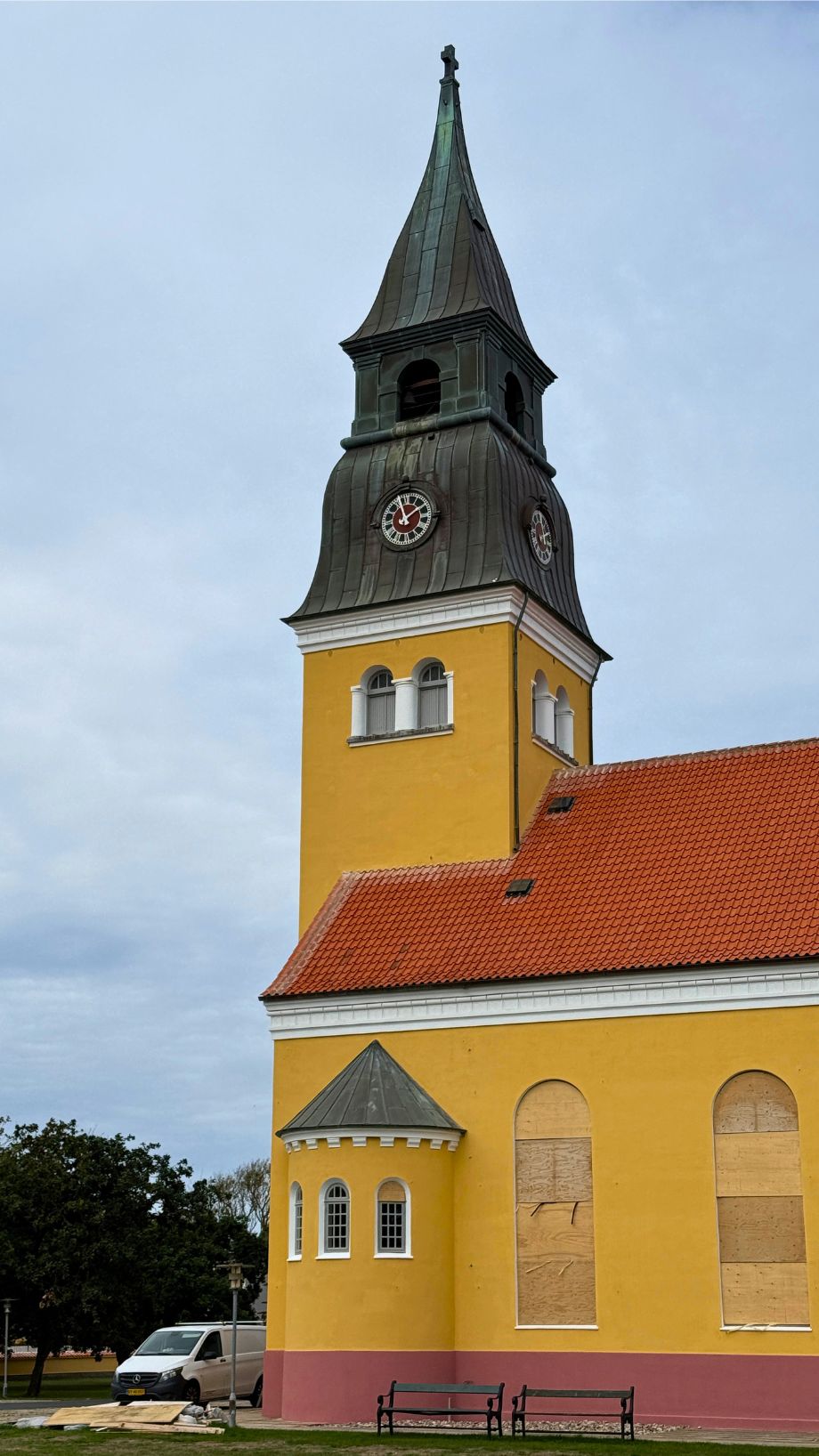
Many of the houses are painted a distinctive shade of yellow, often with red-tiled roofs edged in white. The harbour remains important, both as a working fishing port and as one of the busiest areas for visitors.
Much of central Skagen is easily explored on foot. It's also Denmark, so naturally, bicycles are everywhere.
During the summer months, the difference between this relatively quiet coastal town and the lively visitor destination it becomes can be considerable.
Yet for all the boutiques, restaurants and vacation homes, Skagen doesn't feel like a resort created for tourists. Its landscape, architecture, fishing industry and cultural history are all closely connected. To understand why, head farther north.
Grenen: Where Two Seas Meet
The best-known attraction in Skagen isn't actually in the town itself. Grenen is the sandy point at the northern end of Denmark, where the waters of the Skagerrak and Kattegat meet.
It's often described more dramatically as the place where the North Sea meets the Baltic Sea. Strictly speaking, the geography is more complicated than that, but the visual effect is real.
Walk to the end of the sand and you can watch waves approaching from different directions. It's an unusual sight, and there's something satisfying about standing at the very end of a country with nothing but water ahead.
You may also spot people standing with one foot in the water on either side of the point for photographs. Just don't be tempted to go swimming. Strong and unpredictable currents make swimming around Grenen dangerous, and it is prohibited around the tip.
Grenen is also constantly changing. Sand and gravel carried by the currents continue to reshape and extend this northernmost piece of Denmark.
From the main parking area, you can walk along the beach to the tip. Alternatively, the wonderfully named Sandormen, or Sand Worm, transports visitors across the sand in tractor-pulled passenger carriages.
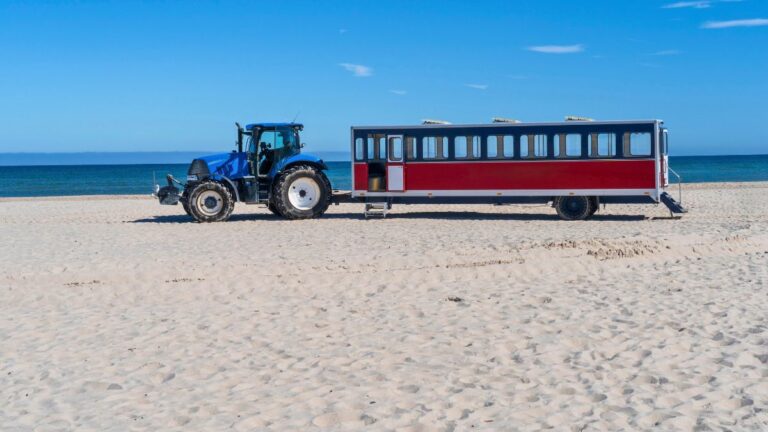
It's unashamedly touristy, but also quite practical if you're short on time or don't fancy the walk.
The Skagen Painters
For me, the most interesting thing about Skagen is how closely its landscape is connected to its cultural history.
In the late 19th century, artists began travelling to what was then a relatively remote fishing community. Holger Drachmann arrived in 1872. Others followed, including Michael Ancher, Anna Ancher, P.S. Krøyer, Marie Krøyer, Laurits Tuxen and Viggo Johansen.
Collectively, they became known as the Skagen Painters. The attraction wasn't simply that Skagen was picturesque. Artists were experimenting with new approaches to painting, influenced by developments elsewhere in Europe.
Rather than concentrating on formal studio subjects, they painted ordinary people, fishermen, beaches and everyday life.
And then there was the light. Skagen became particularly famous among artists for its long summer evenings and coastal light.
P.S. Krøyer's paintings are perhaps the most familiar examples. His beach scenes capture that Scandinavian summer twilight when daylight seems reluctant to disappear altogether.
Anna Ancher took a different approach, often using sunlight streaming through windows to transform ordinary domestic interiors.
Even if you're not normally someone who seeks out art museums while travelling, understanding the Skagen Painters adds something to a visit here. Once you've seen their work, you start noticing the same landscapes and colours outside.
Visit Skagens Museum
The obvious place to start is Skagens Museum, close to the centre of town. The museum holds a substantial collection of works from the Skagen artist community and explains how the painters lived, worked and socialised.
What interested me most was that this wasn't simply a collection of individuals who happened to paint in the same place. They formed a community.
Many gathered at Brøndums Hotel, which became the social centre of the group. The hotel's dining room was eventually moved into the museum, complete with portraits painted by members of the colony.
Anna And Michael Ancher's Home
A short walk away, Anchers Hus offers another perspective. Anna and Michael Ancher lived here for decades, and much of the house has been preserved with its original furniture, artwork and personal objects.
Anna Ancher is particularly interesting within the story of the Skagen Painters. She was born in Skagen, unlike many of the artists who came from elsewhere, and grew up at Brøndums Hotel.
She also became one of Denmark's most important artists at a time when professional opportunities for women were far more restricted.
Visiting the house after seeing the paintings in Skagens Museum makes the whole artistic community feel far less abstract.
Why Are The Houses In Skagen Yellow?
One of the first things you'll notice in Skagen is the architecture. Yellow-painted houses with red-tiled roofs dominate many streets, often with striking white lines along the roof edges.
They've become such an established part of the town's image that you might assume Skagen has always looked this way. It hasn't.
As the local fishing community became wealthier during the late 19th century, older and more modest buildings were rebuilt or improved.
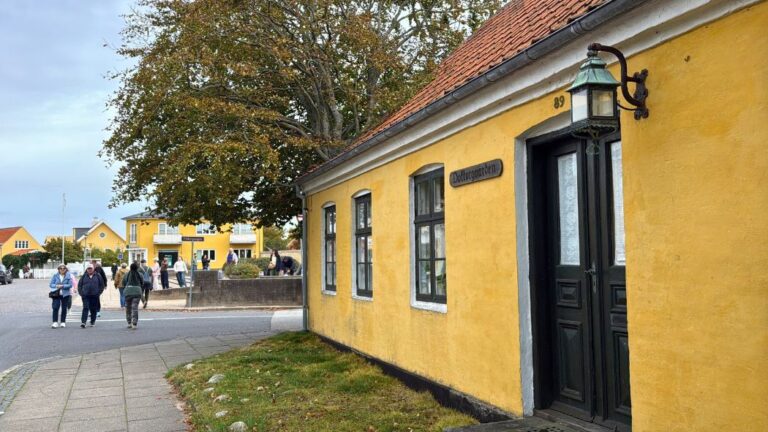
Brickwork was protected from Skagen's harsh coastal weather with limewash, and yellow gradually became particularly associated with the town. Artists also appreciated how the colour looked beneath the intensely blue summer sky.
The white roof details have an even more practical explanation. Because of Skagen's strong winds, roof tiles were secured with mortar. The exposed mortar around roof ridges and edges was then protected with white limewash.
Something that today appears to be a charming decorative tradition was essentially weatherproofing.
I love details like this because they sum up Skagen rather well. Even the town's prettiest features have been influenced by the reality of living in such an exposed coastal location.
Skagen Harbour
For a completely different side of Skagen, head down to the harbour. Fishing has been at the heart of life here for centuries, and Skagen remains one of Denmark's most important fishing ports.
Today the harbour area is also one of the liveliest parts of town in summer. Restaurants and cafes cluster around the waterfront, making this a good place to stop for lunch or a drink. Unsurprisingly, fish and seafood feature heavily.
The Sand-Buried Church
Skagen's relationship with its surroundings hasn't always been easy. One of the strangest examples lies a short distance southwest of town.
Den Tilsandede Kirke, usually known in English as the Sand-Buried Church, was once one of the largest churches in this part of Denmark.
During the 17th and 18th centuries, drifting sand became an increasingly serious problem. Parishioners sometimes had to dig their way through the sand simply to enter the church.
Eventually, the battle was lost. The church was abandoned in 1795, and most of the building was later demolished. Today, its white tower rises alone from the landscape.
Råbjerg Mile
For an even more dramatic example, consider a trip to Råbjerg Mile, south of Skagen. This enormous migrating sand dune covers around one square kilometre and contains millions of cubic metres of sand.
Driven by the prevailing winds, the dune moves northeast by around 15 metres every year. The result is a landscape that feels surprisingly wild for Denmark. Walking across Råbjerg Mile can feel more like crossing a small desert than visiting northern Europe.
It's farther from Skagen than the other attractions mentioned here, so you'll need to allow more time, but it's well worth considering if you have a car or are spending several days in the area.
When Is The Best Time To Visit Skagen?
My two visits have certainly taught me something about this question. Skagen can be visited throughout the year, and there is undoubtedly something atmospheric about seeing this exposed corner of Denmark beneath dramatic skies.
But if you're looking for the classic Skagen experience, summer is hard to beat. On a sunny day, the yellow houses look their best, the harbour is lively and the town's cafes and restaurants spill outside.
The long Scandinavian summer evenings also give you a taste of the light that helped make Skagen famous in the first place. And whatever time of year you visit, bring an extra layer. You're never far from the sea here.
How Long Do You Need In Skagen?
You can see a surprising amount in one day. The town centre, harbour and Skagens Museum are close enough to combine easily, while Grenen requires a little more time.
That's essentially what makes Skagen such a good day-trip destination, including for the increasing number of people who arrive here by cruise ship.
But if you're interested in art, cycling or the surrounding landscapes, staying overnight changes the experience.
You could spend one day concentrating on Skagen itself and Grenen, then use a second to visit the Sand-Buried Church and Råbjerg Mile. It would also give you the chance to experience the town after many of the daytime visitors have left.