
Tromsø's booming tourism industry has transformed the city into one of Europe's hottest winter destinations. But the growth of short-term rentals is making it increasingly difficult for local people to find somewhere to live.
Tromsø's rise as an international tourism destination has been nothing short of remarkable.
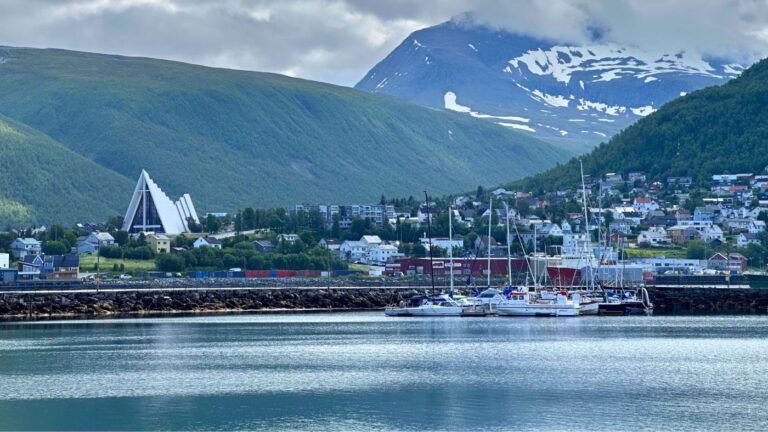
Once a place where summer was the obvious season for visitors, the northern Norwegian city has successfully turned the darkest months of the year into its busiest time.
Northern lights tourism, international cruise lines, whale watching, dog sledding and an ever-growing network of international flights now bring people from around the world to Tromsø throughout the winter.
In 2025, the municipality recorded more than 1.3 million commercial overnight stays, an increase of around 10% in just one year. During the winter season, Tromsø municipality estimates that between 12,000 and 16,000 visitors can be in the area on any given day.
For a municipality of just under 80,000 people, that's an enormous tourism industry. It brings jobs, supports restaurants and attractions, and has helped establish Tromsø as one of the best-known destinations in northern Europe.
But there is an increasingly visible downside. Quite simply, tourists and residents are competing for the same homes.
Almost 4,000 Airbnb Units
Tromsø municipality's recently published analysis of the tourism industry's impact on the city makes for striking reading.
In December 2025, there were 3,915 Airbnb units registered in Tromsø, an increase of 24% in just one year.
The municipality says Tromsø now has one of Norway's largest short-term rental markets relative to its population. It also says the continued expansion of tourism in recent years has been made possible in large part by Airbnb and other short-term rental platforms.
That accommodation has provided badly needed beds when hotels are full. But every apartment used primarily as tourist accommodation is potentially one fewer apartment available to someone who lives, works or studies in the city.
According to a survey included in Tromsø's tourism carrying-capacity study, 91% of residents believe tourism is making it more difficult to rent a home.
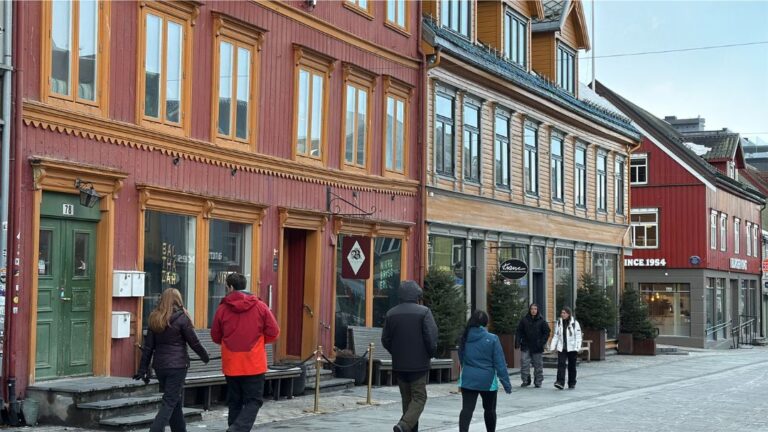
The municipality identifies pressure from short-term rentals as one of the three biggest social challenges created by tourism and concludes that Tromsø's social carrying capacity has now been exceeded.
That's unusually strong language from a municipality whose tourism industry remains extremely important to the local economy.
Rent Until October, Then Move Out
Perhaps the strangest consequence of Tromsø's tourism boom is the emergence of what amounts to a seasonal rental market for residents.
In many destinations, summer is the lucrative time for short-term holiday rentals. Tromsø is different. Winter is peak season.
An NTNU study of the city's rental market found that some landlords can earn more by renting a property to tourists for a few winter months than they could from a conventional tenant for an entire year.
People working in Tromsø's property sector told the researcher that this has created a highly seasonal market. Apartments are offered to residents from roughly April until October, before returning to Airbnb and other short-term platforms when the northern lights season begins.
The issue resurfaced in the local political debate in October. Tromsø city councillor Matias Hogne Kjerstad claimed that many people are now being offered rental contracts for only part of the year because landlords want their properties available for tourists during winter.
His argument was simple: Tromsø should be a good city to live in, not merely a good city to visit.
It is important to distinguish political claims from hard statistics. There is no official count of how many people are forced into these seasonal contracts. But the practice itself is supported by earlier research into Tromsø's rental market.
Tourism Isn't The Only Problem
It would be too simplistic to blame Tromsø's entire housing problem on Airbnb.
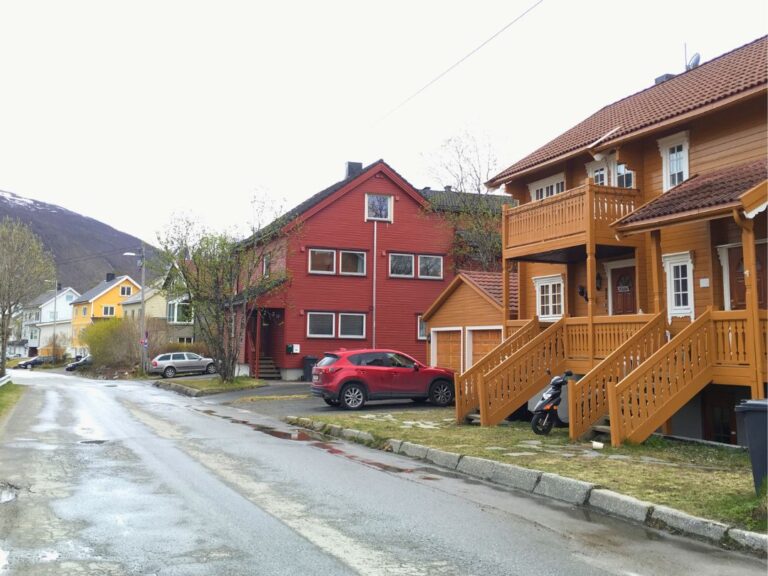
The city already had many of the ingredients for a difficult housing market. Tromsø is a regional centre for healthcare, education and research, with a large student population and constant demand from people moving to the city for work.
There is also a straightforward supply problem. Statistics Norway lists 42,367 homes in Tromsø municipality, while just 251 new homes were completed in 2025.
People interviewed for the NTNU rental-market study disagreed on the principal cause of the shortage. While some pointed directly to tourism and short-term rentals, others argued that insufficient housebuilding was the more fundamental problem.
Meanwhile, buying a home has become substantially more expensive. Tromsø house prices rose 12.2% during the first nine months of 2026, one of the strongest increases anywhere in Norway.
That doesn't mean tourism caused the rise. Interest rates, housing construction, population growth and the wider Norwegian property market all play a role. But short-term tourism adds another powerful source of demand to a market that was already tight.
And unlike demand from new residents, tourism can change the economics of existing homes.
A property doesn't need to be sold to disappear from the long-term housing market. Its owner simply needs to decide that renting it by the night is more profitable than renting it by the year.
Can Tromsø Do Anything About Airbnb?
That's where the issue becomes complicated. Tromsø municipality itself says that it currently lacks the tools and resources needed to properly control the growth in Airbnb and similar short-term rentals.
National regulation is being considered, but the municipality says no quick solution is expected. Local measures through Norway's planning laws may be possible, but they are difficult to implement.
The debate also isn't about stopping ordinary residents from occasionally renting out their homes.
The municipality specifically highlights a distinction between people who rent their home for short periods and investors who buy residential property primarily to operate it as tourist accommodation.
That distinction is likely to become increasingly important as Norway debates how short-term rentals should be regulated.
Tromsø has also voted to introduce an overnight visitor charge from 2027, subject to the required national approval and local regulations.
The money is intended to help fund tourism-related infrastructure such as toilets, transport management, waste handling and improvements at heavily visited locations.
But a tourist tax isn't a housing policy. It may help Tromsø deal with the physical impact of millions of visitors, but it won't automatically return apartments to the long-term rental market.
The Price Of Tromsø's Tourism Success
None of this changes the fact that tourism has been hugely beneficial to Tromsø. The industry accounts for around 10% of employment relationships in the municipality and supports businesses throughout the city and surrounding region.
Nor is the problem the people who want to visit. Tromsø is an extraordinary destination, and its success in developing winter tourism has become a model for other parts of northern Norway.
The difficult question is what happens when tourism becomes so profitable that the places people come to visit begin losing homes for the people who live there. Tromsø's own assessment now says that threshold has been crossed.
For years, the city's challenge was attracting enough visitors during the long Arctic winter. Today, the challenge may be ensuring that the people who serve those visitors can still afford to call Tromsø home.