
When I first wrote about Lillebjørn Nilsen, Norway was still processing the shock of the 2011 terror attacks.
I was new to the country then, still trying to understand not just the language, but the culture behind it. Like many newcomers, I was learning Norway through headlines, everyday conversations, and the strange little moments when a song, a place, or a phrase suddenly reveals much more than expected.
For me, one of those moments came at the national memorial concert held in Oslo one year after the attacks.
Bruce Springsteen and Steven Van Zandt had made a guest appearance to perform “We Shall Overcome.” It was a powerful, unexpected moment for the crowd.
But the difficult task of following Springsteen fell to a man far less known outside Scandinavia, yet far more deeply connected to the city and the country gathered in mourning. That man was Lillebjørn Nilsen, and there was no better person for it.
An Oslo Folk Hero
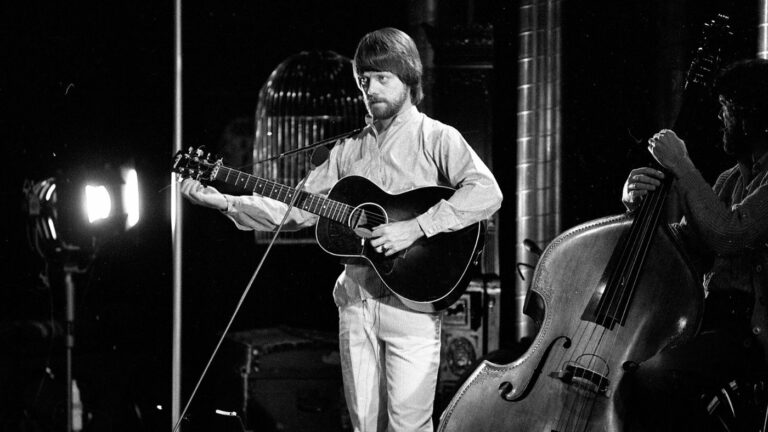
Lillebjørn Nilsen was not an international superstar in the conventional sense. Outside Norway, his name is still unfamiliar to many. But in Norway, and especially in Oslo, he occupied a very different kind of space.
He was a singer-songwriter, folk musician, storyteller and city chronicler. His songs were simple without being simplistic. They were often gentle, accessible and easy to sing, yet full of human observation. They captured neighbourhoods, summer evenings, ordinary people, longing, humour and community.
Born Bjørn Falk Nilsen in Oslo in 1950, he became known as Lillebjørn during his early musical career and kept the name for life. He released his first solo album, “Tilbake,” in 1971, and went on to become one of the most important figures in Norwegian folk music and visesang, the Scandinavian tradition of lyric-driven song.
For international readers, perhaps the easiest comparison is not to a single artist, but to a tradition: part folk singer, part poet, part local historian. He was not simply singing about Oslo. He helped Norwegians hear the city differently.
The Song That Comforted Oslo
At the memorial concert, Nilsen performed “God natt Oslo,” usually translated as “Good Night Oslo.”
It is a lullaby for the city, an ode to Oslo after dark. In another setting, it might simply feel like a quiet, affectionate song about streets, harbour air and the night settling over the capital. But in that moment, sung in front of the city hall after a year of grief, it became something much bigger.
The tiny addition of the Norwegian word kjære, meaning dear or darling, gave the song an extra emotional weight. It was no longer just “Good night Oslo.” It was “Good night, dear Oslo.”
Even watching on television, it was deeply moving.
His songs were not grand national anthems written with ceremony in mind. They were human-scale songs. But when Norway needed words and melodies that felt familiar, sincere and communal, his music was already there.
‘Barn av Regnbuen' and Norway’s Response
Nilsen followed “God natt Oslo” with “Barn av regnbuen,” his Norwegian adaptation of Pete Seeger’s “My Rainbow Race.”
The song had already taken on extraordinary significance earlier in 2012 during the trial of Anders Behring Breivik, the far-right terrorist responsible for the attacks in Oslo and on Utøya on July 22, 2011.
Breivik had criticised the song as an example of multicultural influence in Norwegian society. The response was remarkable. Tens of thousands of people gathered at Youngstorget in central Oslo, in the rain, to sing “Barn av regnbuen” together.
For many people in Norway, that moment turned the song into something more than a familiar folk tune. It became a public answer to hatred.
That does not mean “Barn av regnbuen” is loved by everyone in the same way, or that any song can neatly explain modern Norway. But it is hard to think of another Norwegian song that has carried such visible symbolic weight in recent decades.
The Legacy of Lillebjørn
Lillebjørn Nilsen died in January 2024 at the age of 73. His funeral was held at Oslo City Hall, the same symbolic heart of the capital where he had helped comfort the city after July 22.
That setting felt appropriate. More than almost any other Norwegian musician, Lillebjørn belonged to Oslo. Not the glossy tourist version of Oslo, but the lived-in city of trams, streets, summer light, apartment blocks, harbour air and ordinary people going about their lives.
Songs such as “Tanta til Beate,” “Bysommer,” “Stilleste gutt på sovesal 1,” and “God natt Oslo” have become part of Norway’s shared cultural memory. Some are playful. Some are nostalgic. Some are reflective. Many are easy to sing, which is part of their power.
There is something very Norwegian about that. The songs do not demand attention. They invite participation.
Learning Norwegian Through Music
There is another reason I still recommend Lillebjørn Nilsen to people discovering Norway: his songs are useful for learning Norwegian.
That might sound like a much lighter point after the emotional history above, but it is one of the ways many of us first connect with a culture. Music helps language stick.
Nilsen’s songs are often clearly sung, melodic and lyrically direct. For learners, that makes them much easier to follow than a lot of modern pop. You can hear sentence structure, rhythm and pronunciation in context, rather than as isolated textbook examples.
“God natt Oslo” is a good place to start because of its gentle pace. Listen for the repeated sounds, the soft rhythm of the language, and words that return throughout the song. Even the phrase kjære Oslo teaches something about sound, feeling and address in Norwegian.
“Barn av regnbuen” is another good choice, partly because many Norwegians know it so well. If you are learning Norwegian, songs like this can help you understand not just vocabulary, but cultural references that appear in conversation, media and public life.
Of course, learning a language through music has limits. Songs bend grammar. Pronunciation can be stylised. Lyrics can be poetic rather than conversational. But as a supplement to study, Norwegian music is a wonderful tool.