

An artificial football pitch on a rocky island has become one of Lofoten’s most recognisable sights. But what is Henningsvær’s famous football ground actually like to visit?
The photograph is far more famous than the football ground itself.
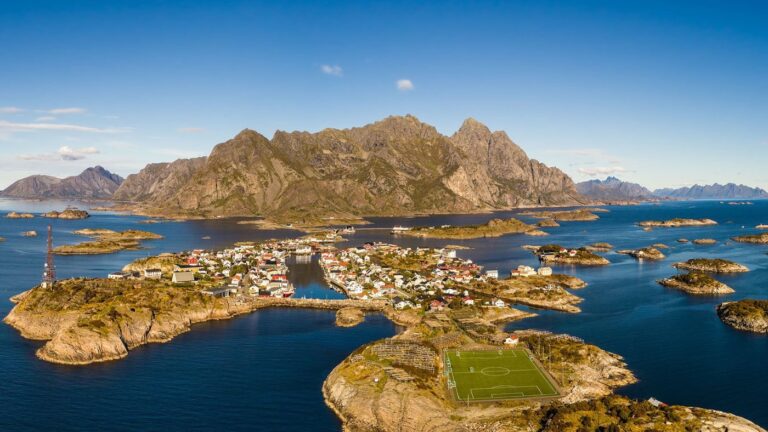
You have probably seen it online: a vivid green rectangle of artificial turf surrounded by jagged rocks, wooden fish-drying racks and the cold waters of the Norwegian Sea.
Beyond it lies the compact fishing village of Henningsvær, backed by some of Lofoten’s most dramatic mountains.
Seen from above, the pitch looks almost impossible. It appears to have been squeezed onto the last available piece of land at the edge of the world.
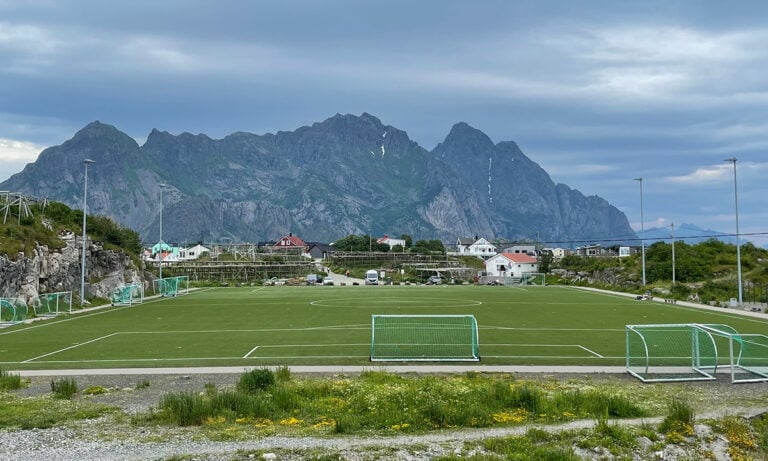
At ground level, however, Henningsvær Stadion is a much more modest place. It's certainly not one of Norway's most impressive stadiums in the traditional sense.
There are no grandstands, no turnstiles and no professional football club. It is simply a municipal sports field serving a small island community. That contrast is precisely what makes it so interesting.
Henningsvær’s Global Landmark
For generations, the football pitch was primarily a place for local children to train and play.
Its international fame arrived much later, as drones and social media gave photographers the ability to reveal the extraordinary shape of the surrounding landscape.
From the air, the pitch is framed by bare rock, water and rows of wooden racks used for drying cod. The village appears behind it, spread across several small islands connected by bridges.
The resulting images have appeared on football websites, travel programmes and social media accounts around the world. It is frequently described as one of the most beautiful football grounds anywhere.
Yet the photographs also disguise something important: the pitch only looks truly spectacular from above.
Visitors expecting a conventional stadium or a sweeping viewpoint from the roadside may be disappointed. On the ground, the surrounding rocks block much of the wider perspective. You can admire the location, but you cannot recreate the famous photograph without taking to the air.
That has brought its own problems. Visit Lofoten acknowledges that drone activity around the pitch has become excessive and asks visitors to respect residents as well as Norway’s aviation regulations.
Introducing Henningsvær
The football pitch lies at the southern end of Henningsvær, one of the best-known fishing villages in the Lofoten Islands.
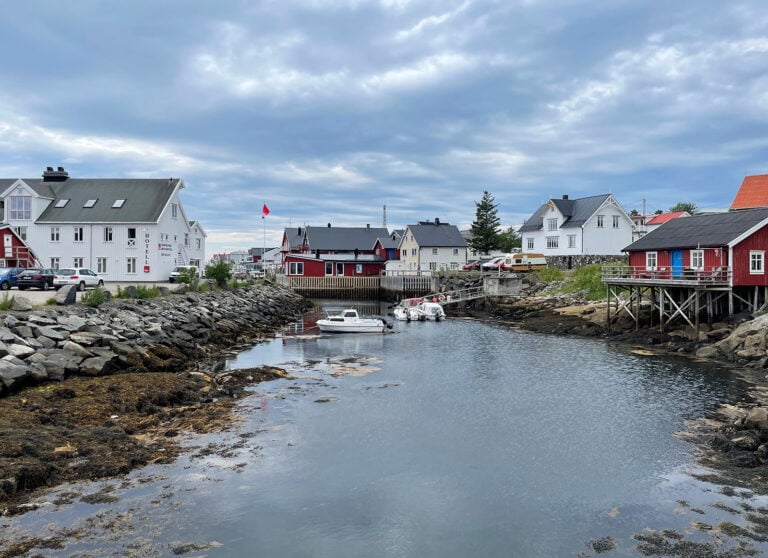
Around 500 people live permanently in the village, which is built across the islands of Heimøya and Hellandsøya. Despite its small population, Henningsvær can feel remarkably lively, especially during the summer.
Fishing remains an important part of local life. During the winter cod season, boats return to the harbour with their catches while thousands of fish are hung from wooden racks to dry in the Arctic air.
Tourism has transformed the village too. Its narrow streets now contain cafés, restaurants, independent shops, accommodation and several galleries.
Henningsvær has developed into one of Lofoten’s most important cultural centres. Among its best-known attractions is KaviarFactory, a contemporary art gallery established inside a former caviar factory. The village is also home to traditional crafts, glassmaking, jewellery and a strong community of artists and musicians.
Outdoor enthusiasts are equally well served. Henningsvær is an important base for rock climbing in Lofoten, while kayaking, snorkelling, diving and boat trips offer different ways to explore the surrounding skerries.
In other words, the football pitch may bring many people here, but it should not be the only thing they see.
Walking to Henningsvær Stadion
The best way to reach the football pitch is on foot from the centre of Henningsvær.
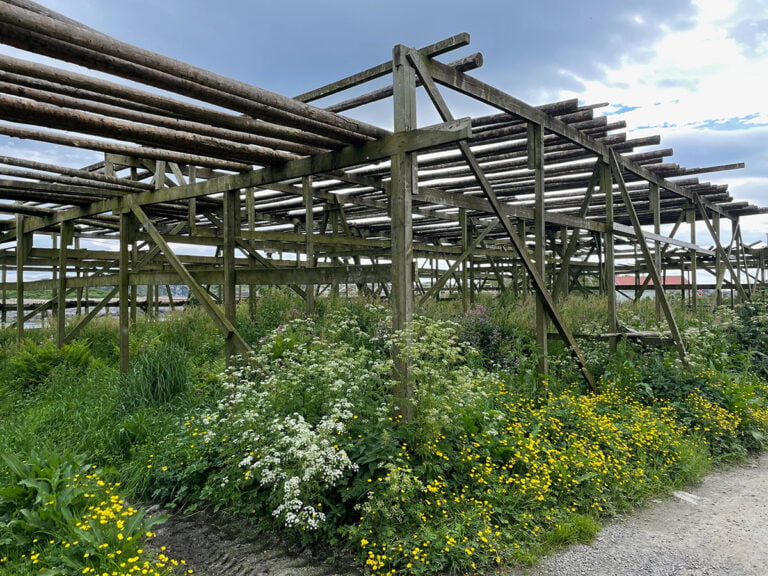
The walk takes you past the harbour, traditional buildings and rows of wooden fish-drying racks. Depending on the season, the racks may be empty or filled with cod slowly drying in the open air. It is certainly not a typical walk to a football ground.
Eventually, the village begins to thin out and the artificial turf appears between the rocks at the southern end of Hellandsøya.
The first impression is likely to be surprise at how ordinary the facility appears. There are floodlights, a small clubhouse and several sets of goals, but no stands or formal spectator areas.
The surrounding rock formations provide a few natural elevated positions, although none offers the famous aerial perspective.
A Community Sports Ground
Henningsvær Stadion is owned and operated by Vågan municipality, which maintains artificial football pitches in Henningsvær, Kabelvåg and Svolvær.
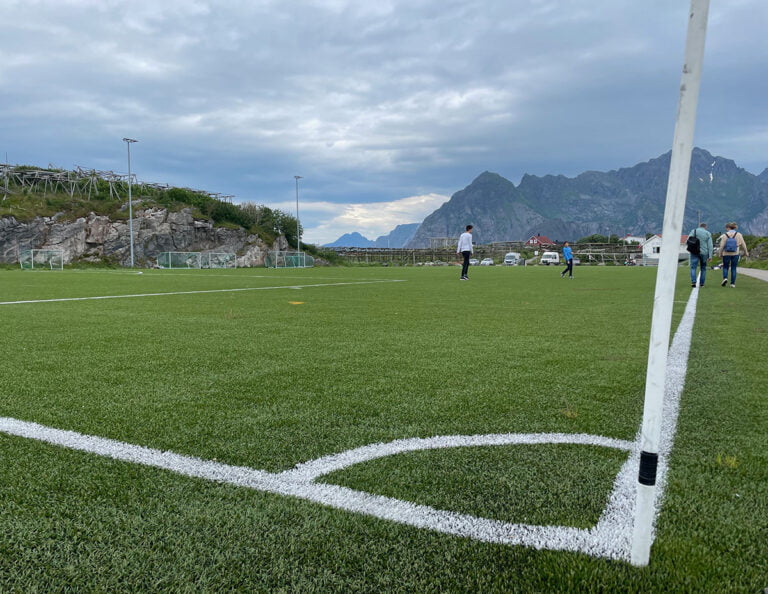
An artificial surface is hardly unusual in Northern Norway. The climate and short growing season make natural grass difficult and expensive to maintain, even at some of the country’s professional grounds.
The pitch has long been associated with Henningsvær Idrettslag, the village sports club. The Norwegian Football Federation lists the club as having been founded in 1946, although it currently has no registered senior, youth or children’s teams competing in official football.
That does not mean the ground has lost its community role. It remains a local sports facility and has hosted children’s tournaments, training sessions, school activities and private events.
On my summer visit, volunteers from the sports club were operating a simple kiosk inside the clubhouse. Coffee, soft drinks and snacks were available, while a steady stream of curious visitors wandered down to see the pitch.
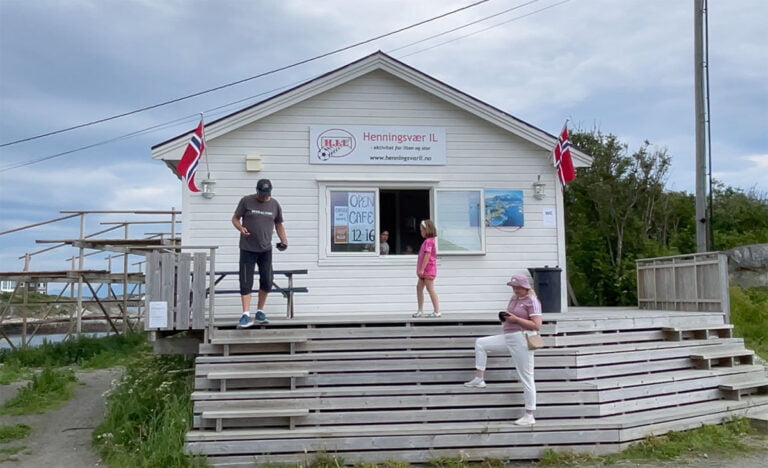
That kind of informal operation cannot be guaranteed, so visitors should not expect a permanent café, museum or organised tour. This is a community football ground rather than a conventional tourist attraction.
Football Beneath the Midnight Sun
Although the pitch has floodlights, they are not always necessary during the height of summer.
Lofoten’s midnight sun season generally lasts from late May until the middle of July, although the exact dates and visibility vary according to location and the surrounding mountains.
During this period, evening kick-offs can take place in full daylight. Even outside the official midnight sun season, the long summer evenings create plenty of opportunities for football.
Winter offers an entirely different experience. Snow may cover the artificial surface, storms can sweep across the exposed island and the sun remains below the horizon for several weeks.
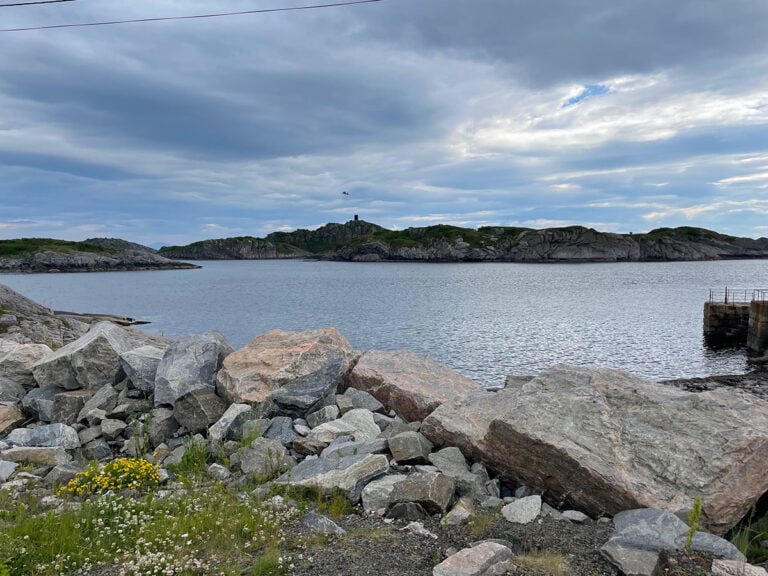
The pitch may be less green, but the combination of snow, blue twilight and the possibility of the northern lights can make Henningsvær every bit as atmospheric.
Visiting the Football Pitch Responsibly
Henningsvær is a living community rather than an outdoor film set.
The roads and streets are narrow, and parking has become a major challenge during the busiest months. Visitors arriving by car should use marked public car parks and explore the village on foot. Street parking is generally prohibited unless a space is specifically signposted.
The same consideration applies at the football ground. Do not interrupt training, organised activities or maintenance work. Respect any gates or signs indicating that the pitch is closed, and remember that nearby buildings and boats belong to local residents.
Drone pilots must also follow Norwegian regulations. Flights must generally remain below 120 metres, keep a safe distance from other people and respect privacy. Restrictions can vary, so pilots should check the official drone map before flying.
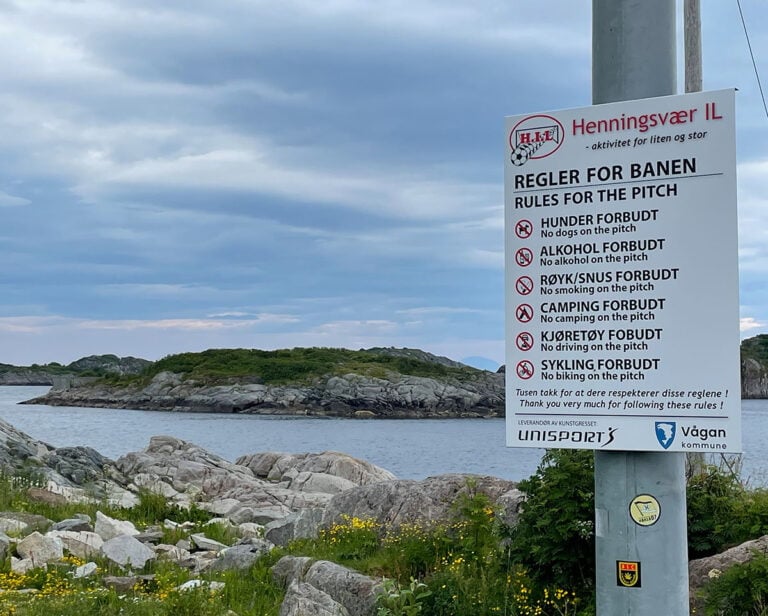
Even when a flight is technically permitted, that does not mean it will be welcomed. Constant drone noise can be intrusive for people who live beside one of Norway’s most photographed locations.
Is It Worth Visiting?
Henningsvær Stadion is unlikely to occupy more than a small part of your visit.
There is no need to spend hours at the pitch, and football fans should not arrive expecting a major stadium experience. Much of its fame comes from a perspective that is impossible to appreciate fully from the ground. Even so, the walk is worthwhile.
The combination of an ordinary community football pitch and an extraordinary Arctic setting says a great deal about life in Lofoten. Space is limited, the weather is demanding and the sea is never far away, yet there is still room for children to meet and play football.
Bring a ball if you like, but be prepared to wait if the locals are using the pitch. After all, it may be one of the world’s most photographed football grounds, but it belongs to Henningsvær first.