
From ancient traditions to modern political influence, Sámi culture plays a central role in Northern Norway. Here’s what you should know about the history, identity, and resilience of the Sámi people.
The Sámi people are the Indigenous population of northern Scandinavia, with a homeland (known as Sápmi) that stretches across northern Norway, Sweden, Finland, and into Russia’s Kola Peninsula.
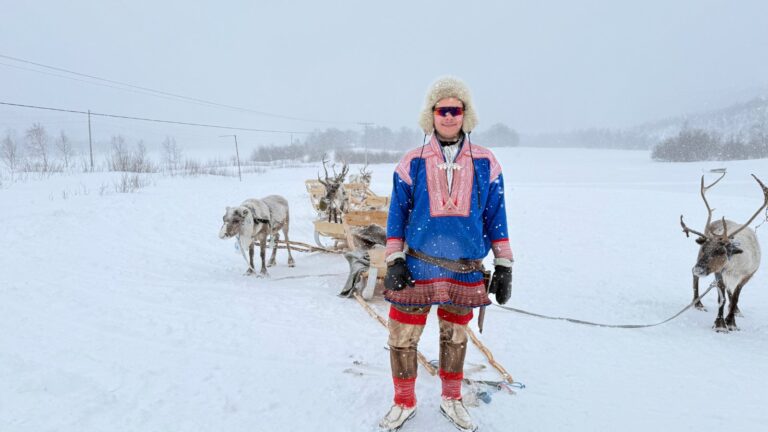
Norway is home to the largest Sámi population today, and elements of Sámi heritage can be seen throughout the north, from the bilingual road signs in Troms and Finnmark to the reindeer herding districts surrounding Kautokeino and Karasjok.
On a recent visit to the vast Finnmark county, I visited a Sámi family to learn more about the history and culture. I made a video about that visit, which if you're interested, you can watch on Life in Norway's YouTube channel.
Whether you’re travelling in the Arctic or simply curious about life in northern Norway, understanding the Sámi story adds enormous depth to your experience. Here are ten facts that help explain Sámi history, culture, and the realities of modern Sámi life.
1. The Sámi Have Lived in Northern Scandinavia for Thousands of Years
Archaeological evidence shows that communities of Sámi people have lived across northern Scandinavia for several millennia, long before the formation of the modern states of Norway, Sweden and Finland.
Finds of tools, settlement sites and ancient migration routes all point to a deep, continuous connection with the land. This long history is one reason the Sámi are recognised as Europe’s Indigenous people.
Sápmi, their homeland, isn’t defined by political borders but by landscape, language, tradition and cultural continuity. It's an identity shaped by mountains, coastlines, reindeer migrations and the rhythms of the Arctic environment.
2. Reindeer Herding Is Important, But Not All Sámi Are Herders
Reindeer husbandry is one of the most recognisable aspects of Sámi culture, yet it involves only a minority of Sámi today. Historically, many Sámi were coastal fishers, inland farmers, craftspeople, traders or a mixture of all these.
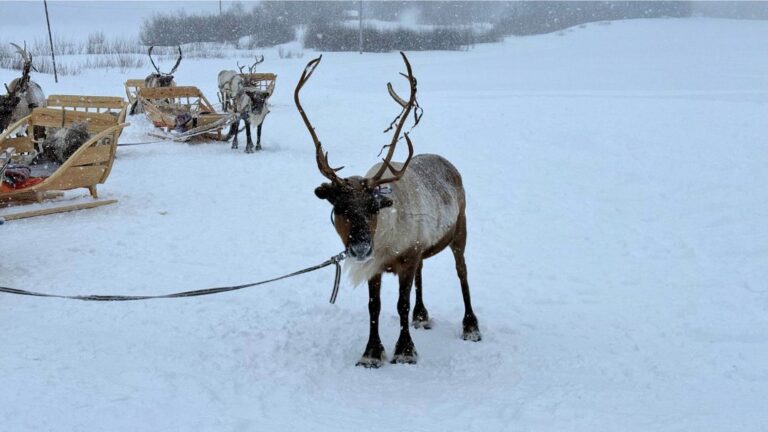
There are several distinct Sámi identities, including mountain Sámi, forest Sámi, and coastal Sámi, each with its own history and relationship to the land.
3. Reindeer Herding Has Special Legal Protection
In much of Northern Norway, the right to practice reindeer herding is reserved for Sámi who belong to designated herding siidas (family or community units). This right is protected by Norwegian law and reflects the deep cultural, economic, and historical significance of reindeer husbandry.
Herders follow traditional migration routes shaped by the seasons, and while the work now involves drones, snowmobiles and GPS collars, the principles are rooted in knowledge passed down through generations.
4. Sámi Languages Are Diverse and Distinct from Norwegian
There is no single Sámi language. In Norway, three Sámi languages are actively used today:
- Northern Sámi
- Lule Sámi
- Southern Sámi
These languages belong to the Finno-Ugric family (related to Finnish and Estonian) rather than the Germanic family that includes Norwegian. Each language has its own grammar, sounds, literature, and dialects.
Bilingual road signs in northern municipalities highlight the commitment to keeping Sámi languages visible and alive.
5. The Sámi Parliament Gives the Sámi a Political Voice
The Norwegian Sámi Parliament (Sámediggi) was established in 1989 as a direct result of growing Sámi political mobilisation and the wider recognition of Sámi rights following the Alta conflict. Based in Karasjok, the parliament serves as a democratically elected body that represents Sámi interests at the national level.
Unlike a full legislative parliament, Sámediggi doesn’t pass laws. Instead, it functions as a consultative and advisory authority, ensuring that Sámi perspectives are considered in state policy and decision-making.
Crucially, the Norwegian government is required to consult the Sámi Parliament on matters that may affect Sámi people, especially in areas involving land, resources, culture, and language.
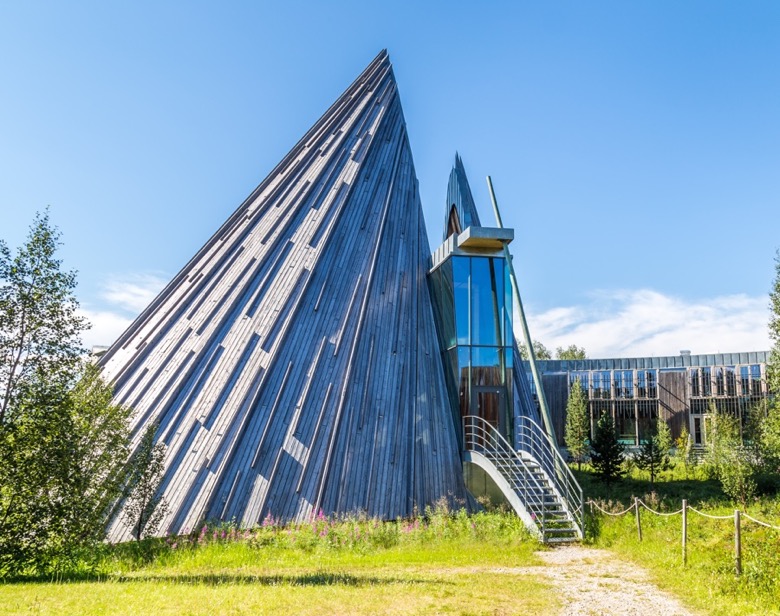
Elections to the Sámi Parliament take place every four years. Anyone in Norway who self-identifies as Sámi and meets certain criteria, such as having a Sámi-speaking grandparent, may register to vote.
Norway is not alone in this system. Sámi parliaments also operate in Sweden and Finland, and the three collaborate on cross-border issues through a joint body known as the Sámi Parliamentary Council. This cooperation reflects the reality that Sápmi stretches across national borders.
6. Norway’s Assimilation Policies Left a Lasting Mark
From the mid-1800s until well into the 20th century, the Norwegian government pursued a wide-ranging campaign of “Norwegianization.” These policies aimed to assimilate Sámi people and other minorities into the Norwegian majority culture.
Teachers were encouraged, and at times required, to suppress Sámi languages in the classroom. Over time, the message was clear: speaking Sámi was discouraged or outright banned.
Land ownership rules also reinforced this trend. In some areas, people who wanted to buy or keep land were pressured to take Norwegian names and demonstrate Norwegian language ability.
These measures contributed to a wider social atmosphere in which Sámi identity was considered something to hide, not something to celebrate.
As a result, many Sámi families made the painful decision to stop speaking Sámi at home to protect their children from discrimination or to help them “fit in.” This created a generational break in language and culture that is still being repaired today.
Modern revitalisation efforts from bilingual education to cultural festivals are part of a broader attempt to heal the wounds left by a century of assimilation.
7. The Alta Conflict Helped Transform Sámi Rights
The protest movement surrounding the Alta–Kautokeino River hydroelectric project in the late 1970s and early 1980s became one of the most significant turning points in Sámi political history.
The Norwegian government’s plan to build a large dam in the Alta Canyon threatened Sámi grazing lands, local communities, and traditional livelihoods. It also symbolised deeper frustrations about a long history of decisions being made without Sámi involvement.
What began as a local dispute quickly grew into a national and international issue. Sámi activists, environmentalists and supporters organised marches, civil disobedience campaigns, and hunger strikes in Oslo.
Images of police removing protesters from the construction site made headlines and sparked debate far beyond northern Norway. Although the dam was ultimately built, the political impact was profound.
The Alta conflict forced the Norwegian government to acknowledge that Sámi rights needed stronger protection, resulting in the creation of the Sámi Rights Committee, and ultimately the Sámi Parliament in 1989.
8. ‘Duodji' Crafts Are Rich in Meaning
Duodji, the traditional Sámi craft tradition, covers everything from leatherwork and textiles to carved wooden cups, knives, jewellery and practical everyday tools.
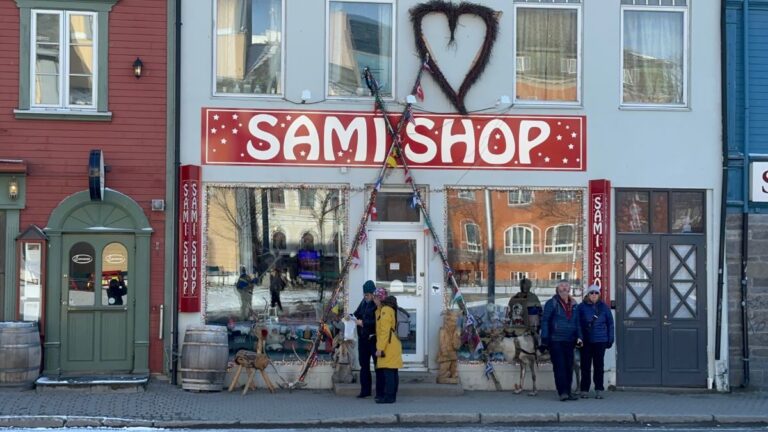
These items carry layers of meaning, reflecting regional styles, family traditions and the Sámi relationship with natural materials such as reindeer antler, birch and leather.
Duodji has always blended function and beauty, with designs shaped by life in the Arctic.
Today, many Sámi artisans continue the craft using time-honoured techniques while also experimenting with new materials and modern aesthetics, ensuring that duodji remains a living and evolving cultural expression.
9. The Gákti Is a Living Cultural Garment
The traditional Sámi outfit, known as gákti, varies in colour and design from region to region. Details can indicate where a person comes from, and in some cases, family affiliations or special occasions.
The gákti is worn at cultural festivals, weddings, christenings, funerals and political events. It is a symbol of identity and pride, not a costume.
10. Sámi Culture Is Experiencing a Quiet Revival
Sámi culture is far from frozen in time. Across northern Norway you’ll find a vibrant mix of tradition and innovation, from contemporary Sámi musicians and a renewed interest in joik to a growing body of Sámi film, literature and TV.
Festivals such as Riddu Riđđu and the winter markets in Kautokeino and Karasjok remain cultural cornerstones, while younger generations increasingly reclaim their languages and identity.
Sámi culture also took centre stage during Bodø 2024, when the European Capital of Culture showcased Sámi art and storytelling to international audiences. Despite ongoing challenges, Sámi culture continues to evolve, adapt and flourish.


I know you are a travel writer but the article you linked to on how Norway is threatening to take Sami land for wind turbines really touched me.
The same is happening in the US — for the same reason — energy. Both are energy exporters so really. With platforms such as yours, we tourists need to be educated on the politics of the Sami experience, not just what we can take from them, but how we can support them and their culture. I’ve signed the petition but I wish I could tell the author she touched me.
The Sami museum in kirkenes is outstanding in expressing the Sami culture; also the unfairness of the division of Lapland with national borders. I found it very moving.
Hi David,
Thank you for your fabulous article about the same people. As I am a same myself, I enjoyed the ‘read’ very much. I’m from Varanger fjord and I like to do ‘joik’ing.
Thank you again!