
Stavanger is a cultural melting pot of trendy bars, international restaurants and a surprisingly rich museum scene. Here’s a detailed guide to the best museums in Stavanger, updated for today’s visitor.
Stavanger’s position on Norway’s southwest coast means it sees more than its fair share of rain. With well over 200 wet days a year, you’ll almost certainly encounter a shower at some point during your stay.
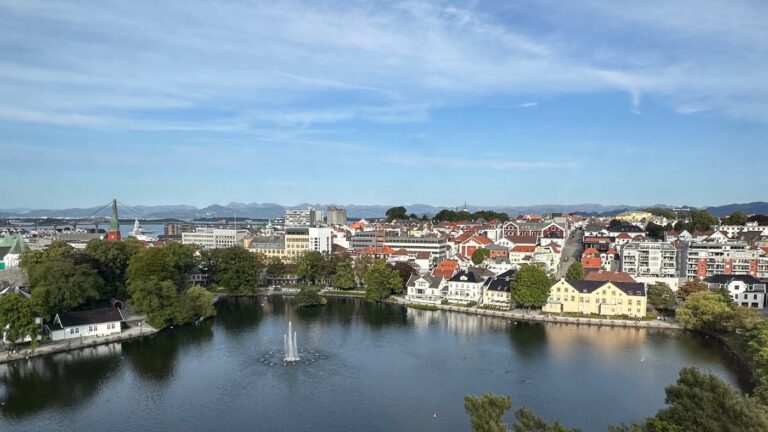
The good news is that this compact city is exceptionally well equipped for indoor exploration. There are so many things to do in Stavanger, and when it comes to museums specifically, the city punches far above its weight.
From world-class exhibitions on Norway’s oil industry to intimate, atmospheric heritage sites in Gamle Stavanger, the city offers a broad and often deeply personal look at the forces that shaped both the region and the country.
Whether you’re travelling with family, interested in Viking history, or simply looking to understand modern Norway a little better, there’s something here for you. Let’s take a closer look.
Norwegian Petroleum Museum
One of Stavanger’s most distinctive buildings sits right on the waterfront, designed to resemble offshore oil platforms. Inside, the Norwegian Petroleum Museum tells the story of how Norway became one of the world’s leading energy producers.
Everything changed in 1969 with the discovery of oil at the Ekofisk field. That moment transformed Stavanger from a relatively quiet coastal town into the centre of Norway’s oil industry. This museum brings that story to life in an engaging, accessible way.
Exhibitions go far beyond timelines and text panels. You’ll find interactive installations, full-scale models of oil platforms, and detailed explanations of how drilling works beneath the seabed.
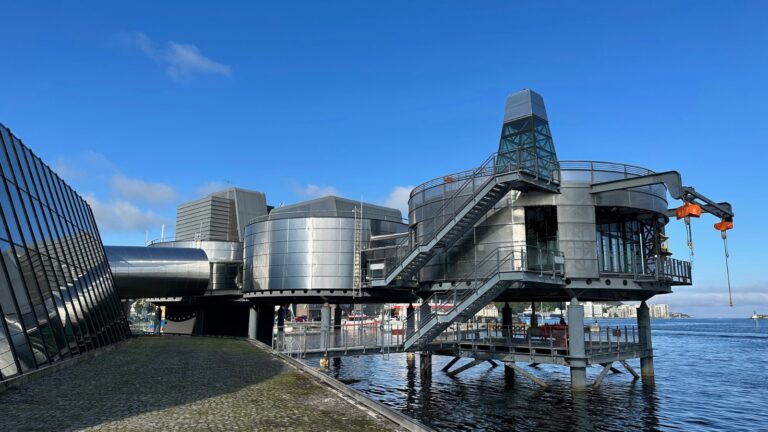
There’s also a strong focus on the human side of the industry, including what life is like for workers offshore.
It’s particularly good for families, with hands-on exhibits designed to keep younger visitors engaged. Immediately outside the museum, the playground features colourful parts recycled from the oil and gas industry.
Stavanger Maritime Museum
Housed in beautifully preserved 18th and 19th-century warehouses along the harbour, the Stavanger Maritime Museum offers a quieter, more atmospheric experience.
Step inside and you’re immediately transported back to a time when herring fishing and shipping dominated the local economy. The museum traces Stavanger’s maritime history through ship models, photographs, tools, and reconstructed interiors.
One of the highlights is the recreated office of a shipping company, complete with period details that give a real sense of how business was conducted in the past. Elsewhere, exhibitions explore everything from sail-powered trade to the transition into the oil era.
The setting itself is part of the appeal. The creaking wooden floors and narrow staircases add to the sense of stepping back in time.
Norwegian Canning Museum
Located in the heart of Gamle Stavanger, the Norwegian Canning Museum tells the story of an industry that once defined the city.
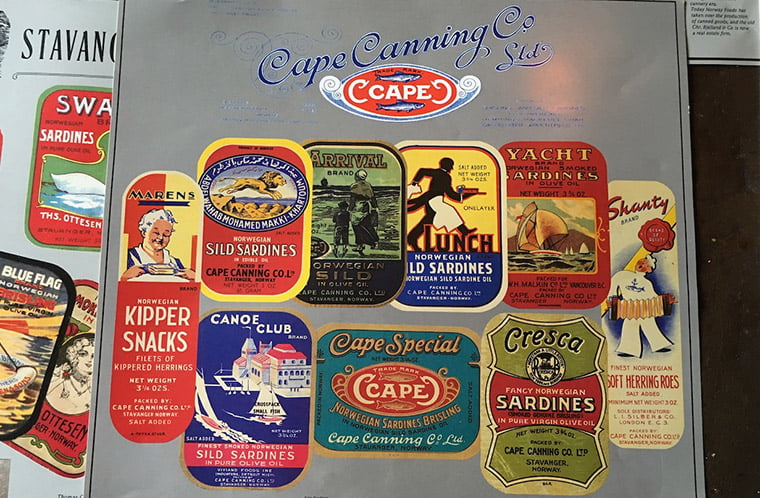
At its peak in the late 19th and early 20th centuries, Stavanger was known as the “canning capital” of Norway. Sardines and other fish products were exported around the world, and the factories employed a significant portion of the local population.
Today, the museum recreates an authentic canning factory environment. You can follow the entire process, from preparing fresh fish to sealing tins, while also learning about the often tough working conditions faced by employees.
After a long period of closure for renovation, the museum has now reopened with updated exhibitions, making it more engaging than ever. It remains one of the most unique museums in Norway.
Museum of Archaeology, University of Stavanger
For a deeper dive into the region’s past, the Museum of Archaeology offers a fascinating journey spanning more than 10,000 years.
Run by the University of Stavanger, the museum combines academic research with accessible storytelling. Exhibitions cover everything from the first human settlements in the region to the Viking Age and beyond.
You’ll see a wide range of artefacts discovered in Rogaland, including tools, jewellery, burial items, and everyday objects that help paint a picture of life in prehistoric Norway.

A particular highlight is the focus on Viking-era discoveries, including burial finds featuring swords, buckles, and decorative items. These displays provide a tangible connection to the region’s Norse heritage.
Viking House Stavanger
If traditional museums aren’t quite your thing, Viking House offers a more immersive take on history.
Using virtual reality technology, this experience places you directly into the Viking Age. Instead of viewing artefacts in glass cases, you’re transported into reconstructed environments where stories unfold around you.
One of the key narratives revisits the Battle of Hafrsfjord in 872, often considered a defining moment in the unification of Norway under Harald Fairhair.
The main VR experience lasts around 25 minutes and is available in several languages, making it an accessible option for international visitors. It’s a particularly good choice if you’re travelling with teenagers or simply want something a bit different.
Stavanger Museum
Stavanger Museum is less a single museum and more a collection of experiences under one roof.
Founded in 1893, it focuses on both cultural history and natural science. Exhibitions explore the development of Stavanger as a city alongside the region’s biodiversity, offering a broader context for everything you’ll see elsewhere.
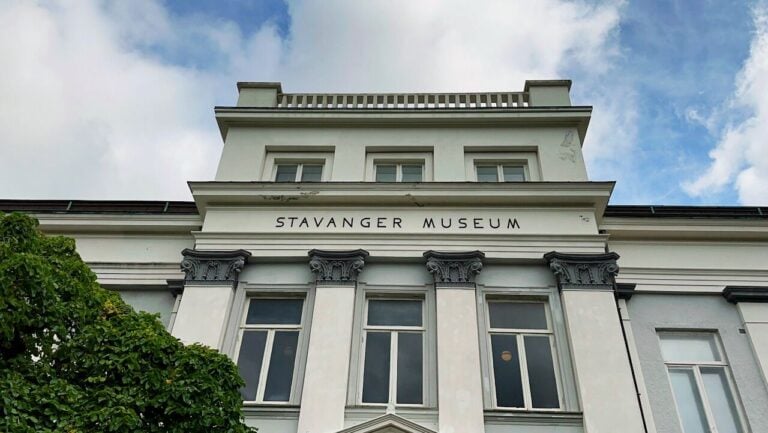
Within the same complex, you’ll also find the Norwegian Children’s Museum, which is ideal for younger visitors, along with specialised collections such as the Bird Ringing Centre.
The building itself has evolved over time, with several extensions and redesigns. While it may not have the instant visual impact of some newer museums, the breadth of content makes it well worth a visit.
Stavanger Art Museum
A short distance from the city centre, the Stavanger Art Museum offers a more tranquil experience beside the lake Mosvatnet.
The museum’s collection spans from the 19th century to contemporary works, with a strong emphasis on Norwegian artists. One of its standout features is the extensive collection of paintings by Lars Hertervig, a Stavanger-born artist known for his evocative landscapes.
His work, often linked to Norwegian Romanticism, captures both the beauty and the psychological intensity of nature in a way that still resonates today.
Even if you’re not an art enthusiast, the location alone makes this worth considering. A walk around Mosvatnet before or after your visit is one of the city’s simplest pleasures.
Stavanger’s Street Art Scene
While not a museum in the traditional sense, Stavanger’s streets form one of the most dynamic and accessible galleries in Norway.
Over the past two decades, the city has built an international reputation for street art, largely thanks to the annual Nuart Festival. Since its launch in 2001, Nuart has brought leading artists from around the world to Stavanger, transforming blank walls into bold, often thought-provoking works.

What sets Stavanger apart is how integrated this art feels. You don’t need a map or a ticket. Just walk through the city centre, the harbour area, or neighbourhoods slightly off the main tourist trail, and you’ll start to spot large-scale murals, hidden pieces, and unexpected interventions.
Some works are visually striking, designed to grab attention. Others are more political or conceptual, reflecting global issues or local perspectives. The mix keeps things interesting, even if you’ve visited before.
Areas around Øvre Holmegate, often known as the “Colour Street,” and parts of the east side of the city are particularly rich in street art. But in truth, part of the appeal is the element of surprise. You never quite know what you’ll find around the next corner.
In a city known for its museums, Stavanger proves that culture doesn’t always need four walls.
Other Museums & Cultural Highlights in Stavanger
Stavanger’s museum scene extends beyond the major institutions, with several smaller but worthwhile attractions.
The volunteer-run Flyhistorisk Museum Sola, located near Stavanger Airport, Sola, is a must for aviation enthusiasts. Set inside a former World War II hangar, it houses around 30 aircraft, ranging from civilian planes to military jets used by the Norwegian Air Force.
Another highlight is Ledaal, a beautifully preserved manor house that also serves as the royal residence in Stavanger. Built between 1799 and 1803 by merchant Gabriel Schanche Kielland, it offers a glimpse into the lives of the city’s elite during a very different era.
And while not technically a museum, a stroll through Gamle Stavanger is essential. With around 170–180 preserved wooden houses, it’s one of the best-preserved historic districts in Northern Europe. Just remember that people still live here, so be respectful as you explore.
And that just about wraps things up! What's your favourite museum in Stavanger? Please do share your thoughts and experiences down in the comments.