
Electric aviation may still sound futuristic, but Norway is already becoming one of Europe’s most interesting test beds for it. Here’s why the country’s geography, transport network, and love of electrification make it such a strong fit.
For many of us, the idea of an electric plane may still feel a little far-fetched.
Electric cars are now completely normal on Norwegian roads. Electric ferries are quietly becoming part of everyday life along the coast.
But electric aircraft? That still sounds like something from a technology conference rather than something you might one day book through SAS or Widerøe.
And yet, electric aviation is no longer just a glossy artist’s impression. In Norway, it is already being tested in real conditions, at real airports, in real weather.
Norway is not an obvious aviation market in the conventional sense. It is a country with a small population, long distances, complicated geography, harsh weather, and countless communities separated by mountains, fjords, islands, sea crossings, and winter roads. But those are precisely the reasons electric flight could work so well here.
Nobody is suggesting electric aircraft are about to replace long-haul flights to North America or Asia. The first generation of electric planes will be small, short-range aircraft.
They will not solve all of aviation’s climate problems overnight. But Norway does not need them to do everything. It needs them to do one thing well: connect short, important regional routes where flying already plays a vital role.
That is where things become interesting.
Norway’s Geography Makes Flying Essential
In many countries, a short domestic flight may feel like a luxury or a convenience. In Norway, it can be much more than that.
A journey that looks short on a map can take hours by road. Fjords cut deep inland. Mountain passes can be closed or difficult in winter. Islands and coastal communities rely on ferries.

In the north, distances are vast, settlements are scattered, and the weather can change quickly.
This is why Norway has such an extensive network of small regional airports. They are not just there for business travellers or tourists. They are part of the public transport system.
Anyone who has travelled around northern Norway, the west coast, or the Helgeland coast will understand this. A short flight can save half a day. In some cases, it can make a journey practical at all.
That is the strongest argument for electric aviation in Norway. It is not about glamour or creating a new luxury travel product. It is about making an existing transport need cleaner and quieter.
The Widerøe Factor
No discussion of electric aviation in Norway can ignore Widerøe. The regional airline Widerøe is a familiar name to anyone who travels beyond Norway’s biggest cities.
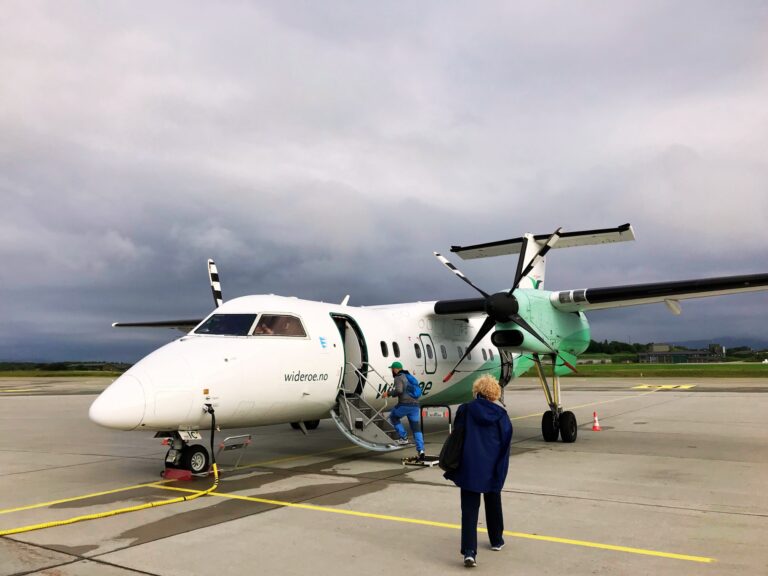
Its green and white aircraft serve a network of small airports across the country, many of them on short public-service routes that link remote communities with larger towns and cities.
These are not easy routes to operate. Many Norwegian airports have short runways, challenging weather, and limited passenger numbers. Widerøe’s Dash 8 aircraft have become closely associated with this network because they are well suited to these conditions.
That also explains why replacing them is not straightforward. Norway cannot simply switch to whatever new aircraft appears on the market.
Any future electric or hybrid-electric aircraft must be able to cope with short runways, frequent take-offs and landings, winter conditions, and the practical reality of operating in remote parts of the country.
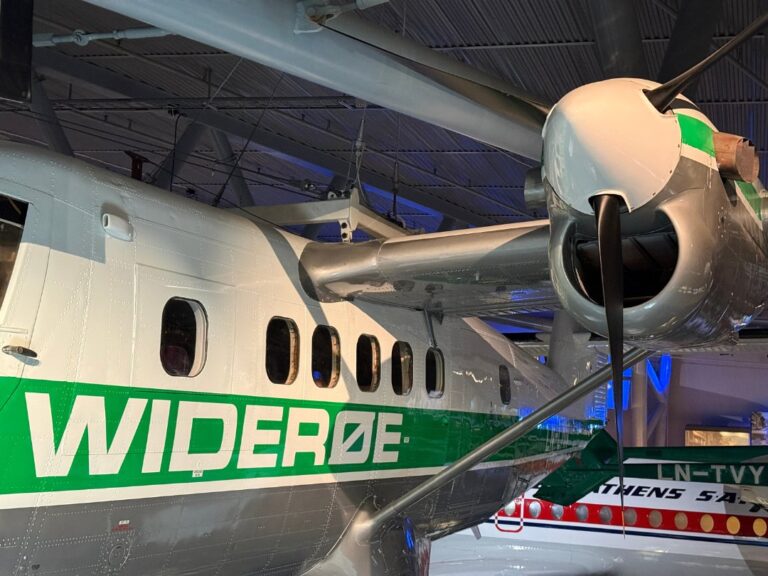
Even so, this is exactly the sort of network where the first electric aircraft might make sense. If electric aircraft are going to prove themselves as useful public transport, Norway’s regional Widerøe network is one of the clearest places to try.
A Real Test, Not Just a Promise
In early 2026, Norway completed its first full-scale electric aviation test project. A BETA Technologies ALIA electric aircraft, operated by Bristow, spent around six months flying in Norwegian conditions.
The programme included 126 flights and more than 16,000 kilometres of flying. The aircraft operated between Stavanger and Bergen, and also visited several airports of different sizes in western Norway.
That may not sound dramatic compared with a new international route launch. But in the world of electric aviation, it was significant.
The project was not just about proving that an electric aircraft could take off and land. It was about learning how electric aircraft fit into the wider aviation system. That includes charging infrastructure, airport operations, air traffic control, safety procedures, emergency preparedness, winter performance, and regulation.
In other words, the boring stuff. But the boring stuff is exactly what matters if electric aviation is ever going to move from demonstration flights to regular services.
For passengers, the important question is simple: can electric aircraft become part of everyday transport? For that to happen, the whole system around the aircraft has to work. Airports need chargers. Operators need procedures. Regulators need confidence. Pilots need experience. Routes need to be designed sensibly.
Norway’s test project was an early attempt to answer those questions in real-world conditions.
Why Stavanger to Bergen Matters
The Stavanger to Bergen test route was a smart choice. On paper, the two cities are not far apart. In reality, travelling between them by road involves a long journey along Norway’s complex west coast, with ferries, tunnels, bridges, and winding roads.
For many Norwegians, this is a familiar kind of travel problem. Two places can seem close geographically but still be awkward to connect on the ground.
That is where short-haul aviation comes in. A flight can be quick, direct, and reliable compared with a long road journey. If that flight can one day be operated with much lower emissions, the argument becomes stronger.

Western Norway is also a good place to test the practical side of things. The region offers changeable weather, coastal conditions, and airports that reflect the kind of environment in which future electric aircraft may have to operate.
Electric Planes May Need Their Own Routes
One of the interesting lessons from Norway’s recent testing is that electric aircraft may not fit perfectly into today’s aviation system.
Conventional aviation has developed around aircraft that burn fuel, climb to efficient cruising altitudes, and follow established airways. Battery-electric aircraft may work differently. They may be most efficient at lower altitudes and on more direct routes, where unnecessary detours and climbs can be avoided.
Avinor, the state-owned company that runs most of Norway’s airports, is now looking at the potential for dedicated airspace routes for electric aviation. These so-called e-routes could help electric aircraft operate more efficiently alongside conventional traffic.
This is a reminder that the transition will not be as simple as swapping one aircraft for another. Electric aviation will require new thinking about airports, airspace, energy supply, and route planning.
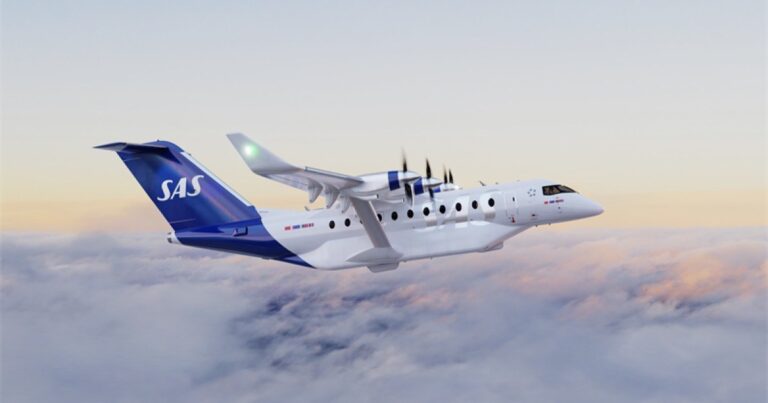
SAS Has Already Sold Out Symbolic Electric Flights
The most public-facing sign of interest in electric aviation came from SAS.
In 2023, the Scandinavian airline opened reservations for its first electric flights, planned for 2028. There were to be three inaugural flights, one each in Norway, Sweden, and Denmark, with 30 seats available on each.
The seats sold out, although the flights should be understood as symbolic reservations rather than normal scheduled services. The exact airports, routes, dates, and aircraft have yet to be confirmed.
Even so, the SAS reservations were an important moment. They showed that electric aviation had moved from an industry talking point to something travellers could imagine booking.
For Norway, the SAS project is useful as a sign of public curiosity. But the more important story is likely to be found away from the big airline headlines, in the regional network where electric aircraft could solve real transport problems.
Norway’s Advantage: Clean Electricity and Public Trust
Norway has another major advantage when it comes to electric aviation: the country already understands electrification.

Electric cars are everywhere. Charging infrastructure is part of daily life. Electric ferries are no longer unusual. Many Norwegians are familiar with the idea that transport can change quickly when technology, policy, infrastructure, and public demand line up.
This does not mean electric aircraft will be easy. Aviation is much more technically demanding than road transport. Batteries are heavy, certification is strict, and safety requirements are rightly demanding.
But public trust matters. So does political experience. Norway has already shown that it can use incentives, infrastructure, and long-term planning to change how people travel.
The electricity mix also helps. Norway’s power supply is dominated by hydropower, which makes the climate case for electrification stronger than in countries where electricity still depends heavily on fossil fuels.
That does not make electric aviation emission-free in every sense. Aircraft have to be built, batteries have to be produced, and infrastructure has to be installed. But the operational emissions case is much clearer in Norway than in many other countries.
The First Routes Could Be Small But Important
The first successful electric routes in Norway may not be the ones international visitors know best.
They may not involve Oslo, Bergen, or Tromsø at all. They could be short regional routes linking small communities to larger transport hubs.
A good example often discussed in Nordic electric aviation studies is the route between Bodø and Leknes in the Lofoten Islands. Today, this is the kind of short regional flight that makes sense in northern Norway. By road and ferry, the journey is far more complex. By air, it is quick and practical.
That is the kind of route where electric aviation could begin to prove itself. Not by transforming the whole aviation industry overnight, but by making a specific journey cleaner and quieter without removing an important connection.
This is also why the debate should not be reduced to a simple question of flying versus not flying.
In Norway, regional aviation often competes not with a simple train journey, but with long drives, ferries, difficult winter roads, or no practical alternative at all.
Reasons to Be Cautious
Electric aviation still faces serious hurdles.
The first aircraft will be small. Range will be limited. Weather matters. Charging speed matters. Battery performance in cold conditions matters. Certification can take longer than expected.
Airlines will need aircraft that are not just technically impressive, but commercially viable.
There is also a risk of overpromising. Aviation has seen many ambitious green technology claims over the years, and not all have delivered. Hydrogen, sustainable aviation fuel, hybrid aircraft, and electric aircraft may all have a role to play, but none is a magic solution.
For Norway, the most realistic path is likely to be gradual. Test flights first. Then more trials. Then perhaps limited commercial routes. Then a broader network if the technology proves itself.
That may sound slow, but it is exactly how aviation should work. Safety, reliability, and public confidence matter more than speed.
A Norwegian Solution to a Norwegian Problem
What makes electric aviation in Norway so compelling is that it is not just a climate story. It is also a geography story.
Norway has spent generations learning how to connect difficult places. Ferries, tunnels, bridges, mountain roads, coastal ships, regional airports, and small aircraft all form part of that story.
Electric aircraft could become the next chapter. Not everywhere. Not immediately. But on the right routes, they could fit surprisingly well into the way Norway already moves.
There is something very Norwegian about that. The technology may be new, but the problem is old: how do you connect scattered communities across a landscape of mountains, fjords, islands, and sea?
The answer has changed many times. Once it was coastal ships. Then roads, tunnels, ferries, and small aircraft transformed travel again.
In the future, the answer may include short electric flights over fjords, along the coast, and between remote communities that still need fast, reliable connections.
Electric aviation may not arrive first on a glamorous long-haul route between global cities. It may begin with something far more practical: a short flight in Norway that saves hours on the ground.


Butthe “incentive”is changing. And in typical norwegian, when it is all daid and done , the advantage will be gone…
it is called envy… it is alteady in the works. Just like diesel was the thing, but not anymore, now it is electric.
Molbo land