
Iceland is best known for its volcanoes, glaciers, and geothermal hot springs. But in the country’s far northwest lies a fjord region that feels surprisingly familiar to Norwegians, yet different enough to feel like a revelation.
The Westfjords are rugged, remote, and deeply scenic, offering dramatic mountains, long fjords, and a sense of space that is increasingly rare in Europe.
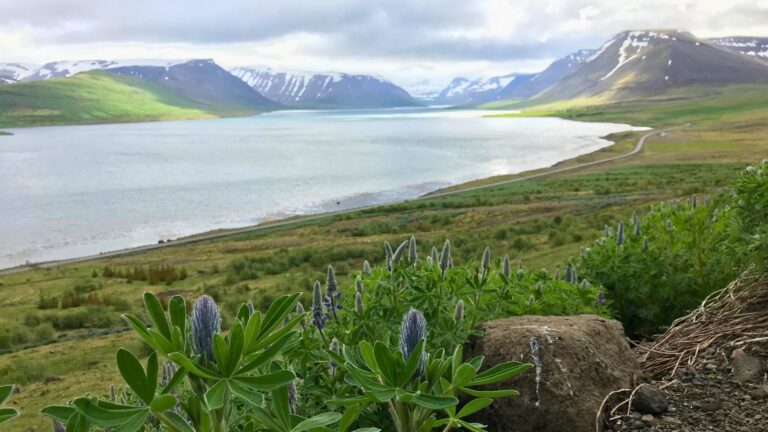
If you ever find yourself thinking you have seen all the fjords Norway has to offer, a short flight west might change your mind.
Many Norwegians head south in search of sunshine rather than west in search of wild landscapes, and that is a shame. Norway is extraordinary, of course, but Iceland offers a rawness and geological clarity that feels almost elemental.
The Westfjords, in particular, strip the landscape back to its essentials.
Icelandair has spent years promoting stopovers between North America and Europe, and it seems to be working. On this trip, I encountered more American travellers than any other nationality, even in places that felt extraordinarily remote.
My own visit was brief and work-focused, which limited how much I could explore.
Still, it was long enough to get a strong sense of what defines the Westfjords. This is not the Iceland of bubbling hot springs and crowded Golden Circle tours. Instead, it is a region shaped by mountains, fjords, and isolation.
Ísafjörður: Gateway to the Westfjords
The journey began in Ísafjörður, the largest town in the Westfjords and the region’s informal capital. To save both keystrokes and sanity, I will refer to it as Isafjordur from here on.
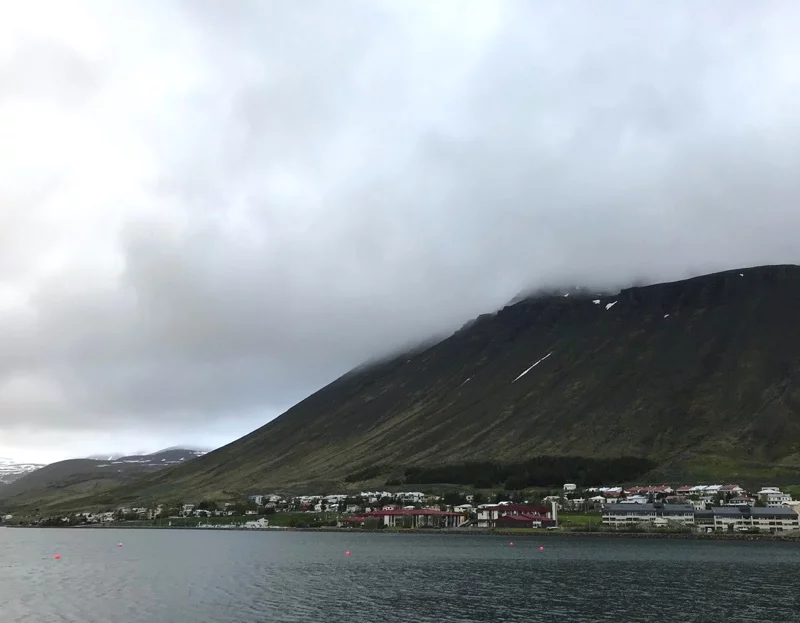
The setting is instantly striking. Nestled at the end of a narrow fjord and surrounded by steep mountains, Isafjordur immediately reminded me of small towns in Norway’s Lofoten Islands. The scale is similar, but the landscape feels barer, more exposed.
Inside the airport terminal, a small but thoughtful exhibition introduces visitors to the area’s history. Archive photographs of seaplanes line the walls, alongside artwork depicting local life and industry.
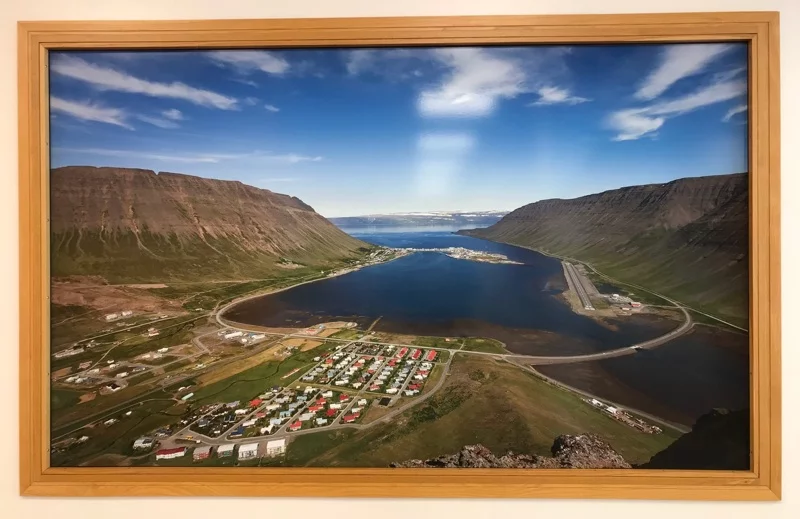
It is a clever use of a modest space and an early signal that this is a region proud of its past.
From above, the town looks almost impossibly compact. The airport runway hugs the fjord’s edge, squeezed between sea and mountain. That runway would soon become one of the most memorable parts of the trip.
Despite its size, Isafjordur functions as the hub of north-west Iceland. It has daily flights to Reykjavík, several hotels, restaurants, supermarkets, a petrol station, and even a small football ground. Everything you need is here, but nothing feels excessive.
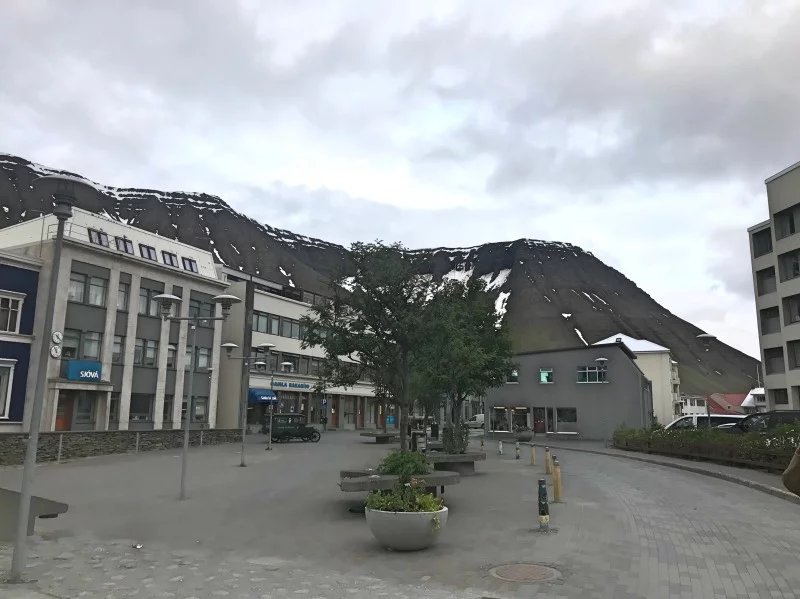
Still, Isafjordur is rarely the final destination. For most visitors, it is simply the starting point.
On the Road in the Westfjords
Once you leave town, the character of the Westfjords reveals itself quickly. The roads cling to fjord edges, snake over mountain passes, and frequently dissolve into gravel and dirt.
At first, the scenery feels comfortably familiar to anyone who knows Norway’s fjords. Then something starts to feel different. It took me a while to realise what it was.
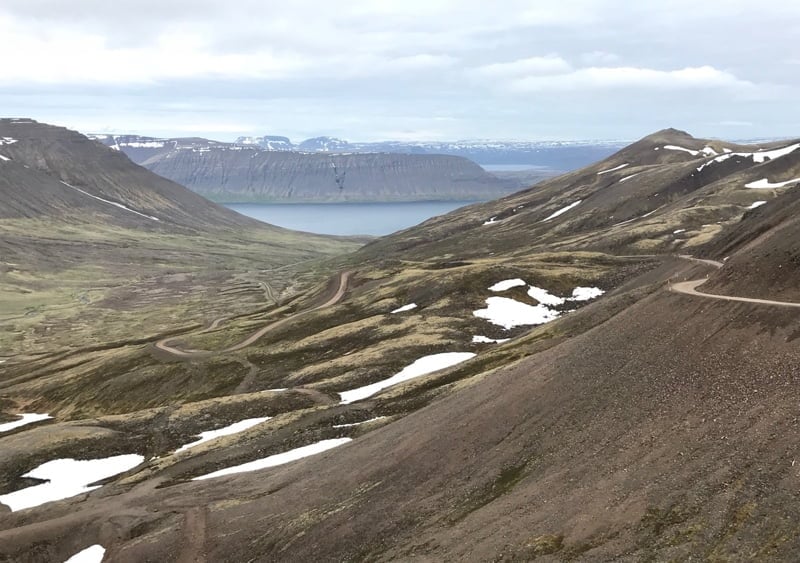
There are almost no trees.
It sounds obvious in hindsight, but the absence is striking. I only noticed it properly when trying to explain the landscape to a colleague back home.
A single isolated tree stood out so dramatically that it suddenly explained everything. The Westfjords feel more open, more exposed, and more ancient as a result.
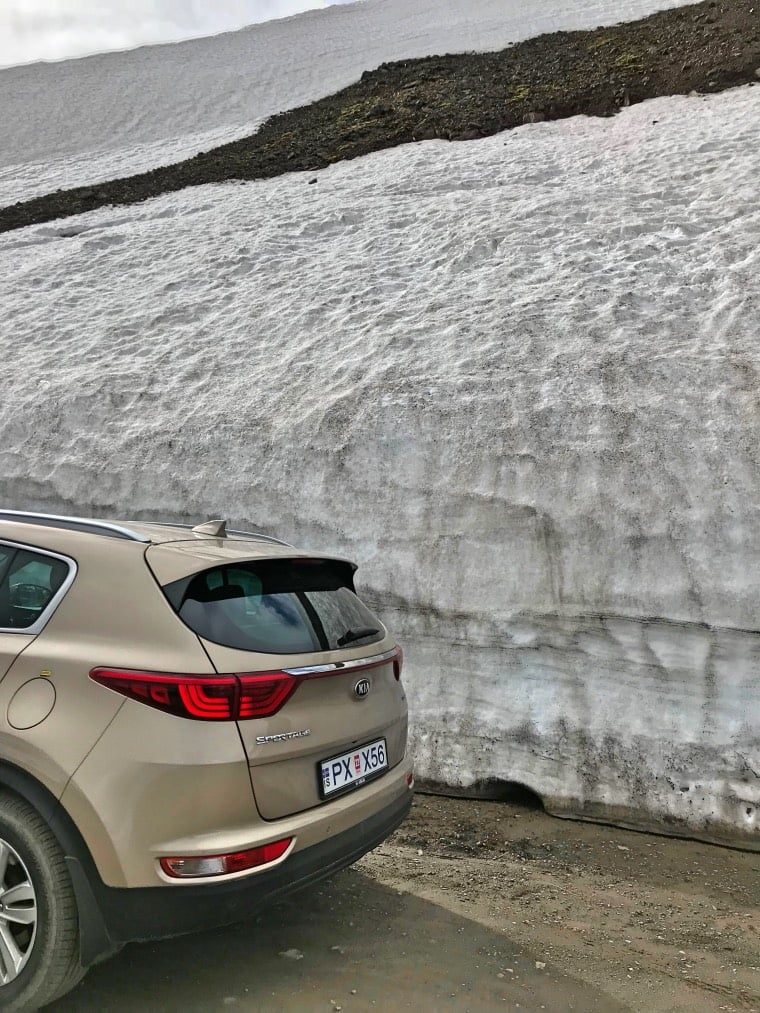
The roads themselves are part of the experience. They are rough in places, narrow, and occasionally unforgiving. At the rental car desk, the clerk offered some reassurance: “Here in Iceland, we don’t worry about scratches. You’re going to get them.”
Despite the conditions, or perhaps because of them, driving here is a joy. Every bend reveals a new fjord, a different rock formation, or a distant snow-covered ridge. Even in mid-June, patches of snow and ice linger on the mountains.

The landscape is far from monotonous. Layers of exposed rock create dramatic patterns in the mountainsides, while mosses, grasses, snow, and stone combine into a muted but beautiful colour palette.
Arnarfjörður and Hrafnseyri
Our destination was Arnarfjörður, one of the quietest fjords in the region. Human presence here is minimal. Apart from a temporary construction camp linked to a road tunnel project, there are almost no settlements.
The only permanent village is Hrafnseyri, best known as the birthplace of Jón Sigurðsson, the leading figure in Iceland’s independence movement against Danish rule.
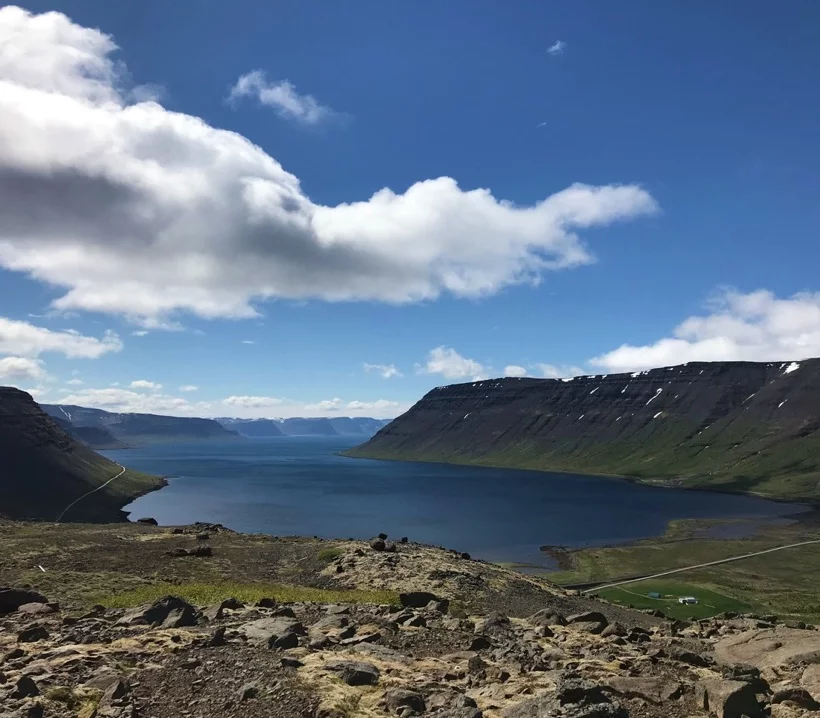
Today, the site consists of a small museum, a handful of buildings, and a campsite, all set against a backdrop of sweeping fjord scenery.
Nearby, a rough mountain road suitable only for four-wheel-drive vehicles leads to a high-altitude lake. From there, the view back across Arnarfjörður is spectacular, a wide sweep of water framed by steep, empty mountains.
Time was limited, and most of the trip was tightly scheduled. Still, our hosts insisted on one short detour, and it was impossible to argue.
Dynjandi: The Westfjords’ Most Famous Waterfall
Dynjandi is one of Iceland’s most celebrated waterfalls, and it earns that reputation easily. From the car park, it looks impressive. Up close, it is overwhelming.
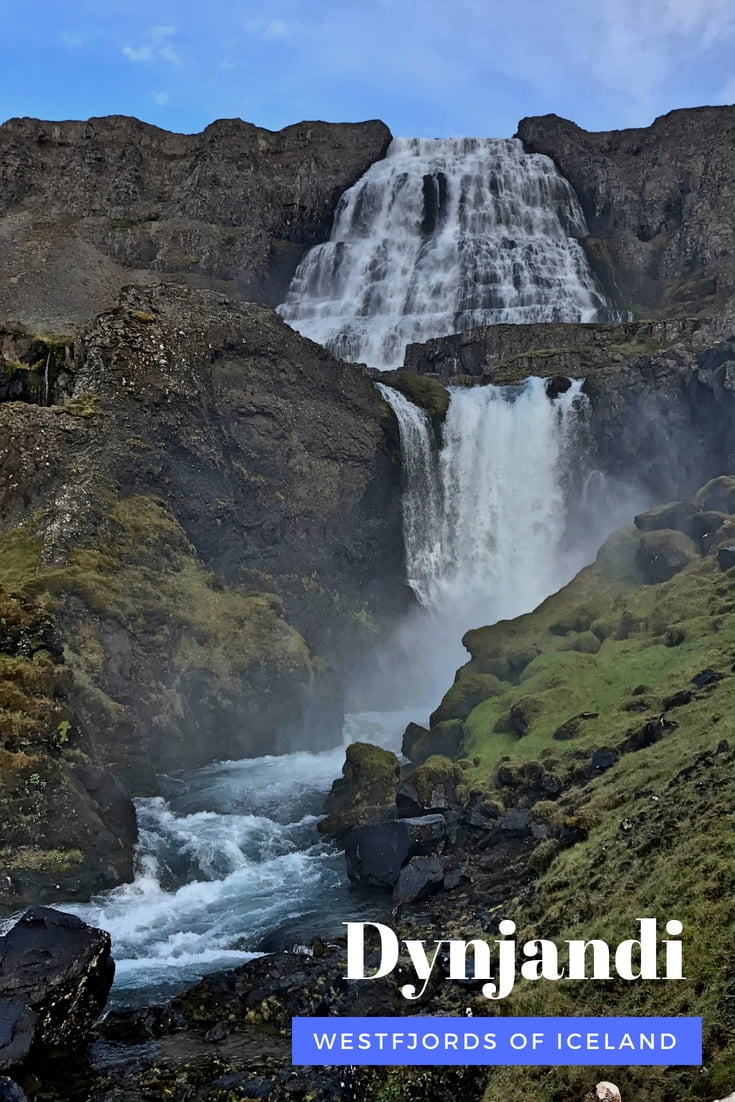
Rather than a single vertical drop, Dynjandi cascades down a broad cliff face in a series of steps, widening as it descends like a natural amphitheatre of water. Photographs struggle to capture both its scale and its power.
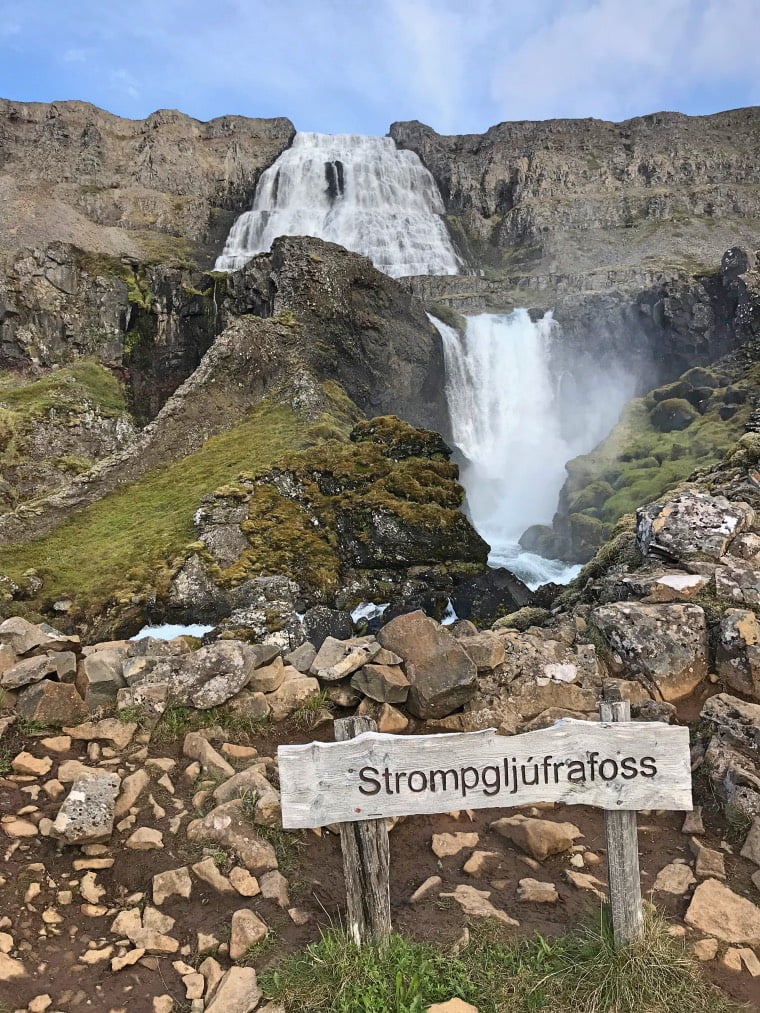
To truly appreciate it, you need to climb the path to the top of the falls. The ascent is steep and uneven, with loose stones underfoot. I lost count of the steps somewhere along the way, but it was enough to guarantee a sweat.
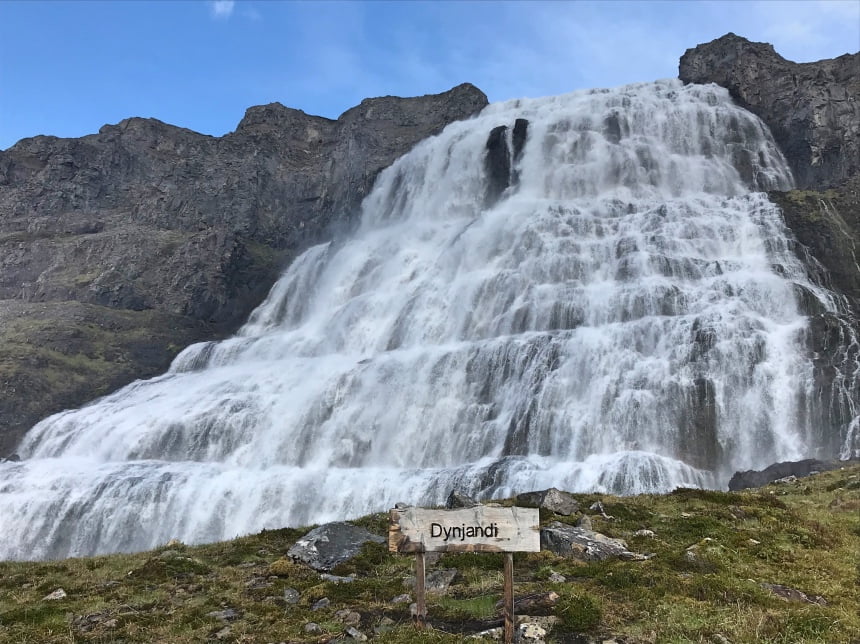
For those unwilling or unable to make the full climb, the walk is still worthwhile. Several smaller waterfalls line the path, each impressive in its own right, and the main cascade becomes more dramatic with every metre gained.
Getting There: A Flight to Remember
For all the scenery on the ground, my strongest memory of the trip may be the flight from Reykjavík to Isafjordur.
The landing is famous among pilots. The aircraft approaches low through the fjord, flying uncomfortably close to the mountainside before banking sharply in a 180-degree turn on final approach. Only small turboprop aircraft are capable of using the short runway.
Reaching the domestic airport adds another layer of complexity. Almost all international flights arrive at Keflavík, nearly 50 kilometres from Reykjavík. Domestic flights, however, depart from the much smaller airport close to the city centre.
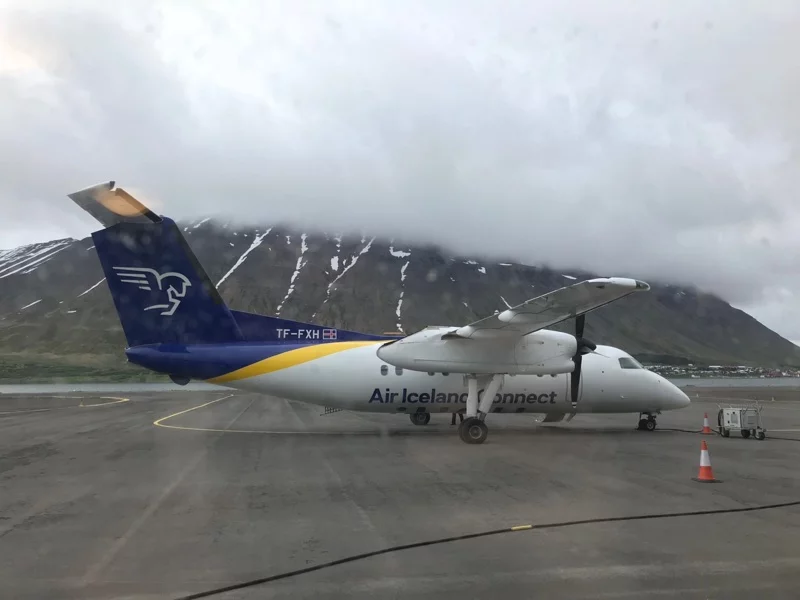
Confusingly, this airport is sometimes referred to as Reykjavík International Airport, as it also serves flights to Greenland and the Faroe Islands. For first-time visitors, the naming alone can be enough to cause frustration.
Still, minor logistical annoyances fade quickly once you are airborne.
Seeing the Westfjords on an Iceland Cruise
For travellers who want the drama of Iceland’s fjords without the challenge of driving long distances, cruising offers a scenic and surprisingly practical way to experience the Westfjords.
Ísafjörður is one of the few regular cruise ports in the region and has become an increasingly popular call on expedition-style and Northern Europe itineraries during the summer season.
Cruise lines including Norwegian Cruise Line, MSC Cruises, Holland America Line, Celebrity Cruises, Royal Caribbean, and Seabourn feature Ísafjörður on Iceland-focused routes.
These range from full circumnavigations of the island to longer voyages linking Iceland with destinations such as the Faroe Islands, Greenland, and occasionally Norway.
When ships dock in Ísafjörður, they usually berth close to the town centre, making it easy to explore on foot. Passengers can wander the historic harbour area, visit cafés and the Westfjords Heritage Museum, or join shore excursions to highlights such as Dynjandi waterfall.
For many visitors, a cruise offers an appealing way to sample the Westfjords’ wild scenery alongside other parts of Iceland, particularly when time is limited or overland travel feels daunting.
A Region Worth the Effort
The Westfjords demand more time and patience than many parts of Iceland. Distances are deceptive, roads are slow, and weather can be unpredictable. But the reward is a sense of space and solitude that is increasingly rare.
This was a short visit, and it barely scratched the surface. Even so, it left a strong impression. I only wish I had more time to explore Reykjavík, the rest of the Westfjords, and more of the island beyond. Next summer, perhaps.