
Across Norway, tens of thousands of foreign war dead lie buried far from home.
Their graves, scattered from remote Arctic valleys to city cemeteries, tell a quieter story of the Second World War, shaped not only by conflict, but by memory, responsibility and reconciliation.
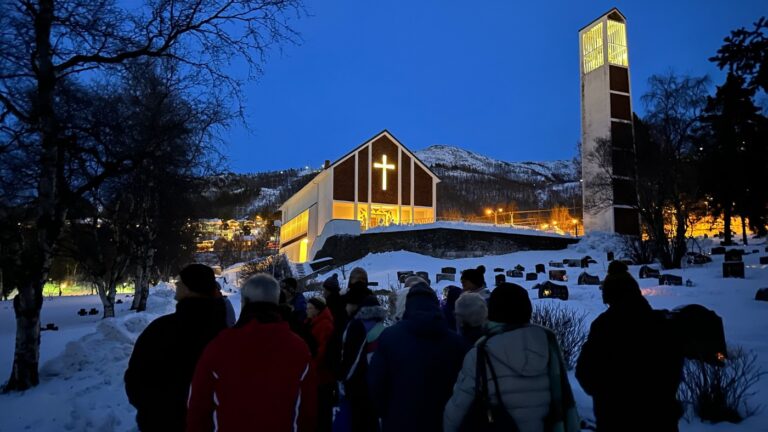
While many travellers come to Norway for its landscapes and history, few realise just how visible this legacy of the Second World War still is.
From small plots in local cemeteries to vast memorial sites in the north, these graves form part of a wider story that can still be experienced today.
A Country That Cares For the Fallen
Norway is home to 29,450 foreign war graves, a striking figure for a country of its size. What makes this particularly notable is that the Norwegian state takes full responsibility for their care.
Today, the work is overseen by the Ministry of Culture and Equality, with the Norwegian War Graves Service handling maintenance, research and documentation.
The Falstad Centre plays a key role in maintaining a national database of war graves, ensuring that names and stories are not lost to time.
This commitment extends beyond Norway’s borders too. Around 300 Norwegian war graves abroad are also maintained through international cooperation.
Soviet Prisoners And The Largest Loss Of Life
The largest group of foreign war dead in Norway comes from the former Soviet Union.
During the German occupation, around 100,000 Soviet prisoners of war were brought to Norway. Forced into brutal labour, particularly in the north, an estimated 14,000 lost their lives.
Many were buried hastily by German forces, often in mass graves or remote locations with little or no marking. After the war, Norway made a remarkable decision. In 1951, the government committed to recovering these remains and reburying them with dignity.

This led to the creation of the Tjøtta war cemeteries in Nordland, where many of the dead are now laid to rest. Others remain buried across the country, including in places like Mo i Rana and Tromsø.
One of the most tragic events linked to these prisoners was the sinking of the German-controlled ship MS Rigel in 1944. Carrying thousands of prisoners, it was attacked by Allied aircraft off the Helgeland coast.
More than 2,400 people died, making it one of the worst maritime disasters in Norwegian history. Many of the victims were later buried at Tjøtta as unknown.
German War Graves Across The Country
There are around 11,500 German war graves in Norway, now consolidated into a small number of dedicated cemeteries.
These include sites in Oslo, Trondheim, Bergen, Narvik and Saltdal. After the war, many smaller burial sites were closed, with remains moved to these central locations.
One of the most significant is the cemetery at Alfaset in Oslo, where more than 3,000 German casualties are buried. Others, such as Havstein in Trondheim, reflect the scale of German military presence across Norway during the occupation.
Maintenance of these graves is shared between Norwegian authorities and the German war graves organisation Volksbund Deutsche Kriegsgräberfürsorge.
Yugoslav And Other Prisoners Of War
Another significant group are prisoners from the former Yugoslavia. Around 2,410 Yugoslav war dead are buried in Norway, many of whom were also forced labourers under harsh conditions.
A dedicated cemetery in Saltdal serves as a central memorial, while other graves are found in Trondheim and elsewhere.
Smaller numbers of war dead from Poland, France, the Netherlands and the Nordic countries are also buried in Norway, reflecting the truly international nature of the conflict.
Commonwealth Graves In Familiar Surroundings
For visitors from the UK and other Commonwealth nations, the presence of familiar white headstones may come as a surprise.
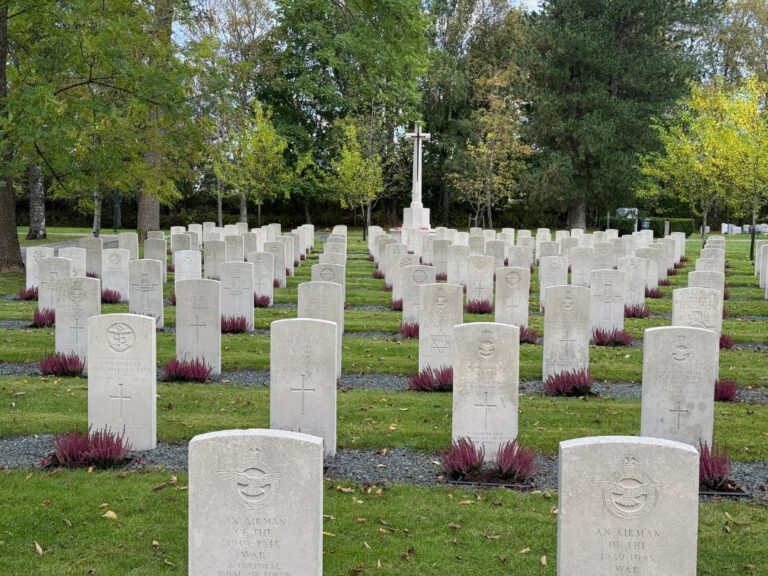
There are 1,194 Commonwealth war graves in Norway, belonging to soldiers from countries including Britain, Canada, Australia and New Zealand. Unlike some other groups, these graves are not heavily concentrated but spread across 74 cemeteries.
They are maintained by the Commonwealth War Graves Commission, with day-to-day care handled locally in Norway.
Memorials Across The Landscape
Beyond the cemeteries themselves, memorials to foreign war dead can be found across Norway, particularly in the north.
Many of these mark former burial sites where remains were later relocated. Others stand in remote areas where prisoners once lived and died.
A common inscription, agreed between Norway and the Soviet Union in the 1950s, honours those who “lost their lives in Norway in 1941–1945”. These simple words, repeated across multiple locations, reflect a shared effort to remember a difficult past.
Can You Visit These War Graves?
Many of Norway’s war graves are accessible to visitors, although they are not tourist attractions. They are quiet places of remembrance, often located within ordinary cemeteries or in remote landscapes.
One of the most compelling places to experience this history is in the northern town of Narvik.
The town’s main cemetery includes Narvik German War Cemetery, the northernmost German war cemetery in Norway, where around 1,470 German casualties are buried. Many of those interred here died during the fierce battles for Narvik in 1940, one of the earliest and most complex campaigns of the war.
What makes Narvik especially interesting is the mix of nationalities represented. Within the wider cemetery, you will also find Commonwealth war graves, including sailors from British naval ships lost in the surrounding fjords.
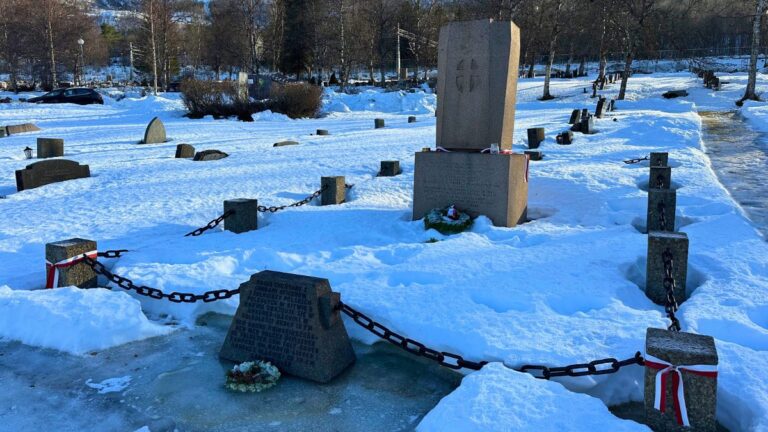
This reflects the international nature of the fighting, which involved Norwegian, British, French, Polish and German forces.
A short walk away, the Narvik War Museum provides essential context. Its exhibits explain the strategic importance of Narvik, the naval battles in Ofotfjorden, and the shifting fortunes of the Allied and German forces.
Visiting both the museum and the cemetery offers a powerful contrast between the broader story of the conflict and its human cost.
Elsewhere in Norway, similar experiences can be found, from Commonwealth graves in city cemeteries to the remote Tjøtta war cemeteries in Nordland. Each offers a different perspective on the same shared history.
If you do choose to visit, it’s worth remembering that these are not typical sightseeing stops. They are places of reflection, shaped by complex and often tragic histories that still resonate today.
What About Norwegian War Graves?
In contrast to the highly organised system for foreign war graves, Norwegian war graves are treated differently.
Most are private family graves, scattered across the country’s cemeteries. Responsibility for their upkeep usually lies with relatives, rather than the state.
However, around 10,000 Norwegians died as a result of the war, and their names are recorded in the four-volume work Våre falne, a national roll of honour.
There are also approximately 300 Norwegian war graves abroad, maintained through international agreements and organisations.
A Legacy That Still Matters
War graves are easy to overlook. Many sit quietly in the corners of local cemeteries or in remote landscapes far from tourist routes.
Yet together, they form one of the most tangible reminders of how deeply the Second World War affected Norway, not just for Norwegians, but for thousands of people from across Europe and beyond.
That Norway continues to care for these graves, decades after the war ended, says something important about how the country understands its history. Not only as a story of occupation and resistance, but as part of a wider, shared European experience.