
Was there such a thing as Viking fashion? Drawing on archaeology, textile science, and historical sources, this guide explores what people really wore during the Viking Age.
The Vikings are instantly recognisable in popular culture. Fur cloaks, leather armour, dark colours, and horned helmets dominate modern imagery. Yet almost all of this visual shorthand is wrong.
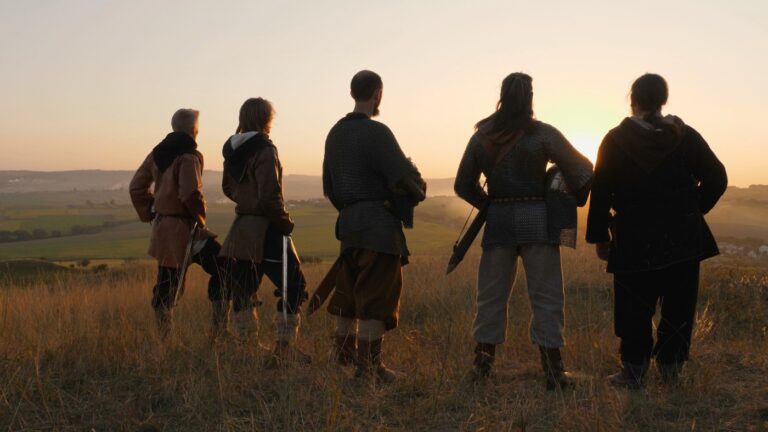
The people who lived in Scandinavia during the Viking Age (roughly AD 793–1066) wore clothing shaped by climate, materials, trade networks, and social structure.
Their garments were functional and durable, but they were also expressive. Colour, decoration, jewellery, and fine craftsmanship mattered. Clothing communicated identity, wealth, and status long before the word “fashion” existed.
Although complete garments rarely survive, enough evidence remains to reconstruct Viking clothing with surprising detail.
How Do We Know What Vikings Wore?
Understanding Viking clothing relies on a combination of archaeological finds, textile fragments, burial contexts, tools, and written descriptions.
Textiles rarely preserve well, particularly in the acidic soils of Scandinavia. When they do survive, it is often in small fragments rather than complete garments. Exceptional preservation conditions, such as waterlogged burials or sealed graves, have therefore been crucial.
Two of the most important sites are Birka, a major trading centre with numerous textile finds, and the Oseberg Ship, whose rich burial goods included woven textiles, tapestries, and clothing fragments.
Written sources such as the Icelandic sagas offer occasional descriptions of clothing, colours, and jewellery, though these texts were written later and must be treated carefully. When combined with archaeological evidence, however, they help flesh out a coherent picture.
Climate, Environment, and Daily Life
Viking clothing was shaped first and foremost by environment. Northern Europe during the early medieval period was cold, wet, and often windy. Clothing needed to insulate, shed moisture, and allow freedom of movement for farming, sailing, hunting, and craftwork.
Layering was essential. Most people wore multiple garments that could be added or removed depending on season and activity.
Durability mattered because cloth was labour-intensive to produce. Every stage, from spinning to weaving to sewing, required time and skill, making clothing a valuable possession.
Materials and Textile Production
The two most important materials in Viking clothing were wool and linen.
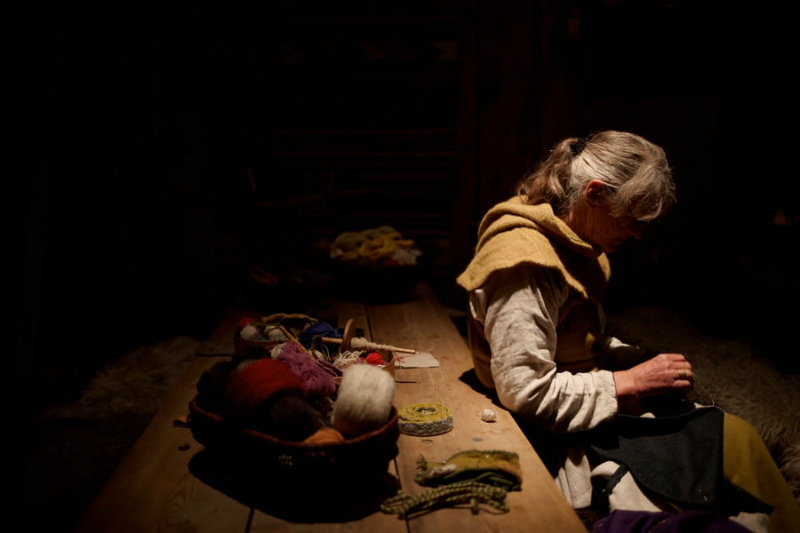
Wool was the backbone of everyday dress. It was warm even when damp, relatively durable, and well suited to the Scandinavian climate. Different sheep breeds produced fibres of varying quality, allowing for both coarse workwear and finer garments.
Linen, made from flax, was smoother and more comfortable against the skin. It required more labour to produce and was therefore often associated with undergarments or higher-status clothing.
Textiles were woven at home using upright looms, most often by women. Decorative techniques such as tablet weaving were used to create patterned trims, especially along hems, cuffs, and necklines. These details could be subtle or striking, depending on wealth and taste.
Silk existed in the Viking world but was rare and valuable. It arrived via long-distance trade routes from Byzantium and the Islamic world and was typically used as trim or decoration rather than whole garments.
Colour, Dye, and Decoration
The idea that Vikings dressed only in dull browns and greys is outdated. Archaeological evidence shows that Viking clothing could be vividly coloured.
Natural dyes produced blues, reds, yellows, greens, and purples. Blue was commonly derived from woad, while yellow came from plants such as weld. Red, particularly from imported madder root, was expensive and often associated with wealth and prestige.
Colour choice mattered. Brightly dyed garments required more resources and skill, making them visible markers of status. Patterned fabric, embroidered details, and elaborate metalwork further reinforced social distinctions.
Clothing and Social Status
Clothing functioned as a social signal in Viking society. While basic garments were broadly similar across classes, differences in fabric quality, colour intensity, decoration, and jewellery clearly marked wealth and rank.
Silver and gold brooches, imported beads, and finely woven trims were not merely decorative. They communicated access to trade networks and surplus resources. Clothing also played a role in courtship and personal reputation, particularly at gatherings, feasts, and assemblies.
What Did Viking Men Wear?
A typical Viking man wore a layered outfit designed for work, travel, and outdoor life.
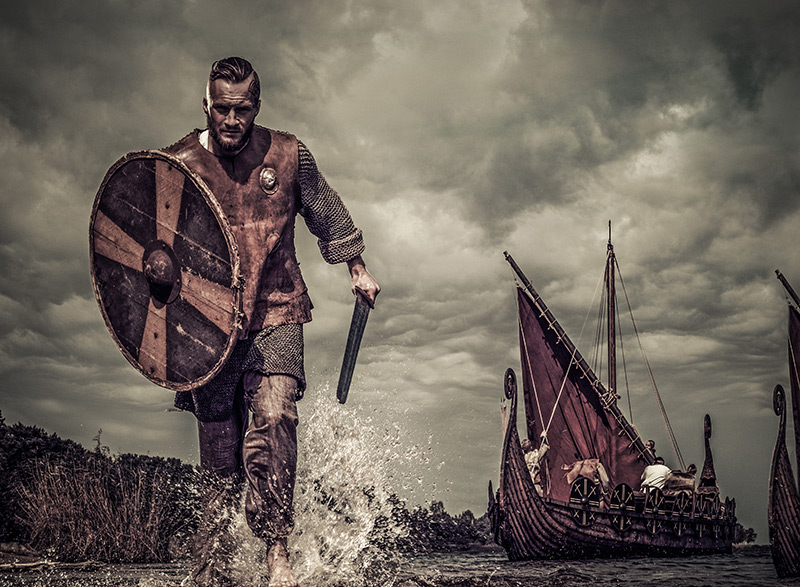
Closest to the skin was a linen undershirt. Over this sat a woollen tunic, usually knee-length, with long sleeves in colder months. Tunics could be plain or decorated with woven trim, particularly for wealthier individuals.
Trousers varied in cut and fit. Some were loose and gathered, while others were tighter. They were typically made of wool or linen and had no pockets. Instead, belts were used to carry knives, pouches, and tools.
Leg wraps, wound from ankle to knee, provided warmth and protection and were common across Scandinavia. Cloaks fastened at one shoulder with a brooch were widely worn outdoors, offering warmth and flexibility.
What Did Viking Women Wear?
Women’s clothing is particularly well documented thanks to burial finds.
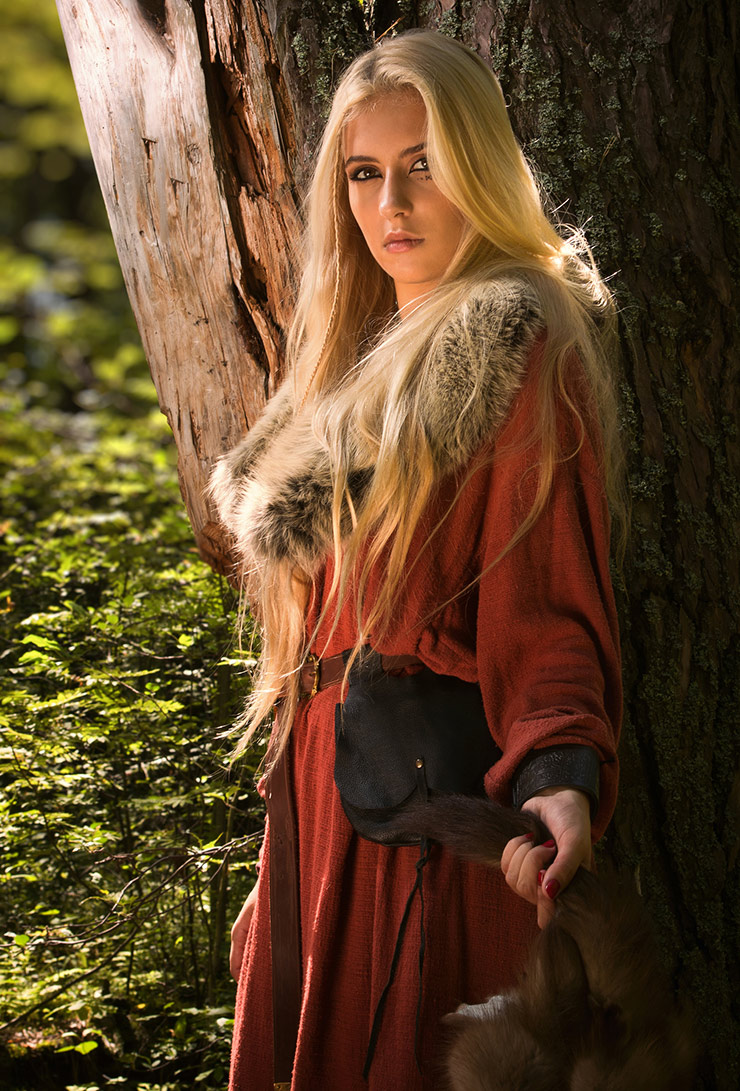
Most women in the Viking Age wore a long linen underdress with a sleeveless wool apron dress over the top. This outer garment was suspended by straps fastened at the chest with two oval brooches, often connected by strings of beads made from glass, amber, or semi-precious stones.
The apron dress was typically ankle-length and could be plain or decorated. Over this, women might wear a shawl or cloak for warmth. Jewellery played an important role in women’s dress and social identity.
Hair was usually worn long, often braided or pinned. Married women may have covered their hair, though practices likely varied by region and period.
Viking Warrior Clothing and Armour
Clothing worn in battle prioritised mobility, warmth, and protection.
Warriors wore similar garments to everyday dress but favoured thicker wool tunics and cloaks, particularly during sea voyages. Leather belts secured weapons such as swords and axes, keeping them accessible.
Protective equipment included shields, helmets, and sometimes mail shirts. Contrary to popular belief, Viking armour was not excessively heavy. Mobility was essential, and most warriors relied on skill and speed rather than full body protection. Horned helmets, famously, have no basis in Viking Age archaeology.
Socks, Shoes, and Cold-Weather Accessories
Keeping feet warm and dry was vital. Socks, mittens, and scarves were commonly made using a technique called nålebinding, which produces dense, durable fabric well suited to cold climates.
Shoes were typically ankle-high and made using the turnshoe method, where the shoe was stitched inside-out before being turned. While flexible and comfortable, these shoes wore out quickly and required frequent repair or replacement.
Boots also existed, particularly for colder conditions, but all footwear required constant maintenance.
Vikings on TV vs. Archaeological Evidence
Modern television has shaped how many people imagine Viking clothing, but these portrayals often prioritise drama over evidence.
The TV series Vikings popularised a look dominated by dark leathers, exposed skin, shaved heads, and heavy armour. While visually striking, this aesthetic bears only limited resemblance to what archaeology tells us.
In reality, leather was used sparingly, mostly for belts, shoes, and small accessories. Full leather outfits would have been impractical, expensive, and poorly suited to wet Nordic climates. Wool and linen dominated everyday clothing, not hides.
Television Vikings are also typically dressed in dark, muted colours. Archaeological textile fragments show the opposite. Viking clothing could be brightly dyed, with blues, reds, yellows, and greens all in use. Colour was an important marker of status and wealth.
Another common trope is the idea of uniform “Viking warrior” clothing. In practice, most men dressed similarly to farmers or traders, even when armed. Armour was rare and valuable. Many warriors fought with little more than a shield, helmet, and thick woollen clothing.
Some details are closer to the mark. Cloaks fastened with brooches, layered garments, and the absence of buttons all align with archaeological evidence. Horned helmets, however, remain a complete myth with no Viking Age basis.
Ultimately, television Vikings are designed to look intimidating and timeless. Real Vikings dressed for work, weather, and social life. Their clothing was far more colourful, practical, and nuanced than modern portrayals suggest.
Clothing as Identity in the Viking Age
Viking clothing was far more than simple protection against the elements. It reflected environment, technology, trade, and social structure, revealing how people understood themselves and their place in the world.
While practicality always came first, colour, decoration, and craftsmanship mattered deeply. Clothing was one of the most visible ways to express identity in a society without written labels, uniforms, or modern social markers.
Every garment represented time, labour, and skill. Spinning thread, weaving cloth, dyeing fabric, and sewing clothing were demanding processes that connected households to wider trade networks and seasonal rhythms. What a person wore could signal wealth, occupation, marital status, and access to resources, long before a word was spoken.
Although the archaeological record is fragmentary, it consistently points to a culture that cared about appearance and presentation.
Vikings invested effort in well-made clothing, decorative trims, jewellery, and colour, even in a harsh climate where survival was never guaranteed. Their garments balanced durability with display, tradition with personal expression.
Modern images of Vikings often emphasise violence and spectacle, but clothing tells a quieter, more human story. It reveals people who farmed, traded, raised families, travelled widely, and took pride in how they presented themselves to others.


In “colors and patterns” you accidentally omitted the word “far”
Great article, thank you! I do have two questions, though. First, I have read that some of the wealthy men who went raiding were able to own and wear chain mail. The less wealthy raiders would wear leather armor, quilted and padded. Is this, to your knowledge, correct?
Secondly, there is a lot of conflicting information about the wearing of earrings. Some sources say that the Scandinavians who would have been Viking never wore earrings, yet I’ve seen (online) pieces of jewelry in the Metropolitan Museum of Art labeled as Viking earrings. I haven’t seen visual representations of Viking earrings, in grave goods or the Bayeux tapestry. Do you have information regarding the wearing of earrings, by either gender? Thank you very much.
I find it sad that you’re article on viking clothing only the last2 pictures actually represent the time period and culture. While the rest are a mix of medieval and fantasy horseshit thrown together by someone who’s watched to many seasons of Vikings on tv…
Well believe it or not we don’t have access to photography from 1,200 years ago. Thanks for your polite contribution to the discussion though, I bet you’re really interesting at parties.
Far as I can tell your photos are okay, and including popular culture references isn’t wrong, as long as your content is correct, which it is, as far as current availability of research shows. Ignore those who cannot be kind.
Thank you for this! Laugh of the day for your reply to Andy 🙂 And thanks for the information that I was actually looking for 😉
I wonder why you are reading an article about Norse clothing if you are already such an expert?
This website is great it really helped me with school and studying
and dont listen to andy
me too this website is great
POV: you dont have a life so you resort to commenting on some random post about something 600 years ago
Vikings did not have black clothing. And the enviorment in norway at that time was actualy warmer and more stable than today. Tunics are usualy long armed and the under tunic is usualy longer than the overe tunic so that people could se that yøu where rich enugh to have 2