
You’ll see the word seter on maps and signs all over rural Norway. But what exactly is one, and why did Norwegian farmers spend their summers living high in the mountains?
Spend enough time hiking or driving through rural Norway and sooner or later you'll come across the word seter.
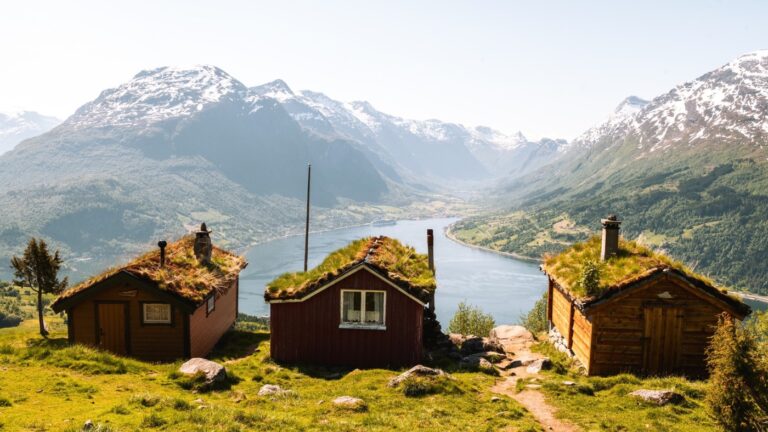
Perhaps it's part of a place name. Perhaps a sign points towards one several kilometres up a mountain road. Or perhaps you arrive at a collection of old wooden buildings where someone is selling waffles, sour cream and locally made cheese.
At first glance, a seter can look like a remote farm, but that's not quite what it is.
Traditionally, a seter was a seasonal summer farm, usually some distance from the main farm, where livestock were taken to graze during the warmer months. The idea was simple, practical and perfectly suited to Norway.
Why did Norwegian farms need a seter?
Norway has never been blessed with an abundance of good agricultural land.
For centuries, farmers had to make the most of every available patch of productive soil. During summer, fields close to the main farm were needed to grow crops and, crucially, produce hay and other food to keep livestock alive through the long winter.
So rather than allowing cows and goats to eat that valuable grass, farmers moved the animals elsewhere.
The forests, uplands and mountains offered vast areas of summer grazing that couldn't easily be cultivated but were perfectly useful to livestock. Moving animals to those outlying pastures freed up the home farm for growing winter fodder and crops.
That seasonal move is a form of transhumance: moving livestock between different grazing areas at different times of year. In Norway, it became the tradition of going til seters.
Life moved to the mountains
The animals couldn't simply be sent away for the summer by themselves. Someone had to milk them, look after them and process what they produced. That meant people moved too.
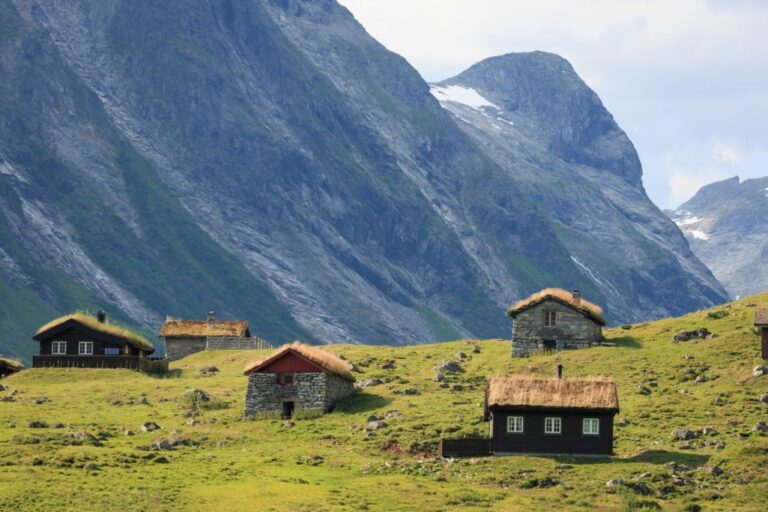
A traditional seter therefore included buildings for both livestock and the people caring for them. Depending on the size and location, there could be a living house, cowshed, hay barn, storage rooms and buildings used for processing milk.
The person most closely associated with seter life was the budeie, traditionally a woman responsible for milking the animals and making dairy products. That was important work.
Rather than trying to transport fresh milk long distances back to the farm every day, it could be turned into products that lasted much longer, including butter, cheese and sour-milk products.
These could then be carried back to the home farm periodically and stored for use through the winter.
So although the romantic image today may be of peaceful summer days surrounded by mountains and grazing cows, seter life involved plenty of hard physical work.
Seter, sæter or støl?
Here's a small linguistic complication. You'll encounter several words for essentially the same thing. Seter is the standard modern spelling, although sæter is an older spelling still familiar from place names.
In western parts of Norway, you're especially likely to encounter the word støl. Variations such as støyl and stul also appear in place names.
Today, seter and støl are generally used synonymously, although historically they had somewhat different meanings. Seter comes from the Old Norse word setr, relating to a seat, residence or place to stay, while støl originally referred more specifically to a place where livestock were gathered and milked.
That linguistic legacy is written all over the Norwegian map. Store norske leksikon estimates there are around 50,000 Norwegian place names connected with seter culture, including thousands ending in forms of -seter, -set, -støl and -støyl.
So even where the summer farm itself has disappeared, the name often remains.
Not every seter was high in the mountains
It's tempting to imagine every seter perched dramatically above the tree line. Some certainly were, but summer farming was practised throughout Norway, including in forests and relatively low-lying areas.
Some farms even used several different seasonal sites. A heimeseter might be relatively close to the main farm and used early or late in the grazing season. A mellomseter could provide an intermediate stop, while a more distant summer seter might lie far into the mountains.
In some cases, the main summer farm was dozens of kilometres from home. The important thing wasn't altitude. It was access to grazing that wasn't needed for winter food production.
The seter produced more than milk
Seter culture developed its own traditions, knowledge and folklore. People needed to understand animal husbandry, dairy production, weather, grazing land and the maintenance of buildings and fences.
There were also distinctive songs and calls used to communicate with livestock over long distances.
One of the best known today is kulning, the high-pitched herding call associated with summer farming in Norway and Sweden. The tradition is already something we've covered here on Life in Norway. Folklore also found its way into seter life.
Stories told of the huldra, a mysterious supernatural woman associated with the forests and mountains. Some traditions involved announcing one's arrival at the seter to the supernatural inhabitants believed to occupy the area.
What happened to Norway's seter tradition?
Modern agriculture in Norway changed everything. Better roads, refrigeration, mechanisation and centralised dairy production made it increasingly unnecessary for farmers to spend an entire summer living beside their animals.
The number of active seter farms declined dramatically during the 20th century. Norsk Seterkultur says there were as many as 100,000 summer farms operating in Norway during the 1850s. By 1939, there were around 27,000.
By 2022, only around 750 summer dairy farms remained in operation.
Many former seter buildings have since become recreational cabins. Others stand abandoned, while some have been preserved by museums or converted into accommodation and tourist attractions. But traditional summer farming hasn't disappeared entirely.
Seter culture is now recognised by UNESCO
In December 2024, the summer farming traditions of Norway and Sweden were inscribed on UNESCO's Representative List of the Intangible Cultural Heritage of Humanity. Importantly, UNESCO isn't simply protecting old farm buildings.
The recognition covers the knowledge, traditions and practices associated with summer farming: livestock grazing, dairy production, land management, handicrafts, herding calls, songs, storytelling and other cultural traditions.
Some working seter farms now also welcome visitors, sell cheese and other dairy products, or demonstrate traditional farming techniques.
Valdres in particular remains one of Norway's strongest areas for active seter culture, although working summer farms survive in several parts of the country.
A living piece of the Norwegian landscape
Today, you don't need to be a farmer to encounter seter culture. You may pass an abandoned seter while hiking, stay overnight in a converted one, buy cheese from a working summer farm or simply notice -seter and -støl scattered across a map.
Once you understand what the word means, those names begin to tell a story. For generations of Norwegian farming families, summer involved more than simply waiting for the crops to grow.
People packed up, moved livestock away from the farm and effectively established another home for several months. The cows got the mountain grass. The farm got its winter hay. And Norway got one of its most distinctive rural traditions.