
Lower income tax, more expensive electric cars, continued electricity support and increased student funding are among the changes proposed in Norway’s state budget for 2027.
Norway's government has presented its proposed state budget for 2027, setting out how it plans to raise and spend money next year.
For people living in Norway, some of the most noticeable proposals concern income tax, electric cars, electricity bills, students and integration.
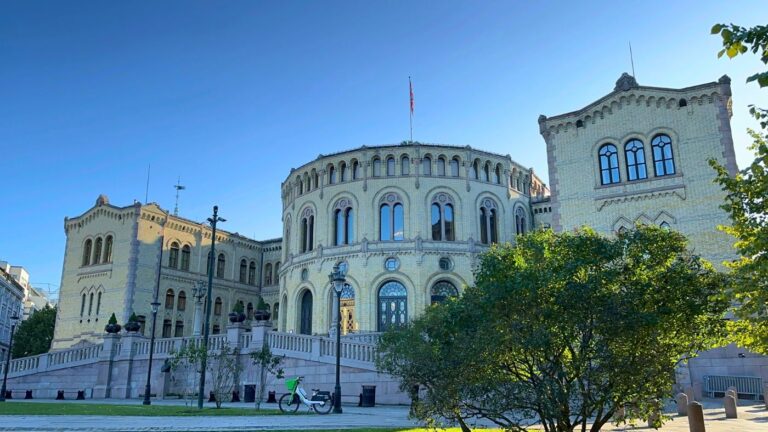
The budget proposal is exactly that, a proposal, and not yet final. It must be negotiated and approved by the Norwegian parliament, the Storting, before taking effect.
Income Tax Would Fall Slightly
The government proposes NOK 6.4 billion in income tax reductions. One of the main changes would be a reduction in the trygdeavgift, the National Insurance contribution paid on most employment and business income.
For employees, the rate would fall from 7.6% to 7.4%. For most self-employed income, it would fall from 10.8% to 10.6%. The personal tax allowance (personfradrag) would also increase from NOK 114,540 to NOK 120,180.
The precise impact will depend on income and individual circumstances. The government gives the example of someone earning NOK 750,000 receiving a tax reduction of about NOK 1,500 from the lower National Insurance contribution alone.
Electric Cars Would Become More Expensive
One of the most significant changes concerns Norway's electric car incentives.
At present, VAT is charged only on the portion of an electric vehicle's purchase price above NOK 300,000. The government proposes cutting that threshold to just NOK 150,000 from 2027.
That means considerably more of the purchase price of most new electric cars would become subject to Norway's 25% VAT. The government expects the change to raise NOK 3.8 billion in additional revenue.
It's another step in the gradual reduction of the generous tax incentives that helped make electric cars dominant in the Norwegian new-car market.
Norgespris and Electricity Support Continue
Norway's two main household electricity support systems would continue in 2027. The government proposes spending almost NOK 16.4 billion on Norgespris and the regular electricity support scheme.
Norgespris, which offers households an alternative fixed electricity price, would be set at 45 øre per kilowatt-hour before VAT and other charges in 2027.
For households using the ordinary electricity support scheme instead, the support threshold would be set at 79 øre per kilowatt-hour.
More Money for Language Training & Integration
The government also proposes an additional NOK 96 million for measures aimed at improving integration.
Of that, NOK 17.7 million would increase funding for flexible Norwegian language training for refugees and other immigrants who need additional tuition.
Another NOK 30 million would go to Jobbsjansen, a programme aimed particularly at helping immigrant women move into employment or education.
The proposal also includes a trial introduction programme for some women who have moved to Norway through family immigration, together with changes intended to improve consistency in the assessment of spoken Norwegian language tests.
Norwegian language test results can be important for people applying for permanent residence or Norwegian citizenship.
Student Support Would Be Tied to Wage Growth
Students are another group set to benefit. The government proposes linking the basic student loan and some grants to the National Insurance basic amount, known as grunnbeløpet or simply G.
This is significant because G generally follows wage growth. Student support is currently adjusted primarily according to inflation.
Under the proposal, the basic student loan would increase by 4.21% for the 2027-28 academic year. That amounts to a little more than NOK 7,000 extra compared with 2026-27.
Wages Expected to Rise Faster Than Prices
There is also some positive news in the government's forecasts for household finances. Average annual wages are forecast to rise by 4% in 2027, while consumer price inflation is forecast at 2.7%.
If those forecasts prove accurate, wages would once again increase faster than prices, meaning an improvement in real purchasing power for many households.
The government expects mainland Norway's economy to grow by 1.7% in 2027, while registered unemployment is forecast to remain at 2.1%.
What Happens Next?
The state budget presented on 7 October is the Norwegian government's proposal rather than the final budget.
The proposals will now be considered by the Storting, where negotiations and amendments can take place before the final budget is approved. That means individual measures may still change before they come into force in 2027.