
Hardy, friendly and instantly recognisable, the Norwegian Fjord horse is one of Norway’s most beloved national symbols.
The Norwegian Fjord horse, or fjordhest in Norwegian, looks as if it has stepped straight out of an old Norse tale.
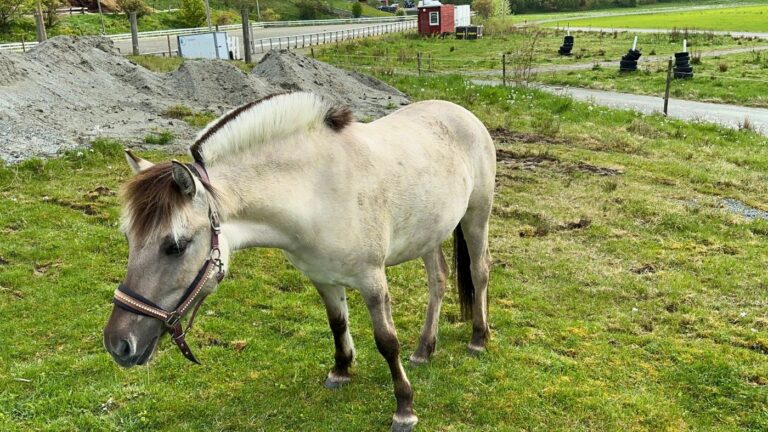
With its compact body, thick neck, strong legs, pale dun coat and striking dark stripe through the mane, it is one of the most distinctive horse breeds in the world. It is also one of Norway’s great living links to the past.
Although strongly associated with the fjord landscape of western Norway, the breed is now found far beyond its homeland. Fjord horses are kept across Europe, North America and elsewhere, admired for their temperament, strength and versatility.
But to understand the Fjord horse properly, you have to start in Western Norway.
A Horse From The Fjords
The Norwegian Fjord horse has deep roots in the fjord areas of Western Norway, especially the Nordfjord. Before modern roads transformed life along the coast, this was a region of steep mountainsides, scattered farms, narrow valleys and difficult journeys.
In that landscape, a horse had to be more than beautiful. It had to be strong, calm, sure-footed and able to work in tough conditions. The Fjord horse fitted that role perfectly.
For generations, it was used on farms, in forests and for transport. It could pull timber, plough fields, carry loads and help people move between hamlets, farms and ferry crossings.
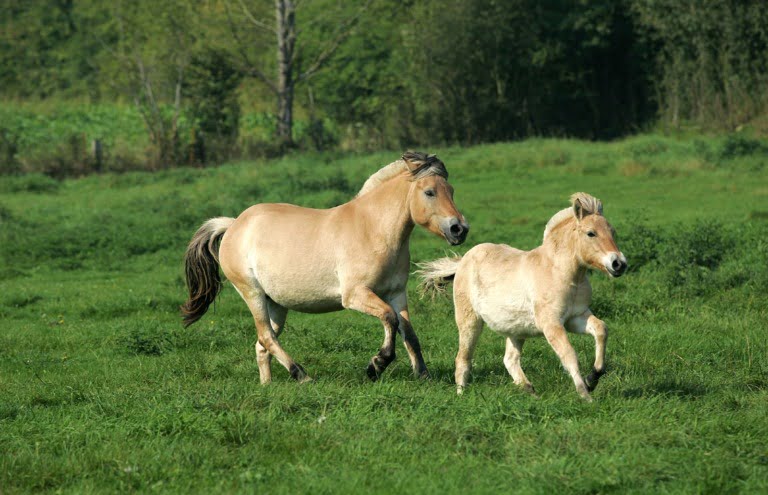
Its relatively small size was an advantage rather than a weakness, because it made the horse practical in narrow, uneven terrain.
The breed was once known as the Vestlandshest, or West Country horse, a name that reflects its regional roots. The modern name Fjord horse is now much better known internationally, but the old name says a lot about where the breed belongs.
What Does A Fjord Horse Look Like?
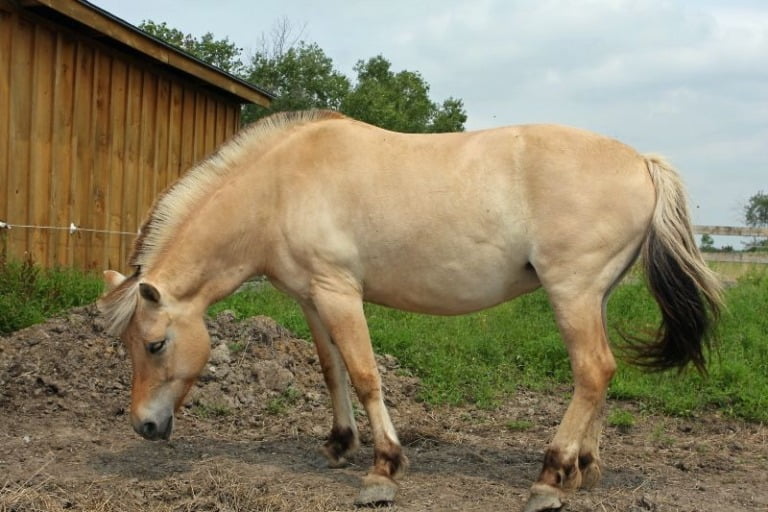
The Fjord horse is relatively small, but it is not a delicate animal. It has a compact, muscular build, a broad forehead, a thick arched neck, a strong back and sturdy legs. It gives the impression of a horse built for work.
Although people unfamiliar with horses may assume it is a pony because of its size, the breed is usually referred to as a horse. The desired height is generally around 135 to 150 centimetres at the withers, although individuals vary. Weight is often in the region of 400 to 500 kilograms.
One of the most noticeable features is the mane. Fjord horses have a dark stripe of hair running through the centre of the mane, with lighter hair on either side. Traditionally, the mane is cut short and upright in a crescent shape.
This makes the dark centre stripe stand out and emphasises the strong curve of the neck.
The result is a horse that even people with no special interest in horses can recognise immediately.
The Famous Fjord Horse Colours
All Fjord horses are dun, but that does not mean they all look exactly the same.
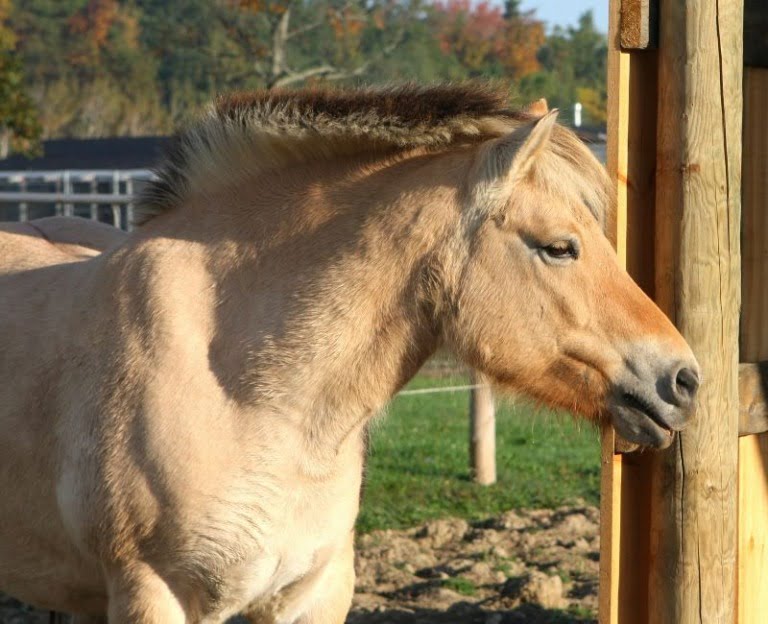
The dun colouring gives the body a pale, earthy tone, often somewhere between cream, tan, yellowish brown or greyish brown. This lighter body colour is contrasted with darker primitive markings, including the stripe through the mane, the dorsal stripe along the back and, in many horses, zebra-like stripes on the legs.
These markings are a major part of the breed’s visual identity.
Five colours are recognised within the breed: brown dun, red dun, grey, uls dun and yellow dun. Brown dun is by far the most common. Yellow dun is the rarest.
The Norwegian names are often used by breeders and enthusiasts: brunblakk for brown dun, rødblakk for red dun, grå for grey, ulsblakk for uls dun and gulblakk for yellow dun.
Although the differences may be subtle to a casual observer, colour is taken seriously in the Fjord horse world. Preserving all five recognised colours is part of maintaining the breed’s character.
One Of Norway’s Oldest Breeds
The Fjord horse is often described as one of the world’s oldest and purest horse breeds. As with many ancient breeds, its earliest history cannot be pinned down with absolute certainty, but the horse has been part of Norwegian life for a very long time.
Archaeological evidence shows that horses were domesticated in Scandinavia in ancient times, and Viking burial grounds indicate that horses of this general type were being bred in Norway around 2,000 years ago.
This is why the Fjord horse is often linked with the Viking Age. You will sometimes see it called the horse of the Vikings, and it is easy to understand why. Small, strong, hardy and practical, it fits the image of the kind of horse that would have suited life in early Norway.
Even so, it is better to treat the Viking connection with a little care. The modern Fjord horse is the result of centuries of breeding, and not a horse frozen unchanged from the Viking Age.
What we can say with confidence is that the breed belongs to a very old Norwegian horse tradition.
From Farm Work To Modern Riding
The Fjord horse’s working days are not entirely over, but its role has changed.
In the past, the breed was an essential part of everyday rural life in Western Norway. It was valued because it could do many jobs. It was strong enough for farm and forestry work, steady enough for transport, and sure-footed enough for difficult terrain.
Today, Fjord horses are used more often for riding, driving, leisure, competitions and therapy. Their calm nature and manageable size make them popular with families, riding schools and people who want a dependable all-round horse.
That does not mean they are lazy or dull. Fjord horses are known for being good-natured and cooperative, but they are still powerful animals with plenty of personality. Their combination of strength, intelligence and steadiness is a major reason for their continued popularity.
A Norwegian National Symbol
Norway has three national horse breeds: the Fjord horse, the Døle horse and the Nordland/Lyngen horse. Of these, the Fjord horse is probably the best known internationally.
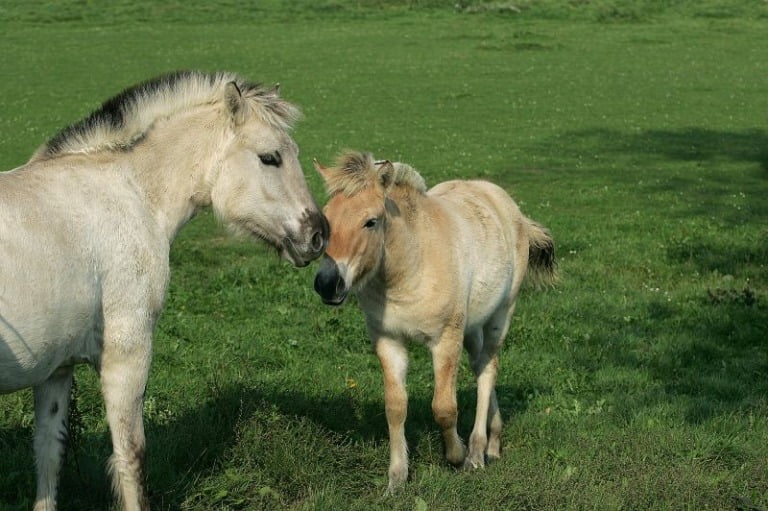
It is also the breed most closely associated with the national image of Norway. The connection is especially strong in Nordfjord, where the Fjord horse has long been part of local identity.
This is reflected in local heraldry. The coat of arms of Gloppen municipality features a Fjord horse, while the former municipality of Eid also used a Fjord horse head on its coat of arms. Eid became part of Stad municipality in 2020, and the new Stad coat of arms also includes a Fjord horse, alongside Saint Sunniva.
That says a lot. In this part of Western Norway, the Fjord horse is not just an animal. It is a symbol of place.
Nordfjordeid And The Fjord Horse
Anyone especially interested in the breed should know about Nordfjordeid, a charming village in the Nordfjord region and one that's become a popular cruise ship port of call in recent years.
The village is often described as a centre of Fjord horse culture. It is home to the Norwegian Fjord Horse Centre, a national resource centre for the breed. The centre works with breeding, education, promotion and the use of Fjord horses today.
Nordfjordeid’s horse traditions run deep. Stallion shows have been held in the area since the late 19th century, and the village remains an important gathering point for breeders, owners and enthusiasts.
For travellers, this makes Nordfjordeid one of the best places in Norway to learn more about the breed. Depending on the season and local arrangements, visitors may be able to meet Fjord horses, learn about the history of the breed or take part in horse-related activities.
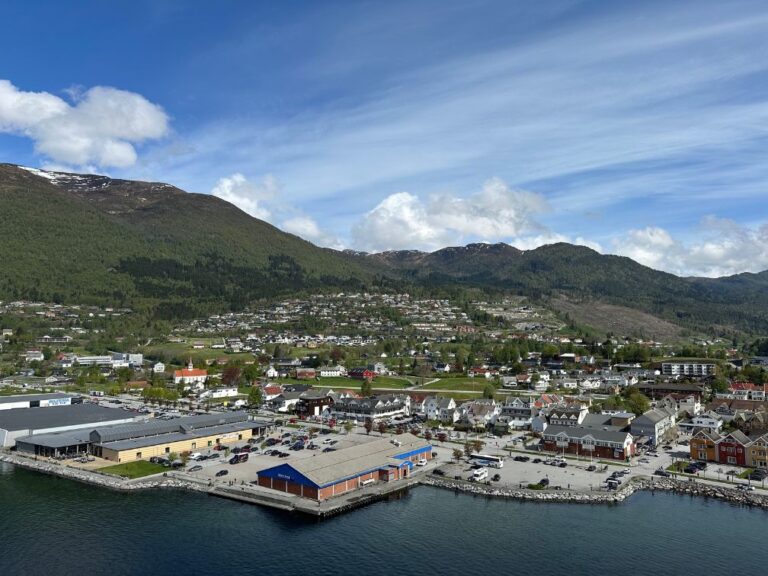
It is also a beautiful part of Norway in its own right, set between fjord, mountains and coast.
The Fjord Horse Around The World
Although the breed is Norwegian, the Fjord horse is no longer found only in Norway.
There are significant Fjord horse communities in several countries, including Denmark, Sweden, Germany, the Netherlands, Belgium and the United States. Breed organisations and registries help maintain standards, support breeders and promote knowledge about the horse.
Fjord Horse International works as an international network for breed organisations, while national groups such as Norges Fjordhestlag in Norway and the Norwegian Fjord Horse Registry in North America play important roles in preservation and registration.
This international interest is a reminder that the appeal of the Fjord horse goes far beyond nostalgia. People are drawn to the breed because it is practical, attractive, friendly and deeply distinctive.
A Living Link To Norway’s Past
It is easy to romanticise the Fjord horse. With its ancient appearance, Viking associations and connection to the dramatic landscapes of Western Norway, the breed invites it. But the real story is more interesting than myth.
The Fjord horse survived because it was useful. It was shaped by climate, terrain and the needs of rural communities. It worked on farms, travelled mountain tracks, pulled timber and helped people live in places where life was not always easy.
Today, it continues to thrive because those same qualities still matter. Strength, steadiness, character and adaptability never really go out of fashion.
For many Norwegians, the Fjord horse is a reminder of rural life, regional identity and the close relationship between people, animals and landscape. For visitors, it is one of the most charming and recognisable symbols of Norway.
Small, strong and full of character, the Norwegian Fjord horse remains one of the country’s most treasured breeds.


We enjoy this wkly. paper sa mange !! Vi elske dette lander sa vi enjoy all the buildes og stories. Our famiallie is in the Flekkefjord area of Norge and we have visited 3 times. It is the most vakkert country in the world. You are so blessed to be living there.