
Norway’s Government Pension Fund Global, often referred to simply as the oil fund, has posted one of the largest annual gains in its history, driven by strong performances in global technology, banking, and mining stocks.
The fund, the largest sovereign wealth fund in the world, reported a return of around 1.4 trillion Norwegian kroner in 2025, bringing its total value to 21.27 trillion kroner by the end of the year.
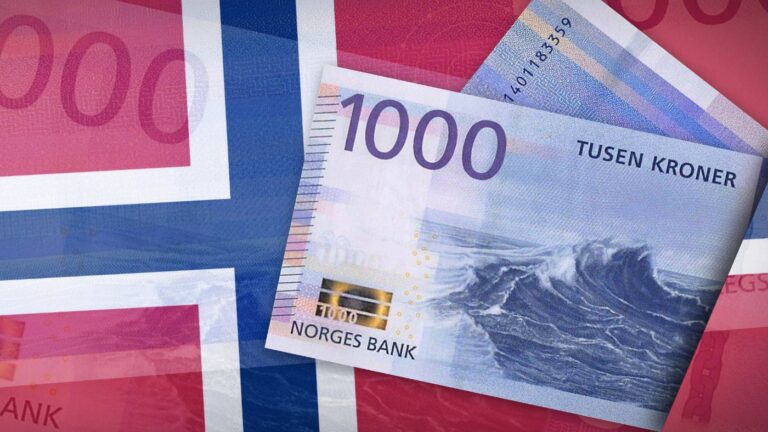
That is equivalent to more than $2 trillion, a figure that regularly places Norway at the top of global rankings for state-owned investment funds.
What Is Norway’s Oil Fund?
Despite its name, the Government Pension Fund Global has nothing to do with pensions in the traditional sense. Instead, it exists to manage Norway’s oil and gas wealth for the benefit of both current and future generations.
The fund was established in the 1990s, following political decisions made decades earlier to ensure that income from Norway’s offshore oil and gas industry would not be spent all at once.
Rather than allowing oil revenues to flood the domestic economy and risk inflation, politicians agreed that surplus income should be invested abroad.
Today, the fund invests in more than 7,000 companies across around 60 countries, owning small stakes in businesses around the world. In practice, this means that Norway is a part-owner of many familiar global brands.
Tech and Banking Drive Returns
In 2025, equities accounted for about 71% of the fund’s investments, and these holdings returned 19.3% over the year. Technology stocks were among the strongest contributors, with the fund holding sizeable stakes in companies such as Nvidia, Apple, and Microsoft.
The oil fund now owns around 1.3% of Nvidia, 1.2% of Apple, and 1.3% of Microsoft, making Norway one of the largest institutional investors in several of the world’s biggest tech firms.
Banking stocks also played an important role. The fund holds significant positions in major US banks including Bank of America, JPMorgan Chase, and Goldman Sachs, as well as European financial giants such as Santander, UBS, HSBC, and UniCredit.
European banks, in particular, have delivered strong returns in recent years after a long period of weak performance.
Mining and basic materials added further momentum. One standout investment was mining company Fresnillo, which saw its share price surge amid a silver boom and corporate acquisitions.
More Than Just Shares
Although equities dominate headlines, the oil fund is diversified across several asset classes.
In 2025, its fixed income investments returned 5.4%, while unlisted real estate delivered a 4.4% return. The fund’s growing portfolio of renewable energy infrastructure performed especially well, returning 18.1% over the year.
Altogether, the fund’s market value increased by around 1.53 trillion kroner during 2025. That includes not just investment returns, but also currency movements and other valuation effects.
How the Fund Is Managed
The oil fund is managed by Norges Bank Investment Management (NBIM), a division of Norway’s central bank, on behalf of the Norwegian population.
Strict ethical guidelines govern where the fund can invest, and companies can be excluded for reasons including environmental damage, corruption, or human rights violations.
Importantly, the fund is not a pot of money the government can freely spend. Each year, politicians are only allowed to use a small portion of its expected long-term return to help fund public spending.
This rule is designed to protect the fund’s value over time and ensure that oil wealth benefits future generations, not just today’s taxpayers.
A Global Safety Net
While headline figures often attract attention during boom years, the oil fund’s true importance lies in its long-term role. It acts as a financial buffer for Norway’s welfare state, helping to support public services as oil and gas revenues eventually decline.
As NBIM CEO Nicolai Tangen noted, strong performances in technology, financials, and basic materials were key drivers of last year’s result.
But as always, the fund’s managers stress that short-term fluctuations matter less than steady, long-term growth. For a country with 5.7 million people, the oil fund remains one of Norway’s most unusual and most important national assets.