

Are you fascinated by Viking history and culture? From reconstructed longhouses to original burial finds, these are the best Viking museums and Viking experiences in Norway to help plan your trip.
For many visitors, Viking history is one of the great draws of a trip to Norway. The ships, sagas, burial mounds and reconstructed villages all offer a glimpse into a world that still shapes how Norway is imagined today.
But planning a Viking-themed trip to Norway is not quite as simple as it once was.
Oslo’s famous Viking Ship Museum, long one of the capital’s most popular attractions, is currently closed while it is transformed into the much larger Museum of the Viking Age.
That means visitors to Oslo cannot currently see the famous Oseberg, Gokstad and Tune ships. Even so, the story of Norway’s new museum is too important to ignore.
Museum of the Viking Age, Oslo
The most exciting development in Norway’s Viking world is not actually open yet!
The former Viking Ship Museum on Bygdøy is being rebuilt and expanded into the Museum of the Viking Age, a major new museum that will place Norway’s best-known Viking ships in a broader context.
When it opens, the museum will once again display the Oseberg, Gokstad and Tune ships, three remarkable vessels excavated from burial mounds in the Oslofjord region. These ships were not simply transport. They were status symbols, burial monuments and extraordinary examples of Viking Age craftsmanship.
The new museum promises far more than a refreshed display of the ships. Thousands of objects from the Viking Age collection will help tell a wider story of everyday life, belief, trade, power and death in Viking society.
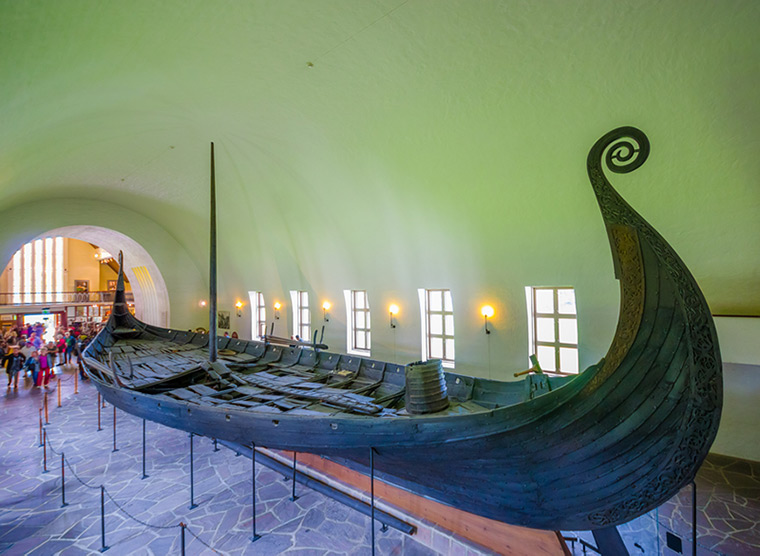
For now, though, visitors need to be patient. If seeing the original Viking ships is a must for your trip, check the latest opening information before booking travel. If you are visiting Oslo before the new museum opens, the Historical Museum is the best place to start.
Historical Museum, Oslo
While the ships are off display, Oslo’s Historical Museum remains an essential stop for anyone interested in Viking history.
Located in the city centre, close to the Royal Palace and National Theatre, the museum is home to exhibitions covering Norwegian history from the Stone Age through to the Viking Age and Middle Ages.
The highlight for Viking fans is VÍKINGR, an exhibition that presents objects from the Viking Age and explores themes such as war culture, travel, belief and social change. It is a much smaller experience than the forthcoming Museum of the Viking Age will be, but it offers important context for understanding the period.
The Historical Museum is also a good reminder that Viking history is not just about ships and raids. Jewellery, weapons, household items and religious objects all help build a more nuanced picture of Viking Age life.
Midgard Viking Centre, Horten
South of Oslo, the Vestfold region is one of Norway’s most important Viking landscapes. Burial mounds, ship finds and historic power centres line the western side of the Oslofjord, making this area especially rewarding for anyone with a deeper interest in the Viking Age.
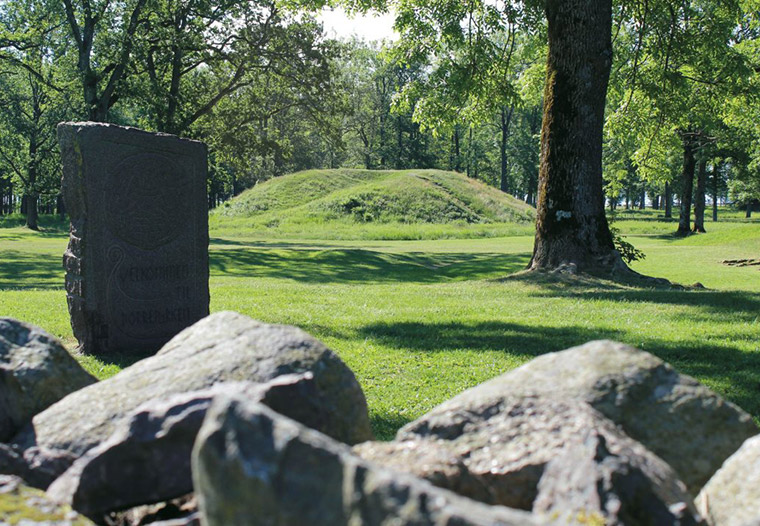
Midgard Viking Centre in Horten is located close to the Borre burial mounds, one of Scandinavia’s most significant collections of monumental graves from the Iron Age and Viking Age.
The centre’s standout attraction is the reconstructed Gildehallen, a Viking-style feast hall inspired by archaeological finds and professional interpretations of how such halls may have looked. It gives visitors a much stronger sense of Viking elite culture than display cases alone can provide.
Midgard is particularly good for families, especially during activity days and seasonal events. Depending on the programme, visitors may encounter crafts, storytelling, archery or other hands-on activities.
While in the region, consider continuing to Tønsberg, often described as Norway’s oldest town. The harbour area is home to a reconstructed Viking ship, and the surrounding Vestfold landscape is rich in burial mounds and Viking Age connections.
Sagastad, Nordfjordeid
Sagastad is one of Norway’s newer Viking attractions, and it deserves far more attention than it gets from international visitors.
Located in Nordfjordeid, between the fjords and mountains of western Norway, Sagastad is built around the Myklebust ship. The original ship was burned as part of a burial ceremony, but its remains showed that it had been one of the largest Viking ships ever found in Norway.
The full-size reconstruction is an impressive sight. At around 30 metres long, it gives visitors a sense of scale that can be difficult to grasp from archaeological remains alone.
Sagastad’s exhibitions place the ship within the wider story of Nordfjordeid, local power, burial rituals and Viking Age society. It is a particularly good stop for travellers exploring the Nordfjord region, especially those looking for something beyond the most famous fjord viewpoints.
Nordvegen History Centre, Avaldsnes
Avaldsnes on Karmøy has a strong claim to being one of Norway’s most important Viking sites. The area controlled the sailing route along Norway’s west coast, known as Nordvegen, or “the northern way.”
This strategic position helped make Avaldsnes an important centre of power. It is also closely associated with Harald Fairhair, the king traditionally credited in the sagas with unifying Norway.
The Nordvegen History Centre is an underground museum that introduces the rulers, sagas and archaeological finds connected with Avaldsnes. It is not a large museum, but it is atmospheric and works well as an introduction to the wider site.
A short walk away, the Viking Farm on Bukkøy brings the story to life through reconstructed buildings and demonstrations during the visitor season.
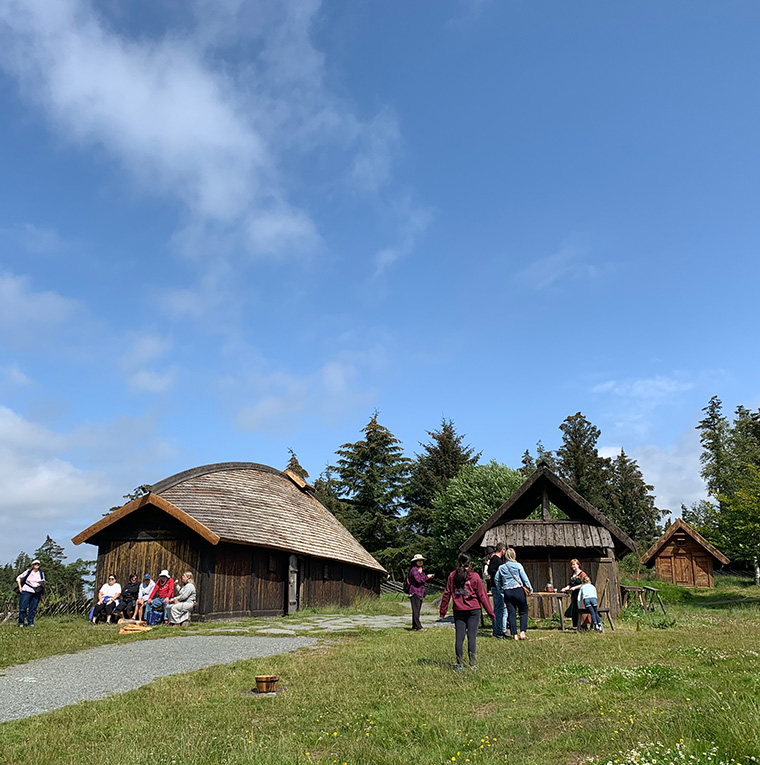
Together, the history centre and farm make Avaldsnes one of Norway’s best Viking destinations, especially for travellers exploring the Stavanger, Haugesund or Hardangerfjord region.
Lofotr Viking Museum, Lofoten
Lofoten is best known today for mountains, fishing villages, beaches and dramatic light. But more than 1,000 years ago, these islands were also home to powerful Viking Age communities.
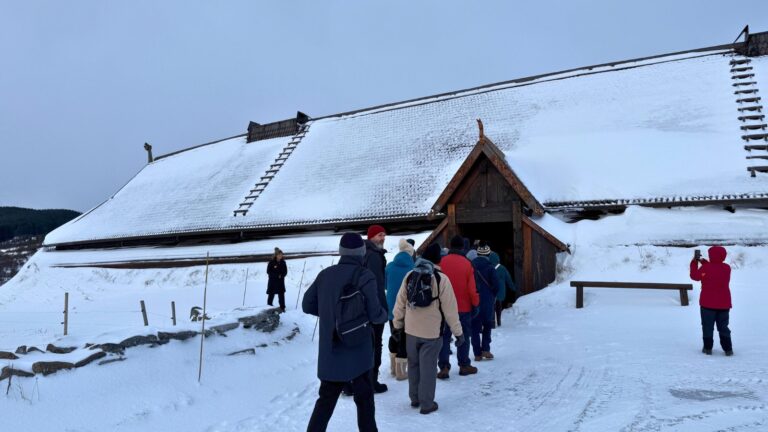
Lofotr Viking Museum at Borg is built around the discovery of a major chieftain’s longhouse. The reconstructed longhouse is the centrepiece of the museum, and stepping inside is one of the most memorable Viking experiences in Norway.
This is not just a place to look at objects behind glass. Lofotr is designed as a living history experience, with guides, craftspeople, demonstrations and seasonal activities helping visitors imagine life in a wealthy Viking household.
In summer, the museum is at its most lively, with outdoor activities and special events. Depending on the programme, visitors may be able to try traditional crafts, see animals, join games or take part in experiences linked to Viking Age food and storytelling.
Lofotr is especially worthwhile if you are already travelling through Lofoten by car. It adds historical depth to a journey often dominated by scenery.
Stiklestad National Cultural Centre, Trøndelag
Stiklestad is not a Viking museum in the same sense as Lofotr or Midgard, but it belongs in any serious discussion of Norway’s Viking story.
The Battle of Stiklestad in 1030, where Olav Haraldsson was killed, is traditionally seen as a turning point in Norway’s transition from the Viking Age into the Christian Middle Ages. Olav later became Saint Olav, and his cult had an enormous influence on medieval Norway.
Located about 100 kilometres north of Trondheim, Stiklestad National Cultural Centre explores the battle, the Christianisation of Norway and wider cultural history. The site includes exhibitions, historic buildings, seasonal events and a recreated medieval farm environment.
For visitors based in Trondheim with a strong interest in Norwegian history, Stiklestad is one of the most meaningful day trips in the region. It helps explain not just the Viking Age itself, but what came after.
Museum of Archaeology, Stavanger
The Museum of Archaeology in Stavanger is another excellent option for travellers who want to move beyond the most familiar Viking stories.
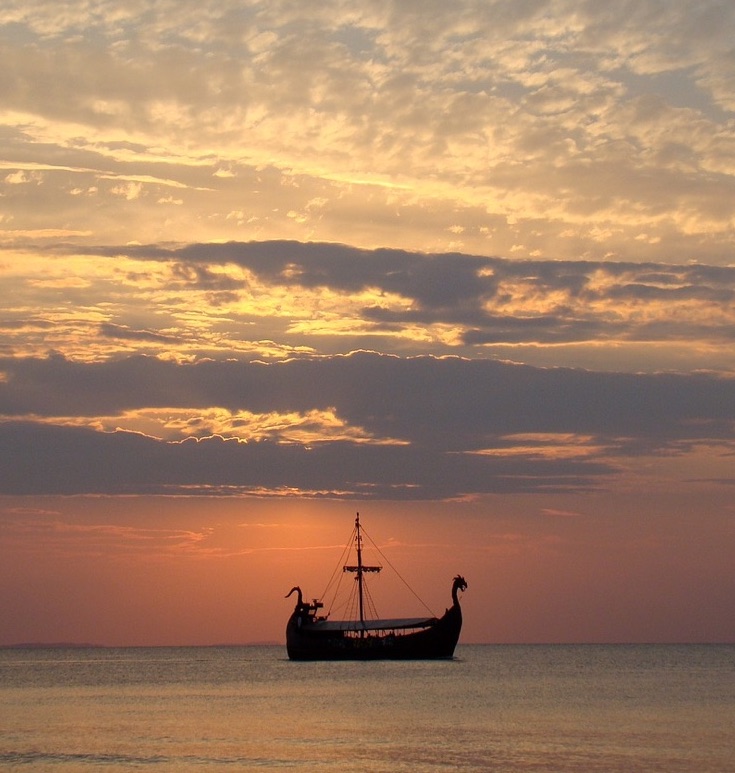
The museum covers a much longer sweep of regional history, but its Viking Age material is one of the highlights. Exhibitions explore Viking society through objects found in Rogaland, a region with strong connections to seafaring, trade and power during the period.
Stavanger also has a wider Viking story to tell. Nearby Hafrsfjord is traditionally associated with the battle that helped Harald Fairhair unite Norway, although the history is filtered through later saga tradition.
The Swords in Rock monument at Hafrsfjord is not a museum, but it is a striking modern landmark that many Viking history enthusiasts will want to see while in the area.
Viking House in central Stavanger offers a different kind of experience, using virtual reality to tell Viking stories. It is not a replacement for the archaeological museum, but it can work as a fun supplement, especially for visitors who enjoy immersive attractions.
Njardarheimr, Gudvangen
At the end of the Nærøyfjord, one of Norway’s most dramatic fjord landscapes, Njardarheimr offers a reconstructed Viking village experience in Gudvangen.
This is more of a living history attraction than a traditional museum. Visitors can walk among reconstructed buildings, meet people demonstrating Viking Age crafts and learn about daily life, belief and skills.
Its location is a major part of the appeal. Many travellers pass through Gudvangen while touring the fjords, especially on routes linking Flåm, Voss and Bergen. For families or anyone curious about hands-on history, Njardarheimr can be a memorable addition to a fjord trip.
Planning a Viking-Themed Trip to Norway
If Viking history is a major reason for your visit, it is worth planning your route carefully.
Oslo remains important, even while the ships are unavailable, because of the Historical Museum and the forthcoming Museum of the Viking Age. But for now, some of Norway’s richest Viking experiences are outside the capital.
Vestfold is the easiest addition to an Oslo itinerary. Avaldsnes works well with a trip to Haugesund, Stavanger or the fjords. Lofotr is ideal for travellers heading to Lofoten, while Sagastad fits naturally into a Nordfjord road trip.
The best Viking museums in Norway are not all alike. Some focus on original artefacts, others on reconstructed buildings, living history or landscape. Taken together, they show that the Viking Age was not one simple story of raids and longships, but a complex period of travel, trade, belief, power and change.
Norway’s Viking story is not confined to museums. In Trondheim, Nidaros Cathedral marks the later Christian legacy of Saint Olav. Built over his traditional burial site, it became the most important pilgrimage destination in medieval Scandinavia.
And when Oslo’s Museum of the Viking Age finally opens, Norway’s Viking story will gain a spectacular new centrepiece.


In July 2004, I came to Norway to visit family. We went on a road trip and one of the places we visited was Rygnestadtunet, an old farm located north of Valle. What a gem! We were a party of four (three adults and one small child). No other visitors were around so we were treated to an exclusive private tour of the grounds. Our guide was a lovely college student working for the summer months. She was a credit to the museum . . . very personable, and full of information. It is a small museum but so interesting! I wouldn’t mind going back!
My wife and I have been to Norway eight times since 2005. We love it and though sadly we can’t visit this year (for obvious reasons!), these articles bring it close. The Lofot and Stavanger museums are excellent and worth the journey. I recommend the Hardanger visitor centre, which though not strictly a museum, gives a good insight into life around Hardangervidda. These articles are very well written Mr. Nickel, keep it up!
I can only dream of going and living in Norway. I recently found out that I’m of Viking descent