
The air quality in Norway’s capital has improved significantly over the last 50 years. Even so, winter pollution, road dust and stricter future regulations mean the issue hasn’t gone away.
Despite rapid population growth and major urban development, Oslo’s air quality is far better today than it was a few decades ago.
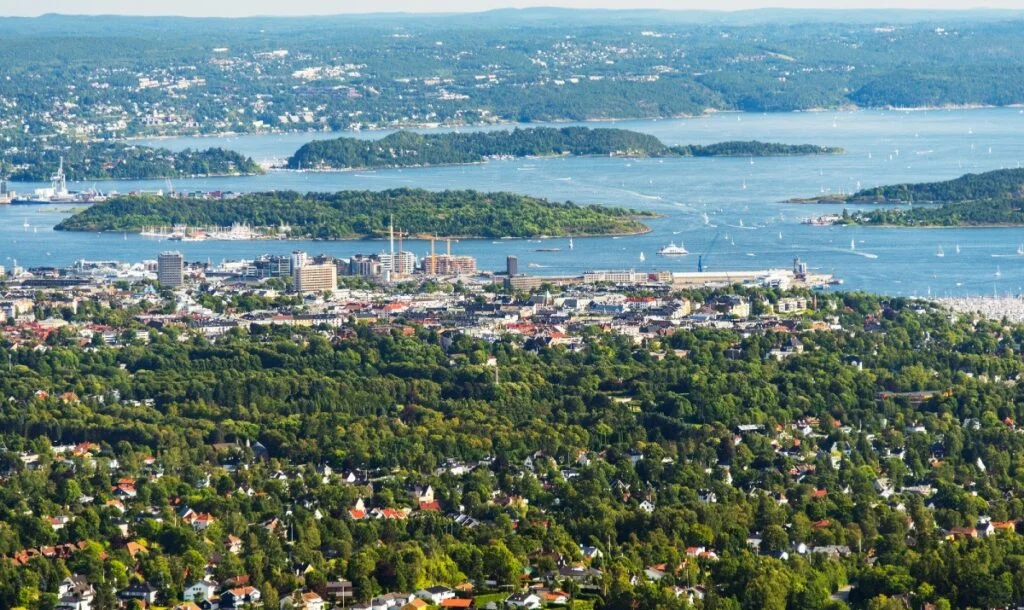
Cleaner vehicles, traffic measures, restrictions on studded tyres, and better monitoring have all helped.
But “better” doesn’t mean perfect. Like many northern cities, Oslo still has days when the air is noticeably worse, especially during cold, dry winter periods.
Why air quality in Oslo matters
As an asthma sufferer, I have always appreciated the relatively clean air of Norwegian cities compared with many British cities. But Oslo’s air isn’t always as fresh as visitors might expect from a country so closely associated with nature.
Air pollution is not only a concern for people with asthma. Both short- and long-term exposure to nitrogen dioxide and particulate matter can affect health, especially for children, older people, and those with existing respiratory or cardiovascular conditions.
The two pollutants most often discussed in Oslo are nitrogen dioxide, known as NO₂, and particulate matter, known as PM10 and PM2.5.
NO₂ is a gas mainly linked to exhaust emissions, especially from diesel vehicles. PM10 and PM2.5 are tiny airborne particles. PM10 is often linked to road dust from tyres, brakes and road surfaces, while PM2.5 is more closely associated with combustion, including wood burning and vehicle exhaust.
How Oslo’s air has improved
Oslo has made big progress, especially with nitrogen dioxide.
NO₂ levels have fallen substantially since 2013. This is largely because the vehicle fleet has become cleaner, with more electric cars and newer heavy vehicles with better emissions technology. Changes to tolls, traffic patterns and environmental charges have also played a role.
Annual NO₂ limit values have not been exceeded at Oslo’s monitoring stations since 2017. Hourly NO₂ exceedances have also remained within legal limits in recent years, although the risk can still return during certain winter weather conditions.
Particulate matter has also improved compared with the early 2000s. Measures such as studded tyre fees, environmental speed limits and road cleaning have helped reduce the amount of road dust in the air.
These changes are easy to underestimate, but they have made a real difference to everyday life in Oslo.
The winter problem
The biggest air quality problems in Oslo today are seasonal. Cold, dry weather creates ideal conditions for poor air quality. When there is little wind, polluted air can become trapped close to the ground.

This is known as temperature inversion, and it can lead to sharp local increases in pollution.
Road dust is one of the main winter challenges. Studded tyres wear down road surfaces, creating fine dust that can be stirred up by traffic when roads are dry. Even with high use of stud-free tyres in Oslo, road dust remains a problem on and near busy roads.
Wood burning is another important factor. Many homes still use fireplaces and wood-burning stoves, particularly in winter.
Modern clean-burning stoves are much better than older ones, but wood burning can still contribute to levels of fine particulate matter, especially in residential areas on cold evenings.
Oslo’s main pollutants today
The main sources of local air pollution in Oslo are road traffic and wood burning.
Traffic contributes exhaust emissions, road dust, and particles from tyres and brakes. This means electric cars help reduce exhaust-related pollution, but they do not remove the road dust problem entirely.
Wood burning contributes fine particles, especially during cold periods when many people heat their homes or use fireplaces for comfort.
Construction activity can also cause local dust problems, while port activity and shipping can contribute around the harbour. Oslo is working toward reducing emissions from the port, including through electrification and shore power.
Some pollution also arrives from outside Norway, carried by wind from other parts of Europe. This is particularly relevant for certain pollutants, including ground-level ozone.
Measuring air quality in Oslo
Oslo’s air quality is monitored through official measuring stations across the city.
These include roadside stations, background stations and other locations designed to show how pollution varies in different parts of the city.
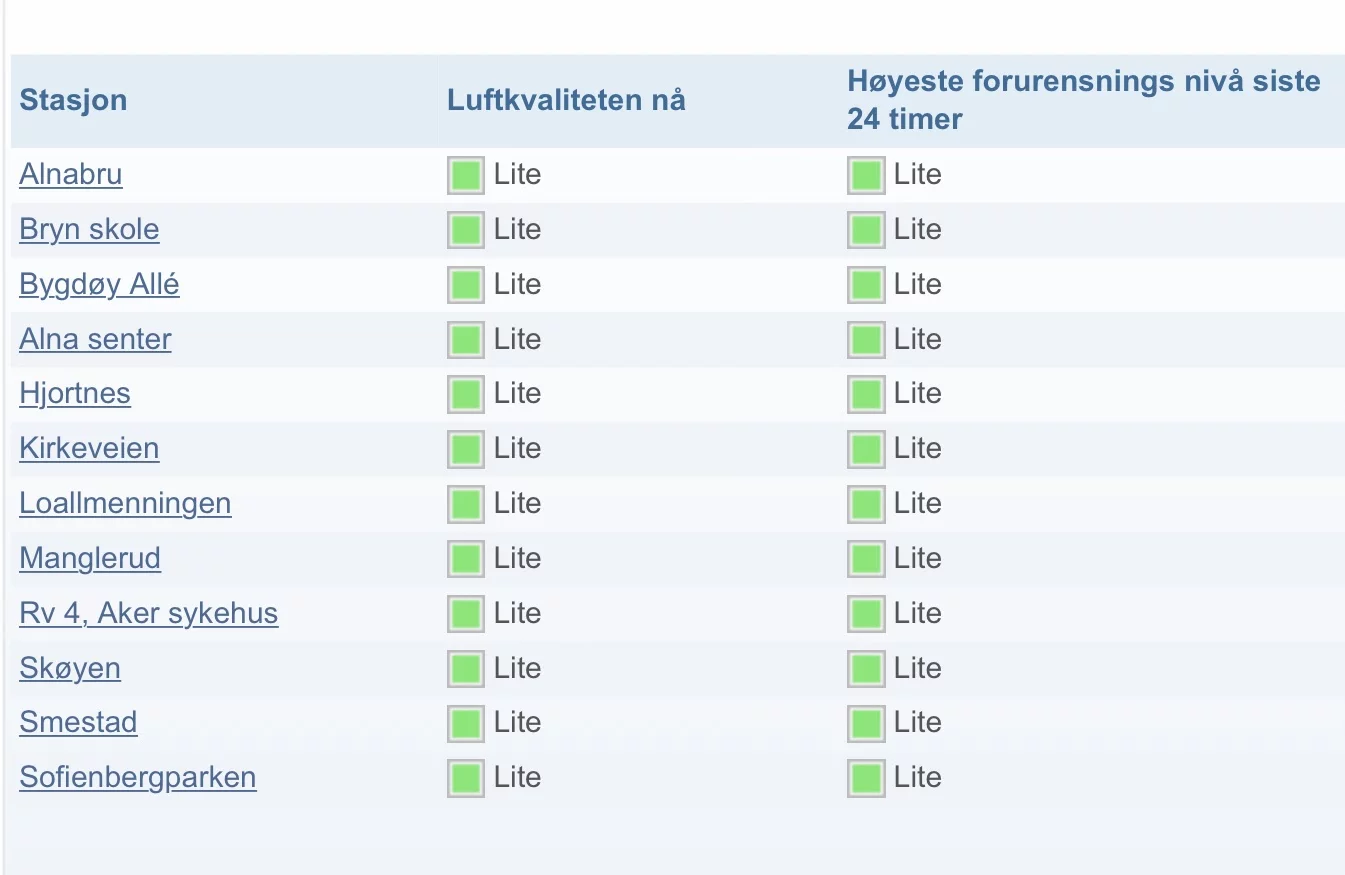
The data is available online through Norway’s official air quality service, Luftkvalitet i Norge. The service provides current measurements and forecasts, including colour-coded warnings for good, moderate, poor and very poor air quality.
This is useful for anyone with asthma or other respiratory conditions, but also for parents, runners, cyclists and anyone planning outdoor activity on cold winter days.
What Oslo is doing next
Oslo’s air quality work is now focused less on one single fix and more on a package of measures.
These include continued road cleaning and dust suppression, environmental speed limits, maintaining the option of temporary diesel bans during severe pollution episodes, reducing emissions from Oslo port, and encouraging cleaner heating and better wood-burning practices.
Oslo has also tested lower-cost air quality sensors in research projects. These do not replace official monitoring stations, but they may help improve understanding of highly local pollution, including particles from wood burning in residential areas.
The next challenge is regulation. Norway’s existing air quality rules already set legal limits, while health authorities recommend stricter criteria because health effects can occur below the legal thresholds.
In addition, new European air quality rules are expected to tighten standards toward 2030.
That means Oslo may have to do more, even though the city’s air has already improved a lot.
Cleaner, but not solved
For most visitors, Oslo will feel like a clean-air city. On many days, it is.
But the capital’s air quality varies by season, weather and location. A walk through a park or by the fjord can feel very different from standing beside a busy road on a cold, dry winter morning.
The long-term story is positive. Oslo’s air is much cleaner than it used to be. But the remaining problems are real, especially for people with asthma and other health conditions.
So, while Oslo can rightly point to decades of improvement, clean air remains something the city has to actively work for.