
An electric hydrofoil ferry capable of cutting commuting times by hours has begun a trial operation across the Trondheimsfjord, reviving a long-lost passenger route and reintroducing “flying ferries” to the city’s waterways.
From mid-December, the Candela P-12, the world’s first electric hydrofoil passenger ferry, will operate between Frosta Brygge and Trondheim as part of the Frostabåten project. The trial will run into January, with further testing planned into 2026.

The route reconnects Frosta with Trondheim by water for the first time since 1970. Today, residents of the growing seaside community must rely on road transport, facing journeys of up to 90 minutes each way.
By crossing the fjord directly, such a service would cut travel time to around 30 minutes, potentially saving commuters close to two hours per day.
A Modern Take on a Historic Route
Fast ferries are not new to Trondheim. The route last operated in 1970 using a diesel-powered PT-20 hydrofoil, which offered rapid crossings but proved too expensive to run. High fuel costs ultimately made the service unsustainable, particularly as road infrastructure improved.
“We’re bringing flying boats back to Trondheim, but this time they are electric, whisper-quiet, and vastly more efficient,” says Alexander Sifvert, Head of Candela’s European operations.
Faster, Quieter, and Cheaper to Operate
The P-12 cruises at 25 knots and has an all-electric range of 40 nautical miles, making it the fastest and longest-range electric passenger vessel currently in operation.
Unlike traditional electric fast ferries, which often require large and costly charging infrastructure, the P-12 can be charged using a relatively simple DC charger similar to those used for electric cars.
This is particularly significant in Norway, where electrifying high-speed maritime routes has proven difficult despite strong political backing for zero-emission fjords.
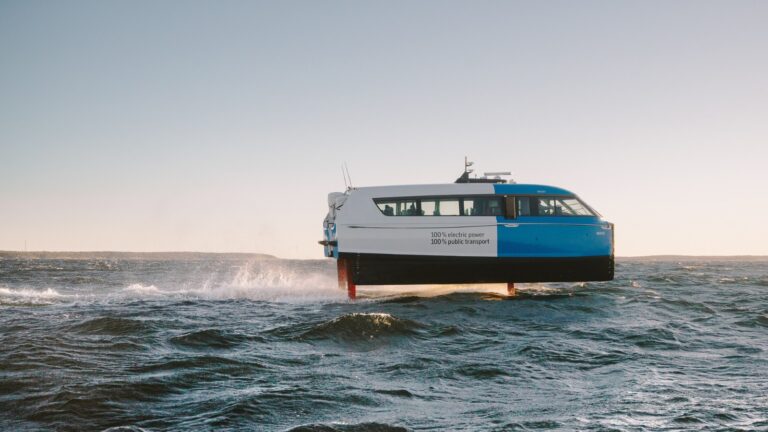
Conventional hull designs consume large amounts of energy at speed, limiting range and driving up costs. By reducing drag, hydrofoils offer a way around that bottleneck.
Electricity costs are also low in the Trondheim region, where hydropower dominates the energy mix. Together, these factors bring operating costs closer to those of land-based public transport such as buses.
Testing the Future of Fjord Transport
The Frostabåten project is a collaboration between property developer Frosta Brygge, NTNU, Trondheim Port, the Ocean Autonomy Cluster, and regional and municipal authorities. NTNU’s Shore Control Lab will also be involved, supporting research into operations and future applications.
While the initial tests start in mid-December, extended testing should continue into January 2026. The goal is to assess not just the technology itself, but how electric hydrofoil ferries could fit into Norway’s wider transport network.