
At a time when much of Europe is debating tourist taxes, entry caps and cruise limits, Sweden is taking a very different approach.
Instead of restricting visitors, the country’s national tourism board is offering five international applicants the chance to “adopt” an uninhabited Swedish island for a year.
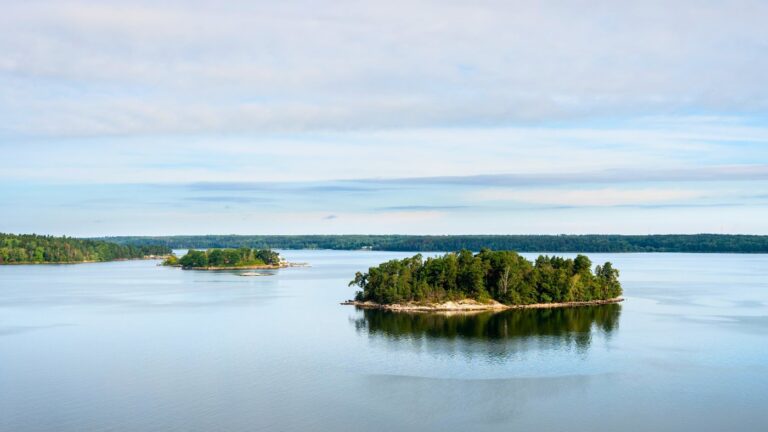
The initiative, called Your Swedish Island, promises flexible usage rights to five remote islands scattered across Sweden’s vast archipelagos and inland waters.
Winners will receive round-trip flights to Sweden and a symbolic certificate granting custodianship for 12 months. It sounds like a castaway fantasy. But the reality is a little more nuanced.
A Country Built on Open Space
Visit Sweden launched the campaign in partnership with National Property Board of Sweden, which manages state-owned natural and historic sites.
Sweden often reminds the world that it has more islands than any other country: around 267,000 in total. Only about 1,000 are inhabited.
“Sweden has more islands than any other country in the world, and we would like to invite people to enjoy what may be the most genuine form of luxury: the peace and tranquility of nature on your own island,” said Visit Sweden CEO Susanne Andersson in a statement announcing the initiative.
The campaign also cleverly spotlights Sweden’s cultural cornerstone: allemansrätten, or the Right of Public Access.
The same concept as Norway's own right to roam rules, the centuries-old principle allows anyone to roam freely across most land, including camping temporarily on many islands, provided they respect nature and wildlife.
In other words, Sweden is marketing openness at a time when others are tightening the gates.
The Five Swedish Islands
The five selected islands offer a cross-section of Sweden’s geography, stretching from inland freshwater to exposed Baltic and west coast environments.
One sits on Lake Vänern near Lidköping, surrounded by pine and spruce forest and within sight of Läckö Castle. Farther north, near Umeå, another island lies in calm brackish waters shaped by post-Ice Age land uplift, offering a quieter, more remote Baltic setting.
Closer to Stockholm, two islands represent classic archipelago terrain: smooth granite rock formations, open sea views and little natural shelter, including one within the Stockholm Archipelago and another near Nynäshamn.
These are the quintessential skerries of Swedish postcard imagery, defined more by wind, salt and horizon than forest.
On the west coast near Falkenberg, the final island offers a fully marine environment along the Kattegat, with pale rock, sparse vegetation and wide skies.
Together, the five locations reflect what Visit Sweden calls “rawness and simplicity”. It's a deliberate contrast to the idea of polished, fully serviced private-island luxury.
What You Actually Win
Despite the headlines, winners do not gain ownership, development rights or exclusive access. The islands remain public land. Under allemansrätten, other visitors may still legally access them.
There is no electricity, plumbing or permanent accommodation. Winners are permitted to camp and make short visits but are not expected to live there full-time. Internal transport within Sweden, including boat access to the island, is not included in the prize.
In practice, the award functions as symbolic custodianship. The tourism board describes it as an invitation to “slow down” rather than relocate.
Applicants must submit a video of no more than one minute explaining why they want an island and how they would use it. Posting publicly on Instagram or TikTok with the campaign hashtags can strengthen an application.
The deadline is 17 April, 2026, with winners announced in early summer.
Notably, Swedish citizens and billionaires are excluded. That's an on-brand nod toward egalitarian Nordic values, even if wealth verification relies largely on self-declaration.
Smart Branding in an Age of Overtourism
Across Europe, destinations from Barcelona to Venice are grappling with overtourism. Sweden’s message is almost the inverse: we have space.
Rather than selling luxury villas or private exclusivity, the campaign reframes “private island” as emotional rather than material. It leans heavily on Sweden’s cultural narrative of simplicity, nature access and understated wealth.
For travellers, the appeal is obvious. The idea of having a rugged Baltic outcrop or a forested lake island to yourself for even a weekend taps directly into post-pandemic desires for silence, space and digital detox.
But perhaps the cleverest detail is this: even if you don’t win, the campaign reinforces the idea that Sweden’s landscapes are accessible to everyone.
In a tourism market increasingly defined by scarcity and restrictions, Sweden is marketing abundance.