
Whether you’re staying overnight or longer, Bodø offers plenty to do, from harbour walks and museums to dramatic nature experiences just beyond the city limits.
Once known primarily as a transport hub for travellers heading further north, Bodø has quietly grown into a destination in its own right.
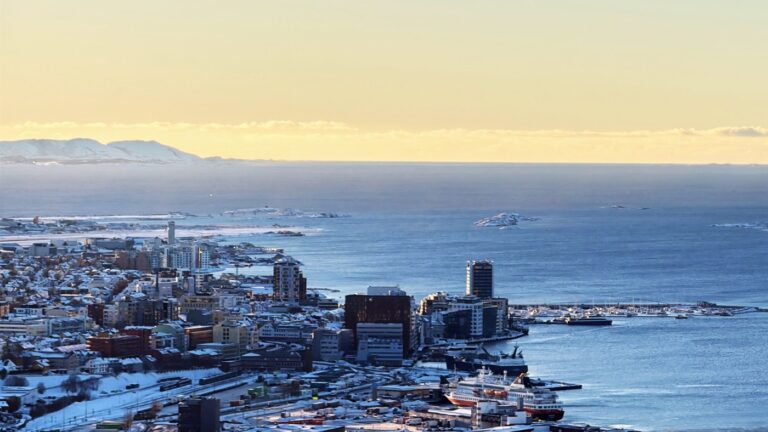
Set on an exposed stretch of coastline just north of the Arctic Circle, the city combines raw nature and a strong local identity shaped by coastal culture, the weather and the wild ocean.
Recently, the city has been thrust into the spotlight like never before. As European Capital of Culture in 2024, Bodø presented itself on the world stage with confidence.
Whether you’re stopping for a night or planning a longer stay, here are ten ways to experience Bodø at its best.
Watch: The Best of Bodø
If you prefer video, check out my recommendations in my Best of Bodø video, which I just updated after my recent visit.
If you enjoyed that, please subscribe so you won't miss out on future videos. And don't forget to read on for lots more information on what to see and do in and around the city.
1. Experience the Power of Saltstraumen
Just outside the city lies Saltstraumen, one of the strongest tidal currents in the world and Bodø’s most famous natural attraction.
As enormous volumes of water are forced through a narrow strait between fjords, the tide accelerates dramatically, creating powerful whirlpools and swirling eddies. At peak flow, the water surface boils and twists in a way that feels more oceanic than coastal, a reminder of just how exposed this part of Norway really is.
Saltstraumen is not a place for casual sightseeing. Timing is everything. Because the current is driven entirely by the tides, conditions change constantly throughout the day. Visit at slack water and the strait can look almost calm.
Arrive at maximum flow, and the transformation is striking. Checking tide tables before you go is essential.
There are several viewpoints on both sides of the strait, along with bridges and coastal paths that allow you to watch the current from different angles.
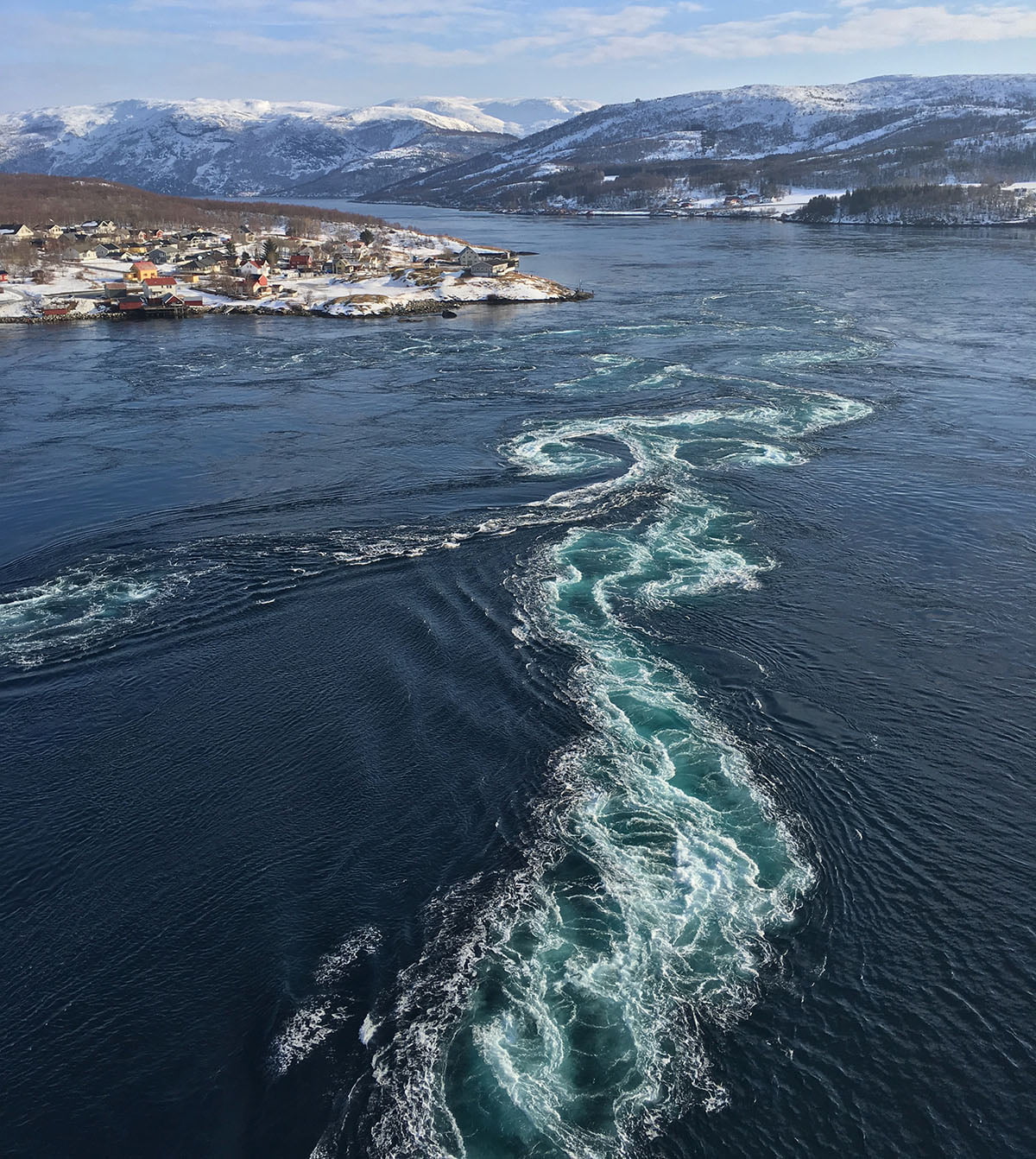
For a closer encounter, RIB boat tours operate from Bodø, taking visitors directly into the current’s outer edges. These tours are particularly popular with travellers arriving on the Norwegian coastal ferry and offer a dramatic perspective on the forces at work.
Saltstraumen also highlights one of Bodø’s greatest strengths. World-class nature is not something you need to travel far to reach. It sits right on the city’s doorstep, shaping both the landscape and the mindset of the people who live here.
2. Walk Along the Harbour
Bodø’s harbour is the city’s natural focal point. Open, windswept, and facing straight out to sea, it gives you an immediate sense of how exposed this place really is.
A particularly good stretch to walk is the Moloen promenade, which runs along the breakwater at the edge of the harbour.
Here, a series of seven untitled granite sculptures rise from the shoreline, positioned directly in the path of wind and waves. Simple and abstract, they feel less like decorative artworks and more like quiet markers of the forces that shape this coast.
From the promenade, the view back across the water takes in fishing boats, coastal ferries, and the city skyline beyond. Modern buildings such as the Stormen Library stand out clearly.
Even a short walk here helps you understand Bodø’s relationship with the elements, and why weather is such a defining part of daily life in the city.
3. Admire Stormen Library
One of Bodø’s architectural highlights is the Stormen Library, a modern cultural space set right on the waterfront. Step inside to see how the large windows frame the views of the sea and sky, making the building feel closely connected to its surroundings.
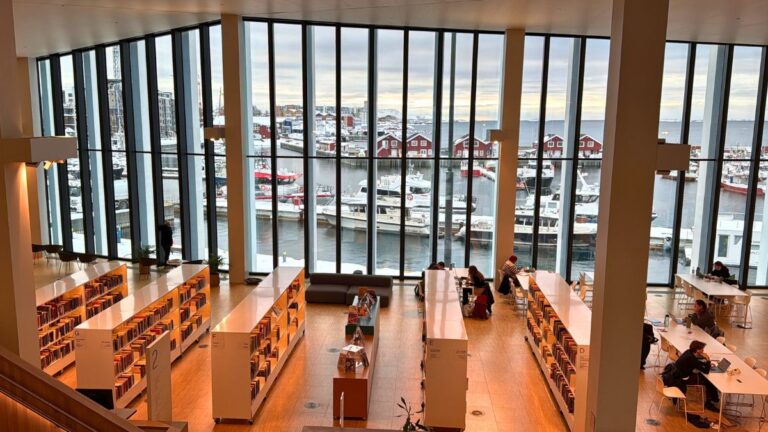
The library is part of the wider Stormen complex, which also includes Stormen Concert Hall. Together, they form the heart of Bodø’s cultural life, hosting everything from concerts and theatre to talks and festivals.
4. Explore Bodø City Museum
Next to the cathedral stands the bright yellow Bodø City Museum, part of the Nordland Museum network.
This is the best place to learn about everyday life in the region, from coastal traditions and trade to wartime history. It’s compact, well curated, and easy to combine with a walk through the city centre.
Nordland Museum operates many other museums throughout the region, so if you're spending a longer time in the region it's well worth checking their website to see what else is on offer.
5. Discover the Norwegian Aviation Museum
A short trip out of town brings you to the Norwegian Aviation Museum, one of Norway’s most engaging specialist museums.
The museum is divided into civil and military aviation, allowing visitors to explore everything from early Norwegian flight and commercial aviation to fighter jets and surveillance aircraft from the Cold War era.
Bodø’s strategic location, close to the Soviet Union and deep inside NATO’s northern defenses, gives many of the exhibits added weight.
Stories of reconnaissance missions, airspace tensions, and everyday life on a Cold War airbase help bring this period to life, even for those with little prior interest in aviation. Interactive displays and full-size aircraft make the museum accessible to families as well as history enthusiasts.
6. Try Local Chocolate at Craig Alibone
Bodø has an unexpectedly refined food highlight in Craig Alibone Pâtisserie & Chocolaterie. The British chocolatier has lived in Bodø for many years and built an outstanding reputation.
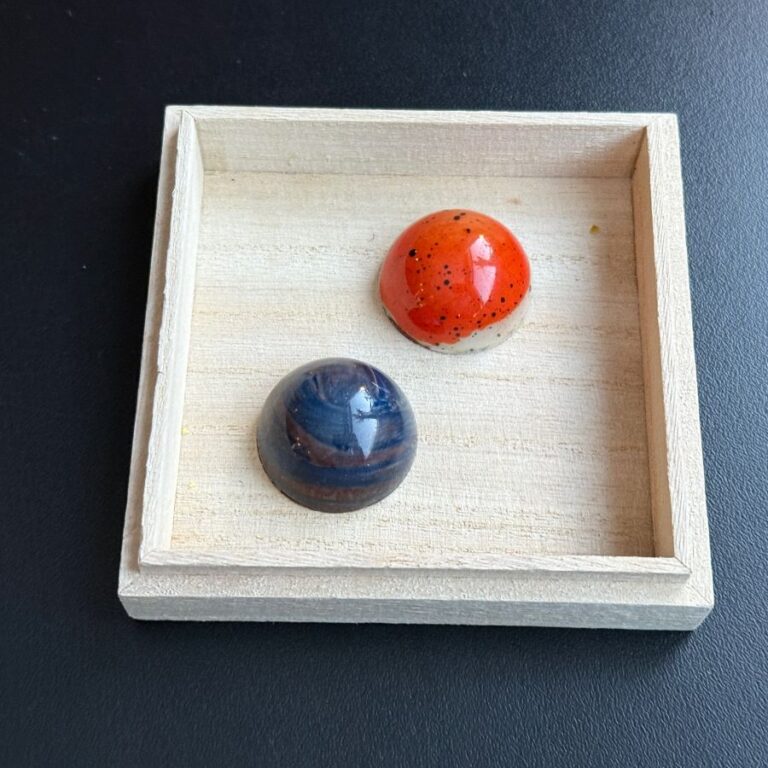
This is both a chocolate shop and a champagne bar, and it’s an easy way to add something memorable to a city walk. If you're in Bodø for a few days, look out for the brunch deals and other events.
But even if you miss a special event, pop into the store to try a single chocolate or browse their bars for takeaway or souvenirs. My recommendations are the savoury flavours, or anything including salt. Yum!
7. Watch a Bodø/Glimt Match
Football has become one of Bodø’s defining features. Bodø/Glimt’s rise from a small provincial team to European giant-killers has drawn international attention.
Watching a match at Aspmyra Stadion is a raw, local experience, helped by the fact that Norway plays a summer football season, typically from late March through to November.
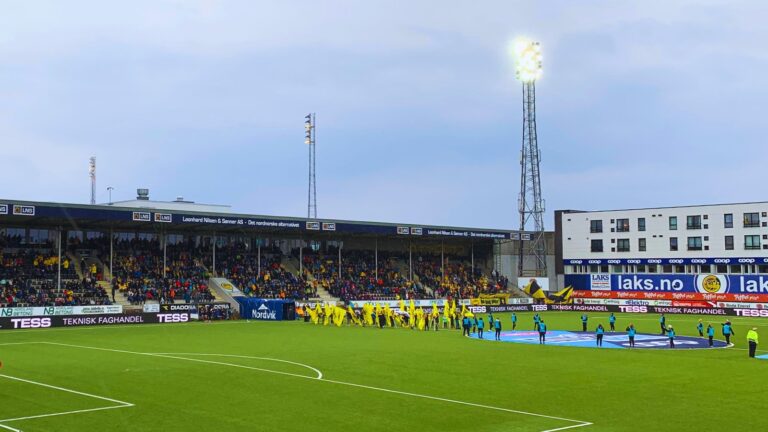
Don't expect to get a ticket for Glimt's major European matches. But a regular Eliteserien match? You should be fine. Book tickets in advance at glimt.no.
8. Look for the Northern Lights
From autumn through early spring, Bodø sits far enough north to experience the northern lights. On clear nights, aurora borealis can sometimes be seen from beaches, hills, or just outside the city centre.
If you're treated to a strong show, you'll see it from the city itself, although it will always be clearer if you can get away from the city lights.
While sightings are never guaranteed, the combination of open skies and coastal landscapes makes Bodø a rewarding place to watch for them.
9. Scout Bodø's Street Murals
Bodø’s street art scene is small but thoughtful, and it rewards anyone willing to slow down and look beyond the main streets. Among the murals scattered around the city centre, one stands out in particular.
My personal favourite depicts a graffiti artist mid-spray, but instead of paint, the can releases flowing bands of green light, transforming into the northern lights across the wall. It’s playful, striking, and unmistakably northern.
The mural works especially well in Bodø because it reflects the city’s character. This is a place where modern life and raw nature constantly overlap. You might be walking past concrete buildings and working harbours, yet the aurora can appear overhead on a clear night.
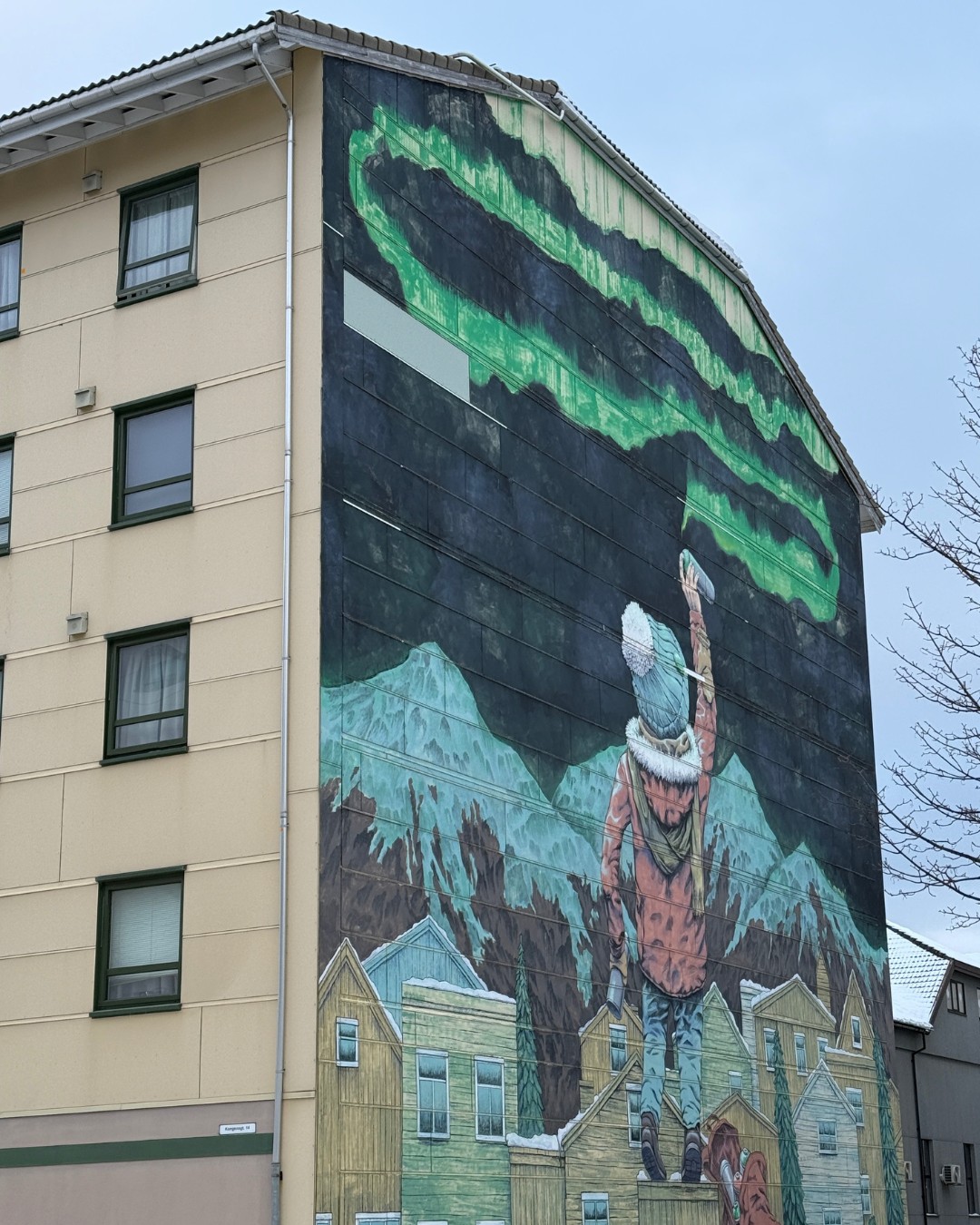
Like much of Bodø’s street art, the mural isn’t signposted or packaged as an attraction. You come across it by wandering, which makes the discovery feel more rewarding.
10. Shopping at City Nord
Right next to the aviation museum is City Nord, the largest shopping centre in Northern Norway.
While not a traditional sightseeing stop, it’s a practical place to eat, warm up, or pick up anything you might need, especially for road trips or on days when the weather makes outdoor exploring less appealing.
Considering the small size of the city centre, City Nord feels like a metropolis and is useful especially for drivers and those heading over to Lofoten.
Best Places to Stay in Bodø
Bodø offers a good range of accommodation, from practical city-centre hotels to more distinctive stays with standout views.
For a reliable central option, the Radisson Blu Hotel Bodø is a popular choice. Its location by the harbour makes it easy to explore the city on foot, and Bar 13 on the top floor is one of the best places in town to take in Bodø’s coastal setting.
For something more dramatic, the Wood Hotel Bodø stands out. Perched on a hilltop just outside the centre, it offers sweeping views across the city and sea, along with a spa and restaurant. It’s also one of the better places to stay if you’re hoping to spot the northern lights.
Other solid options include the Scandic Havet, a modern high-rise near the harbour with panoramic views, and Thon Hotel Nordlys, which combines a central location with easy access to coastal walks and transport links.
Beyond Bodø
One of Bodø’s greatest strengths is its location. The city works not only as a destination but also as a base for exploring some of Northern Norway’s most dramatic landscapes.
To the south and east lies Svartisen, Norway’s second-largest glacier. Reaching it usually involves ferries, short drives, and hiking, but the reward is an unforgettable encounter with raw ice in a coastal Arctic setting.
To the north and west lie the Lofoten Islands, one of Norway’s most visually striking regions. Jagged granite peaks rise directly from the sea, fishing villages cling to narrow strips of land, and beaches with white sand and turquoise water look almost out of place this far north.
The contrast between scale, light, and weather is what makes Lofoten so memorable.The islands are known for outdoor experiences in every season. In summer, hikers tackle mountain trails under the midnight sun, while kayakers and photographers take advantage of long hours of light.
In winter, Lofoten becomes a magnet for northern lights hunters, surfers chasing Arctic waves, and travellers drawn to its quieter, more atmospheric side.
For many visitors, Bodø serves as the main gateway, with regular ferries, flights, and coastal ships connecting the city to the islands. But that constant movement has long overshadowed Bodø itself.
Increasingly, travellers are choosing to slow down, using Bodø not just as a transit point, but as a complementary destination.