

Iceland played a decisive role in the final centuries of the Viking Age, not as a raiding frontier but as a place of settlement, law, and storytelling.
Iceland’s Viking past is sometimes misunderstood. There are no dramatic ship burials emerging from the soil, no rune stones lining ancient roads, and no fortified Viking towns of the kind found elsewhere in Scandinavia.

Yet Iceland holds an important place in Viking history, one that arguably tells us more about how Viking society actually functioned than many better-known sites.
Here, the Viking Age was not defined by raids or conquest. It was shaped by migration, settlement, and the creation of a society without a king.
Iceland also became the place where the Viking world’s stories were preserved, written down, and ultimately passed on to future generations.
Table of Contents
Iceland and the Viking World
By the late ninth century, the Viking world was already changing. Population pressure in western Norway, increasing political centralisation, and the growing power of regional kings pushed many Norse families to look outward.
Iceland offered something rare in the Viking Age: land that was unclaimed and beyond royal control.
Unlike the British Isles or parts of mainland Europe, Iceland was not a target of Viking raids. There were no wealthy monasteries to plunder and no cities to capture.
Instead, Iceland became a destination for settlers seeking autonomy and opportunity. This distinction shaped everything that followed.

The result was a Viking society focused less on expansion and more on community, law, and survival at the edge of the known world.
The First Settlers of Iceland
The Norse were the first permanent settlers of Iceland, but they were not necessarily the first humans to set foot on the island.
Medieval sources describe Irish monks, known as papar, who may have lived briefly in Iceland before withdrawing as Norse settlers arrived. Archaeological evidence is limited, but the tradition survives in early texts and place names.
The main settlement period, known as Landnám, took place between around AD 870 and 930. Most settlers came from western Norway, but genetic studies show a significant contribution from the British Isles, particularly among women.
This reflects the complex reality of Viking expansion elsewhere and the interconnected nature of the North Atlantic world.
Settlement in Iceland was organised and deliberate. Families claimed land, established farms, and adapted quickly to a harsh volcanic environment. Longhouses formed the heart of daily life, sheltering people, animals, and supplies through long winters.
A Society Without a King
One of Iceland’s most remarkable Viking-Age achievements was the creation of a functioning society without a monarch. In AD 930, Icelanders established the Althing, a national assembly that met annually at what is now Þingvellir National Park.
Here, laws were recited aloud, disputes settled, and alliances forged. Power rested not with a king, but with local chieftains known as goðar, whose influence depended on support rather than force. The system was fragile and often violent, but it endured for centuries.
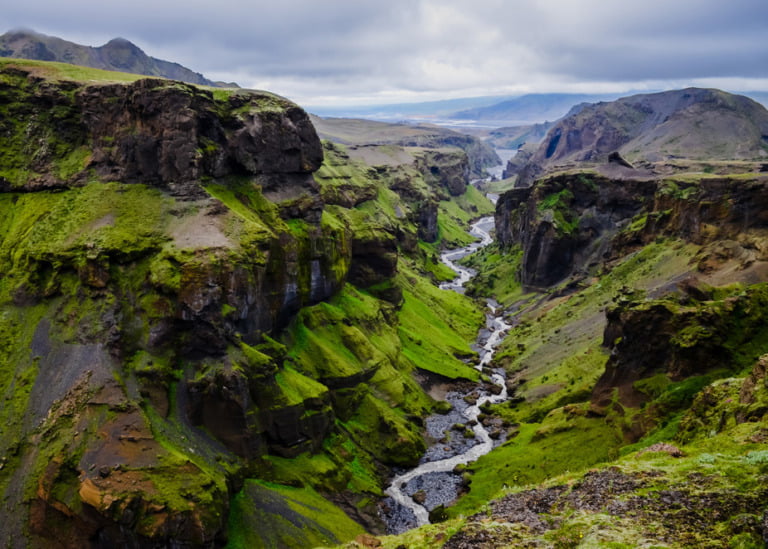
Today, Þingvellir is both a dramatic natural landscape and one of the most important historical sites in the Viking world. Few places illustrate the Icelandic approach to law, governance, and identity more clearly.
Why the Icelandic Sagas Matter
Much of what we know about Viking society comes not from archaeology, but from literature. Iceland’s sagas are among the most important sources for understanding the Viking Age, even though they were written down centuries after the events they describe.
Originally part of a rich oral tradition, the sagas were committed to parchment in the twelfth to fourteenth centuries.
They blend history, genealogy, law, and drama, creating narratives that feel strikingly modern. Characters are complex, motivations are ambiguous, and violence is often presented as tragic rather than heroic.
Although their historical accuracy cannot always be confirmed, the sagas preserve social norms, legal practices, and cultural values that archaeology alone cannot provide. Without Iceland, our understanding of the Viking world would be far more limited.
Discovering the Sagas in Reykjavik
Modern Reykjavik offers several ways to engage with Iceland’s saga heritage. The Saga Museum presents key moments from the sagas through immersive displays and English-language audio narration, making complex stories accessible to visitors.
For a lighter but surprisingly informative introduction, Icelandic Sagas: The Greatest Hits condenses centuries of feuds, poetry, and bloodshed into a fast-paced English-language performance that captures the dark humour of the originals.
The Settlement Exhibition at Aðalstræti takes a more archaeological approach. Built around the remains of a tenth-century longhouse uncovered during construction work, it uses digital interpretation to reconstruct daily life during the earliest settlement period.
For visitors wanting to see Viking-Age artefacts rather than reconstructions, the National Museum of Iceland provides essential context, tracing Icelandic history from settlement through the medieval period and beyond.
Two prominent sculptures in the city also reference Iceland’s Viking past. The Sun Voyager resembles a Viking ship but was conceived as an abstract dream vessel, symbolising exploration and hope.
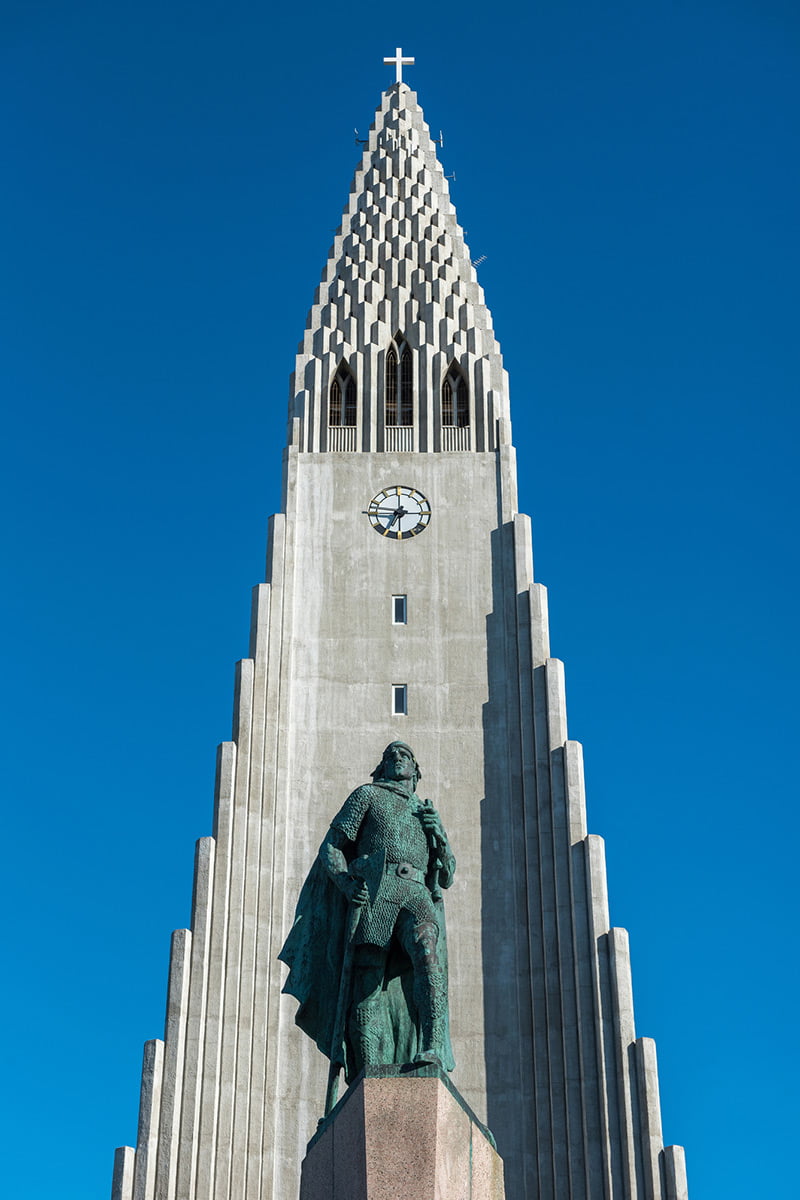
Nearby, a statue of Leif Erikson stands outside Hallgrímskirkja, commemorating Iceland’s most famous voyager.
Hofsstaðir and Viking Power Centres
Just outside Reykjavik, the Viking Age site of Hofsstaðir offers a glimpse into the realities of elite life during the settlement period. Discovered by chance during construction work in the 1980s, excavations revealed a large longhouse capable of housing several dozen people.
The finds suggest Hofsstaðir was more than a simple farm. Imported goods, weapons, and animal remains hint at feasting and displays of power, challenging the idea that early Icelandic society was uniformly modest or isolated.
Further north, near Lake Mývatn, Hofstaðir archaeological site represents one of the most important Viking Age excavation sites in the country.
Here, a large hall appears to have functioned as a ceremonial and feasting centre, reinforcing the idea that power and ritual played a role in Icelandic settlement society.
Viking Ships and Atlantic Exploration
No Viking ships have been excavated in Iceland, largely due to soil conditions and the nature of settlement. Even so, Iceland has embraced its maritime heritage through reconstruction.

Built in 1996, the Íslendingur is a full-scale replica of Norway’s Gokstad ship. Its successful Atlantic crossing demonstrated that Viking ships were capable of long-distance ocean travel, lending weight to theories about Norse exploration of Greenland and North America.
The ship is housed at Viking World, a small museum near Keflavik International Airport that many visitors pass without realising its significance.
Other Key Viking Age Sites in Iceland
In western Iceland, the Settlement Center Borgarnes uses multimedia storytelling to explore Egils Saga. Egill Skallagrímsson, a poet and warrior, embodies many Viking contradictions, capable of brutal violence and refined artistry.
Nearby, Snorrastofa preserves the legacy of Snorri Sturluson, whose writings remain foundational for our understanding of Norse mythology and Viking history.
At Stöng Commonwealth Farm, reconstructed buildings based on archaeological evidence show how Viking-Age farms functioned before being buried by a volcanic eruption in 1104. The site is seasonal, but offers rare insight into everyday life during Iceland’s Commonwealth period.
For visitors interested in how Viking stories survived at all, World in Words explores Iceland’s manuscript tradition and the written preservation of the sagas.
Viking Festivals and Modern Myth-Making
Iceland continues to celebrate its Viking heritage, sometimes with more enthusiasm than historical precision. The annual Viking Festival in Hafnarfjörður, typically held in mid-June, blends combat displays, crafts, music, and costume to create a lively, theatrical experience.
While such events often reinforce popular stereotypes, they also highlight the enduring power of Viking identity in modern Icelandic culture.
Iceland Beyond the Vikings
Even if the Viking Age is your starting point, Iceland quickly becomes a story of landscape. Many travellers combine Viking history with the classic Golden Circle route, where Þingvellir sits alongside erupting geysers and powerful waterfalls.
Beyond that, Iceland’s south coast delivers black-sand beaches, glaciers, and dramatic coastal scenery, while the north offers whale watching and quieter towns shaped by fishing and trade.
Geothermal bathing provides a perfect counterbalance to museums and manuscripts, whether in a famous lagoon or a local swimming pool.
Add Reykjavik’s food scene, café culture, and contemporary design, and Iceland reveals itself as far more than a Viking destination. The sagas may draw you in, but the landscape and modern culture ensure there is plenty more to explore.