
Sport in Norway is not just about snow and skis. Handball is one of the nation’s greatest sporting success stories, particularly on the international stage.
When people think of sport in Norway, images of snow-covered forests, cross-country skis, and biathletes gliding through the winter landscape usually come to mind.
Skiing remains the country’s most visible and culturally embedded sport, sometimes even serving as everyday transport rather than organised competition.
Yet away from the mountains and ski tracks, Norway shares a deep enthusiasm with much of continental Europe for a fast, physical indoor sport that remains surprisingly unfamiliar in the English-speaking world.
Handball is played in schools, community sports halls, and packed arenas across the country, and at elite level it is one of Norway’s most successful team sports on the international stage.
How Handball Is Played
The combination of speed, physical contact, and athletic movement makes handball one of Europe’s most dynamic indoor sports. Whether you want to take part or simply watch a game, here's how its played.
Handball is a high-intensity indoor sport played on a rectangular court measuring 40 by 20 metres, with a goal at each end. Each goal is surrounded by a six-metre area known as the goal zone, which only the goalkeeper may occupy while touching the ground.
Two teams of seven players compete over two 30-minute halves. Players may pass, throw, catch, and dribble the ball, but movement is strictly regulated.
A player may take only three steps without dribbling and may hold the ball for no more than three seconds when stationary.
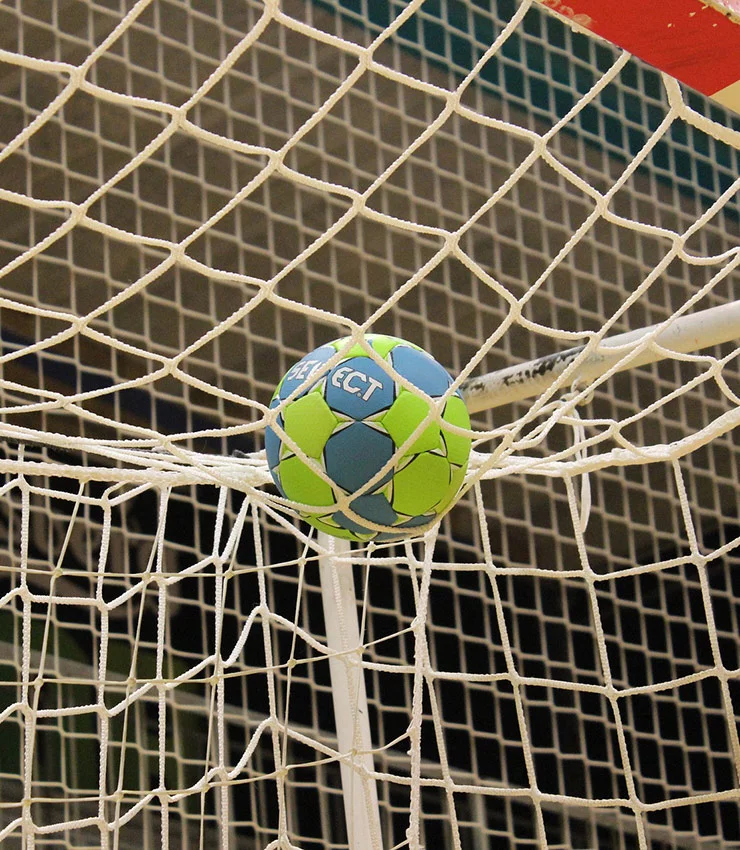
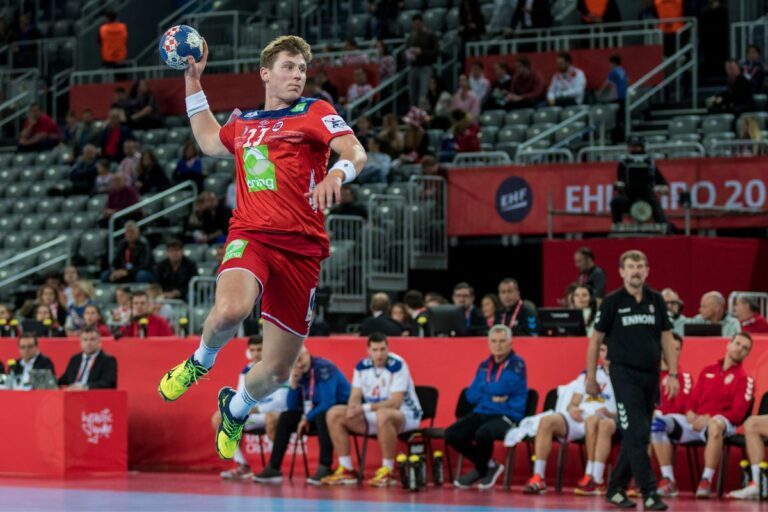
One of the most recognisable aspects of handball is the airborne shooting technique. Attacking players frequently leap into the air from outside the goal area, releasing the ball while airborne before landing inside the zone.
Handball’s Place in Norwegian Society
Handball holds a unique position in Norwegian sport. While football dominates participation numbers, handball has long been a cornerstone of youth sport, particularly for girls and women.
Many Norwegians are introduced to handball at school or through local clubs, and indoor sports halls across the country are in constant use during the long winter season.
The sport is deeply embedded at grassroots level, with a strong volunteer culture and a well-structured development pathway. This broad base has been crucial to Norway’s sustained success, particularly in the women’s game.
Norway’s National Handball Teams
Norway’s national handball teams have delivered some of the country’s greatest sporting achievements, led by a women’s side that has dominated international competition for decades.
The Women’s National Team
Norway’s women’s national handball team is one of the most successful teams in the history of the sport. For decades, it has been a permanent contender at every major international tournament, combining technical excellence with physical resilience and tactical discipline.
Olympic success has been a defining feature. Since first qualifying in the late 1980s, Norway has won multiple Olympic medals, including gold in 2008 and 2012, along with silver and bronze finishes across several Games.
Few national teams, in any sport, have maintained such consistency over such a long period.
The team’s dominance is even more pronounced at European Championship level, where Norway has won numerous titles since the late 1990s. At World Championships, gold medals on home soil in 1999 and later victories in 2011 and 2015 cemented Norway’s status as a global handball powerhouse.
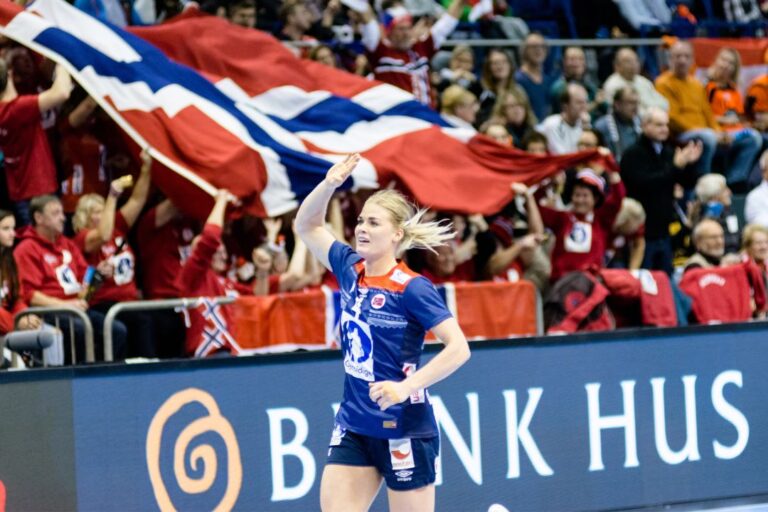
This sustained success is not tied to a single generation. Instead, it reflects long-term player development, strong domestic competition, and continuity in coaching philosophy.
The Men’s National Team
Norway’s men have historically lagged behind their female counterparts, but the picture has changed significantly in recent years.
After decades of limited success, the men’s team reached the final of the World Championship in 2017 and again in 2019, signalling a clear shift in competitiveness.
While Olympic qualification remains elusive compared to the women’s side, Norway’s men are now regular contenders in major tournaments and have established themselves among Europe’s second tier of elite handball nations.
This improvement mirrors broader developments in the domestic league and youth system.
The Norwegian Domestic Handball League
The top tier of Norwegian club handball is the Eliteserien, which exists in parallel men’s and women’s competitions. Each league typically features twelve teams, with promotion and relegation linking the top division to lower tiers and ensuring a steady flow of new talent into the elite level.
Men’s Club Handball
Historically, clubs such as Sandefjord TIF dominated Norwegian men’s handball, particularly during the late twentieth century. In recent years, however, the competitive centre of gravity has shifted decisively.
Elverum Handball have emerged as the country’s leading men’s club, combining domestic success with regular participation in European competition.
Their repeated appearances in the EHF Champions League have raised both the standard and the visibility of Norwegian men’s club handball, providing valuable experience against Europe’s strongest teams.
Although Norwegian clubs still operate with significantly smaller budgets than elite sides in Germany, France, or Spain, sustained European exposure has narrowed the competitive gap and contributed to the national team’s improved international performances.
Women’s Club Handball
Norwegian women’s club handball has historically enjoyed far greater international success. Larvik HK dominated domestically for more than a decade, winning title after title and establishing themselves as a European powerhouse during the 2000s and 2010s.
In the early 2020s, Vipers Kristiansand rose to unprecedented heights, winning multiple EHF Champions League titles and becoming one of the most successful clubs in Europe.
However, financial difficulties led to Vipers’ collapse and withdrawal from elite competition in late 2023, a reminder of the economic challenges facing top-level handball clubs even in successful sporting nations.
As of 2026, the women’s Eliteserien is more open and competitive, with several clubs sharing domestic success rather than one dominant force.
While no single team has yet replicated the sustained European impact of Larvik or Vipers, the league continues to produce elite players and remains a crucial foundation for Norway’s continued international success.
Norwegian Clubs in European Competition
European club competition represents the highest level of handball outside international tournaments. Norwegian participation has historically been uneven, with women’s teams achieving far greater success than men’s.
For many years, Larvik HK were Norway’s standard-bearers in the EHF Champions League, reaching finals and regularly competing with Europe’s elite during their period of domestic dominance.
In the early 2020s, Vipers Kristiansand went even further, winning multiple Champions League titles and briefly establishing a Norwegian club at the very summit of European handball.
Their success demonstrated that Norwegian teams could compete athletically with the continent’s strongest sides, even if doing so placed heavy financial demands on the club.
Following Vipers’ withdrawal from elite competition, Norway’s presence in the women’s Champions League has become more transitional, with clubs continuing to qualify but without the sustained dominance seen in previous eras.
On the men’s side, Norwegian participation in European competition has increased steadily. Elverum Handball have become regular representatives in the EHF Champions League and European League, providing Norwegian players with consistent exposure to top-level opposition.
While deep tournament runs remain rare, this experience has played an important role in raising domestic standards and strengthening the men’s national team.
Prominent Norwegian Handball Players
Norway’s long-standing success in handball has produced an exceptional number of elite players, many of whom have shaped the international game as well as Norway’s domestic sporting identity.
On the women’s side, Gro Hammerseng-Edin remains one of the most influential figures in Norwegian handball history.
A former national team captain, she earned more than 160 international caps and was named IHF World Player of the Year in 2007. Known for her tactical intelligence and leadership, she played a central role in Norway’s rise to dominance in the late 2000s.
Goalkeeper Katrine Lunde stands apart even among an illustrious generation.
Widely regarded as one of the greatest goalkeepers the sport has ever seen, Lunde has won multiple Olympic gold medals, World Championship titles, and European Championships with Norway, in addition to several EHF Champions League titles at club level.
Her international career spans more than two decades, with well over 300 appearances for the national team, an extraordinary level of longevity in elite handball.
Line player Heidi Løke was another cornerstone of Norway’s golden era. With more than 200 caps, she was a key figure in multiple Olympic, World Championship, and European Championship victories, renowned for her physical presence, defensive work, and ability to score under pressure.
In more recent years, Nora Mørk has emerged as one of the defining players of modern women’s handball. A prolific right back, she has been top scorer at major international tournaments and has won the EHF Champions League multiple times with clubs such as Győri ETO KC and Vipers Kristiansand.
Despite suffering serious injuries during her career, Mørk has consistently returned to the top level and remains a central figure for Norway.
The men’s game has also produced internationally recognised stars, particularly as Norway’s competitiveness has increased since the mid-2010s.
Sander Sagosen is the standout name. A powerful playmaker with exceptional vision, Sagosen became one of the youngest players ever to be named IHF World Player of the Year, achieving the honour in 2020.
He has played for elite European clubs including Aalborg Håndbold, Paris Saint-Germain, and THW Kiel, and has scored hundreds of goals for the national team.
Other notable men’s players include Bjarte Myrhol, one of Norway’s most capped male internationals, who spent much of his club career in the German Bundesliga, widely regarded as the strongest domestic handball league in the world.
A defining feature of Norwegian handball is how many top players develop domestically before moving abroad to Europe’s strongest leagues. This international exposure feeds directly back into the national teams and raises the overall standard of the domestic game.
The Origins and Development of Handball
Games resembling handball can be traced back centuries. Variations existed in ancient Rome, medieval France, and among Arctic cultures, all based on throwing and catching a ball by hand.
By the late nineteenth century, similar games were being played across Europe, although rules varied widely from country to country.
The modern sport began to take shape in northern Europe. Denmark, Germany, Sweden, and Norway were particularly influential in codifying a shared set of rules. In 1906, Danish Olympic medallist Holger Nielsen published the first written handball rules, which later evolved into the framework still recognisable today.
International competition followed quickly. The first official international match took place in 1925, and governing structures soon emerged. The International Handball Federation was founded in 1946 and remains the global authority for the sport.
Handball became an Olympic sport for men in 1972 and for women in 1976. World Championships, now held every two years, have been staged regularly since the 1950s. Over time, the indoor version of the game replaced the earlier outdoor “field handball” format, particularly after the Second World War.
Why Handball Matters in Norway Today
Handball’s importance in Norway goes beyond medals and trophies. It is a sport that thrives indoors during long winters, encourages early participation, and offers clear pathways from grassroots to elite level.
Its strong position in women’s sport has also made Norway a global leader in gender equality within team athletics.
With packed arenas during international tournaments, strong television audiences, and growing interest in club competition, handball remains one of Norway’s most vibrant and successful sports.
For visitors and newcomers to Norway, attending a handball match offers a fascinating glimpse into Norwegian sporting culture. Fast, physical, and deeply communal, it is a sport that reflects the country’s values of teamwork, resilience, and long-term development.
Handball is played by millions of players around the world, both men and women alike, so next time you’re looking for a new challenge, why not give it a try?