
Another Games, another Norwegian gold rush. From cross-country superstars to Nordic combined dominance, Norway keeps winning on winter’s biggest stage. But the real story lies far beyond the medal table.
There are some Olympic gold medals that feel hard-earned, won in the final meters after a day of chaos. And then there are the ones that feel inevitable.
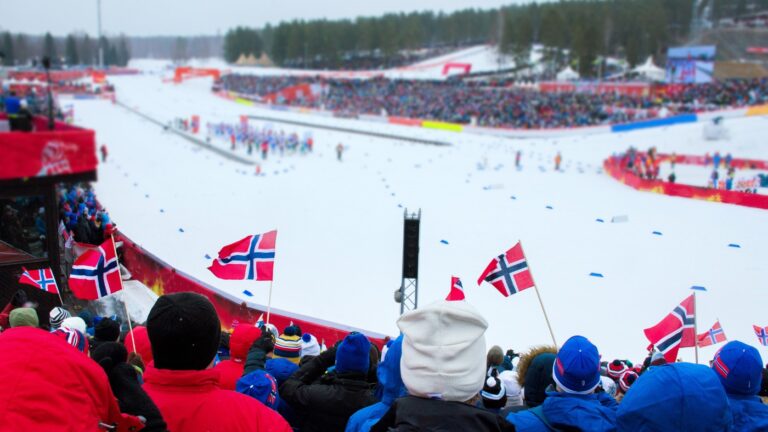
Jens Lurås Oftebro’s second Gold in Nordic Combined had that inevitability about it. The race still had its drama, as these events always do, but for long stretches it looked like Norway had the result under control.
When the decisive moment arrived, Oftebro was there, again, doing what champions do: making the winning move look almost routine.
A few valleys away, Johannes Høsflot Klæbo has been turning “routine” into a personal brand.
At Milano Cortina 2026, Klæbo has won four gold medals at these Games alone, and he has now reached nine Olympic golds in total, an all-time record for the Winter Olympics.
He’s 29, still in his prime, and already being spoken about in the kind of historical terms that normally require retirement and a decade of distance.
So how is Norway doing this, again? And why does it keep happening? The world's media have been looking into these questions. Here's what they found.
This Isn’t Just A Milano Cortina Story
If you only dip into the Winter Olympics once every four years, Norway’s dominance can feel like a sudden burst. It isn’t.
Norway set the modern benchmark in PyeongChang 2018, finishing with 39 medals, a Winter Olympics record, including 14 gold. Four years later in Beijing, Norway topped the medal table again with 37 medals, including a record-breaking 16 gold.
Now, in Milano Cortina, Norway has been leading the medal table again, putting the country on course to top the overall standings for a third straight Winter Games.
Even during Russia’s dominant home Games in Sochi 2014, Norway still won more gold medals than the host nation, finishing with 11 golds despite falling short in the overall medal count.

Norway has always been a winter sports nation. The point is that it has turned that identity into repeatable Olympic dominance.
The Klæbo Detail That Explains A Lot About Norway
One reason Klæbo’s story resonates so widely in Norway is that it isn’t framed as a superstar being “manufactured” by a ruthless system. It’s framed as a family and community project.
NBC Olympics notes that Klæbo has been coached by his grandfather, Kåre Høsflot, since he was 15, and quotes Klæbo describing the day-to-day support that went far beyond coaching: waxing skis, making plans, driving him to training, and being there constantly.
There’s also a simple origin story that fits Norway perfectly: Klæbo has said he got his first pair of skis from his grandpa at Christmas, and that he started skiing when he was two years old.
It’s wholesome, yes. But it’s also a clue. Norwegian winter sports success begins at home, long before it reaches a national team tracksuit.
Norway’s “Secret” Isn’t A Secret, It’s A System
Reuters spoke to Tore Øvrebø, head of Norway’s Olympic delegation, and his explanation is telling because it barely starts with sport.
“It has to do with the way we organize our society,” he said, pointing to broad access, family time, and the practical ability for kids to take part.
That shows up in three ways that matter hugely at the Winter Olympics.
First, Norway’s youth sport culture is designed to keep kids involved, not to identify winners early. “We try not to focus on winning too early,” Øvrebø said, arguing that the goal is participation, enjoyment, and developing the physical and social skills that support long-term progress.
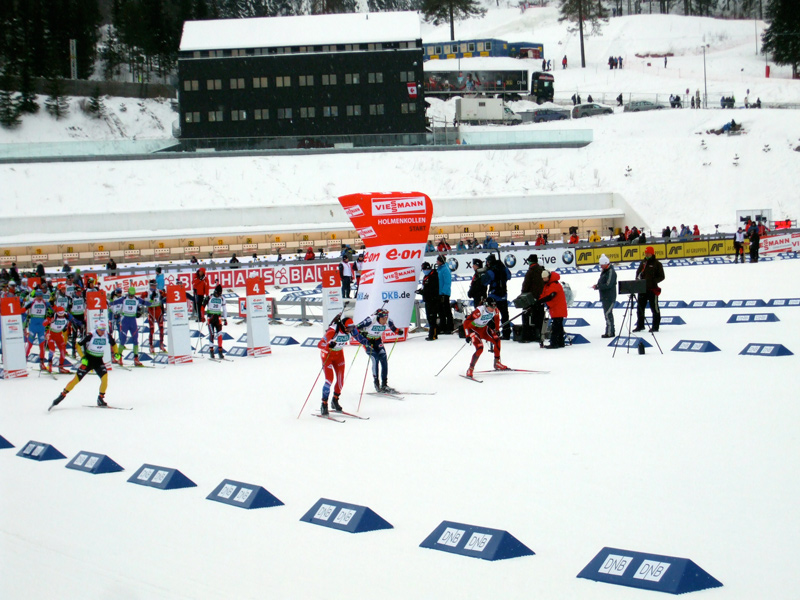
Second, Norway tries to avoid building silos between sports. It is a small country, so knowledge-sharing is a competitive advantage. “We share knowledge because we are not big enough to stay in silos,” Øvrebø told Reuters.
Third, Norway keeps the funnel wide. Even in expensive sports, the aim is to make participation possible. Øvrebø pointed to something very Norwegian, and very practical: “We have a huge used equipment market.”
This is how you get depth. And depth is what the Winter Olympics rewards.
The Winter Olympics Reward Depth
Summer Olympic dominance often requires excellence in a huge spread of unrelated sports.
Winter Olympics dominance, by contrast, is often about being excellent in clusters of disciplines that have deep cultural roots and plenty of medal opportunities: cross-country skiing, biathlon, ski jumping, and the broader Nordic ecosystem.
The discipline of Nordic Combined is a perfect illustration. Unless your country already has genuine medal potential in both ski jumping and cross-country skiing, you’re simply not going to contend.
That’s why Norway can produce not just one Klæbo, but wave after wave of world-class athletes behind him, and why a new double champion like Oftebro can emerge into a sport that, not long ago, was defined by other Norwegian names.
It’s also why Norway tends to look “inevitable” at these Games. When you have contenders across multiple events, across multiple days, it stops being about one golden generation and starts being about constant momentum.
So Why Not Ice Hockey?
For years now, as I’ve sat in Norwegian ice rinks on dark winter evenings, scarf wrapped tight and coffee in hand, I’ve had the same question quietly circling in my mind.
How can a country that produces Olympic champions on skis as if by factory setting struggle to make a serious impact in ice hockey?
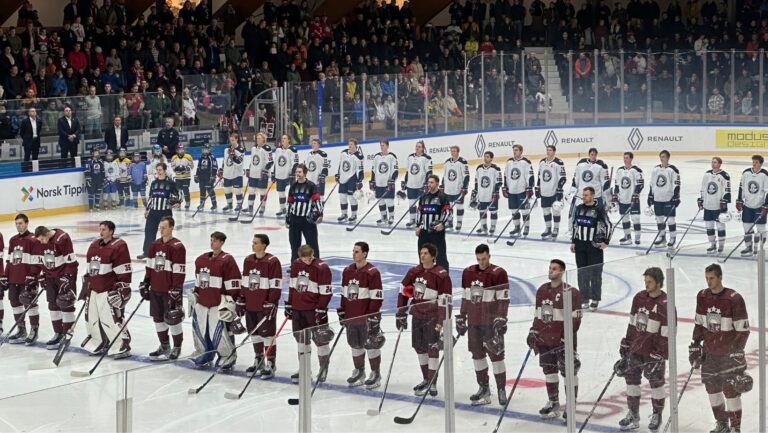
I’ve genuinely grown to love hockey in Norway. The speed, the noise in the arena, the rawness of it. But the truth becomes obvious the moment you zoom out. Ice hockey isn’t a niche winter pursuit like Nordic combined or biathlon.
It’s a massive, global, professionalised sport dominated by countries with deep leagues, huge populations and decades of elite infrastructure. Canada, the U.S., Sweden, Finland, Russia all have vast talent pipelines and highly competitive domestic systems.
Norway, by contrast, simply doesn’t have the same scale. A country of just over five million can build a world-beating system around sports that are culturally universal and relatively accessible. You can strap on skis almost anywhere. You can train on local trails. You can build excellence through volunteer clubs and shared expertise.
Ice hockey demands purpose-built arenas, year-round ice time, a strong professional league and depth across multiple lines of elite players.
In cross-country skiing, Norway can field multiple athletes capable of winning on the same day. In hockey, that depth gap is brutally exposed.
Norway has had good players, proud moments, and competitive spirit. But in a sport where you need waves of NHL-level talent to contend for Olympic medals, the country’s small population and limited pro ecosystem simply can’t compensate in the same way they can in the Nordic disciplines.
Leave The Kids Alone, And Then Let The Best Get Very, Very Good
If you want a single sentence summary of the Norwegian approach, Reuters basically provided it in headline form: “leave the kids alone”.
Build a culture where kids are allowed to enjoy sport without early pressure, keep participation broad, share expertise because you’re small, and then support elite athletes with a collaborative system that helps them convert talent into medals.
That doesn’t guarantee a Klæbo. But it makes it far more likely that when one appears, Norway has everything in place to help him become the all-time great at 29.
And it makes it far more likely that while the world is watching Klæbo rewrite the record books, someone like Oftebro can quietly do what Norway has been doing for years. Win again.