
Kunstsilo on the waterfront of Kristiansand has quickly gone from industrial landmark to cultural icon. This is its story.
In recent years, Norway has made a major play for attention on the European art scene. The National Museum and MUNCH have made international headlines, reshaping the cultural landscape of the capital.
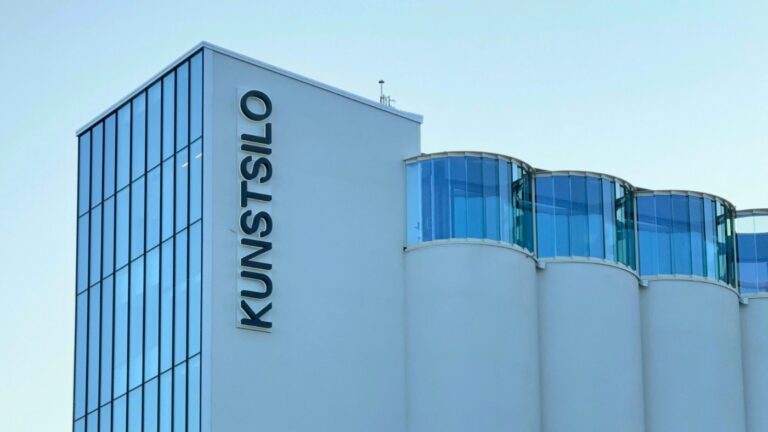
But beyond Oslo, another city is quietly carving out its own space in the world of art and architecture.
Kristiansand, best known within Norway for its zoo, sandy beaches and summer archipelago, is now making waves for a very different reason.
Its newest cultural landmark, Kunstsilo, has transformed a 1930s grain silo into a striking contemporary art museum. I visited to see whether the hype was justified.
Watch: My Trip to Kunstsilo
On a recent trip to Kristiansand, I found time to visit Kunstsilo and make this video. I hope you enjoy! Now, read on for the full story.
From Grain Store To Cultural Landmark
The story of Kunstsilo begins not with art, but with food security.
As commercial director Eldbjørg Dahl explained to me when we spoke, “Norway had a need for grain silos in the 1930s to ensure its population had enough food. Four years after its construction in 1935, the architects won an award for architectural excellence in the field of functionalism.”
For decades, the concrete structure stood as a functional part of Kristiansand’s harbour. Then grain storage ceased.
In 2015, Kristiansand native and financier Nicolai Tangen donated around 1,500 works of Nordic modernist art to the city. The idea emerged to turn the disused silo into a new home for the collection.
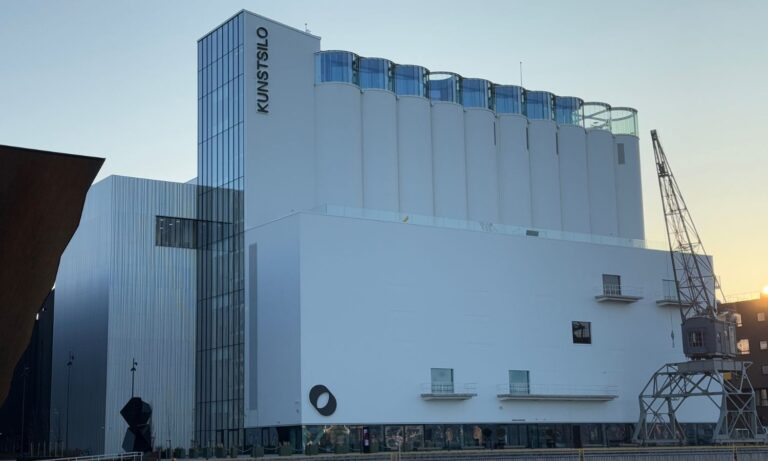
What followed was no cosmetic makeover. Each silo tower had to be strengthened with a new exterior concrete layer. Engineers installed two-metre-long pre-stressed beams before removing 3,500 tonnes of reinforced concrete to carve out what is now the dramatic Silo Hall.
Two sleek new buildings were constructed on either side of the original structure, housing galleries and modern facilities while preserving the industrial heart of the landmark.
The Wow Factor Inside
“When you enter Kunstsilo, it has that ‘wow-factor’ whether you are interested in the art or the architecture,” said Dahl. She’s right.
From my base at the Radisson Blu Caledonien, it was a simple ten-minute walk along the waterfront via Fiskebrygga. Kunstsilo stands beside the equally striking Kilden Performing Arts Centre, and together the two buildings have reshaped this part of the city.
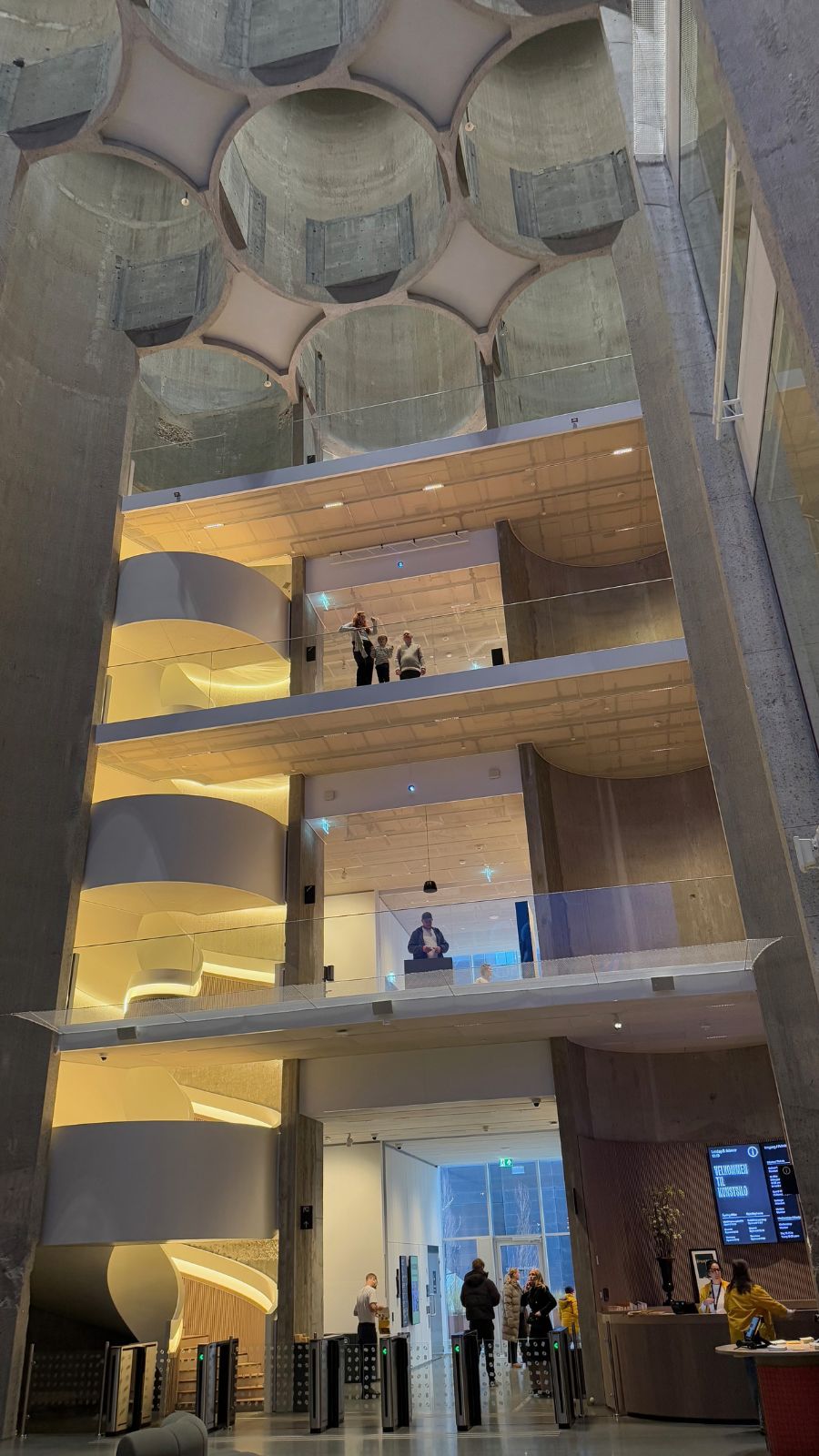
Step inside and you instinctively look up. The Silo Hall is vast, cathedral-like, its raw concrete curves softened by light pouring down from above.
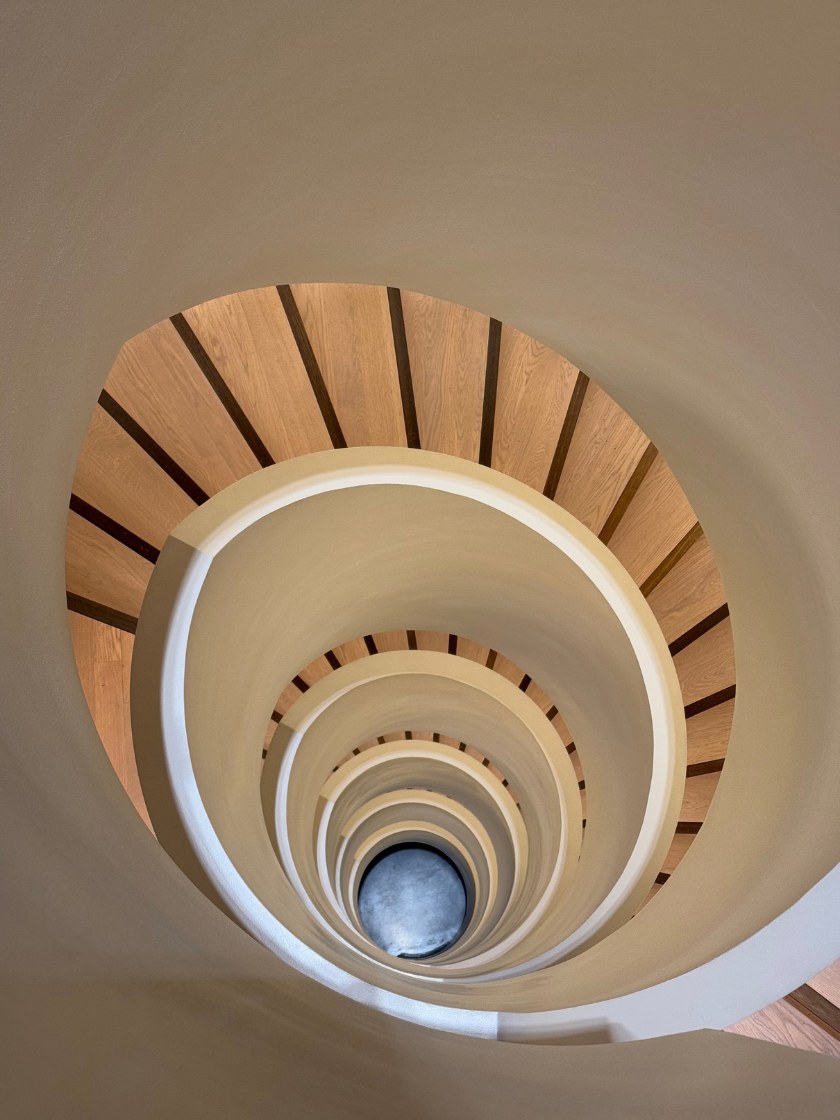
I took the lift to the top floor first to appreciate the full scale before working my way down via the beautiful, slightly dizzying stairwell that threads through the building.
One interactive video installation caught my attention. A giant screen displaying shifting imagery was controlled by a human heartbeat. It’s part of a broader effort to make Kunstsilo accessible and engaging, not just contemplative. There are regular activities for children and plenty of interactive elements woven into the exhibitions.
The Tangen Collection & Nordic Modernism
Despite the architectural drama, it is Tangen’s donation that truly defines the museum’s identity.
Tangen, now CEO of Norges Bank Investment Management, seemed genuinely moved at the official opening. “When we donated this collection, I had no idea it could be this wonderful. It has surpassed all expectations,” he said in 2025.
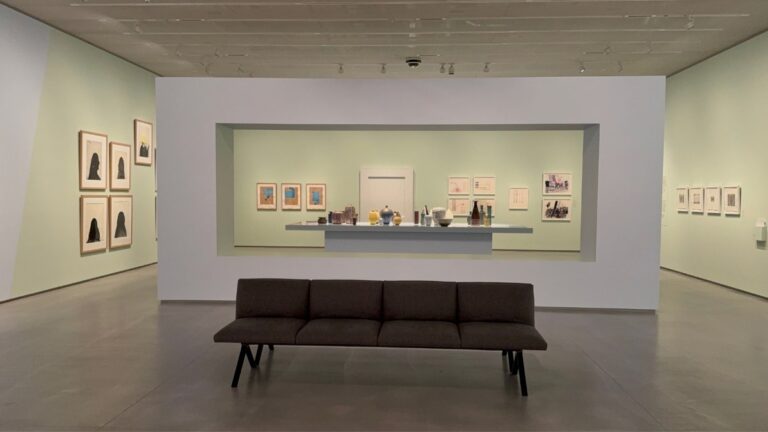
The collection immerses visitors in Nordic modernism. You’ll find the vibrant storytelling of Reidar Aulie alongside the bold abstractions of Anna-Eva Bergman. The works trace how artists across the Nordic region responded to war, industrialisation, politics and identity in the twentieth century.
One of the most talked-about pieces is Gjerdeløa by Marianne Heske. The work, originally a hay barn from Tafjord, famously received acclaim in Paris but a more sceptical reception back home in Norway.
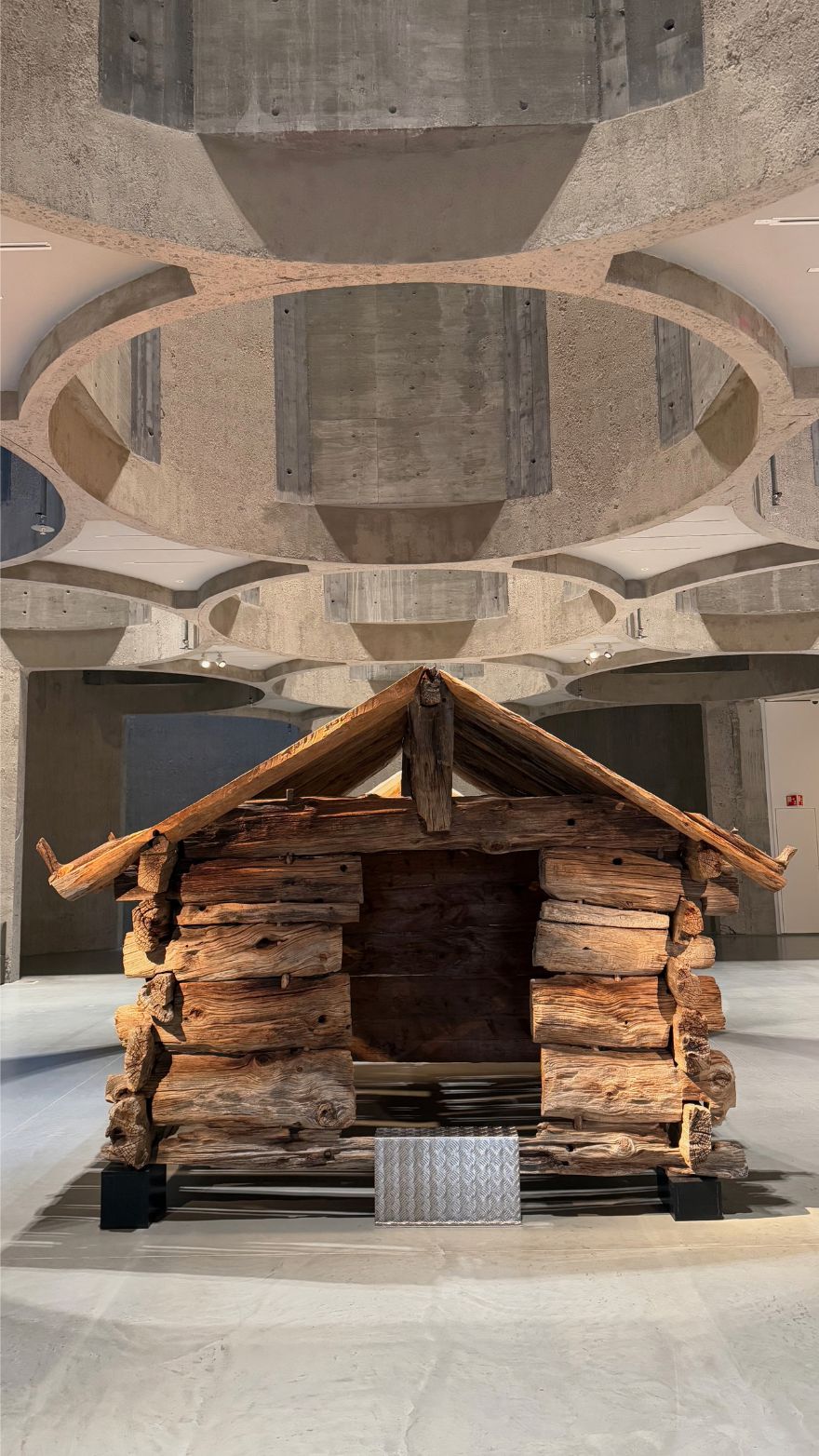
Today, it stands proudly at Kunstsilo, accompanied by a synthetic resin version, prompting fresh conversations about place, authenticity and artistic value.
Beyond The Permanent Collection
Kunstsilo is not simply a static home for one donation. Temporary exhibitions play a central role. These will have now changed since my visit, but they should give you a rough idea of the sort of thing you can expect all the same.
One highlight has been Playing with Fire, marking the Norwegian debut of British artist Edmund de Waal.
Acting as both curator and contributing artist, de Waal presented his work alongside that of Danish ceramicist Axel Salto, drawing on the Tangen Collection and the Royal Copenhagen collection at CLAY to reflect on Salto’s legacy.
On the second floor, S-Lab provides immersive digital experiences. For the opening, visitors were placed inside Aulie’s 1935 painting Tivoli (Funfair) through a digital production.
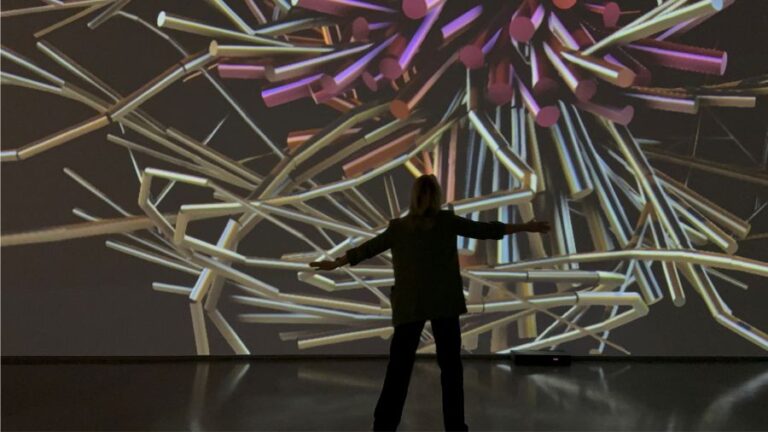
More recently, Ocean Deep has explored fragile marine ecosystems, blending art and technology in ways that feel particularly relevant for a coastal city like Kristiansand.
A Cultural Quarter Reborn
Kunstsilo’s impact goes beyond its walls.
“Kunstsilo has only been open for a few months, but we’ve already welcomed almost 200,000 visitors to the exhibition space. We’ve been blown away by all the international attention,” Dahl told me during my visit. The museum has since remained on track for close to a quarter of a million visitors in its first year.
For a city of Kristiansand’s size, that is significant. The museum sits beside Kilden’s undulating oak façade, and together they form the heart of a revitalised cultural quarter.
A waterfront promenade links the area to Fiskebrygga, once the centre of the fishing industry and now a lively hub of seafood restaurants and summer events.
Then there’s the food inside Kunstsilo itself. The ground-floor brasserie serves an all-day menu focused on local ingredients. I can personally recommend the fish soup
There’s also a top-floor bar with panoramic views across the harbour. On my visit, the weather was not on my side, but even under grey skies the setting felt special.
Why Kunstsilo is Different
It would be easy to see Kunstsilo as simply another museum opening in a country that has invested heavily in culture in recent years.
But it feels like more than that.
It is a statement about adaptive reuse, about regional identity, and about taking world-class art beyond the capital. Kristiansand is no longer just a summer holiday town for Norwegians. It is emerging as a serious cultural destination in its own right.
For visitors planning a trip along Norway’s southern coast, Kunstsilo is reason enough to stop. Even if you arrive curious about the architecture rather than the art, chances are you’ll leave thinking about both.