
Ulefos Jernværk has survived wars, industrial revolutions and enormous changes in Norwegian society. Now, after almost four centuries of continuous industrial history, production at the historic iron foundry is coming to an end.
You may never have heard of Ulefos Jernværk. But if you have spent any time in Norway, there is a good chance you have walked over one of its products.
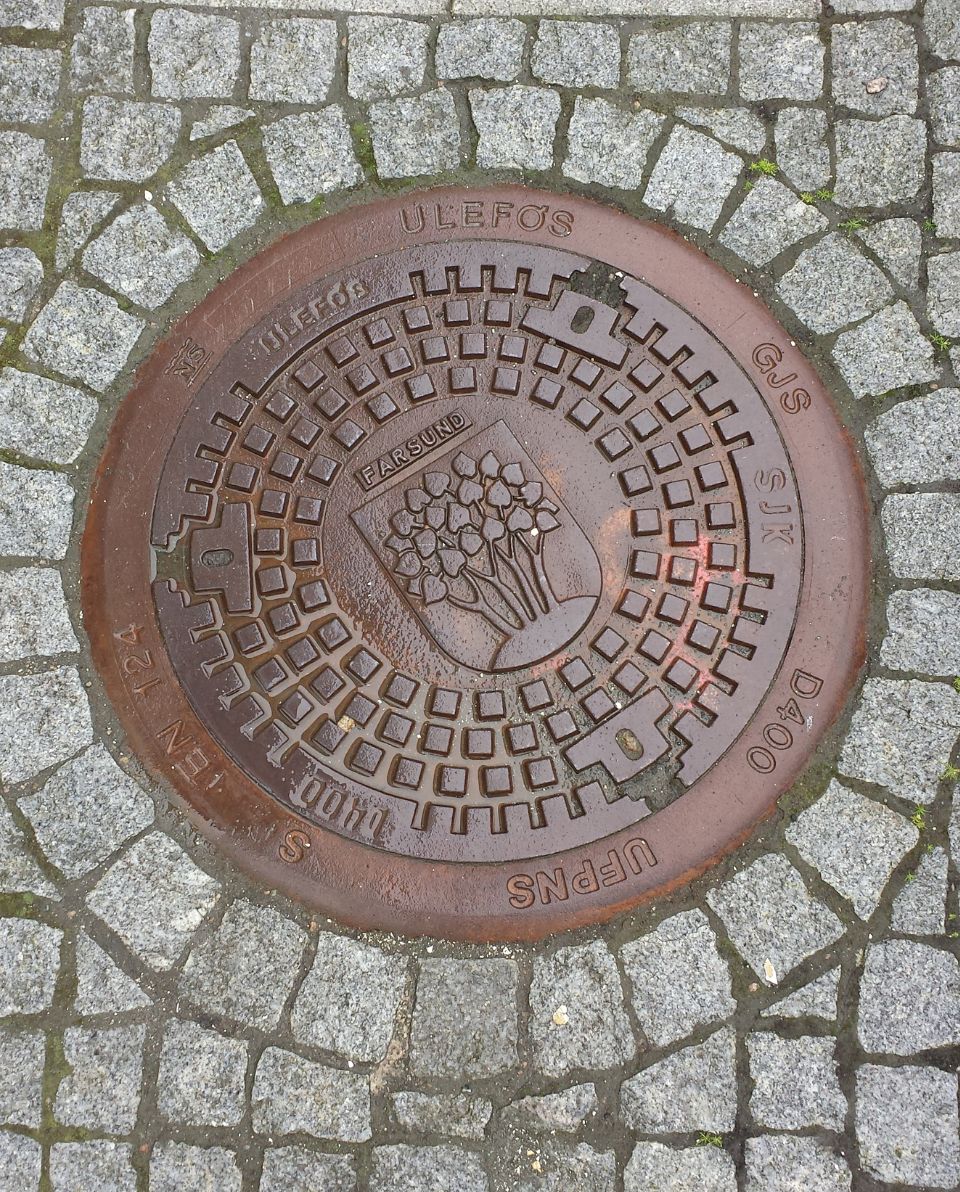
Look down at the street in towns and cities across the country and you will often see the name Ulefos stamped into a cast-iron manhole cover.
For generations, those covers, along with drains, grates and other components for Norway’s water and sewage infrastructure, have been produced at an iron foundry in the small Telemark community of Ulefoss.
That is now set to change. The board of CK Partners has decided to end foundry production at Ulefoss and concentrate Norwegian production at its facility in Stange.
Production will not stop immediately. The Ulefoss operation is expected to be wound down over a period of up to three years.
Even so, the decision brings the curtain down on an extraordinary chapter of Norwegian industrial history. Ulefos Jernværk was founded in 1657. That was 157 years before Norway gained its own constitution.
Norway’s oldest factory
The story began with the discovery of iron ore at Fen, close to Ulefoss, in 1652.
Five years later, Holden Jernværk was established and went on to become one of the ironworks that played an important role in Norway’s early industrial development.
Over the centuries, its products changed considerably. Iron stoves were once among its best-known products, with the first produced as early as 1690. Later, the business increasingly specialised in street infrastructure such as manhole covers, gratings and products for water and sewage systems.
That is why the Ulefos name remains such a familiar sight beneath the feet of Norwegians today.
The company has described the Ulefoss operation as one of Europe’s oldest surviving industrial businesses. It has also been owned by the Cappelen family since 1835.
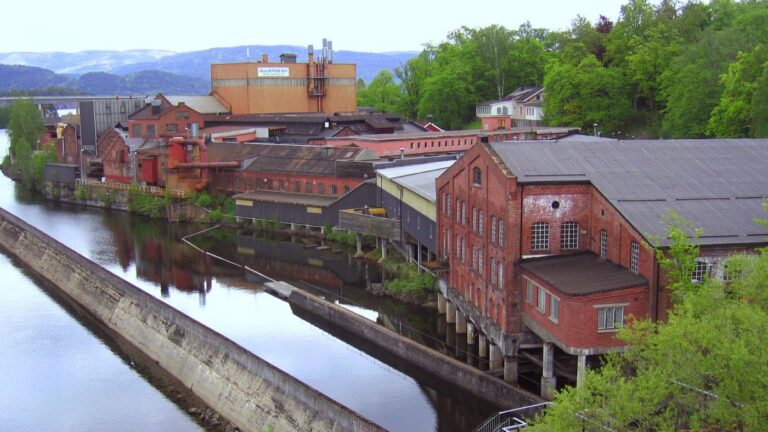
For the small town of Ulefoss, however, the ironworks means much more than industrial history. It has been a cornerstone employer for generations.
114 jobs affected
The closure will affect 114 employees at the Ulefoss foundry. Hundreds of local residents joined a torchlight procession ahead of the decision to protest against the closure and show support for the workforce.
For a relatively small community in Nome municipality, the loss of more than 100 industrial jobs will be significant.
Employees interviewed by Norwegian media described the announcement as deeply upsetting, with some having expected to spend many more years working at the plant.
The effects are also likely to spread beyond the factory itself. Local transport companies, suppliers and other businesses all benefit from the activity generated by the ironworks.
Why is Ulefos Jernværk closing?
The decision follows the merger earlier in 2026 of Ulefos and Furnes Jernstøperi, based at Stange in Innlandet.
Both foundries produce similar cast-iron products. The company says weak demand and increasing competition from lower-cost producers abroad have made operating two separate foundries uneconomic.
Production will therefore be concentrated at Stange. Company representatives say the move is intended to preserve foundry production in Norway rather than see more of it disappear overseas.
For Ulefoss, though, the result is the end of an industrial tradition stretching back almost four centuries.
The end of an extraordinary run
Norway has changed almost beyond recognition since the ironworks was established in 1657.
Through political upheaval, industrialisation and the transformation of Norway into a modern wealthy society, iron continued to be cast at Ulefoss. That continuity is what makes the closure notable far beyond one small Telemark town.
Production is expected to continue during the gradual wind-down over the coming years, but the decision itself has now been made.
After 369 years, one of the longest-running stories in Norwegian industry is approaching its final chapter. And long after production ends at Ulefoss, millions of pieces of its history will remain scattered across Norway. You just have to look down.