
Built to survive being trapped in Arctic sea ice, the polar ship took part in three extraordinary expeditions. Today, visitors to Oslo can step aboard the original Fram to discover the remarkable story of Norwegian polar exploration.
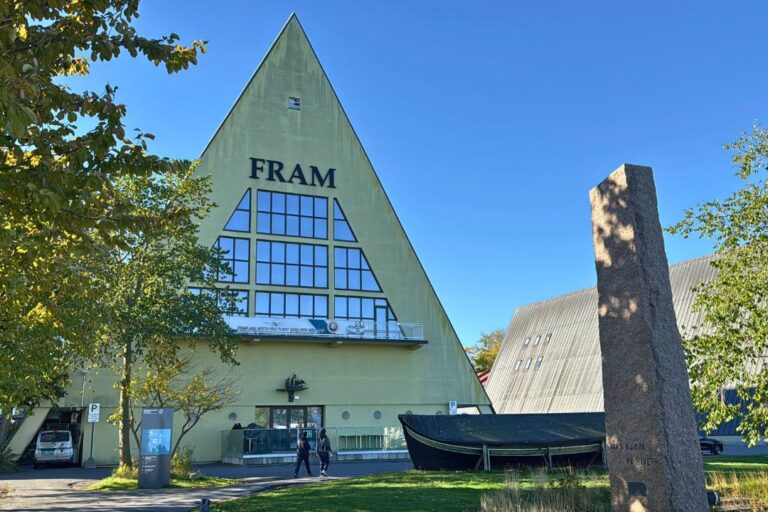
The Fram Museum makes an immediate impression. Walk through the entrance, and there it is: an enormous wooden ship towering above you.
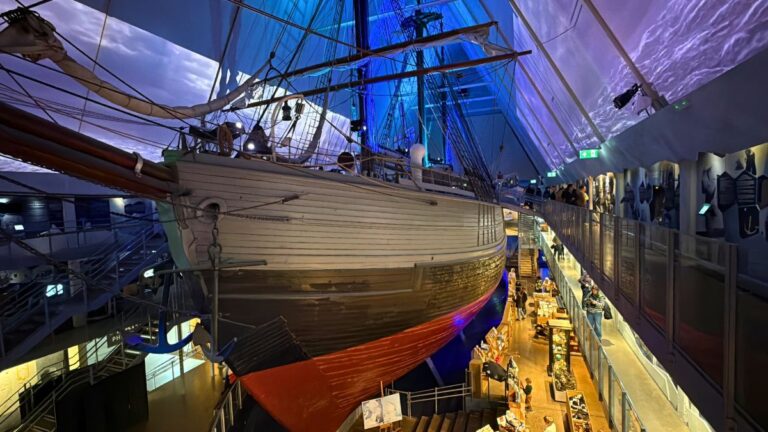
You're not looking at a replica or a model. This is the actual Fram, launched in 1892 and used by some of Norway's most famous polar explorers.
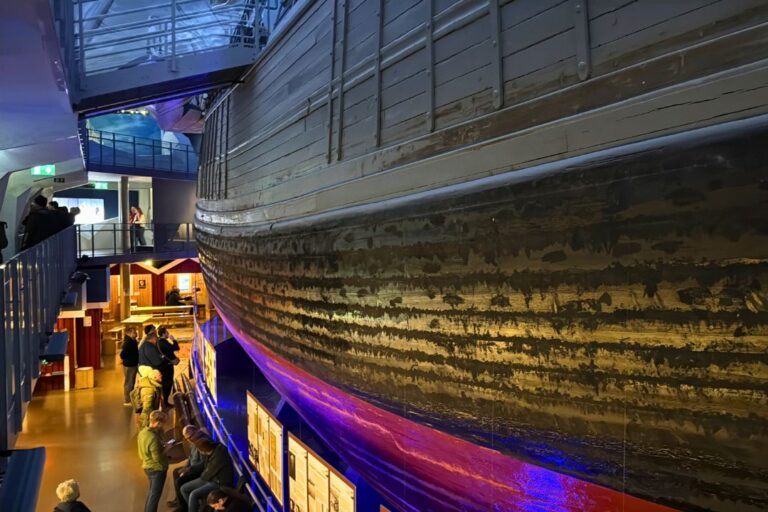
Because you enter the museum at ground level, you're looking up at the ship's imposing black hull. It's a genuine wow moment, and an unusual way to begin a museum visit.
At first, the museum doesn't appear especially large. After all, much of the main building is occupied by just one ship.
But that impression quickly changes. You can climb to the upper level and board Fram, explore the cabins and other rooms inside the ship, and discover further exhibitions on the floors surrounding it. There's even another historic polar vessel in a connected building.
I recently visited the Fram Museum on Oslo's Bygdøy peninsula, and it reminded me just how extraordinary the achievements of Norway's early polar explorers really were.
However, to appreciate what makes Fram so important, we need to go back to the late 19th century, when one Norwegian explorer proposed a seemingly ridiculous idea.
A Ship Designed To Get Stuck In Ice
For centuries, Arctic explorers had treated sea ice as one of their greatest enemies.
Ships could become trapped for months, sometimes years. Worse still, the tremendous pressure of moving ice could crush a wooden hull, potentially leaving its crew stranded in one of the world's most hostile environments.
Norwegian explorer Fridtjof Nansen believed there might be another way.
In 1884, wreckage from the American exploration ship Jeannette was discovered near Greenland, three years after the vessel had been crushed by ice and sunk near the New Siberian Islands.
How had the wreckage travelled so far? The discovery supported an emerging theory that ocean currents carried ice across the Arctic Ocean from Siberia towards Greenland.
Nansen wondered whether a ship could deliberately become trapped in the ice and use those currents to drift across the Arctic Ocean, potentially passing close to the North Pole.
The idea was ambitious, but it presented an obvious problem. How could a wooden ship survive years surrounded by shifting pack ice?
That was the challenge given to Norwegian shipbuilder Colin Archer. His answer was Fram, a vessel unlike almost anything that had been built before.
What Made Fram So Different?
Launched at Archer's shipyard in Larvik in October 1892, Fram was designed around one guiding principle: it should survive being squeezed by the ice. Rather than having the relatively conventional hull shape of other ships, Fram was unusually broad and rounded.
The idea was that when the ice pressed against the hull, the pressure would help lift the ship upwards rather than crush its sides.
That explains Fram‘s distinctive appearance. At approximately 39 metres long and 11 metres wide, she was short and broad compared with many other sailing ships.
Her hull was built with multiple layers of timber, reaching approximately 70 centimetres thick in places. The rudder and propeller could also be raised to protect them from damage.
These engineering decisions came with compromises. Fram was not especially comfortable in the open sea, where her rounded shape could produce unpleasant rolling.
But speed and comfort were never the priorities. The ship also needed to support a small crew for several years, carrying food, scientific equipment and everything else required for a prolonged Arctic expedition.
Even the living quarters were carefully insulated. The result was a remarkable piece of engineering, designed to survive conditions that had destroyed many previous expedition ships. And in 1893, Nansen was ready to test it.
Nansen's Extraordinary Arctic Drift
In June 1893, Fram departed Norway on an expedition that would last more than three years. Nansen led the scientific work, while Otto Sverdrup served as the ship's captain.
After sailing along the northern coast of Russia, the expedition deliberately allowed Fram to become trapped in the pack ice near the New Siberian Islands in September.
The plan was now largely out of the crew's hands. For the next several years, the ship drifted across the Arctic Ocean, carried by the movement of the ice.
There were moments of serious danger. In January 1895, ice pressure became so severe that the crew prepared to abandon the ship. Yet the unusual hull performed largely as intended, allowing Fram to survive.
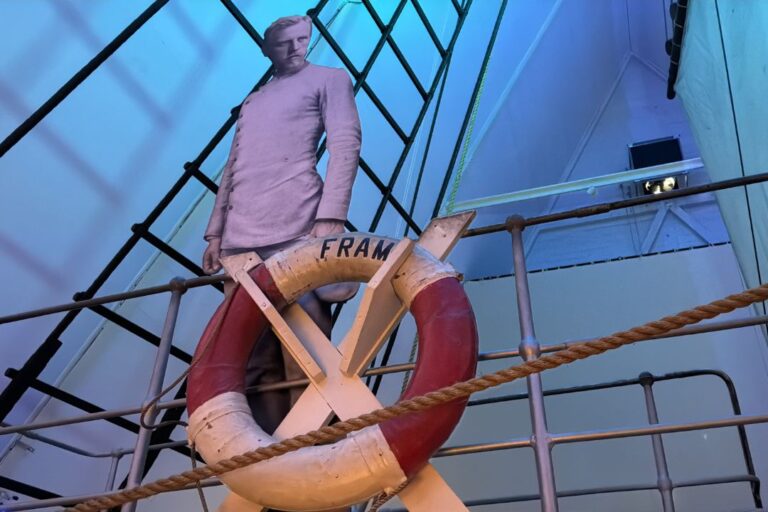
Although the expedition confirmed the existence of the transpolar drift, the ship was not getting close enough to the North Pole for Nansen's ambitions.
In March 1895, Nansen and fellow explorer Hjalmar Johansen made an extraordinary decision. They left Fram with dogs and sledges, hoping to reach the pole themselves.
They reached 86°14′ north, farther north than anyone had previously travelled, before being forced to turn back.
Their return became an adventure in its own right. The two men spent a winter surviving in a makeshift shelter on Franz Josef Land before eventually finding their way to safety. Meanwhile, Fram continued drifting under Sverdrup's command.
The ship finally emerged from the ice near Svalbard in August 1896, remarkably intact after almost three years trapped in the Arctic.
Nansen never reached the North Pole, but the expedition was an enormous scientific success. And Fram had proved that her unusual design worked.
Otto Sverdrup Takes Fram Back To The Arctic
You might expect that surviving such an expedition would be enough for one ship. Not Fram. Following modifications that included an additional deck and improved accommodation, the vessel returned to the Arctic in 1898 under Otto Sverdrup.
This second expedition had a different focus. Rather than attempting to drift across the Arctic Ocean, Sverdrup intended to explore and map areas around northern Greenland.
Difficult ice conditions forced a change of plans, eventually taking the expedition into the islands of what is now the Canadian Arctic. Over four years, the crew carried out extensive geographical surveys and scientific research.
Their work included mapping previously poorly documented islands, studying Arctic wildlife, and collecting geological, botanical and meteorological information.
Although Sverdrup's expedition is less well known internationally than those led by Nansen and Amundsen, its scientific achievements were substantial.
The ship returned safely to Norway in 1902. It's also worth knowing that the Fram preserved in Oslo today is presented largely in the configuration used during Sverdrup's expedition, following the changes made after Nansen's original voyage.
Fram's Final Great Expedition: The South Pole
The third major chapter in Fram‘s history would take the ship to the opposite end of the world.
Roald Amundsen originally intended to use Fram for another attempt to drift across the Arctic Ocean, this time entering from the Pacific side.
However, after American explorers announced competing claims to have reached the North Pole in 1909, Amundsen secretly changed his plans. His new target was the South Pole.
In 1910, Fram sailed south, carrying Amundsen's expedition towards Antarctica. The ship had undergone further modifications, including the installation of a diesel engine.
On December 14, 1911, Amundsen and four companions became the first people to reach the South Pole, beating the British expedition led by Robert Falcon Scott.
Although Fram did not itself reach the pole, it had played a crucial role in transporting the expedition and its supplies.
Having previously travelled farther north than any ship, Fram also set a record for sailing farther south than any vessel during the Antarctic expedition.
One ship had now supported three major expeditions, helping establish Norway as a leading nation in polar exploration.
How Fram Became An Oslo Museum
Despite its extraordinary record, Fram came dangerously close to being lost. After returning to Norway in 1914, the ship was laid up at Horten. Years of exposure and deterioration left its future uncertain. Fortunately, efforts to preserve the vessel eventually succeeded.
Otto Sverdrup himself played a central role in the campaign to save the ship, becoming chairman of the Fram Committee in 1925. Restoration work began in 1929, with the ship returned to its appearance during Sverdrup's expedition.
The next challenge was deciding where to keep it. Rather than leaving Fram exposed outdoors, the decision was made to bring the entire ship ashore and construct a protective building around it.
The ship was moved onto land at Bygdøy in 1935, and the Fram Museum officially opened in 1936. That decision explains the unusual museum experience today.
Rather than placing smaller exhibits inside a conventional gallery, the building effectively wraps around the ship. And what a difference that makes.
Exploring The Real Fram In Oslo
For me, the best part of visiting the Fram Museum is that seeing the ship from below is only the beginning. Once you've taken in the sheer size of Fram from ground level, you can head upstairs to board the ship itself.
This offers a completely different perspective. You can explore the deck, see the rigging and then head inside to discover the living and working spaces.
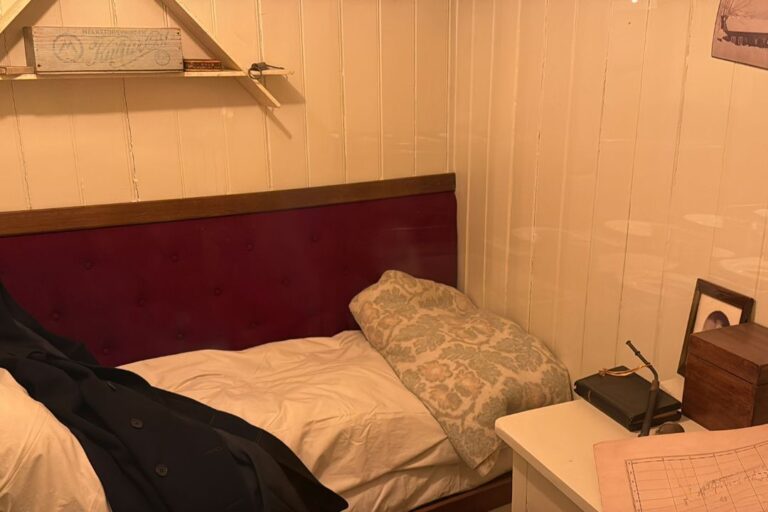
Among the areas accessible to visitors are the cabins, saloons, galley, cargo hold and engine room. The ship's interior gives a much better sense of what life aboard must have involved.
Remember, during Nansen's first expedition, the crew lived aboard Fram for more than three years. It was their home, scientific workplace and refuge from the Arctic environment.
The contrast between the ship's relatively compact interior and the enormous ambition of its expeditions is striking. Being able to explore these spaces, rather than simply view the ship from behind a barrier, is what makes the museum particularly memorable.
The galleries surrounding Fram provide more information on the expeditions, their equipment, scientific achievements and the people involved. But don't assume you've seen everything once you've explored the ship. There's much more downstairs.
The Nansen Photography Exhibition
One of the additional exhibitions I enjoyed during my visit was The Nansen Photographs. This exhibition explores Nansen's first Fram expedition through historical photography, including the cameras used to document the journey.
The story begins with the expedition's planning in 1890 and continues through Nansen's return and international lecture tour in 1897.
Photography was a valuable part of polar exploration, helping document places, people and conditions that most of the world had never seen.
The pictures also provide an important human dimension to the expedition, beyond the familiar stories of records, distances and discoveries.
It's a worthwhile addition to the ship itself, especially for anyone interested in the practical realities of 19th-century exploration. This is listed as a temporary exhibition, so check the museum's website to see whether it is still running when you visit.
Don't Miss Gjøa, The Other Polar Ship
Another reason to allow plenty of time for the Fram Museum is that Fram isn't the only historic ship on display. Following the museum's lower level takes you into a connected building containing another remarkable Norwegian vessel: Gjøa.
This much smaller ship was used by Roald Amundsen during his successful navigation of the Northwest Passage between 1903 and 1906. The Northwest Passage is a sea route through the islands of Arctic Canada, connecting the Atlantic and Pacific oceans.
For centuries, European explorers had searched for a navigable route through these waters, hoping to establish a shorter trading connection between Europe and Asia. Ice, difficult navigation and the harsh Arctic environment repeatedly frustrated those efforts.
Amundsen finally completed the passage aboard Gjøa, accompanied by six other men. The expedition was also scientifically important, particularly for its observations of the Earth's magnetic field.
The crew spent two winters at a location that became known as Gjoa Haven, in what is now Nunavut, Canada.
Today, the original Gjøa is preserved in a separate exhibition building at the Fram Museum, opened in 2013. Seeing Gjøa alongside the much larger Fram provides an excellent comparison between two very different approaches to Arctic exploration.
And it helps explain why Roald Amundsen occupies such an important place in Norwegian history.
Planning Your Visit To The Fram Museum
The Fram Museum is located on the Bygdøy peninsula, a short distance west of central Oslo.
Bygdøy is one of the best areas of the Norwegian capital for museum lovers. The Fram Museum sits close to both the Kon-Tiki Museum and Norwegian Maritime Museum, making it easy to combine several attractions in one visit.
You can reach Bygdøy using bus 30 from central Oslo or by boat from the waterfront. Check departure times before travelling.
The museum is open throughout the year, with longer opening hours during the summer months. Admission is included with the Oslo Pass, and combined tickets with the neighbouring Kon-Tiki Museum are also available.
Check the official visitor information for current opening hours, ticket prices and accessibility details.
How long should you allow? I'd recommend at least two hours, especially if you want to explore the interior of Fram, read the exhibition displays and visit Gjøa.
It's easy to underestimate the size of the museum when you first walk inside. That was certainly my experience.
What initially appears to be one impressive historic ship turns out to be a fascinating exploration of the people, engineering and scientific ideas that helped shape Norway's polar history.
And the fact that you can still step aboard the very ship that carried Nansen, Sverdrup and Amundsen on their extraordinary expeditions makes it all the more special.