
An introduction to Narvik, a Norwegian town with a beautiful Arctic setting and a remarkable history shaped by industry, war and Arctic adventure.
After more than a decade living in Norway, I recently visited Narvik for the first time. Despite its importance in the north, it had somehow always escaped my itinerary.
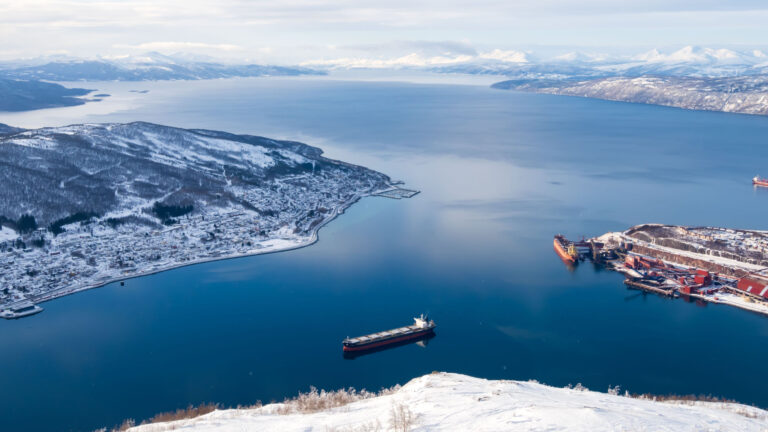
Set between steep mountains and the deep waters of Ofotfjorden, Narvik is one of the biggest towns in Northern Norway. Yet its story is far more dramatic than its modest size might suggest.
Narvik’s modern history begins with iron ore from neighbouring Sweden. It later became the scene of fierce battles during World War II. Today, the town is quietly reinventing itself as a destination for cruise travellers, outdoor enthusiasts and Arctic adventurers.
With a population of around 21,500 people, Narvik ranks among the larger towns in northern Norway. Only Tromsø, Bodø and Harstad are significantly bigger, while Alta is of similar size.
Here are five facts that explain why Narvik is such a fascinating place.
1. Narvik was built on Swedish iron ore
Narvik’s existence is largely thanks to iron ore.
In the late 19th century, enormous iron ore deposits were discovered in the Swedish town of Kiruna, deep in the far north of Sweden. The challenge was how to export this valuable resource to global markets.
The obvious export port was the Swedish city of Luleå on the Baltic Sea. However, Luleå had several drawbacks. The harbour froze in winter, limiting shipping for months at a time. The port was also relatively shallow, restricting the size of vessels that could load there.
Narvik offered a solution. Located on Norway’s Ofotfjord, the harbour is naturally deep and remains ice-free year-round thanks to the warming influence of the North Atlantic Current. This made it ideal for shipping iron ore even during the Arctic winter.
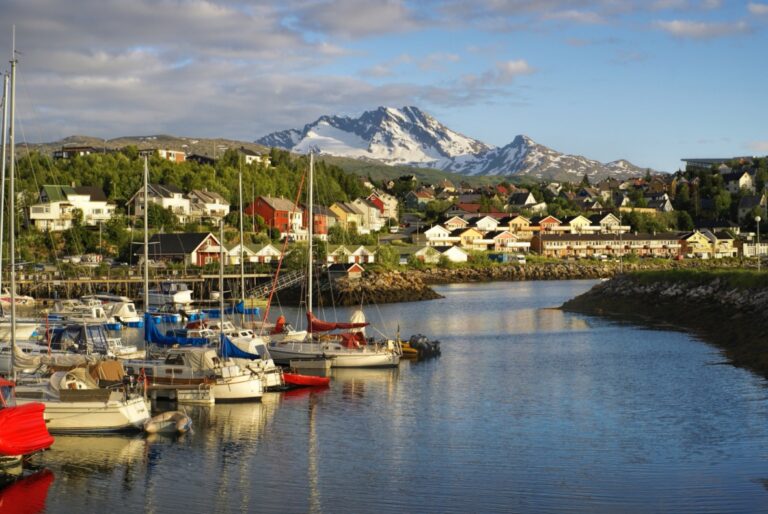
The solution was the Ofoten Line, a railway linking Kiruna to Narvik. Completed in 1902, it transformed Narvik almost overnight from a small settlement into a strategic export port.
More than a century later, the iron ore trains still run daily between Sweden and Narvik.
The port remains one of the most important export hubs for Swedish iron ore, and the long trains hauling ore through the mountains are still a defining sight in the region.
2. Narvik is on the Swedish railway network
Narvik holds a curious record in Norwegian transport history. It is the northernmost railway station in Norway, yet you cannot reach it by train from any other Norwegian city.
Instead, Narvik is connected entirely through the Swedish railway network. The Ofoten Line runs east from Narvik across the mountains to Kiruna, where it connects to Sweden’s rail system.
From there, travellers can continue south to cities such as Stockholm or even further across Scandinavia.
This unusual arrangement is a direct legacy of Narvik’s origins as an iron ore export port. The railway was built specifically to transport Swedish ore to the Norwegian coast rather than to connect Norwegian communities.
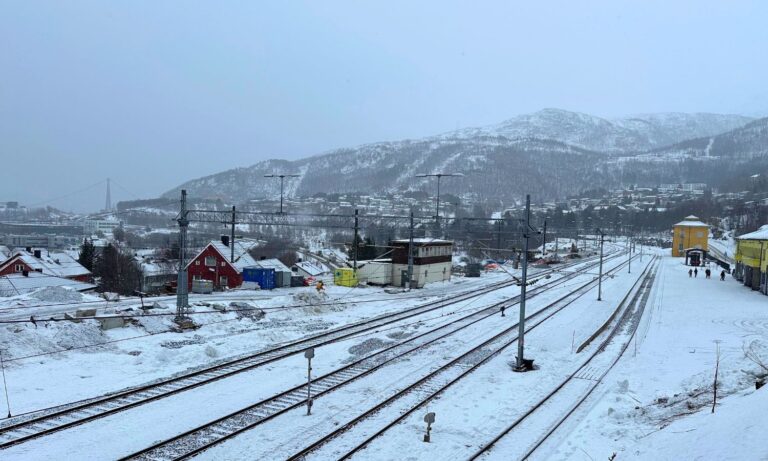
For travellers, however, the line offers one of Scandinavia’s most spectacular rail journeys. The route climbs through rugged mountains, past frozen lakes and vast wilderness landscapes before crossing the border into Sweden.
It’s a reminder that, in this remote corner of Europe, geography often shapes infrastructure in surprising ways.
3. Narvik played a crucial role in World War II
Narvik’s importance as an iron ore port also made it strategically vital during World War II.
Much of Germany’s steel production relied on iron ore from Sweden, particularly during the winter months when Baltic ports were frozen. Control of Narvik therefore became a priority for both Germany and the Allied forces.
In April 1940, German forces launched Operation Weserübung, the invasion of Norway and Denmark. Narvik quickly became one of the most important battlefields in the campaign.
What followed was a series of intense naval and land battles involving German forces, Norwegian troops, and Allied units from Britain, France and Poland. The fighting around Narvik lasted several weeks and took place in harsh Arctic conditions.
For a short time, Allied forces succeeded in retaking the town, marking the first defeat of Nazi Germany’s military during the war. However, when Germany invaded France soon afterwards, Allied troops were withdrawn and Norway ultimately remained under occupation.
Today, Narvik’s wartime history is remembered at the Narvik War Museum, one of Norway’s most comprehensive museums about the Second World War. The museum uses personal stories, artefacts and interactive displays to explain how this small Arctic town became the centre of an international conflict.
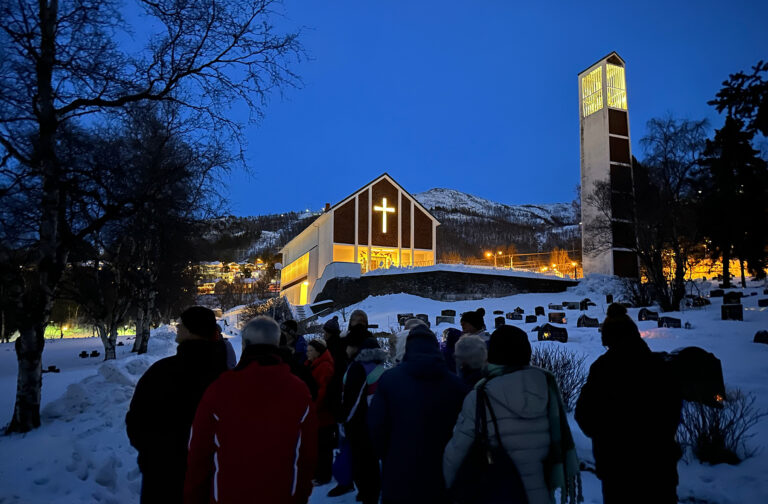
A short distance from the town centre, the Narvik war cemetery serves as a quiet reminder of those who lost their lives in the battles.
4. An emerging cruise ship destination
In recent years, Narvik has begun attracting attention from cruise lines. Northern Norway has become one of Europe’s most sought-after cruise regions, especially for travellers hoping to experience the Northern Lights.
Ports such as Tromsø and the towns of the Lofoten Islands are already well established on cruise itineraries. Narvik offers something a little different.
The deep-water harbour allows ships to dock close to the town centre, while the surrounding mountains create a dramatic natural backdrop. Excursions range from Arctic wildlife experiences and Sami culture to hiking, skiing and scenic railway trips.
Narvik also provides a convenient gateway to inland Arctic landscapes that are harder to reach from many coastal ports.
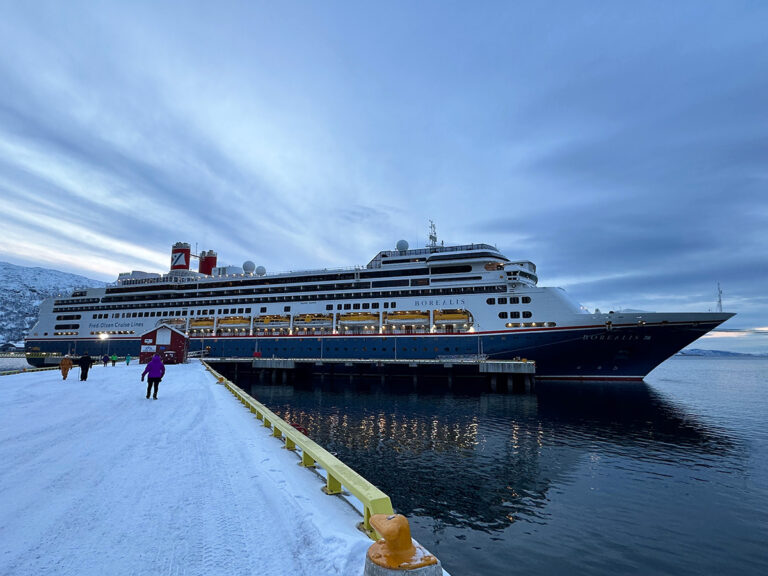
Smaller cruise ships in particular have begun including Narvik on Northern Lights itineraries during autumn and winter. Lines such as Fred Olsen Cruise Lines often visit during the darker months when the aurora is most visible.
5. Narvikfjellet is a top skiing destination
The slopes of Narvikfjellet rise steeply above the town, creating one of the most dramatic ski settings in Norway.
What makes the resort unusual is its location. Few places in the world allow you to ski with panoramic views of an Arctic fjord far below. On clear days, the contrast between snow-covered peaks and deep blue water is unforgettable.
Narvikfjellet already hosts international alpine competitions, but its global profile is about to grow dramatically. In 2029, Narvik will host the FIS Alpine World Ski Championships, bringing the world’s best skiers to this Arctic resort.
You don’t need to be a skier to enjoy the mountain. A cable car carries visitors to the top for sweeping views across Ofotfjorden and the surrounding peaks, with a restaurant at the summit offering one of the most memorable dining views in northern Norway.
Have you ever been to Narvik? Let us know what you thought of this small town in Northern Norway in the comments below.


I’ve been to Narvik 9 times over the past 11 years. (All trips have been in spring and fall.) Every trip has been fantastic. The place oozes with history. Hiking is awesome especially on portions of the Navi Trail. Its only shortcoming is the lack of good restaurants.
Looking forward trip #10.