
Home to Trondheim, Stiklestad, Røros, fjords, farmland and mountain wilderness, Trøndelag is one of Norway’s most distinctive regions. Here’s what makes this part of Central Norway so important.
Ask a Norwegian to describe Trøndelag and you may get a knowing smile. This is a region with a strong identity, a recognisable dialect, a proud food culture, and a history that reaches deep into the story of Norway itself.
For international visitors, Trøndelag can be harder to place. It is not western Norway, although it has fjords and coastal communities. It is not northern Norway, although parts of the county feel remote and wild.
It sits in the middle of the country, both geographically and culturally.
Today, Trøndelag is one of Norway’s counties, known in Norwegian as a fylke. It stretches from the Norwegian Sea coast to the Swedish border, taking in islands, fjords, forests, farmland, mountain plateaus, historic towns and Norway’s third-largest city, Trondheim.
But Trøndelag is much more than an administrative unit. It is one of Norway’s most important historical regions, and a place that helps explain how modern Norway came to be.
Where Is Trøndelag?
Trøndelag lies in Central Norway, wrapped around the broad Trondheimsfjord. Many of the county’s largest communities sit around this fjord, including Trondheim, Stjørdal, Levanger, Verdal and Steinkjer.
The county also stretches far beyond the fjord. To the west are coastal communities such as Hitra, Frøya, Ørland and parts of Fosen. To the north are Namsos, Namdalen and the road toward Nordland. To the south and southeast are Oppdal, Røros and mountain areas that feel quite different from the green farmland around the fjord.
This variety is one of the reasons Trøndelag can be difficult to sum up. In one county, you find university life, medieval history, salmon rivers, ski resorts, small fishing communities, UNESCO-listed mining heritage, mountain farms and some of Norway’s most productive agricultural land.
The name Trøndelag itself points to a long shared history. People from the region are known as trøndere, and the local dialect, trøndersk, is one of the most recognisable in Norway.
From Two Counties To One
For much of modern history, Trøndelag was split into two counties: Nord-Trøndelag and Sør-Trøndelag. The names simply mean North Trøndelag and South Trøndelag.
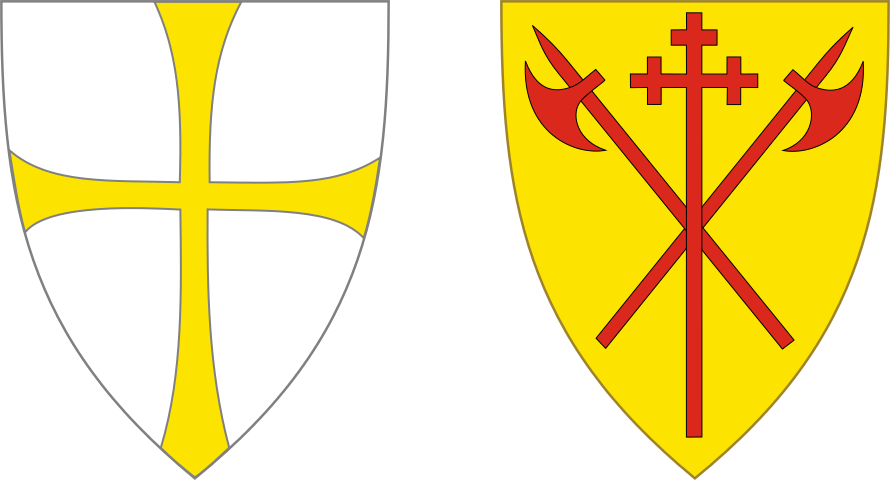
That changed on 1 January 2018, when the two counties merged to form the current Trøndelag county. In one sense, this was a big administrative change. In another, it was a formal recognition of something that had long been true: Trøndelag was already widely understood as one cultural and historical region.
The old division has not disappeared entirely from everyday life. People still talk about “the north” and “the south” of Trøndelag, and the balance between Trondheim and the rest of the county remains an important political and cultural question.
Trondheim is by far the biggest population centre. It is the obvious hub for higher education, technology, culture, health services, transport and nightlife. But the administrative centre of the county is Steinkjer, a choice that reflects the desire to keep public power and jobs spread beyond Trondheim.
That balance matters. In a county where one city dominates the population, smaller communities are understandably keen to ensure they are not reduced to the status of hinterland.
What Does A County Do In Norway?
Norway’s counties sit between national government and municipalities. They are not the same as regions in some countries, but they do have important responsibilities.
County authorities are responsible for upper secondary education, many county roads, public transport, dental health services, cultural heritage, regional development and several environmental and planning issues.
Municipalities deal with many of the services people encounter day to day, such as primary schools, care services, local planning and waste collection. National government handles major areas such as hospitals, defence, universities and much of the legal system.
So, while a county merger may sound like a dry political story, it can affect schools, transport routes, road priorities, regional development and how a place presents itself to the outside world.
In Trøndelag’s case, the 2018 merger also gave one administrative identity to a region that already had a strong shared brand.
Trondheim: The Regional Capital In All But Name
For many visitors, Trøndelag begins with Trondheim. That is understandable. The city is the county’s largest urban centre and one of Norway’s most important cities.
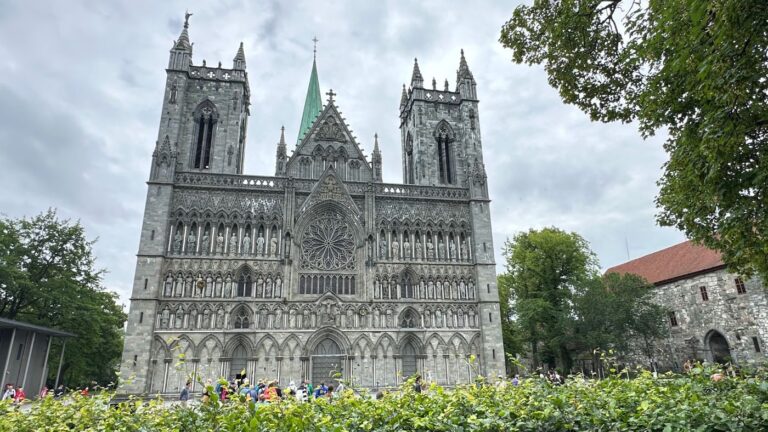
Trondheim was Norway’s first capital during the Middle Ages and remains one of the country’s great historic cities. At its heart stands Nidaros Cathedral, built over the burial place of St. Olav and long associated with pilgrimage, coronations and national ceremony.
Today, Trondheim is also a youthful, technology-focused city. The presence of NTNU, Norway’s largest university, gives the city a student energy that is unusual for its size. Research, engineering, marine technology, start-ups and cultural life all help give Trondheim an outsized role in Norway.
For travellers, Trondheim is often the easiest way into Trøndelag. The airport is at Værnes in Stjørdal, just east of the city, and the railway connects Trondheim with Oslo, Bodø and Sweden.
Coastal ships also call at Trondheim, making it a natural stop on journeys along the Norwegian coast. But Trondheim is not the whole story.
Stiklestad And The Story Of Norway
If Trondheim is Trøndelag’s urban heart, Stiklestad is one of its historic souls.
The Battle of Stiklestad in 1030 is one of the most famous events in Norwegian history. It was here that King Olav Haraldsson fell in battle. After his death, he became St. Olav, and his legacy played a major role in the Christianisation of Norway and the development of the medieval Norwegian kingdom.
For modern visitors, Stiklestad National Culture Centre near Verdal tells this story through exhibitions, events and historical interpretation. Every summer, the drama of St. Olav is performed on the site, keeping the story alive for new generations.
It is hard to overstate Stiklestad’s symbolic importance. Much of Norway’s national story looks back to this landscape, the fjord communities of Trøndelag, and the route between Stiklestad and Nidaros.
Røros And Mountain Trøndelag
Trøndelag is often associated with Trondheim and the fjord, but the county also includes one of Norway’s most atmospheric historic towns.
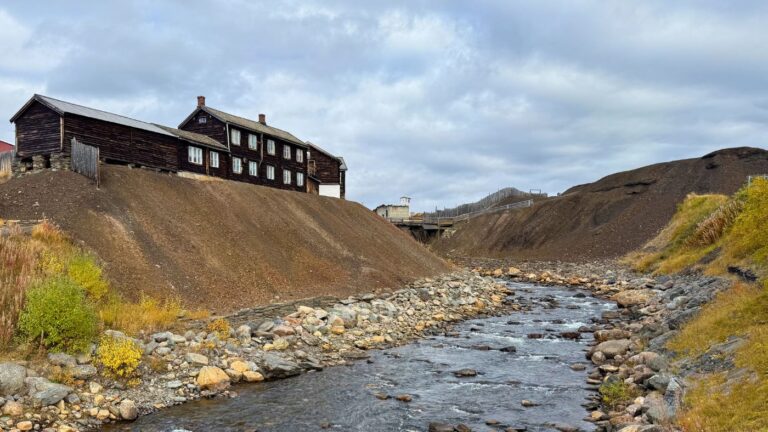
Røros is a former copper mining town close to the Swedish border. Its wooden streets, dark timber buildings and cold mountain climate give it an atmosphere quite unlike anywhere else in Norway.
The town and its surrounding mining landscape are listed as a UNESCO World Heritage Site. Mining began in the 17th century and continued for more than 300 years, shaping not only the town but also the surrounding forests, farms and transport routes.
Today, Røros is known for history, local food, winter atmosphere and one of Norway’s most distinctive Christmas markets. It is also a reminder that Trøndelag is not just fjord and farmland. Much of the county reaches into mountain and inland landscapes with their own traditions.
This part of Trøndelag also has deep South Sámi connections. South Sámi culture, language and reindeer herding are an important part of the region’s wider identity, especially in inland and mountain areas.
A Major Food Region
Trøndelag has become one of Norway’s strongest food regions, but this is not a new story. The region has long been shaped by farming, fishing, hunting and mountain food traditions.
The fertile land around Trondheimsfjord is among Norway’s most important agricultural areas. Dairy products, meat, vegetables, grains, berries and local drinks all form part of the region’s food identity.
Along the coast, seafood from Hitra, Frøya and other island communities adds another dimension.
In recent years, Trondheim and Trøndelag have gained a national and international reputation for food. The region was named European Region of Gastronomy in 2022, a recognition that helped shine a light on local producers, restaurants and food traditions.
For visitors, this means Trøndelag is a good place to eat. Not just in high-end restaurants in Trondheim, but also through farm shops, local bakeries, food festivals, seafood experiences and traditional dishes in smaller communities.
Coast, Fjords And Outdoor Life
Trøndelag’s landscapes are more varied than many first-time visitors expect.
The Trondheimsfjord is the region’s defining geographical feature. It is broad, sheltered and historically important, with farmland and towns dotted around its shores. Further west, the coast opens toward the Norwegian Sea, with islands such as Hitra and Frøya known for seafood, coastal scenery and exposed weather.
Fosen offers a mix of coast, hills, small communities and ferry journeys. Namdalen and the northern part of the county feel more remote, with long valleys, rivers and access to wild landscapes.
Further south, Oppdal is one of Norway’s best-known mountain destinations, popular for skiing, hiking and cabin life.
Trøndelag also has several national parks and protected areas. For hikers and outdoor enthusiasts, the county offers everything from gentle forest walks close to Trondheim to long mountain routes and remote wilderness.
It may not have the dramatic fame of the western fjords or Lofoten, but Trøndelag rewards slower travel. This is a region where the interest often lies in the combination: history, food, coast, countryside and everyday Norwegian life.