
Based on bestselling novels and grounded in real police work, ‘Wisting' became a standout Nordic noir by favouring realism, restraint, and character over shock and spectacle.
When Wisting first appeared on Norwegian television in 2019, it arrived quietly. There was no attempt to reinvent Nordic noir, no shock marketing, and no stylised brutality designed to grab headlines.
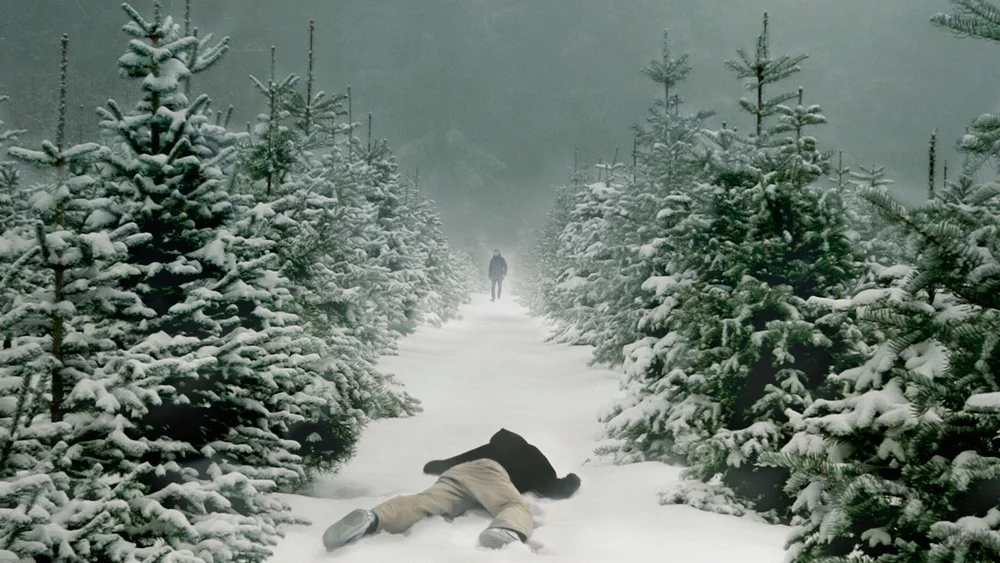
Instead, Wisting offered something far more restrained: a grounded police drama built on routine, persistence, and moral weight. Over multiple seasons and an expanding international audience, that approach has proven to be its strength.
Based on the crime novels of Jørn Lier Horst, Wisting has since become one of Norway’s most successful modern crime exports. It is a series that reflects not just how Norwegian crime fiction is written, but how Norway often prefers to tell its stories.
From Bestselling Novels to Television Drama
William Wisting was already a familiar figure to Norwegian readers long before he reached the screen. Horst’s novels, many inspired by real criminal cases, had built a loyal following thanks to their procedural realism and quiet psychological depth.
That realism comes naturally. Before becoming a full-time author, Horst worked as a senior investigating officer in the Vestfold police district. His experience shows in the books, and it carries over clearly into the television adaptation.
The TV series does not attempt to compress or sensationalise the source material. Instead, it leans into methodical investigation, long timelines, and the slow accumulation of detail. Crimes are solved not through brilliance or coincidence, but through persistence, teamwork, and often uncomfortable compromises.
This makes Wisting feel distinctly Norwegian in tone, even as it travels well internationally.
William Wisting as a Nordic Noir Protagonist
At the centre of the series is a character who deliberately avoids the clichés of the genre. William Wisting is not volatile, self-destructive, or theatrically damaged.
He is widowed, quietly burdened, and deeply committed to his work, but he remains emotionally restrained and professionally disciplined.
That restraint is key to the series’ appeal. Wisting is portrayed as a man shaped by responsibility rather than obsession. His relationship with his journalist daughter adds emotional depth without tipping the story into melodrama.
The result is a protagonist who feels credible, particularly within the context of Norwegian policing and social norms. Authority is questioned, but not dismantled. Institutions are flawed, but rarely portrayed as corrupt caricatures.
Sven Nordin and Understated Performances
The success of the adaptation rests heavily on the performance of Sven Nordin in the title role. Known internationally for his role in Valkyrien, Nordin brings a calm, deliberate presence to Wisting that matches the tone of the novels.
His portrayal avoids the emotional extremes common in crime drama. Small gestures, silences, and physical fatigue do much of the storytelling. It is a performance that trusts the audience to pay attention.
The first season also introduced an international element through the casting of Carrie-Anne Moss as FBI agent Maggie Griffin. Rather than dominating the narrative, her role expanded the story’s scope and underlined the transnational nature of modern crime.
Crucially, the series never loses its Norwegian centre of gravity.
Vestfold as Setting, Not Spectacle
Wisting is filmed primarily in and around Larvik and Stavern in the Vestfold region. These locations are not used for visual drama alone. The coastal towns, quiet streets, and subdued landscapes reinforce the series’ atmosphere of ordinariness.
This is not a stylised noir cityscape. It is recognisably everyday Norway, where serious crimes unfold alongside normal lives. The choice of setting strengthens the realism of the story and subtly challenges international stereotypes of Scandinavian drama as uniformly dark or bleak.
In Wisting, violence intrudes into calm places, and that contrast is more unsettling than any dramatic backdrop.
A Different Kind of Nordic Noir
By the time Wisting had established itself across multiple seasons, it became clear that its success lay in what it didn’t do. It avoids excessive darkness, visual gimmicks, and narrative shock tactics. Instead, it focuses on process, consequence, and emotional restraint.
This places it firmly within the Nordic noir tradition while also distinguishing it from more stylised or commercially aggressive series. Wisting trusts slow pacing, long conversations, and unresolved tensions.
For many viewers, particularly outside Scandinavia, this approach feels refreshingly authentic. It reflects a society that values procedure, accountability, and quiet competence over individual heroics.
Why Wisting Resonated Internationally
Wisting did not become a global phenomenon overnight, but it travelled steadily. International broadcasters and streaming platforms found an audience drawn to its realism and character-driven storytelling.
The themes it explores, grief, responsibility, moral ambiguity, and the limits of institutional power, translate easily across borders. At the same time, the series offers a distinctly Norwegian perspective on policing, family life, and social trust.
That balance between local specificity and universal themes is what ultimately made Wisting work beyond Norway.
A Lasting Place in Norwegian Crime Drama
Several years on from its debut, Wisting stands as a strong example of how Norwegian television drama can succeed without compromising its identity. It respects its literary origins, reflects real professional experience, and allows stories to unfold at their natural pace.
Rather than asking whether Wisting would become the next Nordic noir hit, the more interesting question now is what it represents. It shows that quiet, carefully made crime drama can still travel far, provided it remains honest to its setting and characters.
In that sense, Wisting is not just a successful adaptation. It is a statement about how Norway tells its stories, calmly, credibly, and on its own terms.


Please tell me what my options are for seeing this in the U.S.? Has it been released yet? Can I stream it online anywhere? I am totally addicted to Nordic films and shows, I don’t bother watching most American programming anymore. You guys have ruined it for me, I cannot stomach bad TV anymore. ; )
They’ve only recently finished filming it, as far as I’m aware
Starz may have this in the US. Viaplay in the Nordics.
July 2019 and still no episodes in the US. Haven’t a clue why. There is one guy that I know of uploading with US subtitles on torrents but that’s about it. At the current time he is only on episode 2 so it may be awhile. I do see the entire series uploaded to a torrent by someone else but it’s completely Russian dubbed which ruins the whole thing (I guess unless you are Russian) because all original voices are gone.
The subtitles are so bad. It is obvious that the person that created the subtitle file does not speak English very well. The Russian Language can be turned off by going into the audio drop down box and choosing original Norwegian. That’s what I did and it works fine. It’s the crap subtitles I can’t get past. I have all the files and am currently on episode 2 but the subtitles suck so bad.
(I have not read the books so I don’t know how the TV version compares) You wrote above, that he was raising a daughter on his own after his wife died recently. You make it sound like they are young. While he actually has adult twins, a son & daughter. Terje mentioned they were twins this while “chatting” in the interview room in Episode 7.
I really enjoyed the Wisting series, hopefully there will be another series!