
This is the story of how geography, power, and survival shaped Scandinavia, from fragmented societies to three modern nations bound by history.
For much of its history, Scandinavia was shaped by powers that barely acknowledged Norway as a nation at all. While Denmark ruled the seas and Sweden built a European empire, Norway spent centuries with its political identity absorbed into the ambitions of others.
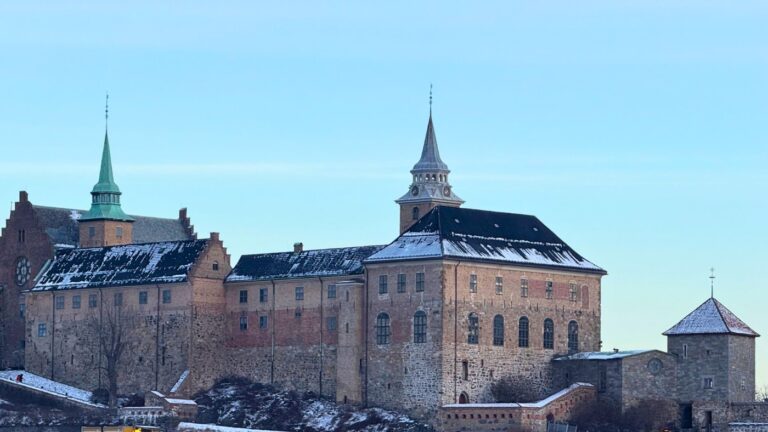
And yet many of the qualities now associated with Scandinavia—resilience, pragmatism, and a deep relationship with nature—took root during this long period of absence.
This is the story of how a region defined by domination, dependency, and rivalry slowly became one of cooperation, stability, and shared values.
A Land Shaped by Ice and Distance
Long before Scandinavia existed as a political or cultural idea, it existed as a physical challenge.
When the last Ice Age retreated around 10,000 years ago, the land that would become Norway, Sweden, and Denmark emerged slowly from beneath the glaciers.
What followed was not a sudden flowering of civilization, but a gradual process of survival. Early settlers followed the coastlines, rivers, and animal migrations, living as hunters, fishers, and gatherers in a landscape that offered little margin for error.
Geography mattered from the beginning.
Norway’s mountains and fjords encouraged small, scattered communities. Sweden’s forests and inland waterways supported movement and trade across long distances. Denmark’s flatter terrain and access to the European continent made it a natural crossroads.
These early differences would echo through centuries of political development.
Even at this stage, Scandinavia was not isolated. Amber, furs, and tools moved along trade routes stretching south into Europe and east toward the Baltic.
Ideas, technologies, and people flowed in both directions. Scandinavia was remote, but never disconnected.
Before the Vikings: Foundations of a Region
Long before Scandinavian societies began to look outward, they were shaped by the demands of living at the edge of what was possible.
Following the retreat of the last Ice Age, small groups of people gradually moved north into the newly exposed landscapes of Scandinavia. They followed animals, coastlines, and seasonal rhythms rather than fixed borders.
Survival depended on mobility, adaptability, and an intimate knowledge of the environment. These early conditions shaped how communities were organised and how power was understood.
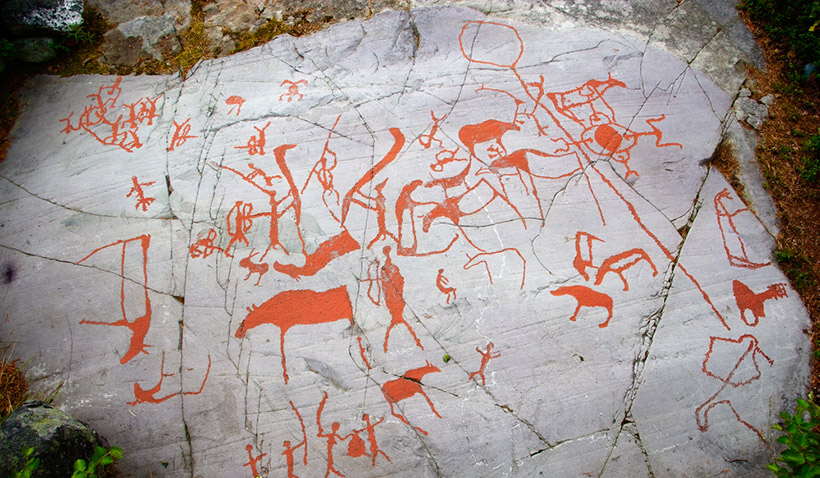
By the late Stone Age and into the Bronze Age, Scandinavian societies were already developing distinctive characteristics. Farming spread slowly, often supplementing hunting and fishing rather than replacing it.
Settlements remained small and scattered, particularly in Norway, where mountains and fjords limited large-scale agriculture.
In contrast, southern Scandinavia, especially present-day Denmark, supported denser populations and more complex social hierarchies earlier on. This uneven development would become a recurring theme in Scandinavian history.
Trade Before the Vikings
Trade played a far greater role than isolation myths suggest. Long before the Viking Age, amber from the Baltic coast travelled south into continental Europe, while metal goods, weapons, and ideas flowed north.
Archaeological finds reveal connections with the Roman world, even though Roman legions never reached Scandinavia. These early trade networks introduced not only goods, but new concepts of status, craftsmanship, and leadership.
Power during this period was local and personal. Authority rested with chieftains who could command loyalty through land ownership, military strength, and gift-giving.
There was no central state, no standing army, and no bureaucracy in the modern sense.
Faith in the Region
Religion reinforced this worldview. Pre-Christian belief systems in Scandinavia were not organised around temples or written doctrine, but around practices tied to land, ancestors, and seasonal cycles.
The gods of Norse mythology reflected a world defined by uncertainty. They were powerful but fallible, bound by fate rather than standing above it. This reinforced cultural attitudes that valued courage, adaptability, and acceptance of risk.
These beliefs were deeply intertwined with daily life. Rituals marked planting and harvest, journeys and deaths. Sacred spaces were often natural ones: groves, springs, stones, and prominent landscape features.
The boundary between the spiritual and the practical was thin. Religion was not something separate from society. It was a way of understanding it.
Language also played a unifying role long before political unity existed. Early forms of Old Norse were already developing across much of Scandinavia, facilitating communication, trade, and shared storytelling.
While dialects varied, mutual intelligibility helped bind the region culturally even as it remained politically divided.
An Established Society
By the early Iron Age, Scandinavia was not a blank slate waiting for the Viking Age to arrive.
It was a region with established trade routes, social hierarchies, belief systems, and cultural norms. What it lacked was not complexity, but centralisation.
The conditions were in place for outward expansion. Population growth, technological advances in shipbuilding, and increasing exposure to wealth beyond Scandinavia would soon push these societies beyond their traditional boundaries.
Indigenous Scandinavia: The Sámi Presence
Long before Scandinavian kingdoms took shape, the northern regions of the peninsula were home to the Sámi, an Indigenous people with their own languages, belief systems, and ways of life.

The Sámi inhabited vast areas of what is now northern Norway, Sweden, Finland, and the Kola Peninsula, an area known as Sápmi. Their societies were shaped by seasonal movement, hunting, fishing, and later reindeer herding, reflecting a deep knowledge of Arctic and sub-Arctic environments.
For much of recorded Scandinavian history, Sámi communities existed outside emerging state structures, governed instead by their own customs and social systems.
As Scandinavian kingdoms expanded northward in later centuries, this independence was gradually eroded, laying the groundwork for long-term marginalisation and conflict that continued well into the modern era.
The Viking Age: Expansion Without Unity
The Viking Age, conventionally dated from around 800 to 1050, remains Scandinavia’s most internationally recognisable era. It is also one of the most misunderstood.
Rather than marking the sudden rise of a new people, the Viking Age was the outward expression of forces already at work within Scandinavian society.
Population growth, increasingly efficient agriculture, advances in shipbuilding, and growing awareness of wealth beyond Scandinavia’s borders combined to push people outward. What followed was a series of overlapping movements driven by opportunity as much as necessity.
More Than Raiders
The popular image of the Viking as a marauding warrior captures only a fraction of the reality. Scandinavian travellers of this period were traders, settlers, mercenaries, explorers, and diplomats as well as raiders. Violence was part of the picture, but it was rarely the whole story.
Longships made this possible. Shallow-drafted, fast, and highly manoeuvrable, they allowed travel along open seas, coastal waters, and far inland via rivers.
This mobility gave Scandinavian groups access to trade networks that connected them to Europe, the Middle East, and Central Asia. Silver coins, silk, glassware, and exotic goods flowed north, while furs, slaves, walrus ivory, and timber moved south and east.
What united these travellers was not a shared identity, but shared tools and circumstances. There was no Viking nation, no common political project, and no sense of acting on behalf of “Scandinavia.”
Three Directions, Three Paths
Geography shaped the direction of expansion, and those directions mattered.
Norwegian Vikings tended to look west. From coastal Norway, they moved across the North Sea to the British Isles, establishing settlements in Scotland, Ireland, and northern England.
They pushed further into the North Atlantic, settling Iceland by the late 9th century and reaching Greenland soon after. These movements were often family-based, focused on land and long-term settlement rather than tribute or control.
Danish Vikings focused largely on England and continental Europe. They established trading centres and fortified towns, some of which grew into lasting urban centres. Danish involvement in England left a deep imprint on law, language, and governance, particularly in areas that became known as the Danelaw.
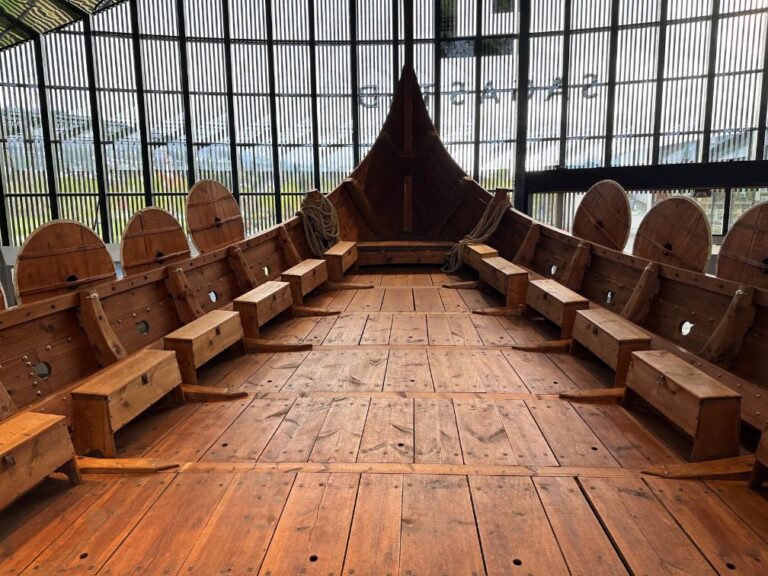
Swedish Vikings, often referred to as Varangians in eastern sources, travelled eastward along river systems through present-day Russia and Ukraine.
These routes connected Scandinavia to Constantinople and the Islamic world. Swedish traders and warriors played key roles in the formation of early states in the east, embedding Scandinavian influence far beyond the Baltic.
Wealth Without a State
The wealth generated by Viking activity transformed Scandinavian societies. Successful leaders accumulated resources and followers, reinforcing existing hierarchies. Trade hubs grew in importance, and long-distance connections became normal rather than exceptional.
Yet this did not translate into political unity. Power remained local, tied to individuals rather than institutions. Alliances were temporary. Loyalty was personal. Leadership still had to be constantly negotiated and defended.
The Viking Age expanded Scandinavia’s horizons, but it did not create nations. Instead, it intensified competition within the region, laying the groundwork for the struggles that would follow.
Christianity and the Rise of Kings
The most transformative force in early Scandinavian history was not conquest, but conversion.
The arrival of Christianity fundamentally altered how power was organised and justified. This was not a sudden spiritual awakening, nor a clean break with the past. It was a long, uneven process driven as much by politics as belief.
From the 10th century onward, Christianity spread gradually across Scandinavia. Kings who adopted the new faith gained access to powerful external allies, literate administrators, and a ready-made ideological framework that supported central authority.
Christianity offered something pagan belief systems did not: institutional structure. Churches, bishops, and written law codes allowed rulers to extend their influence beyond personal relationships.
Taxes could be standardised. Laws could be recorded. Authority could be framed as divinely sanctioned rather than merely negotiated. Conversion, then, was not just about faith. It was about control.
Uneven Paths to Power
Denmark was the first Scandinavian kingdom to consolidate under Christian rule. Its proximity to continental Europe meant earlier exposure to Christian institutions and political models. Danish kings used the church to strengthen central authority, integrate with European power structures, and project influence abroad.
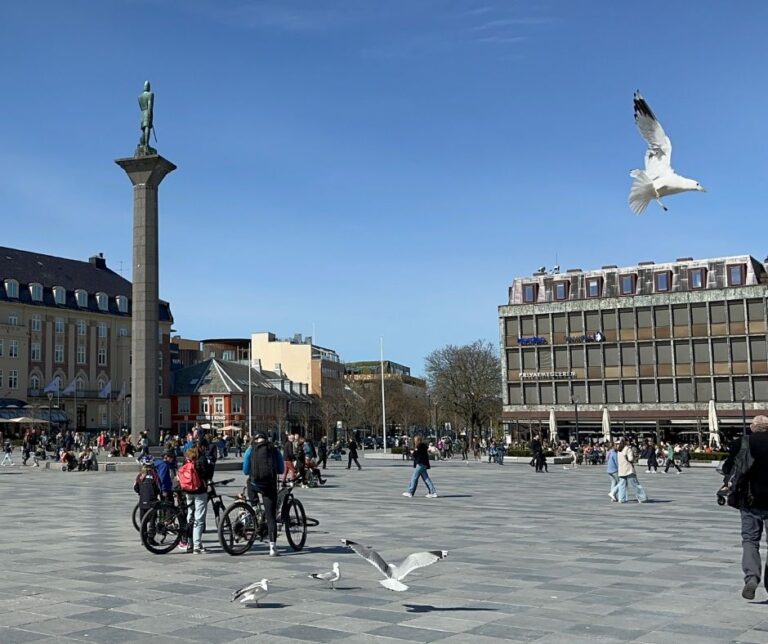
Sweden followed a more uneven path. Conversion progressed slowly and regionally, with strong resistance in some areas. Political consolidation lagged behind Denmark’s, and the balance between local power and royal authority remained fragile for longer.
Norway’s experience was the most violent and contested. Kings such as Olav Tryggvason and Olaf Haraldsson used force to impose Christianity, destroying pagan sites and punishing resistance.
While conversion eventually took hold, it left deep tensions between central authority and local autonomy. These tensions would resurface repeatedly throughout Norwegian history.
A New Order Emerges
Christianity bound Scandinavia more closely to Europe. Latin literacy connected rulers to international networks. Marriage alliances extended influence. Law codes replaced customary practices rooted in oral tradition.
At the same time, conversion marked the beginning of stark power imbalances within Scandinavia.
Denmark’s early consolidation gave it an advantage that would shape regional politics for centuries. Sweden’s gradual centralisation set it on a different trajectory. Norway’s loss of autonomy, paradoxically, began just as it formally entered the Christian European world.
By the end of the Viking Age, Scandinavia had changed profoundly. The outward expansion slowed. The inward consolidation began. Kings replaced chieftains. Written law replaced custom. And the foundations were laid for the unions, rivalries, and dependencies that would define the region’s next long chapter.
The Kalmar Union and the Problem of Power
In 1397, the crowns of Denmark, Norway, and Sweden were united under a single monarch in what became known as the Kalmar Union. On paper, it promised stability in a turbulent region. In practice, it exposed the deep imbalance of power within Scandinavia.
A Union in Name, Not in Reality
The union was dominated by Denmark from the outset. Administrative authority, foreign policy, and economic control were concentrated in Copenhagen, reflecting Denmark’s stronger institutions and closer ties to continental Europe.
Sweden and Norway entered the union from positions of weakness, but their experiences diverged sharply.
Sweden resisted Danish dominance repeatedly, often violently. Noble factions pushed back against royal authority, uprisings were frequent, and loyalty to the union was fragile.
Norway, by contrast, had far less capacity to resist. The Black Death had devastated its population and elite class, leaving the country politically hollow at precisely the moment when power was being centralised elsewhere.
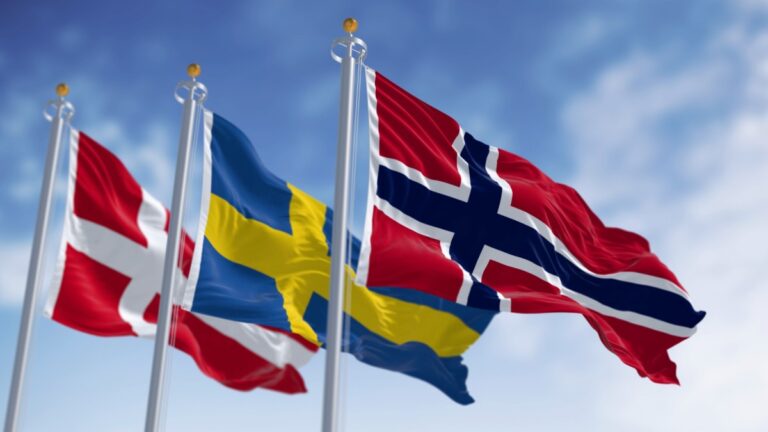
The result was a union that functioned only when interests aligned. It was less a shared project than a constant negotiation, prone to collapse whenever tensions surfaced.
Diverging Outcomes
Sweden eventually broke free in the early 16th century, emerging as an independent kingdom with ambitions of its own.
Norway did not. Instead, it remained bound to Denmark in a tighter political union that effectively erased its autonomy. The Norwegian crown ceased to exist as an independent institution, and governance was conducted largely from afar.
For centuries, Norway existed without a ruling elite of its own. Decisions were made in Copenhagen. Ambition flowed outward. Norwegian history became something that happened to Norway rather than something directed from within.
This prolonged absence from power would shape Norwegian identity in ways that lasted long beyond the union itself.
Denmark-Norway and Sweden’s Age of Empire
As Sweden emerged from the collapse of the Kalmar Union, it did so with force and confidence. The 17th century marked Sweden’s rise as a major European power, controlling territories across the Baltic and projecting military strength far beyond Scandinavia. Denmark-Norway followed a different path.
Two Models of Power
Sweden’s expansion was land-based and militarised. Its identity as a great power was built on conquest, administration, and standing armies. This brought prestige and influence, but also constant warfare and heavy centralisation.
Denmark-Norway became a maritime state. Control of sea routes, naval strength, and trade mattered more than territorial expansion. Copenhagen flourished as a political and cultural centre, while Norway supplied the raw materials that sustained the state: timber for ships, minerals for industry, and manpower for war.
Despite this contribution, Norway remained firmly in a subordinate role. Policy was set elsewhere. Strategic priorities were not its own.
The Quiet Consequences of Subordination
The rivalry between Sweden and Denmark defined Scandinavian politics for generations. Borders shifted. Wars came and went. Norway’s fate remained tied to decisions made beyond its borders.
Yet this long absence from great power politics had unintended consequences.
Norway avoided some of the intense militarisation and bureaucratic centralisation seen in Sweden. Local governance remained comparatively strong. Rural communities retained influence. A tradition of local responsibility survived where state authority was distant.
When Norway later regained independence, these structures would provide a foundation for democratic development and social cohesion. What looked like weakness at the time would eventually become a strength.
The 19th Century: Rediscovering Identity
The 19th century marked a turning point for Scandinavia, and nowhere more so than in Norway.
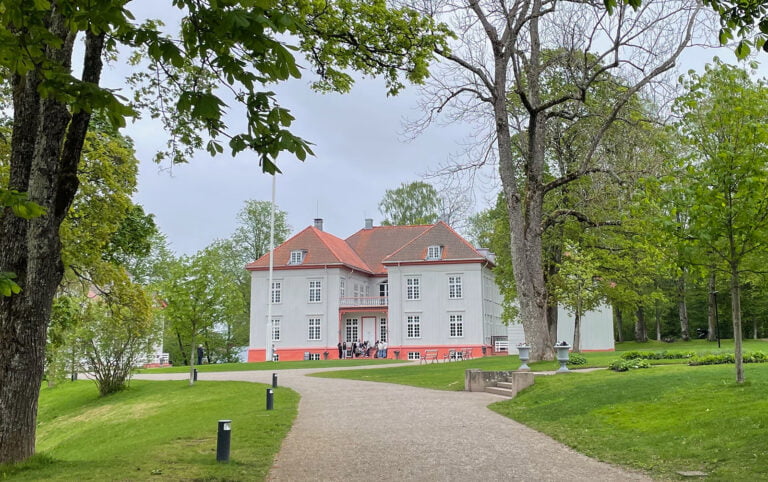
In the aftermath of the Napoleonic Wars, Denmark was forced to cede Norway to Sweden. The transfer was abrupt, and for many Norwegians deeply unsettling. Yet it also created an opening.
In 1814, Norway adopted its own constitution, one of the most liberal in Europe at the time, before entering a new union with Sweden.
Although real power still rested elsewhere, Norway now possessed something it had lacked for centuries: institutions through which national identity could be articulated and defended.
A parliament, legal framework, and administrative structures provided a platform for political participation and debate, even within the constraints of union.
National Romanticism and Cultural Recovery
Across Scandinavia, the 19th century witnessed the rise of national romanticism. Artists, writers, linguists, and scholars turned inward, searching for the roots of national character in folklore, history, and landscape.
This was not simply nostalgia. It was a deliberate project of identity-building in a Europe reshaped by nationalism.
In Norway, the movement carried particular emotional weight. Centuries of political subordination had left gaps in elite culture and written tradition. National romanticism filled those gaps by elevating rural life, oral storytelling, and the natural environment as symbols of authenticity.
Language reform, the collection of folk tales, and the celebration of dramatic landscapes all became ways of reclaiming a past that felt distinctly Norwegian.
Sweden and Denmark experienced similar cultural movements, but their starting points were different. Sweden’s focus reflected the recalibration of a former great power. Denmark’s followed territorial loss and a turn inward.
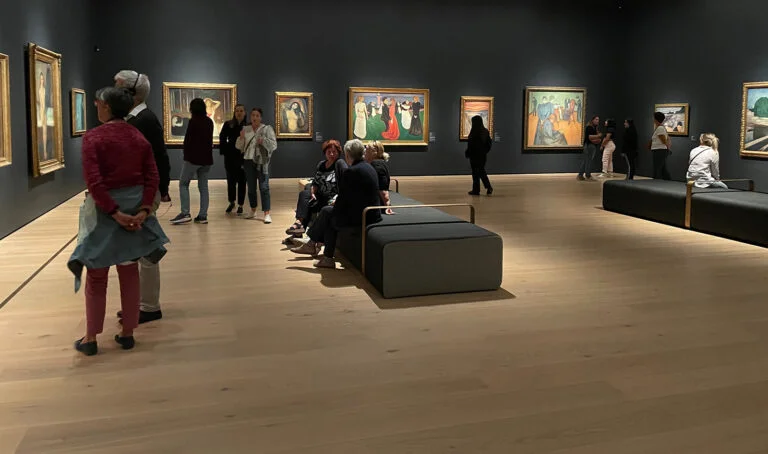
In each case, identity became something consciously shaped rather than passively inherited.
Independence and the 20th Century
Norway finally gained full independence from Sweden in 1905, remarkably without war. By European standards, it was a quiet moment. By Norwegian standards, it was transformative.
Diverging Wartime Experiences
The early 20th century quickly tested Scandinavia’s newly defined paths. During the Second World War, Denmark and Norway were occupied by German forces, while Sweden remained officially neutral.
These different experiences left deep marks on national memory and political culture. Occupation brought trauma, resistance, and moral reckoning in Norway and Denmark. Neutrality forced Sweden to navigate uncomfortable compromises.
After the war, these experiences influenced how each country understood security, responsibility, and international engagement.
Building the Scandinavian Model
In the decades that followed, Scandinavia became associated with a distinctive social and political model. Strong welfare states, high levels of trust, and an emphasis on equality and social cohesion emerged across the region.
These systems were not imposed by ideology alone. They were shaped by history. Small populations, demanding environments, and limited resources encouraged cooperation and long-term planning. Traditions of local governance and participation made broad consensus possible.
The results differed from country to country, but the foundations were shared. Stability, in this context, was not the absence of conflict, but the product of hard-earned compromise.
Modern Scandinavia: Cooperation Without Illusion
Today, Scandinavia is often spoken of as a unified region, particularly from the outside. In practice, it remains a collection of distinct nations with different priorities, alliances, and identities.
Norway’s oil wealth sets it apart economically. Sweden’s industrial base and international diplomacy give it global reach. Denmark’s proximity to Europe shapes its outlook. Differences over NATO membership, the European Union, and foreign policy persist.
What unites Scandinavia now is not sameness, but compatibility. Shared values coexist with healthy rivalry. Cooperation is pragmatic rather than sentimental, built on institutions and habits developed over centuries.
This balance—between independence and interdependence—is the true legacy of Scandinavian history.
Understanding this history helps explain why Scandinavia functions as it does today. Stability here was not inherited. It was built slowly, often reluctantly, and sometimes accidentally. And that may be its greatest strength.
What Scandinavia Means Today
It is tempting to retroactively apply the idea of “Scandinavia” to this entire period, but the concept itself is relatively modern.
For most of history, people identified with their valley, province, or kingdom, not with a broader region. The shared identity associated with Scandinavia today emerged slowly, shaped by language similarities, intertwined histories, and later by conscious cultural projects.
Importantly, Scandinavia does not include all Nordic countries. Finland and Iceland share deep historical and cultural ties with the region, but they follow distinct historical paths. Scandinavia, in its strict sense, refers to Norway, Sweden, and Denmark, linked by geography, language, and centuries of entanglement.
Understanding this distinction helps explain both the closeness and the friction that characterize the region. I go into this in more detail in my article titled Scandinavia: One Nation? I hope you enjoy!