
A routine metal detecting trip has led to one of the most remarkable archaeological discoveries in Norwegian history, with thousands of Viking Age coins uncovered in a field in eastern Norway.
The find, made near Rena in Østerdalen, is already being described as the largest Viking coin hoard ever discovered in Norway.
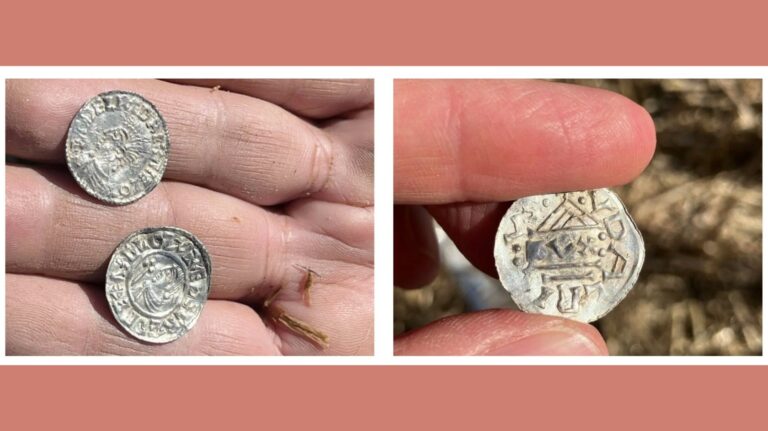
So far, archaeologists have recovered close to 3,000 silver coins, and the search is still ongoing. Experts believe even more could be hidden beneath the soil.
The discovery has drawn attention both nationally and internationally. Director General of Cultural Heritage Hanna Geiran called it “a national and international event,” highlighting the enduring fascination with the Viking Age.
From 19 Coins to Thousands
The story began on 10 April, when two metal detectorists, Rune Sætre and Vegard Sørlie, uncovered 19 silver coins in a field.
Suspecting they had found something significant, they stopped digging immediately and alerted archaeologists from Innlandet County Municipality.
That decision proved crucial. Once professionals joined the search, the scale of the find quickly became clear.
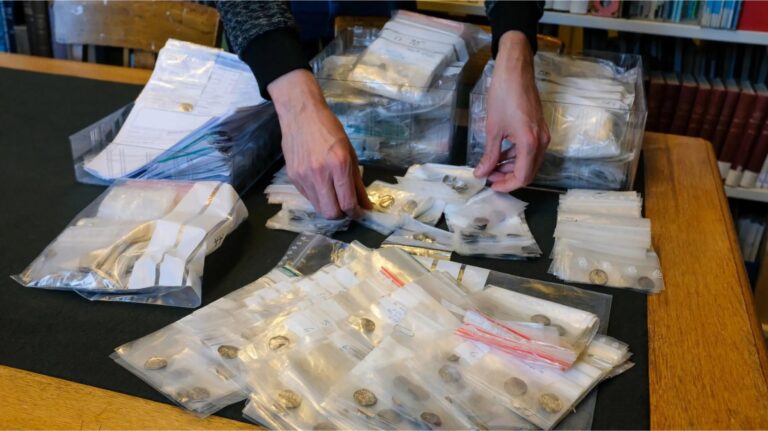
What started as a handful of coins soon turned into dozens, then hundreds. Within days, the number had climbed into the thousands.
Coins From Across Europe
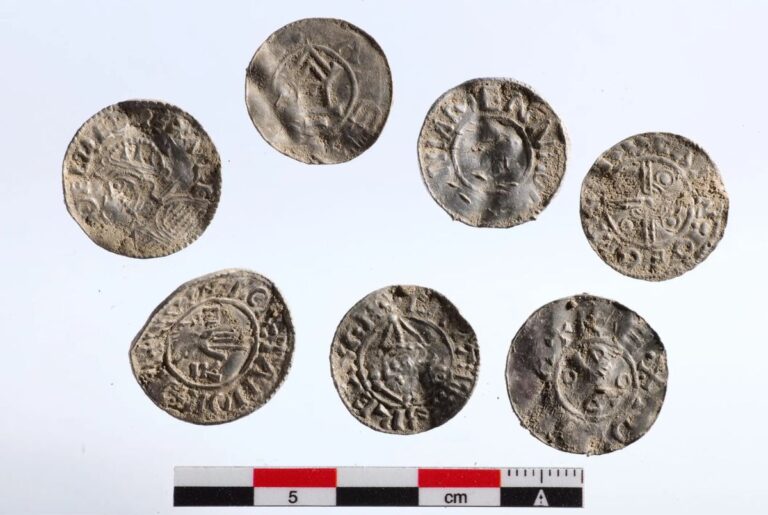
The hoard dates from the late Viking Age, roughly between the 980s and 1040s. Many of the coins were minted outside Norway, including in England and Germany, reflecting the extensive trade networks of the Viking world.
Archaeologist Svein Harald Gullbekk explained that foreign coins dominated circulation in Norway at the time.
That began to change during the reign of Harald Hardrada, who established a national coinage system. Some of the newly discovered coins appear to date from this transitional period, making the find particularly significant for understanding Norway’s economic history.
Why Was the Treasure Buried?
The reason the coins were buried remains a mystery. Archaeologists believe they were originally stored in a pouch or container that has since decayed. Over time, ploughing scattered the coins across the field.
Such deposits were not unusual during the Viking Age. Wealth was often buried for safekeeping, hidden from thieves or during times of conflict. In some cases, valuables may also have been buried as offerings.
Experts suggest the hoard could represent the savings of an individual or family, possibly the equivalent of a substantial fortune. Based on later historical comparisons, it may even have been enough to purchase a farm.
A Once-in-a-Lifetime Find
For those involved, the discovery is being described as extraordinary.
Archaeologist May-Tove Smiseth said witnessing the coins being uncovered has been “absolutely incredible,” adding that finds of this scale are something most archaeologists will never experience.
The condition of the coins has also surprised experts. The soil in the area contains little stone, helping preserve the silver pieces so well that some appear almost newly minted.
More to Be Found
The site, now referred to as the Mørstad Hoard, is still under investigation. Archaeologists expect the search to continue for several seasons, with the possibility that more coins or related discoveries could emerge.
Authorities have also issued a clear warning: the exact location should not be visited. Finds of this kind are automatically protected under Norwegian heritage laws, and disturbing the site could damage valuable historical evidence.
A Window Into the Viking World
Beyond its size, what makes this discovery so important is what it reveals about the Viking Age.
The mix of foreign and early Norwegian coins offers a snapshot of a society in transition, shaped by trade, travel and political change.
It is also a reminder that, more than a thousand years later, Norway’s fields may still hold secrets waiting to be uncovered.


Wow! I love stories like this! Just a regular day out with the metal detectors and . . . .