
A person aboard a vessel in remote Svalbard has been fined NOK 50,000—roughly $5,000—after deliberately sounding the ship’s horn to wake a sleeping polar bear.
The unusual incident took place earlier this month in Lomfjorden, a fjord on the eastern side of Spitsbergen that extends south from Hinlopenstretet.
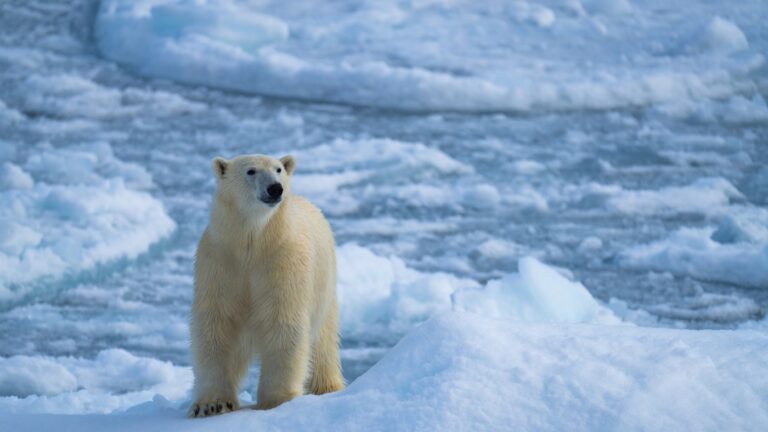
According to the Governor of Svalbard, known in Norwegian as the Sysselmesteren, people aboard the vessel spotted a polar bear asleep on land. One person then used the ship’s horn. The noise woke the bear, which got up and moved to another location.
Perhaps most remarkably, the incident was reported to the authorities by other people aboard the same vessel.
The Governor concluded that the action amounted to deliberately disturbing a polar bear and issued a fine of NOK 50,000 for breaching Section 30a of the Svalbard Environmental Protection Act. The person accepted the fine and has already paid it.
The official statement does not identify the person, their nationality, or the vessel involved. Although some international headlines describe the offender as a tourist operator, the Governor’s statement says only that the person was aboard a vessel.
Strict Rules Around Polar Bears
Deliberately disturbing wildlife has long been taken seriously in Svalbard, but the rules governing encounters with polar bears were tightened substantially from January 1, 2025.
It is forbidden to unnecessarily disturb, attract or pursue a polar bear. People must also normally remain at least 300 metres from one. Between March 1 and June 30, when bears are considered particularly vulnerable to disturbance, that minimum distance increases to 500 metres.
Anyone who unexpectedly encounters a bear at closer range is generally required to retreat to the legal distance.
The Governor’s announcement does not suggest that the latest fine was issued for breaching the distance rule. Instead, it specifically cites the deliberate use of the ship’s horn to disturb the sleeping animal.
Why Svalbard Tightened The Rules
When announcing the changes, Norway’s Ministry of Climate and Environment said both visitor numbers and activity levels in Svalbard had increased since the environmental law was introduced in 2002.
At the same time, rapid climate change is putting additional pressure on Arctic wildlife. The ministry specifically highlighted the importance of allowing polar bears to search for food, hunt, rest and care for their cubs without human interference.
The regulations form part of a wider tightening of environmental rules across Svalbard, including restrictions on tourist landings, ship capacity in protected areas and drone use.
For visitors, the message from this case could hardly be clearer. Seeing a polar bear is one of the great privileges of a trip to Svalbard, but the encounter must happen on the bear’s terms.
In this case, trying to turn a sleeping bear into a better wildlife sighting came with a NOK 50,000 price tag.