
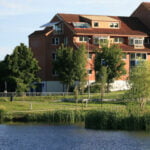
Buying a home in Norway does not always mean owning bricks and mortar in the way many foreigners expect.
One of the most common forms of home ownership in the country is the borettslag, a housing cooperative model that combines private living rights with collective ownership and shared financial responsibility.
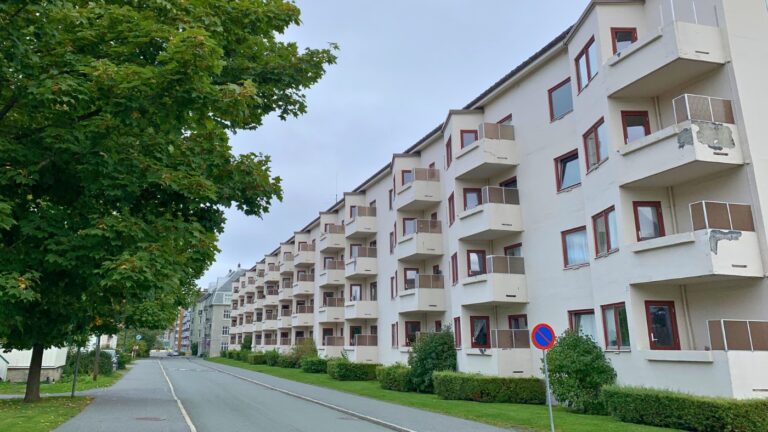
For many people, a borettslag offers a more affordable route into the housing market. For others, it introduces restrictions and risks they did not fully understand at the point of purchase.
Understanding how borettslag ownership works is essential before you commit.
This guide explains what a borettslag is, how the finances really work, and why details such as shared debt, house rules, and governance matter more today than ever.
What is a Borettslag?
A borettslag is a housing cooperative with a specific legal structure. Rather than owning an individual apartment or house outright, residents own shares in the cooperative. Those shares give the exclusive right to live in a specific home.
Borettslag are most commonly associated with apartment living, but they can also include terraced housing (rekkehus) and, in rarer cases, detached homes. The term describes the ownership model, not the physical type of building.
The cooperative itself owns the buildings and land. As a shareholder, you must follow the borettslag’s articles of association (vedtekter) and house rules (husordensregler). These regulate everything from noise levels and renovations to pets and renting.
In return, the borettslag is responsible for maintaining shared structures and facilities, while you retain responsibility for the interior of your own home.
Borettslag vs. “selveier”
Typically, when looking at buying a house in Norway, foreign buyers often compare borettslag ownership with selveier (freehold ownership).
With selveier, you own your individual unit outright and typically have greater freedom to rent it out or make changes. With borettslag, your rights are more limited, but the purchase price is often lower and major maintenance costs are shared collectively.
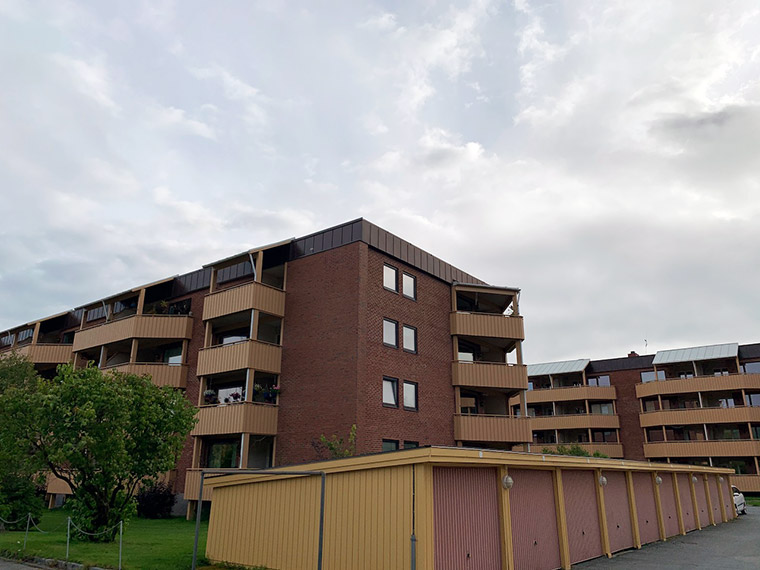
The trade-off is simplicity versus control. Borettslag ownership works well for people who want predictable maintenance and fewer personal responsibilities, but it is less suitable for buyers seeking investment flexibility.
How Borettslag Ownership Works in Practice
When you buy into a borettslag, you purchase a specific share number linked to a specific home. That share gives you:
– the exclusive right to live in your unit
– access to common areas
– voting rights in the cooperative
– in many cases, pre-emption rights on future sales
Because the cooperative owns the property, changes to façades, balconies, windows, roofing, and shared installations are usually outside your control. Even internal renovations may require board approval if they affect structure, plumbing, ventilation, or neighbours.
Money Matters
The most misunderstood aspect of borettslag ownership is shared debt, known in Norwegian as fellesgjeld.
When a borettslag is built, the cooperative typically takes out a large collective loan to finance construction. Over time, additional loans may be added to fund major improvement projects such as roof replacement, façade upgrades, new balconies, or energy improvements.
Each apartment carries a defined share of this joint debt.
Total cost, not asking price
The headline purchase price can be misleading. The true cost of a borettslag apartment is purchase price + your share of the joint debt.
Banks assess affordability using this combined figure, not the advertised price alone. In cities like Oslo, it is increasingly common for the shared debt to represent a substantial portion of the total cost.
Monthly common costs
Your share of the joint debt is repaid through the monthly common costs (felleskostnader). These usually include:
– interest and instalments on shared debt
– municipal fees
– buildings insurance
– caretaker and cleaning services
– electricity for common areas
– routine maintenance and exterior upkeep
Because interest rates rose sharply after 2022, borettslag with high shared debt have seen significant increases in monthly costs. This has made the financial structure of a cooperative far more important than it was a decade ago.
‘Avdragsfrihet': the hidden risk
Many newer borettslag loans include periods of avdragsfrihet, meaning interest is paid but no principal is repaid for several years. This keeps monthly costs artificially low in the early years.
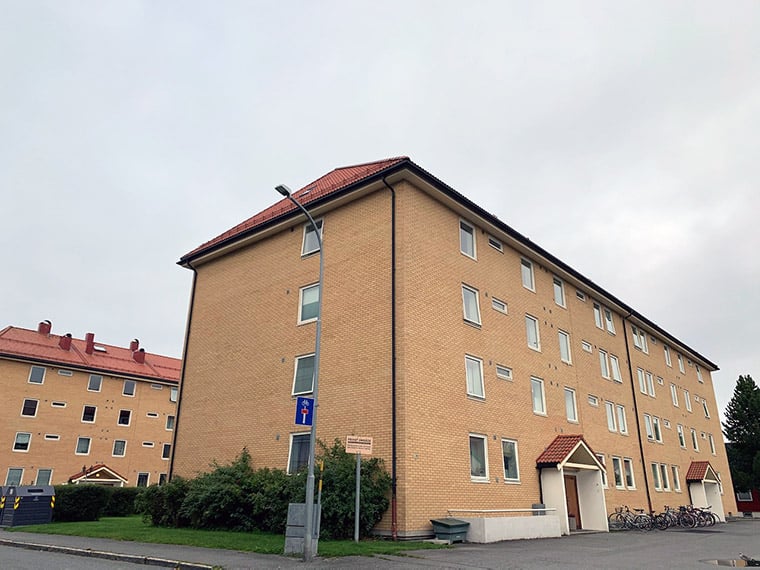
Once repayments begin, common costs can jump dramatically.
Buyers should always check:
– whether the shared debt is currently interest-only
– when repayments are scheduled to start
– whether refinancing is planned
These details are usually buried in board reports rather than sales ads.
Can you repay shared debt early?
Some borettslag allow individual shareholders to repay their portion of the shared debt early, often referred to as an IN-ordning. If permitted, this can significantly reduce monthly costs.
However, not all cooperatives offer this option, and conditions vary. It is not a universal right and must be confirmed in advance.
Maintenance Responsibilities in a Borettslag
A common rule of thumb is:
– The borettslag is responsible for the exterior and shared structures
– You are responsible for everything inside your unit
This typically means the cooperative handles roofs, façades, windows, entrances, stairwells, drainage, and shared systems, while you maintain kitchens, bathrooms, floors, and internal wiring.
Damage that affects other units, such as leaks, can blur these boundaries, so responsibility is not always straightforward.
Renting Out a Home in a Borettslag
Renting rules are one of the most restrictive aspects of borettslag ownership. Unlike selveier properties, you do not automatically have the right to rent out your home. Rules are set by the articles of association and enforced by the board.
Common restrictions include:
– a minimum period of owner-occupation before renting is allowed
– limits on rental duration, often two to three years
– requirements for board approval in advance
In some borettslag, renting is prohibited entirely except in specific circumstances, such as temporary work relocation or military service.
Anyone considering future rental income should treat borettslag restrictions as a potential deal-breaker and verify the rules before buying.
Selling a Borettslag Home
Selling a borettslag apartment is broadly similar to selling a freehold property, but with one important difference: pre-emption rights (forkjøpsrett).

In many cooperatives, existing members have the right to purchase the property on the same terms as an external buyer. This process can delay completion and, in some cases, derail a sale entirely.
Priority systems are often administered by large housing organisations such as OBOS, which operates membership-based queues. Whether pre-emption rights apply, and how long the process takes, should always be clarified during the buying and selling process.
Governance and Decision-Making
Borettslag are democratic organisations. Each shareholder normally has one vote, regardless of apartment size or value.
Major decisions are made at general meetings. Such decisions include:
– taking on new loans
– refinancing existing debt
– approving large maintenance projects
– changing house rules
For buyers, this means future costs are not fixed. Well-run borettslag with transparent finances and active boards tend to be more stable. Poor governance can lead to sudden cost increases or delayed maintenance.
Reviewing recent annual reports and meeting minutes is one of the most important steps in evaluating a purchase.
Tax Considerations
As a borettslag shareholder, you can deduct interest paid on your share of the joint debt in your annual tax return, just as you would with a private mortgage.
Most cooperatives provide an annual statement summarising deductible amounts. This information is also typically pre-filled in Norwegian tax returns, but it remains your responsibility to check it is correct.
Is Borettslag Ownership Right For You?
Borettslag ownership suits buyers who:
– plan to live in the property long-term
– value shared maintenance and predictable management
– do not need rental flexibility
– are comfortable with collective financial decisions
It may be less suitable for those seeking investment freedom, short-term ownership, or full autonomy over their property. Understanding the cooperative’s finances, rules, and governance is just as important as liking the apartment itself.


Borettslag is also a popular way of living in Finland and Sweden. In Finland, you also buy the right to live in the flat, but not the walls, so to say. In result, when one wants to move out, we don’t sell the flat but the borettslag organization takes in charge of it and returns the deposit, which is about 10 to 15% of the actual value of the flat. So when one moves out, they don’t need to worry about selling the flat. What is more, at least in the flats I used to live, if you wanted to redecorate the flat, you’d have to use subtle colours and patterns but you’d get a free starting kit from the hardware store. Also, if you wanted to upgrade your flat by fitting a dishwasher for example, that would rise your deposit a bit.
The property we have lived in for the past 10 years is a borettslag property. We are part of a wider group but our particular block has 55 flats. In 2018 the block had a large fire and we were out of it for 6 months whilst repair work was undertaken. The building insurance which is part of our borettslag cost covered all the work and our relocation costs. and the local board were fantastic at arranging recovery and repair companies – including a specialist asbestos company. The borettslag approach helped massively at this time. In addition things like snow clearing and other maintenance issues are dealt with automatically. As a retired person this approach definitely makes life a lot easier.
Hi , thank you for this informative article. I have a question could you please answer it?
If I buy an apartment and pay joint debt and live there for five or ten years then I want to sell it, what will happen ? The amount I paid will be added to my share?
In selveier, the amount I will pay monthly is deducted from the loan and in fact my share is increasing as I pay. Is it the case also for andel?
Hi, thank you for the information regarding buying property in borretslag.
What is the advantages, if I pay the full fellesgjeld when I buy the property – when selling after 5 years?
– when selling after the grace period is over?
Interesting and informative article about apartment (“ownership”) in Norway. We have that type of home “ownership” here in the USA too. Here we call it a Cooperative. Until about the late 1950s “coops” were the way people here claimed ownership of an apartment. In the late 50s and early 1960s “Condos” replaced “Coops” here but that system of direct ownership of ones living unit never caught on in Sweden or Norway.
I have noticed though many Swedes who return home tend to call their apartments “Condos.” I wonder if Norwegians returning home are equally unaware of the difference.