

From supermarket shelves to cosy pubs, Norway fills with Christmas ale throughout December. These festive brews known as ‘juleøl' reveal a fascinating mix of history, regional identity, and modern creativity.
You cannot go far in Norway during December without someone offering you a glass of juleøl. The shelves fill with it. Bars highlight it. Beer enthusiasts talk about it as if it were a seasonal sport.
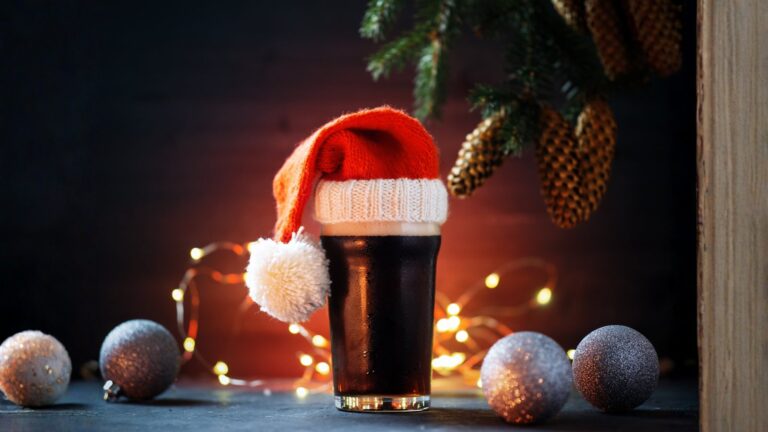
But what exactly is Norwegian Christmas beer and why does it inspire such devotion?
Juleøl is a dark and often full bodied ale brewed especially for the festive season. Nearly every brewery in the country produces its own version.
The result is a landscape of flavours that stretches from classic malt driven beers to creative small batch releases from microbreweries.
The season for one of the most curious Norwegian Christmas traditions begins in early November and gains momentum until Christmas Eve when many Norwegians pour a glass to enjoy with ribbe or pinnekjøtt.
Christmas Beers in Shops and Bars
A December trip to a Norwegian supermarket makes the scale of the juleøl tradition very clear. Supermarkets are only allowed to sell alcohol up to 4.7 percent, yet the Christmas selection still takes up half the beer shelf.
Labels glow with deep reds and golds. Some feature cheerful elves or snow covered barns. Others take a more serious approach and present themselves almost like vintage wines.
For the stronger and more traditional versions you need to head to Vinmonopolet or visit a bar. This is where the real variety appears. Small breweries release rich porters, barrel aged ales, smoked stouts and spiced winter brews.
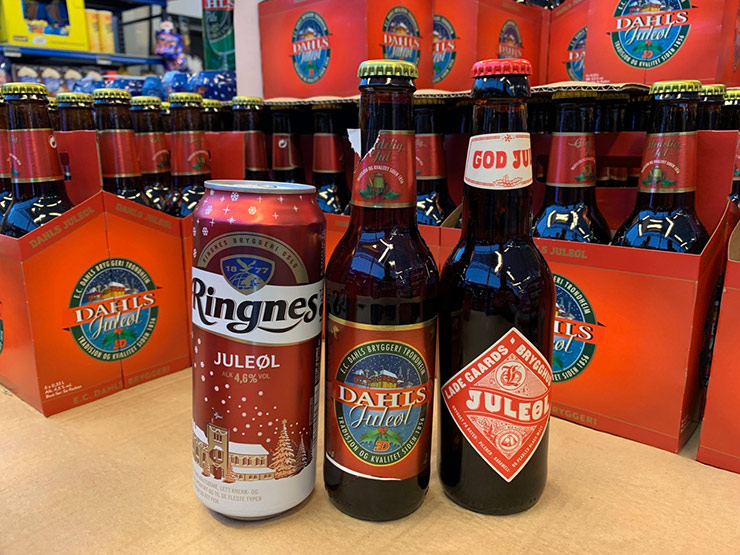
Many of these are made in limited runs that sell out quickly. Part of the fun lies in discovering something unusual and tasting how different breweries interpret the concept of Christmas beer.
I counted six varieties at my local Rema 1000 just the other day and that was a modest display compared with the selection at Vinmonopolet.
Why Norwegians Love Comparing Juleøl
Among beer fans, juleøl season has become a highlight of the year. Breweries regard their Christmas beer as a flagship product and give it more attention than almost anything else they produce.
Norwegian newspapers, websites and magazines respond with long tasting lists and enthusiastic rankings. The competition always becomes slightly heated.
Taste is one thing. Regional pride is another entirely. A beer from eastern Norway might take a national prize, yet someone in Bergen will argue passionately that their local brewery still makes the finest juleøl in the land.
If you ever want to test this theory, visit Bergen and casually mention that your favourite Christmas beer comes from Oslo. Then enjoy the reaction.
According to ‘Øl Akademi' there are around three hundred Christmas beers available in Norway each year, with one hundred and ninety of them brewed domestically. Their testers analysed one hundred and sixty varieties by colour, aroma, flavour and aftertaste.
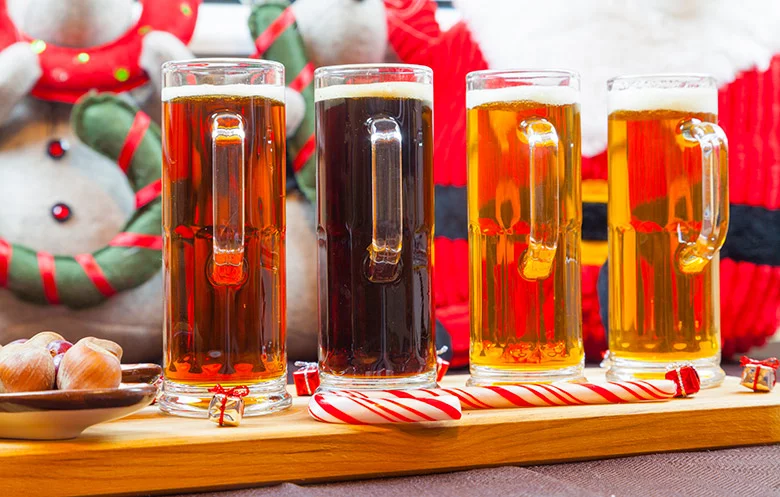
Three tied for first place: Ringnes Julebokk. Færder Røkelse. Haandbryggeriet Fatlagret Bestefar.
Aperitif produced its own extensive ranking and chose Ringnes Julebokk as the winner, followed by Aass Juleøl Vellagret and Lindheim Farmer’s Reserve Winter Apple in joint second.
A Long History in Scandinavia
Norway did not invent Christmas beer. The concept appears throughout Scandinavia and has roots that reach back into pre Christian brewing traditions.
Winter beer had an important place in rituals and celebrations, especially during the darkest months of the year. As the climate encouraged hearty drinks with plenty of character, the idea of a rich festive ale became well established long before the modern breweries existed.
The first known Norwegian newspaper advertisement for juleøl appeared on 1 December 1869 in Bergen. It offered extra fine Christmas beer in wooden barrels known as ankervis that held nearly forty litres.
Early commercial juleøl was not especially strong. It was often sweet and malty, echoing older brewing traditions that existed before bottom fermented lagers became common.
Researchers describe these early beers as ‘pottøl' or ‘søttøl'. They carried flavours that feel familiar today even if their strength and brewing methods were very different.
In many ways they serve as a bridge between ancient brewing practices and the modern winter beers that fill the shelves each December.
Other Christmas Drinks in Norway
Not every Norwegian drinks beer and that has never been a problem. The country offers several traditional alternatives.
Gløgg is the Scandinavian answer to mulled wine. It is served steaming hot and scented with cinnamon, cloves and other winter spices. A handful of raisins and chopped almonds sits at the bottom of each cup.
You will find it at Christmas markets all over Norway where it warms cold hands and lifts spirits on long dark evenings.
‘Julebrus' is a festive soda that appears only at this time of year. It usually comes in a vivid red colour with a berry like sweetness although some regions favour a golden version.
Children adore it. Many adults pretend they buy it for the children yet somehow always find room for a glass themselves.
A Seasonal Sip of Norwegian Culture
Whether you enjoy beer or not, juleøl offers a fascinating glimpse into Norwegian culture. It blends old traditions with modern creativity and brings communities together in a shared seasonal ritual.
The bottles on the shelves tell stories of local identity, changing tastes and a national love of winter flavours.
If you have the chance to try a few this December, enjoy the experience. And if you discover a favourite, someone in another part of Norway will almost certainly disagree, which is half the fun. Skål!


Is there any way I can purchase Juleøl in the United States? I’ve been looking for years but no success.
How could you forget to mention Juleaquavit when it comes to other Christmas drinks?!? 😉
Many very good ones for sure.. and we enjoy several different types each
year – the tase can differ from year to year..
I often like Dahl very much.
Take care, and Merry Christmas – God Jul!