
How three brothers from southwest Norway transformed middle-distance running, and why their family story is more complex than medals alone.
It is rare enough for a country the size of Norway to produce a single world-class middle-distance runner. To produce three from the same family borders on the unbelievable.
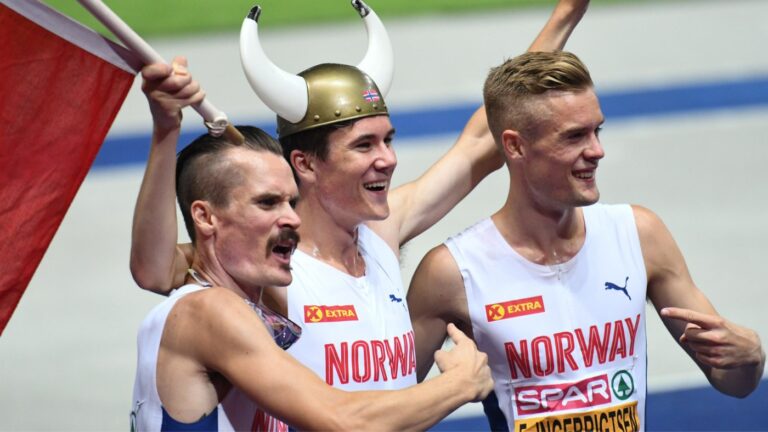
Yet Henrik, Filip and Jakob Ingebrigtsen have done exactly that. Over the past decade, the brothers from Sandnes have rewritten national records, challenged long-standing assumptions about who dominates middle-distance running, and turned athletics into prime-time television in Norway.
Their rise has been extraordinary. Their family story, however, has become increasingly complicated.
From Sandnes to the World Stage
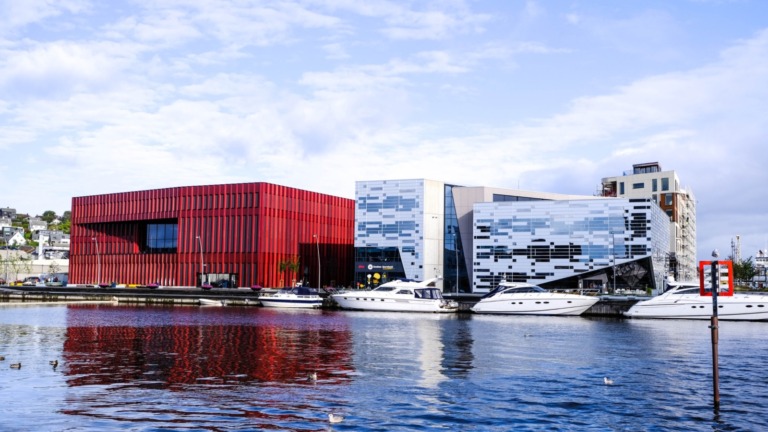
The Ingebrigtsen brothers grew up in Sandnes, a town in Rogaland better known for industry than elite sport. Running was part of daily life from an early age, with structured training beginning far earlier than is typical in Norwegian athletics.
From the outset, the brothers were coached by their father, Gjert Ingebrigtsen. He had no formal coaching education when he began, but developed a highly regimented system based on volume, repetition and strict routines.
That approach would later divide opinion, but there is no question it produced results.
The brothers specialised in middle-distance events, particularly the 1500 metres, a discipline historically dominated by runners from East Africa.
Their success challenged the idea that geography alone determines athletic dominance and placed Norway firmly on the global athletics map.
Henrik Ingebrigtsen: The Pioneer
Born in 1989, Henrik Ingebrigtsen was the first of the brothers to break through internationally. His European Championship gold in the 1500 metres in 2012 announced Norway as a serious middle-distance nation and set a benchmark for what followed.
That same summer, Henrik finished fifth at the London Olympics, a remarkable achievement at the time for a Norwegian middle-distance runner.
Over the following years, he added medals at both European Championships and European Indoor Championships, alongside strong performances on the Diamond League circuit.
While later overshadowed by his younger brothers, Henrik’s role as the trailblazer cannot be overstated. His success proved that the family’s training model could work at the highest level and laid the foundation for everything that came next.
Filip Ingebrigtsen: European Champion and Quiet Consistency
Filip Ingebrigtsen, born in 1990, has often been described as the most understated of the three brothers, but his achievements stand firmly on their own.
His gold medal in the 1500 metres at the 2016 European Championships, followed by bronze a year later, confirmed him as one of Europe’s leading middle-distance runners. With a personal best of 3:30.01, Filip remains one of the fastest Norwegians in history over the distance.
In contrast to Jakob’s global stardom, Filip’s career has been defined by consistency, tactical intelligence and longevity. He has also played an important role as a bridge between the older and younger generations of Norwegian middle-distance running.
Jakob Ingebrigtsen: From Prodigy to Global Superstar
Jakob Ingebrigtsen is not simply the youngest of the brothers. He is the figure who has transformed the family story into an international phenomenon.
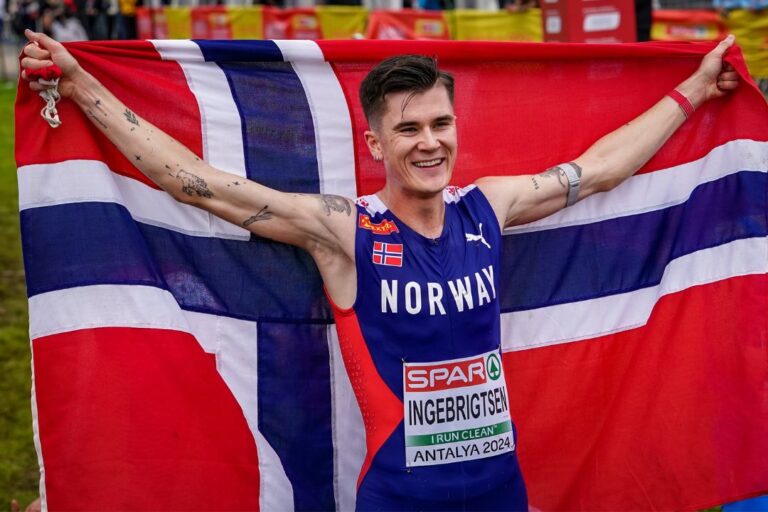
Born in 2000, Jakob was competing against and beating much older athletes while still in his early teens.
His age-group times quickly made headlines across Europe, but it was his composure on the senior stage that set him apart. By 16, he had run a sub-four-minute mile. By 17, he was competing in Diamond League finals.
What followed has been one of the most dominant periods in modern middle-distance running.
Jakob won Olympic gold in the 1500 metres at Tokyo 2020, becoming one of Norway’s youngest Olympic champions. Rather than specialising narrowly, he expanded his range, adding the 5000 metres to his elite repertoire.
That decision paid off spectacularly when he claimed Olympic gold again in Paris in 2024, this time over 5000 metres.
By his mid-20s, Jakob had accumulated multiple world titles, European championships, Diamond League trophies and national records across distances from 1500 metres to 5000 metres.
Indoors, he has pushed the boundaries even further, targeting world records in the mile and 1500 metres—events once considered untouchable.
Equally notable is his racing style. Jakob is known for front-running, controlling races from the front rather than relying on a late kick. This aggressive approach has redefined tactical norms in championship racing and forced rivals to adapt to him, rather than the other way around.
Off the track, Jakob has become one of Norway’s most recognisable athletes. He speaks openly about pressure, ambition and the mental demands of elite sport.
His interviews often reveal a meticulous, almost obsessive mindset. It's one focused not just on winning, but on legacy. His stated goal is not merely Olympic success, but to be remembered among the greatest middle-distance runners in history.
As of early 2026, Jakob remains firmly at the peak of the sport, carefully managing his race calendar while continuing to chase records that once seemed out of reach.
The Ingebrigtsen Family in the Public Eye
The wider Ingebrigtsen family has long been part of the story. Younger siblings grew up around training camps and competitions, while their mother, Tone, played a central role in keeping family life functioning amid relentless schedules.
Much of this dynamic became public through NRK’s documentary series Team Ingebrigtsen, which followed the family over several seasons.

The programme turned elite athletics into mainstream entertainment in Norway and gave viewers unprecedented access to the family’s daily routines, conflicts and ambitions.
Later international productions continued the story, but notably without Gjert Ingebrigtsen in a coaching role.
The Father Controversy and Its Aftermath
In 2023, the public image of the Ingebrigtsen family shifted dramatically. Jakob, Henrik and Filip jointly accused their father and former coach of controlling and abusive behaviour during their upbringing.
The statements prompted a national debate about coaching culture, parental authority and the cost of elite success.
A criminal investigation followed, leading to a highly publicised trial in 2025. Gjert Ingebrigtsen was convicted in relation to a specific incident involving his daughter Ingrid, receiving a suspended sentence. He was acquitted of other charges due to insufficient evidence.
The outcome exposed deep fractures within a family once portrayed as united and singularly focused. For many Norwegians, the case forced a difficult reckoning: how to celebrate unprecedented sporting success while acknowledging the personal toll behind it.
The brothers have since spoken about reclaiming autonomy over their careers and redefining their relationship with the sport on their own terms.
Legacy, Success and a More Complicated Story
The Ingebrigtsen brothers have changed Norwegian athletics forever. They have delivered Olympic gold, world records and a level of international relevance few could have imagined a generation ago.
At the same time, their story has become a reminder that sporting greatness is rarely simple. Behind the medals lie questions about pressure, family dynamics and where the line should be drawn between ambition and wellbeing.
As Jakob continues to dominate the global stage and his older brothers transition into new phases of life, the Ingebrigtsen legacy is already secure. It's not just as a tale of sporting excellence, but as one of the most complex and compelling family stories in modern Norwegian sport.