
Fifteen years after Norway’s deadliest peacetime attack, Oslo’s Government Quarter is reopening. The rebuilt district is not just a workplace for politicians, but a carefully designed public space that visitors will increasingly encounter.
In April 2026, Norway’s government began moving back into Oslo’s Government Quarter, marking a significant moment for the country.
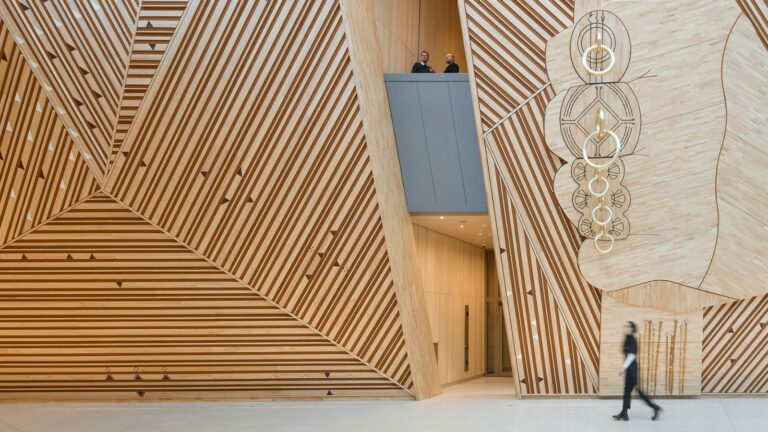
The area, known as Regjeringskvartalet, was the site of the 2011 attacks that killed eight people (in Oslo) and caused widespread damage to government buildings. For years, much of the district remained closed, fenced off, or in transition.
Now, after a long and often debated rebuilding process, the government is returning. The reopening is gradual rather than a single event, but the shift is clear. What was once a scar in the centre of Oslo is becoming part of the city again.
For visitors, this raises an obvious question. What exactly is this place, and is it worth your time?
What Is Oslo’s Government Quarter?
The Government Quarter sits just north of Oslo’s main shopping street, Karl Johans gate, within easy walking distance of the central station.
It's a cluster of government buildings housing ministries and administrative offices. Before 2011, it was a largely functional area, known mainly for its modernist architecture and a handful of public artworks, including pieces by Pablo Picasso.
The 22 July attack changed how the area was viewed. It became a place of national memory as well as government. The rebuilding process has tried to balance those two roles.
A Long And Contested Rebuild
Reconstructing the Government Quarter was never going to be straightforward. There were debates about whether to preserve damaged buildings or start again. Questions over cost, security, and symbolism ran for years.
Some elements of the original complex have been retained, including artworks that survived the bombing. Others have been replaced with new structures designed to meet modern security requirements while still allowing public access.
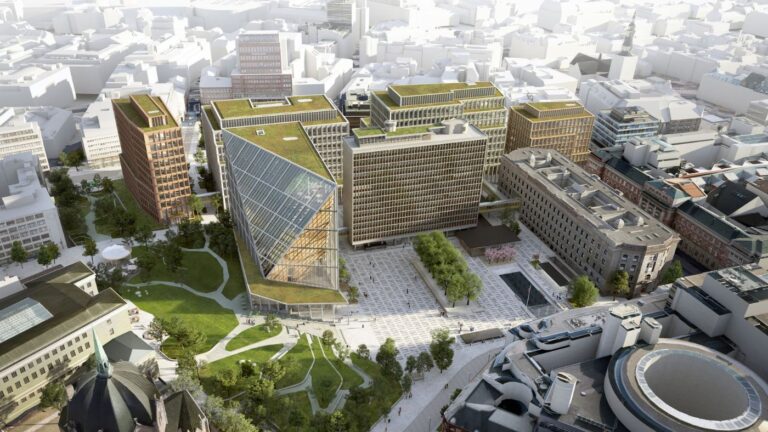
The result is not a single building, but an evolving district that will continue to develop over time.
Designed For Openness, But With Limits
One of the most striking aspects of the new Government Quarter is its design philosophy.
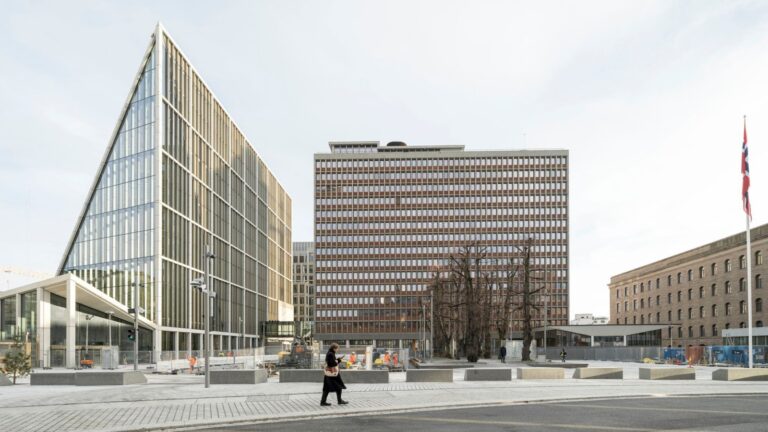
Rather than turning the area into a closed-off, high-security zone, planners have deliberately aimed for something more open. Wide pedestrian routes, public spaces, and sightlines are all part of the concept.
At the same time, security has not disappeared. It’s simply less visible. Buildings are set back. Landscaping plays a role in protection. Access is controlled in subtle ways that most visitors will barely notice.
It’s a careful balancing act, and one that reflects a broader idea: that democratic institutions should remain connected to everyday life, even after a traumatic event.
Public Art And Memory
Art plays an important role in how the space is experienced. Some works from the original Government Quarter have been preserved and integrated into the new design, including large-scale murals associated with Pablo Picasso.
These pieces have become symbolic, representing both continuity and resilience.
Alongside them, a new programme of public art has been developed under the direction of KORO, the state body responsible for art in public spaces. Their involvement ensures that art is not treated as an afterthought, but as a core part of how the district is understood and used.
The newer works, like the overall design of the area, tend to be understated. There are no grand monuments competing for attention. Instead, art and memorial elements are woven into everyday surroundings, inviting reflection without demanding it.
This is not a dramatic memorial site in the way some visitors might expect. For those aware of the history, that subtle approach can feel more powerful than a single focal point.
What Visitors Will Actually Experience
If you walk through the Government Quarter today, you might not immediately realise its significance. There are no queues. No obvious “must-see” landmark.
Instead, you’ll find a mix of modern architecture, open spaces, and people going about their daily work. Office workers, civil servants, and passers-by all share the same space.
One of the most recognisable elements of the area is Grass Roots Square, a public artwork by Do Ho Suh. First installed after the 2011 attacks, it has been relocated as part of the redevelopment and now sits prominently at Einar Gerhardsens plass.
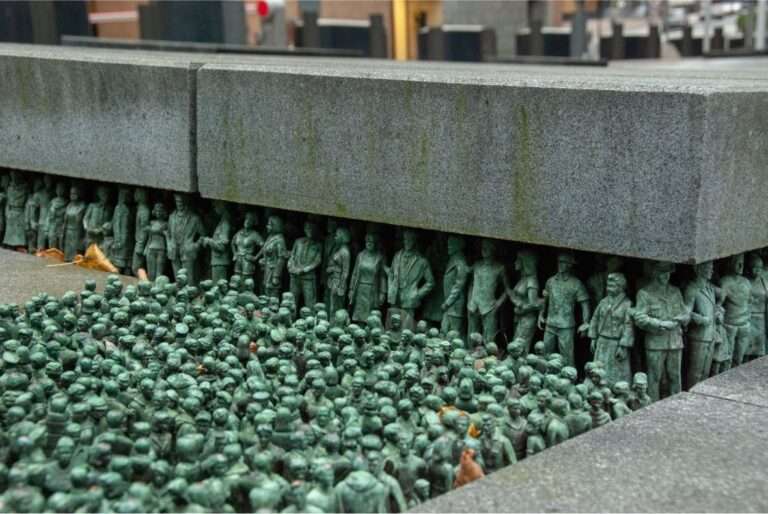
Made up of thousands of small human figures, the work reflects ideas of collective strength and shared responsibility.
Its new placement, at the centre of the rebuilt district, reinforces the wider ambition of the project: to reconnect government with everyday life.
For visitors, it works best as something to encounter rather than something to plan your day around. You might pass through on your way between the station and Grünerløkka, or while exploring central Oslo on foot.
A Place That Means More Than It Shows
There’s a tendency when travelling to focus on the most visually striking places.
The Government Quarter doesn’t immediately compete with Oslo’s waterfront, the Opera House, or Vigeland Park in that sense. But it offers something different.
It’s a place that reflects how Norway has responded to one of the most difficult moments in its recent history. Not through grand gestures, but through design, accessibility, and a decision to move forward without closing itself off.
For many visitors, that meaning may not be obvious at first glance. But for those who take the time to understand it, the Government Quarter adds an important layer to any visit to Oslo.