
From vintage canal boats to dramatic locks and a fairytale hotel, the Telemark Canal is one of Norway’s most distinctive slow travel experiences.
Norway is not a country many people associate with canals. Mention Norwegian water and most travellers picture fjords, ferries, glaciers, coastlines and perhaps the northern lights reflected in an Arctic harbour.
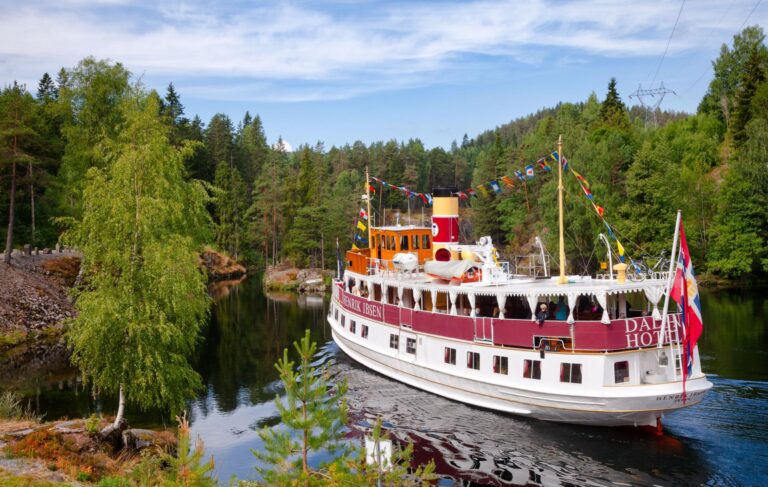
Yet in the heart of Telemark, a historic inland waterway offers a very different way to experience the country.
The Telemark Canal is not a canal in the British narrowboat sense. Much of the journey follows natural lakes and rivers, linked by short canal sections and a remarkable system of locks.
But for anyone with an interest in engineering, slow travel, historic boats, or simply seeing a lesser-known side of Norway, it is a fascinating option.
I grew up in England close to a canal, so I have always been intrigued by these human-made waterways. From the bustling Kiel Canal in Germany to the many canals of Birmingham, they offer a window into maritime history, industry and everyday life.
Norway’s version is very different. Instead of towpaths, pubs and narrowboats, the Telemark Canal offers wooded hillsides, long lakes, historic lock keeper houses, and old canal boats sailing deep into the Norwegian interior.
For travellers who have already seen the famous fjords and coastal cities such as Bergen and Ålesund, the Telemark Canal can make a refreshing addition to a Norway itinerary. It is a slower, quieter experience, and one that gives a strong sense of how inland Norway developed before modern roads changed everything.
What Is The Telemark Canal?
The Telemark Canal links Skien, one of Norway’s oldest towns, with Dalen, a small settlement deep in the mountains of western Telemark. The full route from Skien to Dalen is 105 kilometres long and climbs 72 metres above sea level along the way.
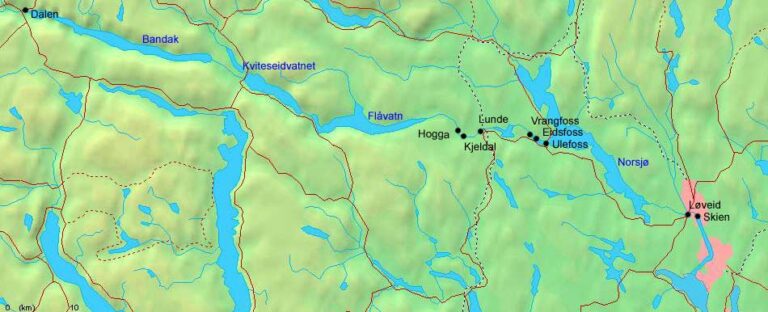
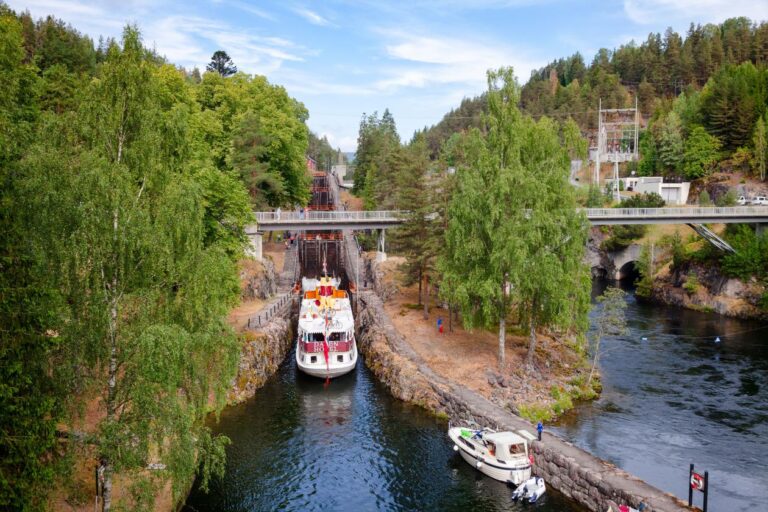
That climb is achieved through eight lock systems with a total of 18 lock chambers. The locks are the star attraction for many visitors, especially the dramatic staircase locks at Vrangfoss, where boats are lifted or lowered through five chambers.
The canal as we know it today actually consists of two waterways. The older Norsjø-Skien Canal opened in 1861, connecting Skien with Lake Norsjø. The later Bandak-Norsjø Canal was completed in 1892, extending the waterway all the way to Dalen.
More than 500 men worked for five years to blast and carve the route through the landscape. At the time, the project was considered such an impressive feat of engineering that it was described as the “eighth wonder of the world.”
That may sound exaggerated today, but it is easier to understand when you see the canal in context.
Telemark’s roads were once poor and difficult, especially in the inland valleys. The canal made it possible to move people, goods and timber between the coast and the interior much more easily.
Today, the canal is no longer essential infrastructure. Instead, it has become a cultural and travel experience, preserved as a reminder of an earlier age.
A Journey Through A Different Norway
The full canal journey from Skien to Dalen takes around 10 to 11 hours, so this is not a quick sightseeing trip. That's the point.
The appeal of the Telemark Canal is not about rushing from one famous viewpoint to another. It is about watching the landscape change slowly as the boat moves from town to lake, from farmland to forest, and eventually into a more mountainous part of Telemark.
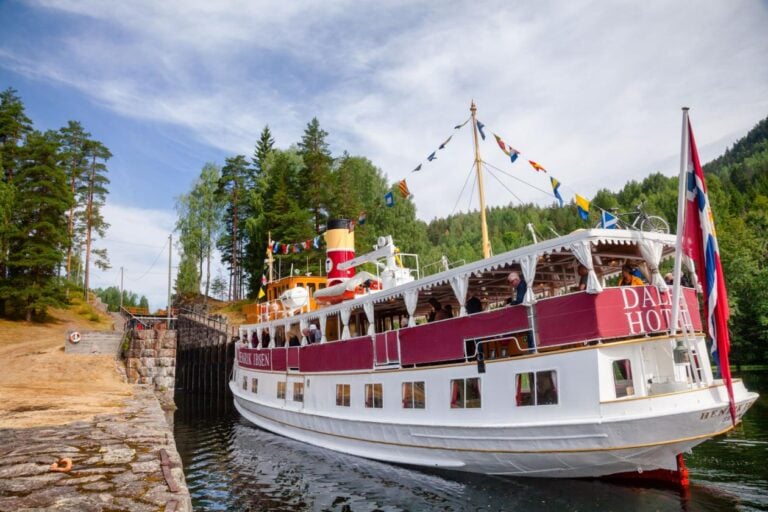
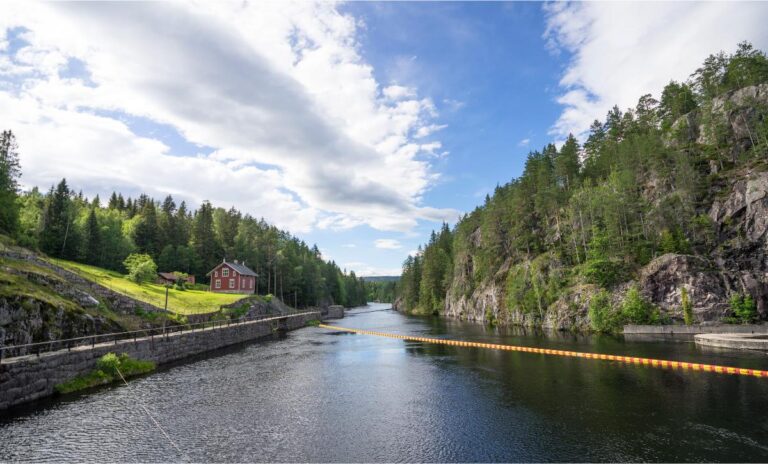
The lower sections around Skien and Norsjø feel relatively open and settled. Further inland, the route becomes quieter and more dramatic. Long stretches of water are framed by wooded slopes and small communities, while the locks add moments of activity and anticipation.
For international travellers, this is also a chance to see a region of Norway that often gets overlooked. Telemark has an important place in Norwegian cultural history, yet it receives far less attention than the fjords of western Norway, Lofoten or the Arctic north.
That can be a big part of the appeal. The Telemark Canal feels historic without feeling like a museum. It is scenic without being overwhelmed by the crowds that can gather at some of Norway’s best-known destinations in the summer.
Starting In Skien
Skien is the natural starting point for many canal journeys. The town is best known internationally as the birthplace of playwright Henrik Ibsen, and visitors with an interest in literature can combine a canal trip with Ibsen-related sights.
The canal begins close to the centre of town, which makes Skien a practical base for those travelling by public transport or arriving from Oslo. It is also a useful place to start if you want to take a shorter day trip rather than commit to the full journey to Dalen.
Skien itself is often overlooked by visitors to Norway, but it has a long history linked to timber, shipping and industry. That makes it a fitting place to begin a journey on a waterway that was once so closely tied to commerce and transport.
Locks, Lakes And Canal Life
For many visitors, the highlight of the Telemark Canal is not one single place but the lock experience itself.
At Ulefoss, the lock system is one of the first major moments on the route. The village is also home to Ulefos Hovedgaard, a historic manor house dating from the early 19th century. It is a good example of how the canal can be combined with cultural stops along the way.
Further along, Vrangfoss is the canal’s most impressive lock system. With five chambers and a total lift of 23 metres, it is the place where the engineering of the canal feels most dramatic.
Watching the old gates open and close, and seeing the boat rise or fall chamber by chamber, gives a real sense of the work involved in moving vessels through this landscape.
Lunde is another important point on the canal. It is a practical hub where many shorter canal trips begin, end or connect with bus transport. For those who do not have time for the full Skien-to-Dalen journey, the Ulefoss to Lunde section is one of the most popular shorter experiences.
Beyond Lunde, the route continues through locks and lakes toward Kviteseid and Bandak. This upper section feels increasingly remote and scenic, especially as the boat approaches Dalen at the far end of Lake Bandak.
Dalen And The Fairytale Hotel
Dalen is the end point of the classic Telemark Canal journey, and it makes a memorable finale. The village sits at the western end of Lake Bandak, surrounded by steep hills and forested slopes.
It has often been described in romantic terms, and although that kind of language can be overused in travel writing, Dalen really does have a sense of arrival about it. Much of that is because of Dalen Hotel.
Opened in 1894, just two years after the completion of the canal, Dalen Hotel was built to welcome the travellers who arrived by boat.
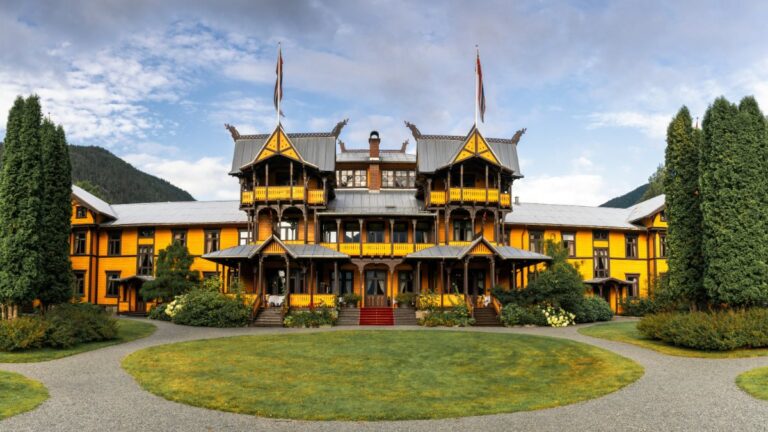
Its architecture, with towers, dragon heads and ornate wooden details, makes it one of Norway’s most distinctive historic hotels.
Staying here turns the canal trip into a much more complete travel experience. Rather than racing back to Skien by bus, you can spend the night in a hotel that belongs to the same golden age of travel as the canal itself.
Dining is a major part of the experience at Dalen Hotel, with Restaurant Bandak set in a preserved historic dining room. Even for those not staying overnight, the hotel is worth seeing from the outside, especially when arriving by boat across Lake Bandak.
The striking Soria Moria Sauna, located by the water, has become a modern landmark in its own right. It offers a very Norwegian contrast to the historic canal experience: heat, wood, lake water and mountain views.
Classic Canal Boats
The most atmospheric way to experience the canal is aboard one of the historic canal boats.
M/S Victoria and M/S Henrik Ibsen are the names most associated with the scheduled canal traffic between Skien and Dalen. These vintage vessels are part of the experience, not simply a means of transport.
A canal trip is slower than driving, of course, but that is precisely why people do it. On board, you can sit back with coffee, watch the lock keepers at work, and see the landscape unfold at a pace that feels rare in modern travel.
During the summer season, there are different trip options. Some travellers choose the full Skien-to-Dalen journey, while others take a shorter section and return by canal bus. This makes the canal more flexible than it might first appear.
For many visitors, a half-day or one-day section will be enough to get a feel for the experience. Canal enthusiasts, slow travel fans, and those building a broader Telemark itinerary may prefer to stay overnight and explore more of the region.
Other Ways To Experience The Canal
You do not have to take one of the scheduled canal boats to enjoy the Telemark Canal.
Kayaks and cycling offer a quieter and more active perspective. There are also electric boats available for hire through Canal Boats Telemark. These 100% electric cabin cruisers offer a modern alternative to the historic canal boats, with the appeal of a quieter journey and no diesel fumes.
This kind of trip will not suit everyone, as handling a boat and planning overnight stops requires more independence. But for families or small groups looking for a different kind of Norway holiday, it is an intriguing option.
Hiking is also possible in the wider region. Near Dalen, the Lårdalstigen hike offers dramatic views above the canal landscape, although it is a demanding route and should be treated as a proper mountain hike rather than a casual stroll.
How To Plan A Visit
The Telemark Canal works best as a summer travel experience. Scheduled canal boats typically operate from late spring into early autumn, with the main season in the warmer months. Anyone planning a trip should check the current timetable before making firm plans, as departure days and routes can vary.
The full Skien-to-Dalen trip is long, so think carefully about what kind of experience you want. If you simply want to see the locks and enjoy a taste of the canal, a shorter day trip between Ulefoss and Lunde may be a better choice.
If you want the full historic journey, consider staying overnight in Dalen. That allows you to enjoy the canal without immediately turning around for a long return journey. It also gives you time to experience Dalen Hotel, the lakeside setting, and perhaps the sauna or nearby walks.
Skien is relatively easy to reach from Oslo by train or car, while Dalen is more remote. This is part of its charm, but it does mean logistics matter. For many visitors, booking a package that combines boat travel, bus connections and accommodation will be the simplest option.
It is also worth remembering that the canal is not a fjord cruise. The scenery is gentler in places, more rural than dramatic, and the pace is deliberately slow.
Those expecting constant cliff walls and waterfalls may be better suited to western Norway. Those interested in history, engineering, peaceful landscapes and slow travel are more likely to love it.
Have you travelled on the Telemark Canal, or is it now on your Norway wish list? Let us know your thoughts and experiences in the comments.