
An introduction to Honningsvåg, Norway’s northernmost town and the main port for visiting the North Cape. But there’s much more to this small Arctic town than you may first expect.
On a recent cruise to Northern Norway, I stopped off at Honningsvåg. I'd been to the town a few years ago on the Hurtigruten, and driven through on the way to the North Cape even earlier.
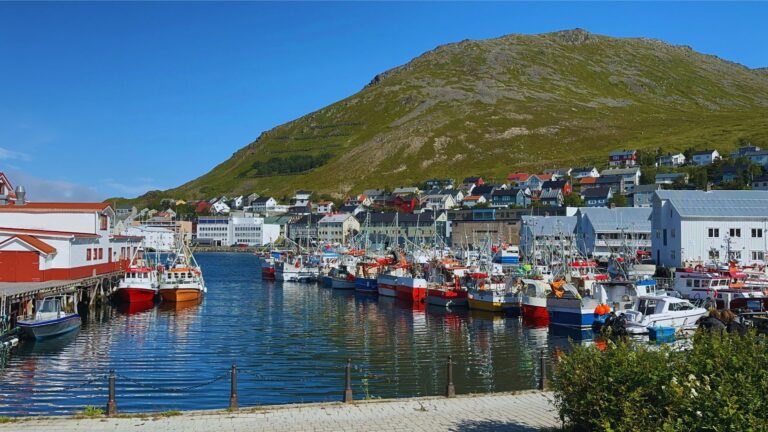
Honningsvåg is a curious place. A small Northern Norwegian fishing town that claims to be Norway's northernmost town, Honningsvåg is a surprisingly lively place thanks mainly to its proximity to the North Cape, or Nordkapp.
Visitors drive to the North Cape from all over Europe, while many others stop on ‘midnight sun' cruise itineraries. The town also receives daily visits from the Hurtigruten and Havila ships working the Norwegian coastal voyage.
This means that despite its small population of just over 2,200, Honningsvåg offers more than you might expect. Although tours here focus on the North Cape, a visit there is by no means the only thing to do when visiting the town.
Watch: An Introduction to Honningsvåg
Honningsvåg is the main town on the island of Magerøya at the very north of Norway. It is the administrative centre of Nordkapp municipality, and by Norwegian standards, it is a town with a big claim to fame.
In 1996, Nordkapp municipality granted Honningsvåg town status. That decision allows Honningsvåg to market itself as Norway’s northernmost town, although Hammerfest is often described as Norway’s northernmost city when using the more modern 5,000-resident threshold.
Check out my video introduction to the town on YouTube:
However you choose to define it, Honningsvåg certainly feels like the end of the road. The town sits on the southern coast of Magerøya, surrounded by bare hills, open sea and a landscape that can feel almost lunar in poor weather.
Magerøya is a rocky, windswept island notable for its almost complete lack of trees, although you will spot a few in sheltered gardens around Honningsvåg. This is not the lush fjord Norway of postcards and fruit farms. It is a harsher Arctic coastal landscape shaped by weather, fishing and survival.
Honningsvåg exists where it does because of the sheltered, ice-free harbour to the south of Magerøya. Fishing remains an important part of daily life here. Even with the cruise ships, coastal ferries and tour buses, the harbour is still very much a working place.
That is what makes Honningsvåg interesting. It may be known internationally as the gateway to the North Cape, but it is not a purpose-built tourist resort. It is a real coastal town where tourism, fishing and everyday Arctic life sit side by side.
A word on the North Cape
I do intend this article to be about Honningsvåg itself, but it is impossible to talk about the town without mentioning the North Cape.
Marketed as Norway’s and Europe’s northernmost point, the North Cape is a clifftop plateau overlooking the vast expanse of the Barents Sea.
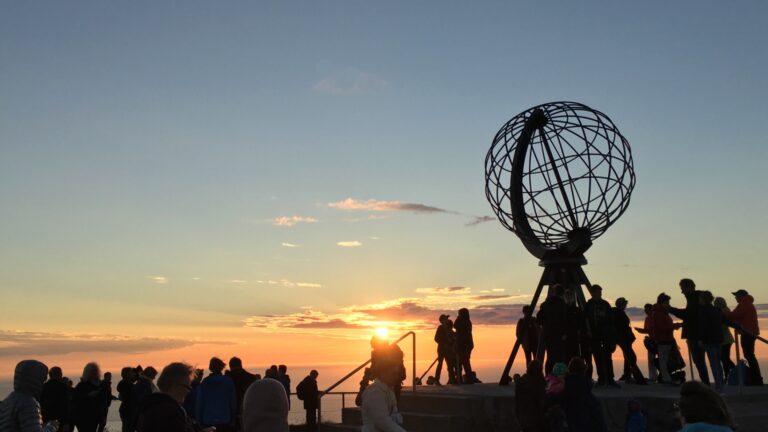
Strictly speaking, it is not the northernmost point of Europe. Nearby Knivskjellodden extends farther north, while Kinnarodden on the Nordkinn peninsula is the northernmost point of mainland Europe.
But for most visitors, those distinctions are not the point. The North Cape is the famous, road-accessible place at the top of Europe. It is the place with the iconic globe sculpture, the dramatic cliff edge and the visitor centre where you can shelter from the wind, fog, rain or snow.
From Honningsvåg, the drive to the North Cape is approximately 33 kilometres. In summer, the journey takes you through the open, treeless landscape of Magerøya, with wide views, reindeer, small settlements and sudden changes in weather.
At the North Cape itself, Nordkapphallen includes exhibitions, a panoramic film, a gift shop, café, restaurant, chapel and indoor viewpoints. That last point matters more than you might think. Weather at the North Cape can be brutal even in summer, and some visitors arrive to find the famous view completely hidden by fog.
Booking a Tour to the North Cape? Check out different providers and compare their prices here.
Still, the North Cape remains one of those places people want to visit simply to say they have been there. For many cruise passengers and road-trippers, the photograph beside the globe sculpture is the main reason for coming this far north.
But Honningsvåg gives that visit context. It is where you can see how people actually live in this remote corner of Norway.
Why Stay In Honningsvåg?
Many people experience Honningsvåg only briefly. Cruise passengers may have a few hours in port. Coastal ferry passengers get an even shorter stop. Road-trippers often pass through on the way to or from the North Cape.
That is understandable, but it is also a shame.
Honningsvåg is not a big destination in the way Tromsø or Bodø are. You will not find a long list of major attractions, stylish hotels and destination restaurants. But if you slow down, the town reveals itself.
There is a working harbour to wander, a small but worthwhile museum, local galleries, a culture house, places to eat and drink, nearby fishing villages, summer festivals, boat trips, king crab experiences and hiking routes into the surrounding hills.
Staying overnight also gives you a better chance of enjoying the North Cape in good conditions.
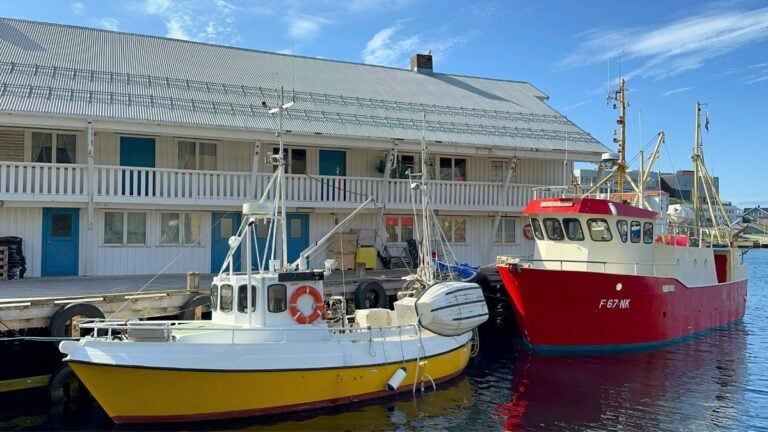
If you visit on a cruise excursion, you go when the coach goes, whatever the weather. If you stay in Honningsvåg, you can watch the forecast, choose your moment and perhaps visit late in the evening under the midnight sun.
In winter, staying overnight becomes even more important. Flights, roads and tours can all be affected by Arctic weather. Building in extra time is not just a nice idea. It can be the difference between a rushed, stressful visit and an enjoyable one.
Things To Do In Honningsvåg
On this visit, several coach loads of cruise visitors boarded buses to set off for Nordkapp. But I chose to enjoy the glorious weather by wandering the town. Here are my recommended things to do in Honningsvåg itself.
Enjoy A Harbour Walk
Honningsvåg’s harbour is small enough to explore on foot, but busy enough to reward your attention. Fishing boats, coastal ferries, tour vessels and cruise ships all use the harbour, while the surrounding buildings add welcome splashes of colour against the often stark Arctic backdrop.
On a good day, the waterfront is the best place to begin. The colours of the boats and buildings really pop against the blue of the water and sky. On a grey day, the same harbour feels completely different, more rugged and atmospheric.
This is also one of the easiest ways to understand the town. Honningsvåg may receive thousands of cruise passengers during the summer, but the harbour has not lost its working character. Fishing vessels, gear, warehouses and local traffic remind you that this is not just a scenic stop on someone else’s itinerary.
Several locals were about when I visited, and they were happy to chat with me and some of the other tourists from the cruise ship. In a town this small, simply walking slowly and paying attention is one of the best things you can do.
Visit West Of The Moon Gallery
West of the Moon gallery on Storgata is a must-visit when in town.

All produced locally, the artwork depicts natural scenes from Magerøya including the northern lights, the road to the North Cape, local wildlife and the changing seasons of the island.
The style is modern but rooted firmly in the local landscape. If you are looking for a souvenir that is more meaningful than a fridge magnet or mass-produced troll, this is a good place to look.
Prices in the gallery were very reasonable on my visit. I bought three small framed prints for just 435 kroner. That was approximately $43 at the time of writing. A great deal, and a much more personal souvenir than most things you will find in a cruise port.
If you venture out on a tour to some of the fishing villages of Magerøya, you may come across the sister gallery. East of the Sun is based in Kamøyvær, one of the small fishing villages on the island.
Stop By Artico Christmas House
Don’t miss this opportunity to add a Scandinavian touch to your Christmas celebration with a souvenir from Artico. The two-floor store immediately in front of the coastal ferry quay is dedicated to all things Christmas, Norwegian style.
It is unashamedly tourist-focused, but that does not make it any less fun. In a place that can feel bleak and windswept even in summer, stepping into a Christmas shop filled with decorations, lights and gifts is a slightly surreal experience.
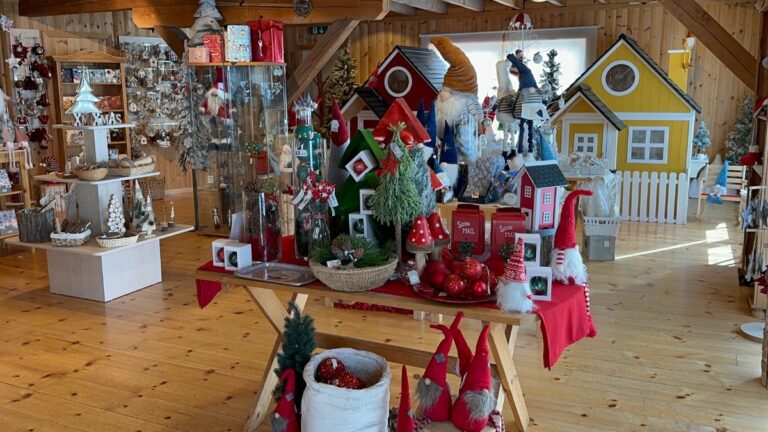
This also used to be the location of the Magic Ice bar, but that attraction is no longer open at the time of writing.
Visit Perleporten Kulturhus
Perleporten is the cultural house and one of the principal meeting places in Honningsvåg. The building hosts concerts, theatre, events and social gatherings, while Sjøgata Pub downstairs is a popular local drinking spot.
The venue is also connected with Perleporten Kulturbryggeri, a local brewery that began with in-house brewing before developing into a more formal part of the town’s food and drink scene.
For visitors, Perleporten is best known for performances of “Our Northernmost Life,” a local stage show about life in the high north. I caught a showing a few years ago and wrote all about it here.
The show is a fun, accessible introduction to life in Honningsvåg, although performances are not necessarily available every day. If you are staying overnight or arriving independently, check the Perleporten website or local tourist information in advance.
Learn Local History At The North Cape Museum
The North Cape Museum is one of the best things to do in Honningsvåg if you want more context for your visit. It is small, but it helps explain the place you are standing in.
The museum covers the history of Magerøya, the fishing industry, coastal life, the development of North Cape tourism and the impact of the Second World War. This last theme is especially important in Finnmark, where many communities were destroyed during the German retreat and later rebuilt.
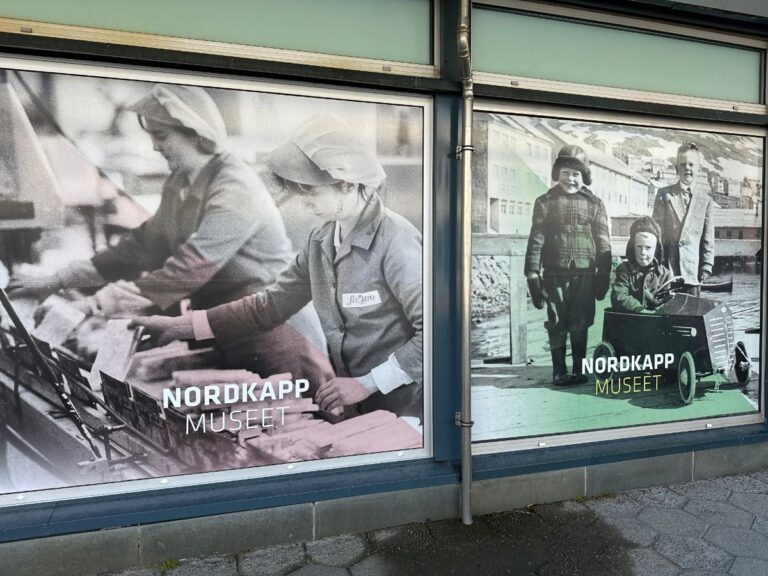
Most exhibitions are presented in English as well as Norwegian, which makes the museum an easy stop for international visitors. Temporary exhibitions may vary, but information is usually available for non-Norwegian speakers.
If you are visiting the North Cape, I recommend stopping at the museum either before or after your trip. The cliff gives you the spectacle. The museum gives you the background.
See Honningsvåg Church
Honningsvåg Church is easy to miss if you are focused only on the harbour and the road to the North Cape, but it is one of the town’s most important buildings.
The wooden church dates from 1885 and is one of the few churches in Finnmark that survived the burning of the region during the Second World War. Much of Finnmark was destroyed during the forced evacuation and scorched-earth retreat in 1944 and 1945, so surviving buildings from before the war are especially significant.
The church is a reminder that Honningsvåg has a much deeper story than its modern role as a cruise port. Even if you only view it from the outside, it is worth including on a walk around town.
Take a RIB Boat Tour
Fancy a bit of exhilaration? Join a RIB boat tour from Honningsvåg harbour and experience the Arctic coastline from the water.
Some tours focus on landscapes, while others look for wildlife or visit nearby islands and coastal settlements. Conditions can be cold and choppy even in summer, but that is part of the experience. Good operators will provide suitable clothing and safety equipment.
Boat tours are especially appealing if you have already visited the North Cape or if you want something more active than a coach excursion. They also offer a different perspective on Honningsvåg itself, as the town is often at its most photogenic when seen from the water.
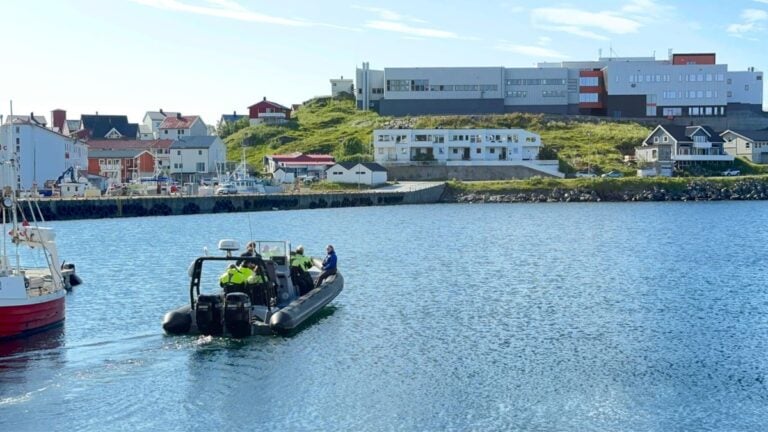
Tours can be booked through local providers, through the tourist information centre or via larger tour platforms. In high summer, there may be availability on the day, but it is still wise to book ahead if there is something specific you want to do.
Join A King Crab Safari
Another option for getting out onto the water is a king crab safari. Honningsvåg is one of the centres of Norway’s king crab industry, and several visitor experiences make use of that connection.
On a typical tour, participants head out by boat to learn about king crab fishing before tasting the catch. Some tours are more hands-on than others, so check the description carefully before booking.
If that sounds too much like hard work, the handful of restaurants in Honningsvåg often feature king crab on the menu. It is not a cheap meal, but it is one of the signature Arctic food experiences in this part of Norway.
Explore Magerøya Beyond Honningsvåg
One of the biggest mistakes visitors make is thinking that Magerøya consists only of Honningsvåg and the North Cape. The island is small, but there is much more to see.
Several fishing villages are within reach of Honningsvåg, either by car, organised tour or limited local transport. Each gives a slightly different view of island life.
Kamøyvær is one of the most charming places on Magerøya and is home to East of the Sun gallery, the sister gallery to West of the Moon in Honningsvåg. It is a small, colourful fishing village that offers a gentler and more intimate contrast to the exposed North Cape plateau.
Skarsvåg is often described as the world’s northernmost fishing village. It is also the closest village to the North Cape and a useful base for nearby walks, including the route to Kirkeporten, a natural rock arch with views towards the North Cape cliffs in good weather.
Gjesvær is best known for birdlife. From here, boat trips head out towards the Gjesværstappan islands, one of the most important bird cliff areas in Northern Norway. In summer, this is a major draw for birdwatchers and photographers.
Nordvågen, just east of Honningsvåg, is much closer and gives a glimpse of everyday coastal life without requiring a long excursion. Sarnes, to the south, is another small settlement worth knowing about if you are exploring independently.
For cruise passengers, a guided tour to one or more of these villages can be a good alternative to the standard North Cape excursion, especially if you have visited the cape before.
Hiking Near Honningsvåg
The large hill immediately behind Honningsvåg may look imposing, but there are hiking trails that take you up for a fantastic view of the town, harbour and surrounding water.
On a clear day, this is one of the most rewarding things to do in Honningsvåg. You do not need to go far to understand how exposed the town is, and how dramatic the landscape becomes once you climb above the harbour.
Pick up a local map from the tourist information office or check marked trails in advance. As always in Northern Norway, weather matters. Fog, wind and rain can arrive quickly, and the landscape above town is more exposed than it may first appear.
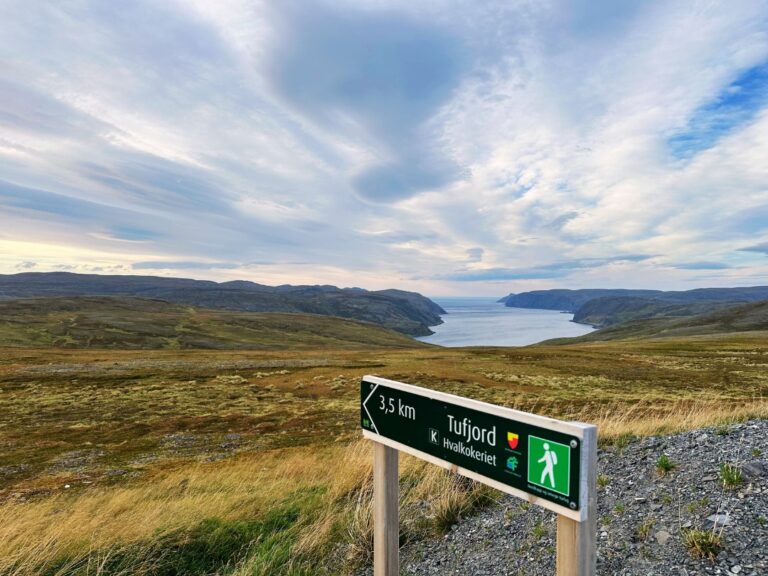
For experienced hikers, Knivskjellodden is the big prize on Magerøya. This long, exposed hike leads to the point that extends farther north than the North Cape itself. It is a powerful experience in good conditions, but it is not a casual stroll from Honningsvåg.
The hike is usually described as an 18-kilometre round trip from the trailhead on the road to the North Cape. It crosses open mountain terrain, and visibility can become a serious issue in fog. It is generally a summer hike and is not recommended in winter.
If you only have a few hours in Honningsvåg, stick to the local viewpoint walks. If you are staying longer and have suitable clothing, navigation and weather conditions, Knivskjellodden is one of the most memorable hikes in the region.
Where To Eat And Drink In Honningsvåg
Honningsvåg is not a big dining destination, but there are more options than you might expect from such a small Arctic town.
Seafood is the obvious theme. King crab appears on many menus, while cod, other local fish and simple Norwegian café food are also common. For something casual, look for cafés and simple restaurants around the harbour and main street.
Sjøgata Pub at Perleporten is one of the town’s best-known social spots, while Perleporten Kulturbryggeri adds a local beer angle to the town’s food and drink scene.
Do check opening hours before making firm plans, especially outside the main summer season. In small Northern Norwegian towns, restaurant and café opening hours can change with the season, staffing and cruise ship schedules.
Where To Stay In Honningsvåg
If you are travelling independently, staying overnight in Honningsvåg makes a lot of sense. It gives you more flexibility for the North Cape, more time to explore Magerøya and a better feel for the town once the cruise crowds have left.
The most memorable accommodation option is The View Hotel North Cape, located above Honningsvåg on Storfjellet. As the name suggests, the draw here is the view. It is a good choice if you want something more special than a basic overnight stop and do not mind being slightly outside the immediate town centre.
In the centre of Honningsvåg, Scandic Bryggen and Scandic Honningsvåg are practical choices, especially for travellers arriving by coastal ferry, bus or cruise ship. They are convenient rather than luxurious, but convenience matters in a place like this.
There are other hotels, and also cabins, guesthouses and fishing-camp style places around Magerøya. In summer, book early. Honningsvåg has limited accommodation, and demand rises sharply during the cruise, road-trip and midnight sun season.
How To Get To Honningsvåg
Despite its remote location, Honningsvåg is easier to reach than you might expect.
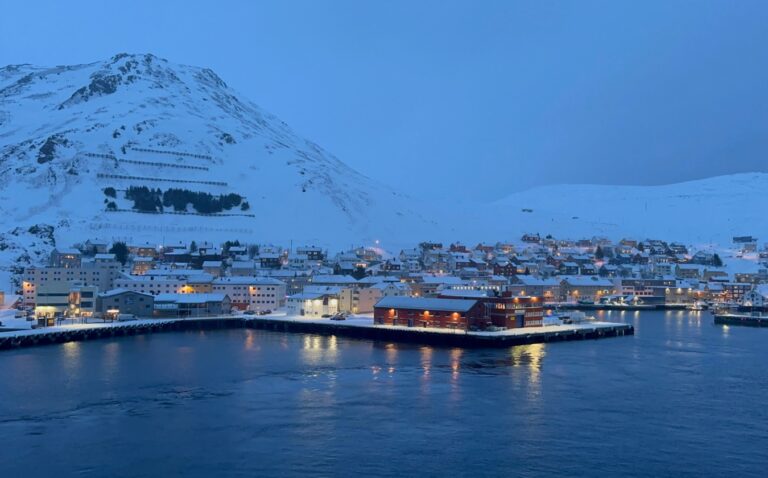
Many visitors arrive by sea. Hurtigruten and Havila coastal route ships call at Honningsvåg every day, with both northbound and southbound sailings stopping in town. The harbour is right beside the town centre, so you can walk straight from the ship to shops, cafés, the museum and tour meeting points.
Cruise ships also call throughout the summer season. For cruise passengers, Honningsvåg is one of the easiest Norwegian ports to understand. The ship docks close to the centre, and most organised tours depart from near the harbour.
Honningsvåg Airport, Valan, is a small regional airport served by Widerøe. Flights typically connect via Tromsø, and the airport is only a short drive from the town centre. In winter, build in extra time if you are depending on flights, as weather disruption is always possible in this part of Norway.
There is also a direct bus service between Honningsvåg and Alta, continuing to Alta Airport. This can be useful for independent travellers combining the North Cape with Alta, Hammerfest or a wider Finnmark itinerary.
If you are driving, Honningsvåg is connected to the mainland by the E69 road and the North Cape Tunnel beneath the Magerøysundet. The road continues across Magerøya to the North Cape.
In summer, the drive is straightforward in normal conditions, although fog, wind and reindeer on the road can all slow you down. In winter, conditions are more serious, and the final section towards the North Cape may operate by convoy.
Practical Tips For Visiting Honningsvåg
Honningsvåg is compact and easy to explore on foot. Most things visitors need are close to the harbour and main street, including shops, cafés, restaurants, the tourist information office and the North Cape Museum.
That said, Magerøya as a whole is not a place where you can rely on taxis for spontaneous sightseeing. Local taxis exist, but availability is limited, and they should not be assumed as a reliable way to get to the North Cape. If you want to explore beyond town independently, book a rental car in advance or join an organised tour.
Weather should shape your plans. Even in summer, conditions can change rapidly. Fog is common, especially on the plateau, and it can completely hide the view at the North Cape. Bring layers, windproof clothing and shoes suitable for wet ground, even if the forecast looks reasonable.
In winter, take local advice seriously. Roads can close, flights can be delayed and the North Cape road may only be accessible in convoy. If you are planning a winter visit, allow extra time and avoid tight onward connections.
If you are visiting by cruise ship, think carefully before defaulting to the North Cape excursion. It is the classic trip, and for many people it will be the right choice. But if the weather is poor, if you have visited before, or if you are more interested in local life than landmark photography, Honningsvåg and the nearby fishing villages can be just as rewarding.
If you are curious about life in Northern Norway, Honningsvåg is fascinating. The North Cape may be the reason most people come here, but Honningsvåg is the place that explains where you are.
Have you been to Honningsvåg? Did you head straight to the North Cape, or did you spend time in the town itself? Let us know in the comments below.


We have done the same as you. Driven to the Nordkapp in Summer after staying at a hotel in Honningsvag and, last March, visited on a ship (Havila).
When we visited Honningsvag by car we came to a crossroads and found someone lying in the middle of the road. It was not an accident just someone
who had too much to drink.
We were told that last year Honningsvag had two months with temperatures between 25 and 30C. That is unusual.
In 1998 we decided to take a summer tour from the South West of England to the North Cape, with our own car from home. To do this we had first to drive to Newcastle some 8 hours drive from where we live, to take the ferry across to Bergen. The trip of 24 hours on the ferry was awful with very rough seas!
However, this also turned out to be the journey of a lifetime, and we had allowed three weeks to complete the trip.
On leaving Bergen we travelled through Voss, and cross country following the road between Sognefjell and the Jotunheimen which we had previously travelled in 1976, to Otta. Stopping just north of Otta for the night we headed on again the next day and got to Steinkjer where we stayed for the second night. On again up the E6, we arrived at a lovely caravan park just a few kilometers below the Arctic Circle at Krokstrand, where we took a cabin to break the journey. There were still three more days of driving ahead before we would be able to cross over to Magerøya, the island on which the North Cape or Nordkapp is situated. This was in the days of the ferry, not the tunnel. After the ferry crossing, we finally arrived in Honningsvåg in the early afternoon in a torrential rainstorm, and drove on to find somewhere to stay. It was good to get there, but if we were to see the midnight sun we would only be able to have a short rest, and then drive the last few kilometers to Nordkapp itself.
Unfortunately, we had not picked the best of evenings to go there as the cloud cover was almost 100%, but after a long wait with hundreds of other people of all nationalities, a gap appeared in the clouds which let us glimpse the sun. Back again we drove to our hotel without any lights on the car at 2 am in the morning. We had never witnessed 24 hour daylight before, and it was quite incredible. We went up again during the next day to take a better look at the surrounding area, and saw many reindeer in the wild, plus snow in some of the hollows which had not melted since the winter. It is indeed a bleak place at any time of the year.
Before I had left England I had had an unfortunate incident with a hammer, and had hit my thumb with it. The nail had gone very black and was obviously going to come off at some stage. As it happened this took place at Nordkapp, which really was quite a fitting moment. I could not allow myself just to throw part of my body away to blow in the wind, so we held a small ceremony and dug a little hole and buried it near the statue of the lady and the boy. Hopefully it is still there to this day, and perhaps I will go back sometime and retrieve it. I may be the only person in the world to have my DNA in two countries at the same time – who knows!
All this was 25 years ago now, but it just seems likes yesterday to me, and I have got the photo to prove it!
When we were in Honningsvag we went to the play that the local high school students put on. It was wonderful and funny – a not to be missed event. Being on a cruise ship limited our time there but I sure could have used a lot more. We walked up to the church and learned about its role of helping people recover after WWII. Inspiring! Would love to go back and spend much more time