
Leknes may not be the most beautiful place in Lofoten, but for many travellers it could be one of the most useful.
When people dream of Lofoten, they usually picture red fishermen’s cabins on the waterfront, jagged mountains rising straight from the sea, and tiny villages clinging to the edge of the Arctic coastline.
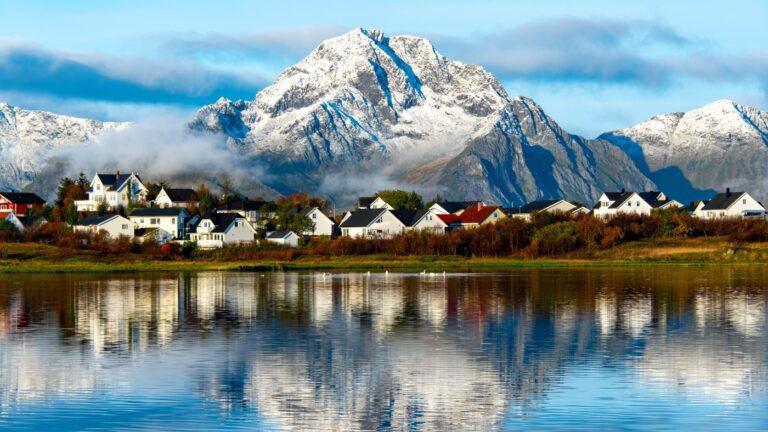
In other words, they picture places like Reine, Henningsvær, Nusfjord or perhaps Svolvær. Leknes rarely makes the same first impression.
That is understandable. Leknes is not the postcard version of Lofoten. It is a small town with shops, roads, services, an airport and everyday life. It is a place where people live, work, buy groceries, visit the pharmacy and run errands.
That may sound less appealing than waking up in a restored rorbu beside the water. But look at Lofoten from a travel planning perspective and Leknes starts to make a lot more sense.
Its location in the middle of the archipelago, its airport, and its proximity to some of Lofoten’s finest beaches and hikes make it a strong alternative base, especially for first-time visitors who want to explore more than one part of the islands.
🇳🇴 Leknes Travel Resources
🛏️ Find availability and rates on accommodation in Leknes
👣 Discover the best guided tours in Lofoten
🚘 Find availability and rates on car rental in Leknes
🚨 Make sure you're covered with travel insurance
What Leknes Is Really Like
Leknes is the administrative and commercial centre of Vestvågøy, one of the main islands of Lofoten. It is not a fishing village in the romantic sense, nor is it a resort town. It is better understood as a practical hub.
That matters in Lofoten, where distances can be deceptive and travel plans are often shaped by weather, road conditions and availability.
In summer, accommodation in the most famous villages can be booked up months in advance. In winter, the thought of driving long distances after dark or in poor weather may make a more central base attractive.

Leknes offers the kind of practical conveniences that are easy to overlook when planning a dream trip, but very welcome once you arrive. There are supermarkets, places to eat, shops, fuel stations and other everyday services.
For anyone staying in self-catering accommodation, travelling with children, or planning several days of hiking and photography, those things can make a real difference.
It is also a good reminder that Lofoten is not just a scenic backdrop for visitors. These islands are home to local communities, and Leknes gives a glimpse of that ordinary side of life in the north.
Why Leknes Works As A Base
The biggest argument for Leknes is location. It sits roughly in the middle of Lofoten, making it a useful compromise between the dramatic western end of the archipelago and the busier eastern side around Svolvær.
From Leknes, you can head west towards Ramberg, Reine and Å, or east towards Henningsvær, Kabelvåg and Svolvær. You will not be right beside all of those places, of course, but you will be well positioned for a flexible itinerary.
That flexibility is valuable in Lofoten. The weather can change quickly, and the best day for a beach walk, mountain hike or photography stop is not always the day you planned.
Staying somewhere central gives you more options. If the western islands are covered in cloud, you can head in another direction. If you wake up to clear skies, some of the region’s most photogenic places are within easy reach.
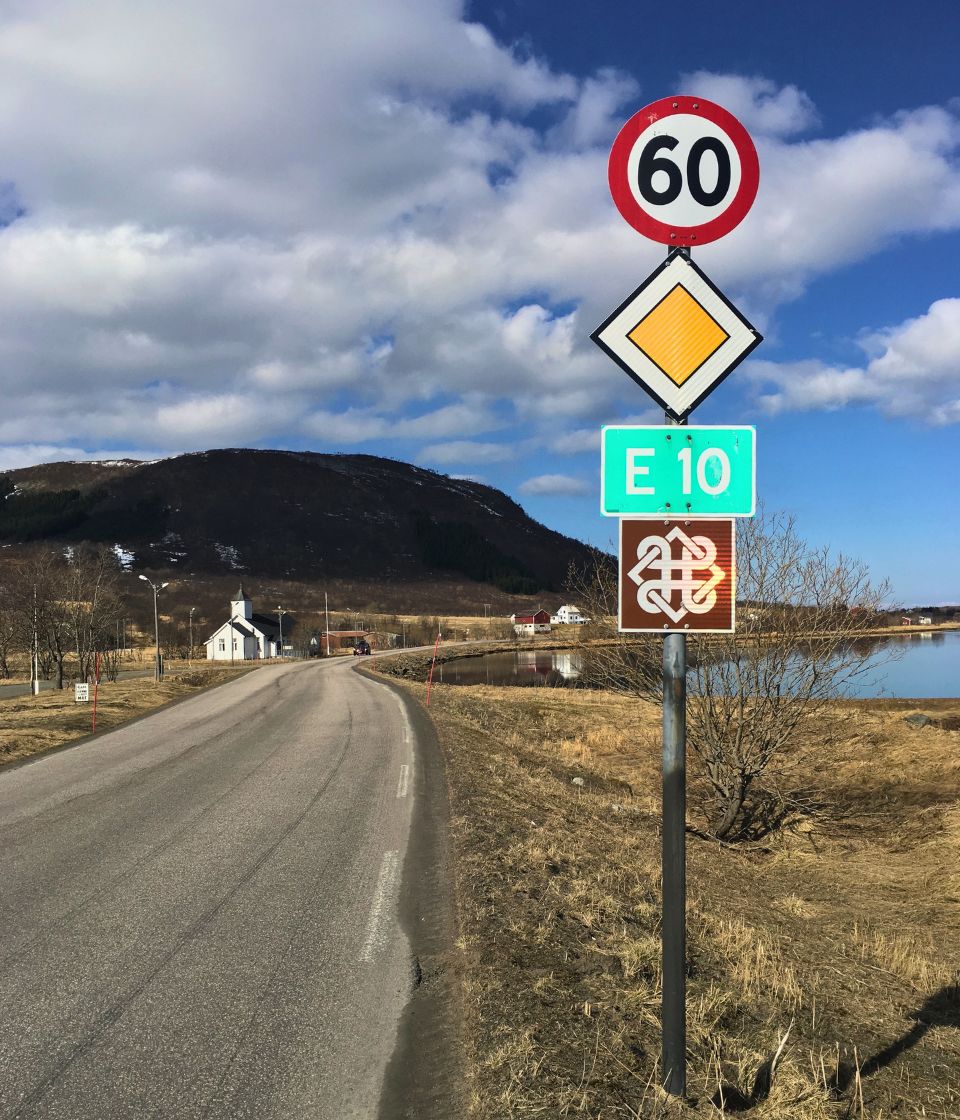
Leknes also has its own airport. For visitors flying into Lofoten, that can simplify the first and last day of a trip. Many flights connect through Bodø or Tromsø, although routes vary by season, so schedules should always be checked carefully before booking accommodation.
Public transport exists, including buses along the main E10 road through Lofoten, but Leknes is at its best if you have a car. That is not a criticism of the town so much as a reality of travelling in Lofoten.
The places that make Leknes such a good base, including beaches, trailheads and small coastal communities, are far easier to explore with your own wheels.
Beaches Close To Leknes
One of the strongest reasons to stay in Leknes is its proximity to the beaches of Vestvågøy.
Haukland Beach is the obvious example. Often described as one of the most beautiful beaches in Lofoten, it combines pale sand, turquoise water and a mountain backdrop that feels almost too perfect to be real.
Of course, this is still the Arctic. On a sunny summer day, Haukland can look tropical in photographs, but the water temperature tells a different story. For most visitors, this is a place for walking, photography, picnics, kayaking or simply standing still and taking in the view.
Nearby Uttakleiv is another standout. Wilder in character than Haukland, it is especially popular with photographers, not least at sunset, during the midnight sun period, and under the northern lights in winter.
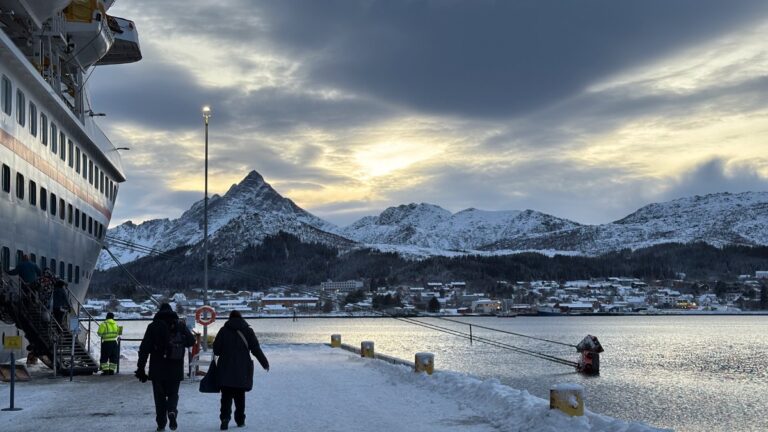
The coastal walk between Haukland and Uttakleiv is a fine option for those who want a relatively gentle outing with excellent scenery, although conditions should always be assessed carefully, especially outside summer.
For hikers, Mannen is one of the classic short hikes in the area, with views down over Haukland and the surrounding coastline. It is not a walk to take lightly in bad weather, but in good conditions it offers the kind of reward that explains why Lofoten has become such a magnet for outdoor travellers.
Day Trips From Leknes
Leknes is not only about beaches. A short drive inland brings you to Borg and the Lofotr Viking Museum, one of the most important cultural attractions in Lofoten.
Built around the remains of a major Viking chieftain’s settlement, the museum helps put the islands into a deeper historical context.
This is important, because Lofoten is often sold almost entirely through scenery. The mountains and fishing villages are extraordinary, but the islands also have a long human story shaped by fishing, trade, farming and seafaring. A visit to Borg adds that missing layer.
To the south of Leknes, Ballstad offers a more traditional coastal atmosphere. It is still a working fishing community, but also has visitor accommodation, restaurants and access to outdoor activities.
For some, Ballstad may actually offer the best of both worlds: more character than Leknes itself, while still being close to the town’s services.
Further west, Nusfjord is one of Lofoten’s most atmospheric historic fishing villages. It is an easy place to understand the appeal of the islands, with its waterfront buildings, mountain backdrop and strong sense of maritime heritage.
It can be visited as a day trip from Leknes without committing to staying at the western end of Lofoten for the whole trip.
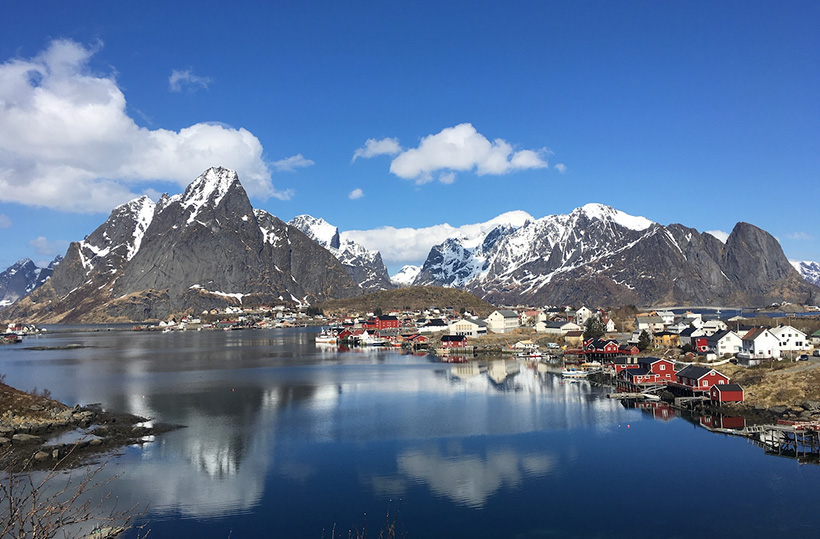
Reine and Å are also possible from Leknes, although they make for a longer day. If those places are your main reason for visiting Lofoten, you may prefer to spend at least one night farther west.
But if you want a broader Lofoten experience, Leknes gives you the option of visiting them without basing your entire trip there.
Who Should Stay In Leknes?
Leknes is a good choice for travellers who value convenience, flexibility and access. It suits road trippers, families, hikers, photographers and anyone who wants to explore several parts of Lofoten without changing accommodation every night.
It can also work well for visitors arriving by air, especially those who want to collect a rental car and begin exploring straight away. If your trip is short, reducing logistics can be just as important as choosing the most scenic base.
Leknes may also appeal to those visiting outside the peak summer season. In winter, when daylight is limited and weather can be unpredictable, being close to services and main roads can feel reassuring.
The beaches near Leknes are also excellent northern lights locations when skies are clear, although no place in Lofoten can guarantee a display.
🇳🇴 Leknes Travel Resources
🛏️ Find availability and rates on accommodation in Leknes
👣 Discover the best guided tours in Lofoten
🚘 Find availability and rates on car rental in Leknes
🚨 Make sure you're covered with travel insurance
Who Should Stay Somewhere Else?
Leknes is not for everyone. If your dream is to wake up in a red rorbu with mountains reflected in the water outside your window, you will probably be happier in a smaller fishing village. And if you want cafés, galleries and a more obvious visitor atmosphere, Henningsvær or Svolvær may suit you better.
Visitors relying entirely on public transport should also think carefully. Leknes is on key bus routes, but many of the best nearby places require additional planning without a car. In summer this may be manageable with patience.
Finally, if your main focus is the western end of Lofoten, especially Reine, Hamnøy and Å, staying in or near those places for at least part of your trip may be more satisfying. Leknes is central, but central does not mean close to everything.
Leknes will not be the place that convinces you Lofoten is beautiful. The beaches, mountains, fishing villages and wild coastal roads will do that.
But as a base, Leknes makes a lot of sense. You do not always need to stay in the most photogenic place to have the best trip. Sometimes, the best base is the one that gives you room to explore.