
From the Helgeland coast and the Arctic Circle to Bodø, Lofoten, Vesterålen and Narvik, Nordland is one of Norway’s most spectacular and varied counties.
Many international visitors know Nordland without necessarily knowing the name.
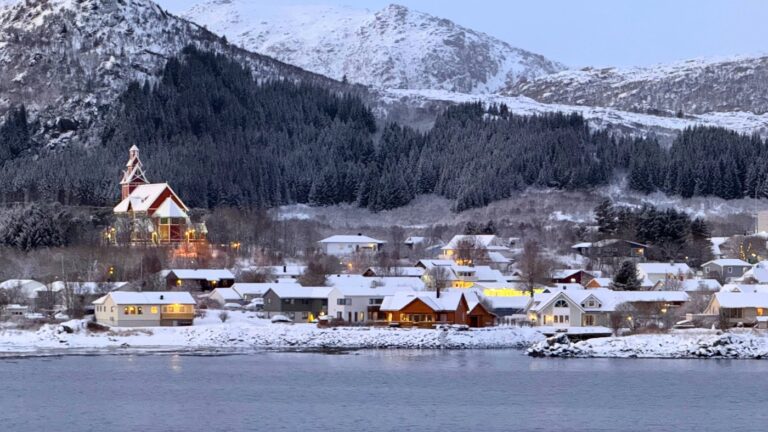
They know Lofoten, with its sharp mountains, fishing villages and dramatic beaches. They may know Bodø, especially since the city’s year as European Capital of Culture in 2024. Some know the Helgeland coast, the Vega islands, Saltstraumen or the long train journey north on the Nordland Line.
But Nordland is much more than a collection of famous places. It is a long, narrow county that stretches along the coast of Northern Norway, from the border with Trøndelag in the south to Troms in the north.
It crosses the Arctic Circle, reaches deep inland toward Sweden, and spreads far out into the Norwegian Sea through thousands of islands, skerries and fishing communities.
Nordland is coastal and mountainous, remote and industrial, deeply traditional and surprisingly modern.
It is home to some of Norway’s most famous scenery, but also to everyday towns, working ports, hydropower communities, mining history, Sámi culture and long distances that many visitors underestimate.
To understand Nordland is to understand a lot about Northern Norway.
Where Is Nordland?
Nordland lies in Northern Norway, between Trøndelag and Troms. It is one of Norway’s 15 counties and has Bodø as its administrative centre.
The county is long and thin, following the shape of the Norwegian coastline. It stretches from Bindal in the south to Narvik and Andøy in the north, with the Swedish border running along much of its inland eastern side.
The geography is complicated, but that is part of its character. Fjords cut far inland. Mountain ranges divide communities. Roads, bridges, ferries, express boats and short flights all play an important role in everyday life.
For travellers, Nordland is often understood through its regions. Helgeland lies in the south, with its island-studded coast and famous mountain formations. Salten is the region around Bodø, Fauske and the Saltfjellet mountains. Lofoten and Vesterålen stretch out into the sea, while Ofoten in the north includes Narvik and the railway connection to Sweden.
This regional identity matters. People in Nordland may all live in the same county, but life in a fishing village in Lofoten feels very different from life in Mo i Rana, Bodø or an inland valley close to the Swedish border.
The Arctic Circle And A Sense Of Arrival
One of Nordland’s defining features is the Arctic Circle.
The line crosses the county through the Saltfjellet mountains, and for many travellers it provides a symbolic moment. Drive north on the E6, take the Nordland Line by train, or travel along the coast by ship, and crossing the Arctic Circle feels like an arrival into a different Norway.
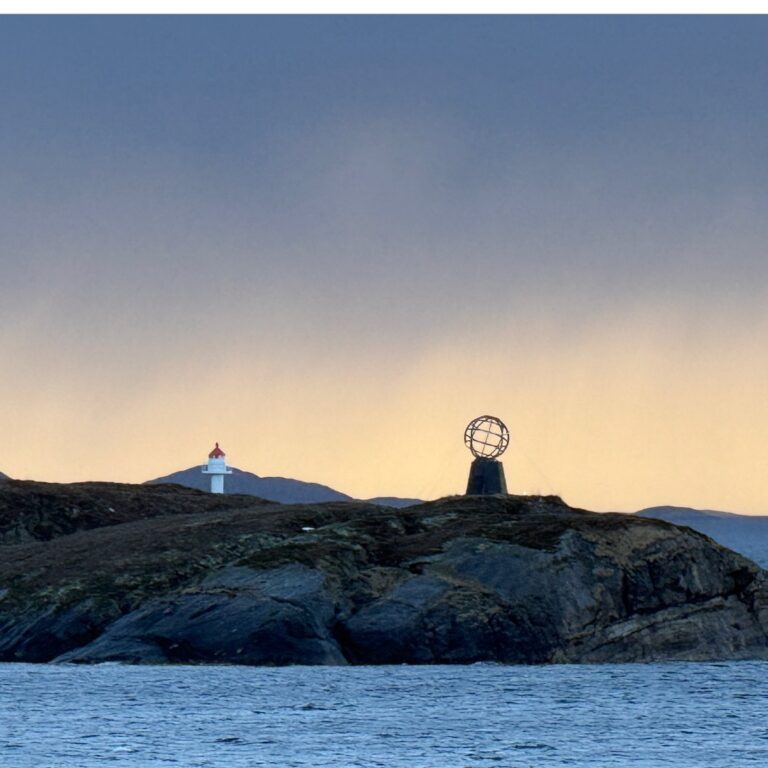
Of course, the change is not immediate. There is no sudden wall of snow, no dramatic switch from south to north. But the Arctic Circle does mark a real shift in daylight. North of the line, at least in theory, the midnight sun appears in summer and the polar night affects winter light.
In practice, Nordland’s relationship with Arctic light varies by place. Bodø and Lofoten enjoy long summer nights where the sun barely seems to leave the sky. Further south in Helgeland, summer evenings are still remarkably bright, even if the strict definition of midnight sun depends on exactly where you are.
In winter, the darkness is less complete than further north in Tromsø or Finnmark, but the contrast is still striking. Low light, snow, storms, northern lights and changing weather all shape the rhythm of the year.
Bodø: Nordland’s Modern Capital
Bodø is the administrative centre of Nordland and the county’s biggest urban area. For many years, it was known mainly as a transport hub: a place to catch a ferry to Lofoten, board a plane, take the train south, or continue north by road.
That reputation has changed. Bodø has developed into one of Northern Norway’s most interesting small cities, with a growing cultural scene, a compact waterfront, new architecture and easy access to nature.
Its year as European Capital of Culture in 2024 brought international attention not just to the city, but to Nordland as a whole.
The city also has a strong military and aviation history. Bodø was heavily bombed during the Second World War and was rebuilt in a more modern style. Later, its air base played an important role during the Cold War. Today, the Norwegian Aviation Museum helps tell that story.
Bodø is also a gateway to nearby natural attractions. Saltstraumen, one of the world’s strongest tidal currents, lies just outside the city.
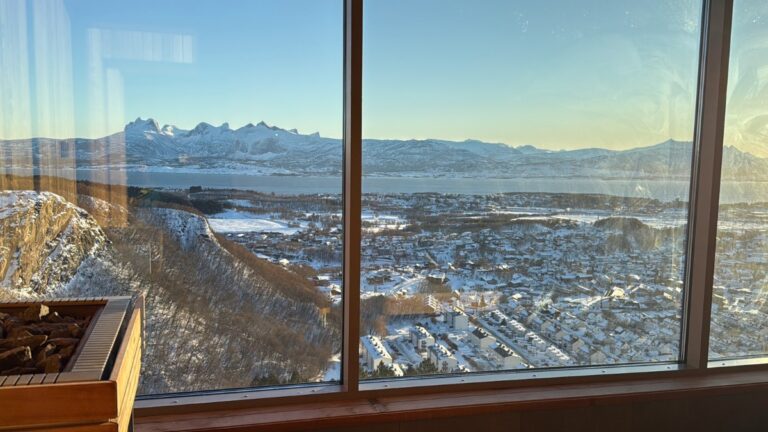
On a day with good timing, you can watch the water surge through the narrow strait, forming whirlpools and powerful currents. Boat trips, diving and wildlife safaris make the most of this dramatic natural phenomenon.
But Bodø’s greatest strength may be its position. It sits between sea and mountains, between the railway and the islands, between Helgeland and Lofoten. It is Nordland in miniature: practical, windswept, coastal, modern and always close to nature.
Helgeland: The Understated Coast
The southern part of Nordland is Helgeland, a region that deserves far more international attention than it gets.
This is one of Norway’s great coastal landscapes. Islands, ferries, white-sand beaches, mountain peaks and small communities line a coast that feels both accessible and remote. Compared with Lofoten, Helgeland is quieter and often more relaxed, but the scenery can be just as memorable.
The Helgeland coast is known for distinctive landmarks. Torghatten, the mountain with a natural hole through its centre, is one of the most recognisable. The Seven Sisters mountain range near Sandnessjøen is another, with its line of peaks forming a dramatic backdrop to the coast.
Further out at sea are islands such as Træna, Lovund and Vega. These are not places you pass through by accident. They require effort, planning and patience, but that is part of their appeal.
The Vega Archipelago is one of Nordland’s great cultural treasures. Listed as a UNESCO World Heritage Site, the islands tell the story of a way of life based on fishing, small-scale farming and the traditional harvesting of eider down.
It is a reminder that Nordland’s coast is not just beautiful. It is a lived-in cultural landscape shaped by generations of people working with the sea.
Helgeland is also a place where transport becomes part of the experience. The coastal route, express boats, ferries and scenic roads all help visitors understand the geography. Here, travel is not just about reaching the next destination. The journey is often the point.
Lofoten: Famous For Good Reason
The Lofoten islands are known for steep mountains rising straight from the sea, red fishermen’s cabins, beaches that look tropical until you touch the water, and villages such as Reine, Henningsvær and Nusfjord.
In summer, the midnight sun draws hikers, photographers and road trippers. In winter, the northern lights and the cod fishing season give the islands a very different atmosphere.
Lofoten’s fame is deserved, but it also creates challenges. Visitor numbers can put pressure on small communities, narrow roads, fragile landscapes and limited accommodation. Anyone planning a trip should think carefully about timing, transport and expectations.
This is not a theme park. Lofoten is a working region with fishing at its core. Stockfish, the dried cod that hangs on wooden racks through the winter and spring, has connected these islands to European trade for centuries.
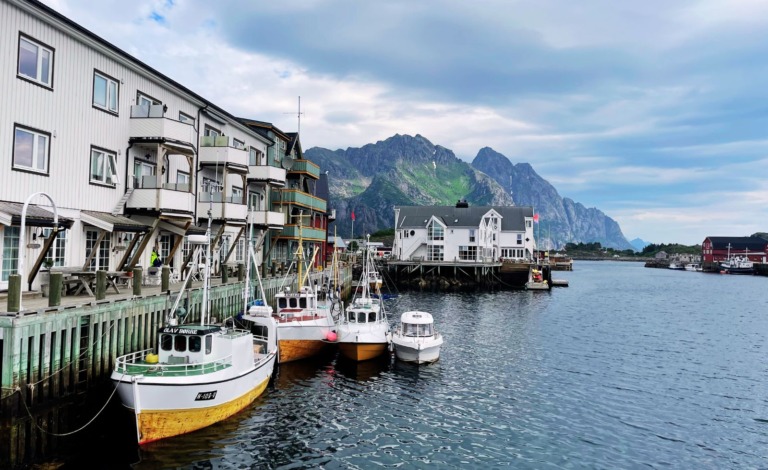
Even today, fishing remains central to Lofoten’s identity, despite the growth of tourism.
The best way to experience Lofoten is slowly. Spend time in fewer places, use local ferries and buses where possible, and remember that bad weather is not a failed trip. In Lofoten, weather is part of the experience.
Vesterålen: Lofoten’s Quieter Neighbour
North of Lofoten lies Vesterålen, another island region that is often overshadowed by its famous neighbour.
That is a shame, because Vesterålen offers a different kind of northern coastal experience. The landscapes are still dramatic, but generally more spacious and less compressed than Lofoten. There are mountains, beaches, fishing villages, wetlands, farmland and long ocean views.
Vesterålen is also one of Norway’s best areas for whale watching, especially around Andenes. The continental shelf lies relatively close to land here, helping make the waters rich in marine life.
Sortland, known as the blue city because of its distinctive painted buildings, is the region’s main urban centre. From here, roads and bridges connect communities across the islands, while ferries and coastal ships link Vesterålen with the wider region.
For visitors who like the idea of Lofoten but worry about crowds, Vesterålen can be a rewarding alternative or addition. It is not “second-best Lofoten.” It has its own identity, rhythm and appeal.
Narvik And Ofoten: Mountains, Iron Ore And War History
In the north of Nordland, Narvik and the Ofoten region add another dimension to the county.
Narvik is shaped by geography and industry. The town developed as an ice-free port for iron ore from Kiruna in northern Sweden, transported across the mountains by the Ofoten Line railway. That connection with Sweden remains central to Narvik’s identity.
The region is also known for Second World War history. The Battles of Narvik in 1940 were among the most significant early campaigns of the war in Norway. Today, the Narvik War Museum tells this story in a modern and accessible way.
Narvik offers mountain scenery on a grand scale. The town is close to ski slopes, hiking routes and viewpoints, with fjords and high peaks packed into a relatively small area. It feels different from the island landscapes further west and the open coast of Helgeland, showing once again how varied Nordland can be.
Mo i Rana and Inland Nordland
Nordland is often seen through its coastline, but the inland towns and valleys matter too.
Mo i Rana is one of the county’s major towns and has a strong industrial identity. Its history is linked to iron, steel, mining and hydropower, and the town remains an important centre in Helgeland.
Nearby, the Rana region offers access to caves, mountains and the Svartisen glacier. Svartisen is one of Norway’s most famous glaciers and a major natural landmark in Nordland. Like glaciers across Norway, it is also a visible reminder of how the climate is changing.
Further inland, the Saltfjellet mountains form one of the great crossings of Northern Norway. The E6 and Nordland Line both pass through this landscape, where weather can change quickly and winter conditions can be serious.
Inland Nordland is also part of Sápmi, the traditional homeland of the Sámi people. Lule Sámi and South Sámi culture, language and reindeer herding are important parts of the county’s identity, especially in inland areas and around places such as Tysfjord, Hamarøy and the mountain regions.
The Nordland Line: A Journey Through A County
One of the best ways to understand Nordland is to arrive by train. The Nordland Line runs from Trondheim to Bodø, crossing the Arctic Circle on the way. It is Norway’s longest railway line and one of the great slow travel experiences in the country.
The journey changes character as it moves north. It begins in Trøndelag’s farmland and forests, then continues through valleys, mountains and remote communities before crossing into Nordland and eventually reaching the coast at Bodø.
The train offers a way to feel the scale of Norway. Nordland is not a compact destination where everything can be ticked off in a weekend. It is a county of distance, weather, landscape and patience.
Spend time in Nordland and you begin to understand the scale and complexity of Norway’s north. It is not one place, one landscape or one experience. It is a long coastal world of islands, fjords, mountains, towns, industries and traditions.