
Norway is heading into what leading researchers describe as “a decisive year” for European security and international cooperation.
According to a new assessment from Norwegian Institute of International Affairs (NUPI), 2026 will test the resilience of Europe, the transatlantic alliance, and Norway’s own foreign policy priorities in ways not seen for decades.

At the heart of NUPI’s analysis lies one overarching question: Will the relationship between Europe and the United States withstand the pressures ahead?
With war continuing on the European continent, intensifying great-power rivalry, and growing uncertainty about long-standing alliances, Norway finds itself increasingly exposed to global instability.
Read more: Norway & UK sign historic defence agreement
“This will be a fate-deciding year for Europe,” says NUPI Director Kari M. Osland. She points to a more serious and unpredictable international landscape, where weakened transatlantic trust and heightened geopolitical competition are challenging European security and increasing Norway’s vulnerability.
Five Themes Shaping Norway's Foreign Policy
As a foundation for the Norwegian Foreign Policy Conference in Oslo later this month, NUPI has identified five themes that will dominate foreign policy debates throughout 2026.
Ukraine
The first is the endgame of the war in Ukraine. While the conflict continues, attention is increasingly turning to how it might conclude and what kind of security order will emerge afterwards.
The political, economic, and military consequences of any settlement, or prolonged instability, will shape Europe for years and directly affect Norway’s strategic environment.
Shifting global politics
Closely linked is the return of power politics. The rules-based international order that has guided European security since the end of the Cold War is under pressure from states willing to use military, economic, and political power to advance their interests.
Alliances that have appeared stable for decades, including NATO and key bilateral partnerships, are now being tested.
A special relationship no more?
The third theme is a crisis of transatlantic trust. Relations between Europe and the United States remain fundamental to all other foreign policy challenges, yet they are under significant strain.
Since the first Trump administration, European leaders have questioned whether US foreign policy could lead to a lasting weakening of NATO.
Statements suggesting that the United States “needs” Greenland have further unsettled European capitals, forcing leaders to balance respect for sovereignty and international law with their security dependence on Washington.
Despite rising political mistrust, NUPI notes that military cooperation within NATO largely continues along established lines. This tension between political uncertainty and operational continuity is likely to define the transatlantic relationship in 2026.
Rising tensions in the Arctic
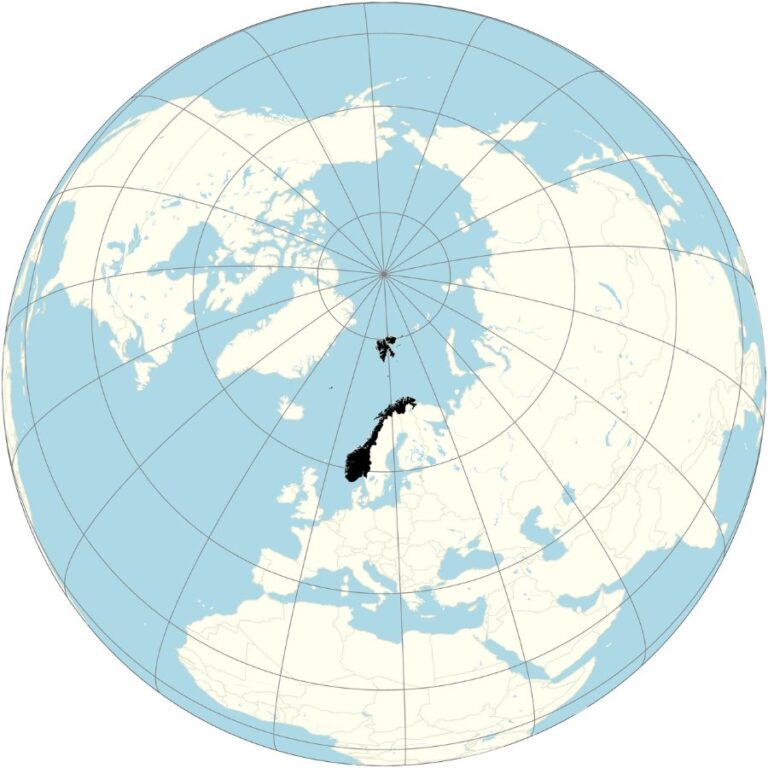
The Arctic’s transformation from a region of low tension and pragmatic cooperation into one of strategic rivalry is another key concern.
Russia’s military build-up in the High North, combined with renewed international interest in Arctic resources and shipping routes, has placed Norway at the centre of a more contested region.
Developments around Greenland have further underscored how the Arctic is now firmly embedded in global power politics.
For Norway, with its long Arctic coastline and proximity to Russia, this shift has profound implications for defence, diplomacy, and regional cooperation.
Technology, economics, and democratic resilience
The fifth theme focuses on technological and economic security. Democracies are facing pressure from multiple directions: rapid technological competition, the growing influence of major tech companies, economic coercion, hybrid warfare, and disinformation campaigns.
At the same time, European societies are grappling with political polarisation and difficult economic choices, complicating efforts to present a united front internationally.
These challenges blur the lines between domestic and foreign policy, making issues such as digital infrastructure, supply chains, and economic resilience central to Norway’s international strategy.
Norway’s place in an uncertain world
All five themes converge on a single dilemma: how Norway, as a small but strategically important country, should navigate a world marked by mistrust and heightened risk.
Questions about the future of Ukraine, the durability of the transatlantic alliance, and rising Arctic tensions are no longer abstract. They will directly influence Norway’s security, economy, and diplomatic room for manoeuvre.
These issues will be at the centre of debate when policymakers, researchers, and the public gather at the Norwegian Foreign Policy Conference in Oslo on 27 January.
According to Osland, the aim is to foster informed discussion and bring research-based insight into a national conversation about Norway’s role in a rapidly changing world.
As 2026 begins, NUPI’s message is clear: the coming year will not just be another chapter in international politics, but a defining moment for Europe and for Norwegian foreign policy.