
Cruise tourism in Norway reached a new high in 2025, with more ships, more port calls, and more passengers than ever before.
New figures from Kystverket, the Norwegian Coastal Administration, show that cruise activity along the Norwegian coast continues to grow, even as concerns about overtourism, environmental impact, and port capacity remain firmly in the public debate.
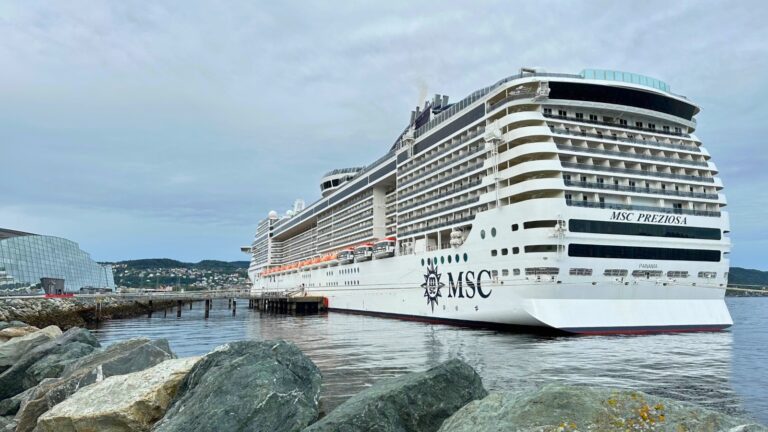
According to the new figures, more than 3,900 cruise ship calls brought passengers to Norwegian ports during the year.
While the headline numbers are striking, the data also reveals important nuances about how cruise tourism is developing, where growth is happening, and why the statistics require careful interpretation.
More Cruise Ships, More Passenger Movements
In total, Norwegian ports recorded more than 6.3 million cruise passenger movements in 2025.
This figure refers to the number of passengers arriving at ports from cruise ships and includes repeat counts for the same passengers when they visit multiple ports on a single cruise.
Kystverket is clear that this does not represent 6.3 million individual people. Cruise passengers are counted again at every port they visit. On average, each passenger called at four Norwegian ports during their cruise.
When adjusted for this, the number of unique cruise visitors to Norway in 2025 was just over 1.6 million.
Most of these passengers began their cruise outside Norway, typically in ports in the UK or continental Europe. A smaller number started and ended Norway cruises in a Norwegian port.
Cruise Growth Has More Than Doubled Since 2016
With the exception of the travel-hit years of 2020 and 2021, cruise tourism to Norway has increased steadily since 2016. Compared with that year, cruise traffic in 2025 has more than doubled.
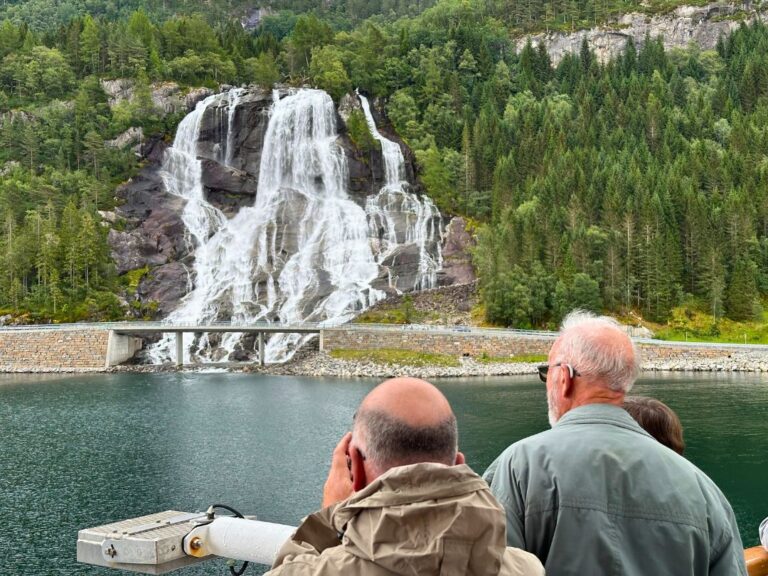
In total, there were 3,933 cruise ship calls during the year, reflecting both increased demand for Norwegian itineraries and cruise lines’ continued investment in Northern Europe routes.
Kystverket notes that the cruise industry is increasingly working to spread growth across more months of the year.
Compared with the previous record year of 2023, cruise calls increased in the first quarter of 2025 by 101 calls, in the second quarter by 79 calls, and in the fourth quarter by 54 calls. At the same time, cruise calls fell in the third quarter by 113.
This shift reflects growing efforts to reduce pressure during the busiest summer months, when popular ports can experience congestion from large numbers of passengers arriving on the same day.
New Destinations Are Absorbing Some Of The Growth
Another clear trend in the data is the emergence of new cruise destinations since 2016. While well-known ports such as Bergen, Stavanger, and Ålesund continue to dominate, several smaller destinations have seen dramatic growth.
The Port of Haugesund has increased from around 21,000 cruise passengers in 2016 to more than 401,000 in 2025.
Nordfjordeid, which had no cruise passengers in 2016, welcomed 228,000 passengers in 2025. Skjolden grew from 16,000 to 101,000 passengers, while Vik in Sogn increased from 9,000 to 75,000.
Kystverket highlights this development as an important way of distributing cruise traffic more evenly along the coast. At the same time, smaller communities often face new challenges when large ships begin calling regularly, particularly around infrastructure, crowd management, and local acceptance.
Germans, Britons & Americans Dominate
Cruise visitors to Norway continue to come primarily from a small number of key markets.
German passengers accounted for approximately 753,000 cruise visitors in 2025, making them by far the largest group. British passengers followed with 337,000 visitors, while American passengers numbered around 185,000.
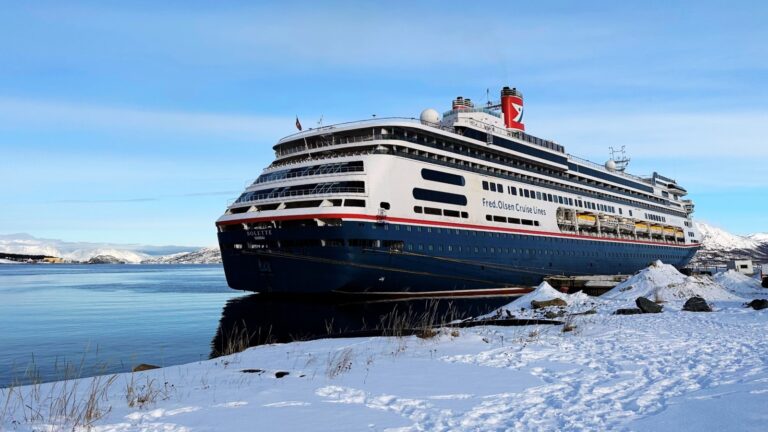
This mix reflects Norway’s strong position in Northern European cruise itineraries, particularly for fjord-focused routes departing from the UK and mainland Europe, as well as longer transatlantic and Arctic voyages.
The popularity of cruises in the German is something I’ve personally noticed both here in Trondheim and in Northern Norway.
Many of the cruise ships we get in Trondheim are focused on the German market, while the trend is reflected in the tour guiding industry in Northern Norway. Many guides are native German speakers, also guiding groups in English.
Bergen Remains Norway’s Busiest Cruise Port
Bergen once again topped the rankings as Norway’s most visited cruise destination, welcoming more than 680,000 cruise passengers in 2025. That figure represents an increase of more than 92,000 passengers compared with the previous year.
The city’s appeal cuts across key cruise markets. German visitors are drawn by Bergen’s Hanseatic heritage, while British and American passengers value the city’s compact layout, cultural attractions, and easy access to fjords and coastal scenery.
Combined with its capacity to handle multiple ships on the same day, those factors help explain why Bergen continues to lead Norway’s cruise statistics.
Measured by the number of cruise calls, Bergen also ranked first with 346 visits, followed by Ålesund with 281 and Stavanger with 244.
Economic Benefits and Growing Opposition
Kystverket describes the continued growth in cruise tourism as positive for Norwegian ports and regional tourism economies.
Coastal Director Einar Vik Arset notes that increased cruise activity contributes to local value creation and employment, particularly in coastal communities.
At the same time, opposition to cruise tourism has become more vocal in several Norwegian cities and fjord regions. Critics point to congestion, pressure on infrastructure, emissions from large vessels, and the visual impact of cruise ships in historic and environmentally sensitive landscapes.
The debate has been especially intense in the UNESCO-listed World Heritage fjords, including Geirangerfjord and Nærøyfjord. A planned ban on conventional cruise ships in these fjords, originally due to take effect in 2026, has now been delayed to 2032.
Environmental groups have criticised the postponement, while cruise operators argue that additional time is needed to allow new low- and zero-emission ships to enter service.
Balancing Growth With Regulation
Norway’s record-breaking cruise year highlights the difficult balance facing policymakers, ports, and local communities.
International demand for Norwegian cruise itineraries remains strong, and cruise tourism plays an important economic role in many regions. At the same time, pressure to regulate the industry more strictly continues to grow.
For Norway, the coming years will likely determine how cruise tourism can be managed in a way that protects sensitive environments and local communities, while still allowing visitors to experience the country by sea.