
There are dominant Winter Olympics performances. And then there are Olympic Games that reset what we thought was possible.
As Heidi Weng crossed the finish line in the women’s 50km mass start, she knew it was not gold. Ebba Andersson had long since disappeared up the trail.
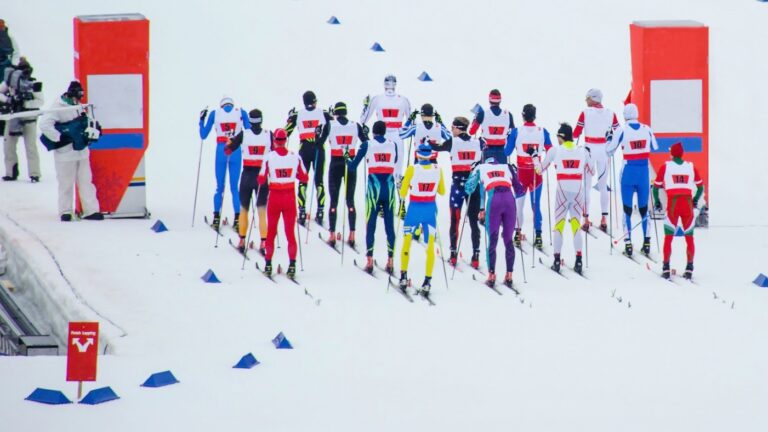
Weng had dropped back midway through the race, over two minutes behind the runaway Swede by the finish. Yet she stayed focused, recalibrated, and skied her own race to secure second place.
One last medal. One last addition to an already historic tally.
As the world’s attention turned to the men’s ice hockey final, Norway began to reflect on a sensational Winter Olympics in Milano Cortina. Norway did not simply top the medal table. It rewrote it.
Just how sensational? Well, let’s look at the numbers.
41: Total Medals
Norway leaves Milano Cortina with an incredible total of 41 medals.
That is the highest total ever achieved by any nation at a single Winter Olympics. It surpasses Norway’s previous record of 39 medals set at PyeongChang 2018.
For a country of just over five million people, that number alone is staggering. But the real story lies deeper.
18: Gold Medals
Of those 40 medals, 18 were gold. That breaks another record. Norway’s previous best was 16 gold medals at Beijing 2022. This time, they went two better.
Eighteen gold medals is the most ever won by a single nation at one Winter Olympics. It was not a narrow victory either. Norway did not just win the medal table. It widened the gap.
6: Klæbo’s Perfect Games
No number defines these Games more than six. At just 29 years old, Johannes Høsflot Klæbo won six gold medals in cross-country skiing, completing one of the most extraordinary Olympic campaigns in history.
He won gold in the sprint, skiathlon, 10km freestyle, team sprint, relay and the 50km classic. Six races. Six gold medals.
No Winter Olympian has ever won more gold medals at a single Games. The previous record of five had stood since 1980, held by Eric Heiden.
Klæbo did not just match history. He made new history.
11: Career Olympic Golds
With six new gold medals added to his collection, Klæbo now has 11 Olympic gold medals across his career. That makes him the most decorated Winter Olympic gold medallist of all time.
Still in his twenties, and already rewriting the record books, Klæbo has moved from being Norway’s biggest cross-country star to one of the defining athletes in Olympic winter history.
For Norwegian fans, it has been extraordinary to watch. For the rest of the world, it is a reminder that Norway’s cross-country system remains almost unmatched.
3: A Podium Sweep
In the men’s 50km classic, Norway took gold, silver and bronze. Klæbo led the way with gold, but he was joined on the podium by Martin Løwstrøm Nyenget and Emil Iversen.
A full podium sweep in one of the most demanding endurance events at the Games underlines the depth behind the headline names. Klæbo may be the undisputed star of Milano Cortina, but Norway’s strength runs far beyond one athlete.
20/20: Perfect Biathlon Shooting
When biathlete Johannes Dale-Skjevdal won gold in the men’s 15km mass start, he hit 20 out of 20 targets.
In biathlon, perfection on the range is rare. To deliver it under Olympic pressure, on the way to a record-breaking gold tally for the nation, felt symbolic.
It was Norway’s 17th gold medal of the Games at the time, the moment that confirmed a new all-time record.
2: A Historic Double in Ski Jumping
Two gold medals. That was the contribution of Anna Odine Strøm at Milano Cortina 2026.
Strøm delivered one of the standout female performances of the Games, winning gold in both the individual and team ski jumping events. In doing so, she became one of Norway’s most successful athletes of this Olympics, male or female.
At a Games so often defined by cross-country skiing, her dominance on the hill was a powerful reminder that Norway’s winter strength stretches across disciplines.
It also matters historically. Women’s ski jumping only made its Olympic debut in 2014. A decade on, Norwegian athletes are not just competing, they are leading.
6:03.95: An Olympic Record on Ice
Norway’s dominance was not confined to snow. Speed skater Sander Eitrem won gold in the men’s 5000 metres in an Olympic record time of 6 minutes 3.95 seconds.
Records fell in cross-country, in biathlon and on the long-track oval. It was not one golden generation in one sport. It was success across disciplines.
The Bigger Picture
Norway has dominated Winter Olympics before. The country topped the medal table in 2018 and 2022. But Milano Cortina 2026 felt different.
This time, the benchmarks themselves moved: Forty-one medals. Eighteen gold. Six for one athlete. An Olympic record on the ice. A perfect shooting performance in biathlon. A full podium sweep in the 50km.
Many people are asking the same question: why does Norway dominate the Winter Olympics? I wrote an article to round-up the most common beliefs.
For a small nation on the northern edge of Europe, winter sport is woven into the culture. Children grow up skiing to school. Local clubs nurture talent. National federations emphasise long-term development over short-term hype.
Every four years, that system shows itself to the world. At Milano Cortina, it showed more clearly than ever.


I am proud to be a 2nd generation Norwegian American! Proud of the Norwegian accomplishments at Milano Cortina. Well worth watching all the events … Thankyou Norway!
And also the host nation of Italy.