
A focused temporary exhibition in Oslo brings Edvard Munch’s little-seen Freia paintings out of the factory and places them within a much wider social story.
When MUNCH opened on Oslo’s waterfront in 2021, the building itself dominated much of the conversation. Its metallic exterior and distinctive leaning upper section divided opinion long before anyone had stepped inside.
On my first visit shortly after the opening, discussion of the architecture almost overshadowed the art it had been built to display.
Five years later, the building has settled into the Oslo skyline, thanks in part to the modern developments surrounding it, allowing more attention to shift toward the stories being told inside.
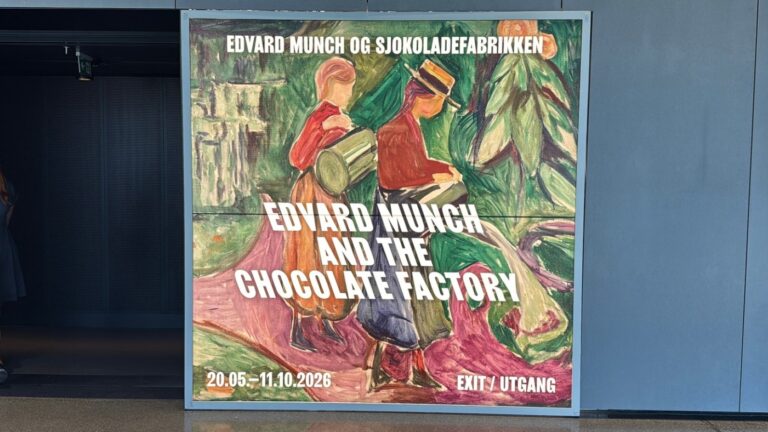
Edvard Munch and the Chocolate Factory is a good example of what the museum can do particularly well: take one relatively narrow part of Edvard Munch’s career and use it to explore a much broader moment in Norwegian history.
The Freia Frieze
The exhibition centers on 12 monumental paintings commissioned for the women’s canteen at Oslo’s Freia Chocolate Factory.
Munch was already an established name in the Norwegian art world in his late fifties when discussions about the project began in 1921. The completed paintings were installed at the factory in 1923, where they have remained for more than a century.
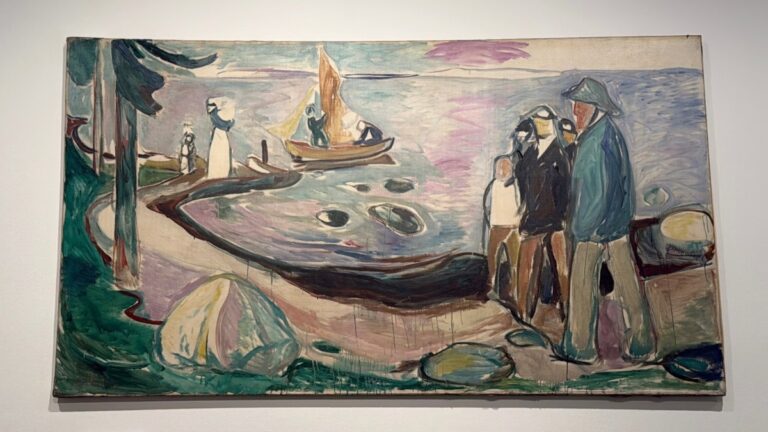
This temporary relocation marks the first time the complete Freia Frieze has been displayed outside the factory. At MUNCH, visitors can examine the works at close range rather than seeing them high on the walls of a working canteen.
The paintings are not obvious celebrations of factory life. Many depict bright outdoor scenes, including women gathering fruit, people dancing and figures beside the Oslofjord.
Munch saw the series as a version of his wider Frieze of Life, transferred into a new setting. The exhibition also presents sketches and variations that reveal how he experimented with figures, movement and color while considering how the paintings would work within the architecture of the room.
Not Just Twelve Paintings
The strongest part of the exhibition is its willingness to look beyond the paintings.
Around two-thirds of Freia’s workforce were women, many performing physically demanding and poorly paid work. Displays examine their working conditions, early attempts to organize within trade unions and the pressure placed on married women to surrender their jobs to unemployed men.
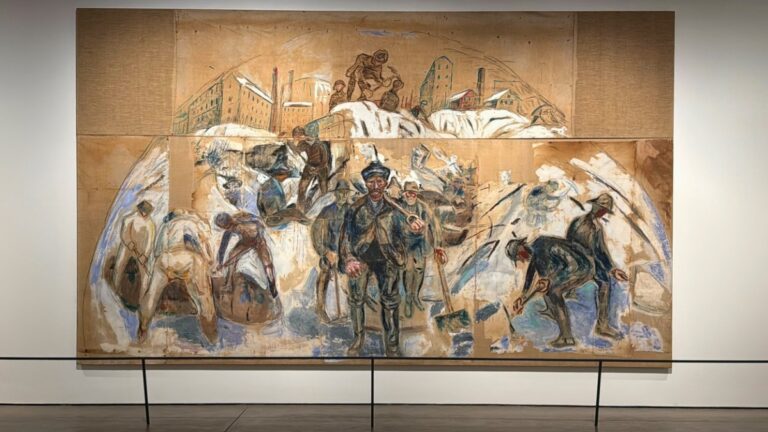
Munch’s unrealized ideas for the men’s canteen lead into another recurring subject in his work: labour. Paintings and sketches of construction workers, street diggers and people returning home from factories show his growing interest in everyday working life.
The exhibition also confronts the less comfortable history behind Norwegian chocolate.
Archival material explores the West African origins of Freia’s cacao and the colonial system that made its import possible. A company film from 1925 celebrated modern industry and the journey of cacao to Oslo, while presenting African people through the racist and exoticizing language of its time.
That context prevents the exhibition from becoming a simple exercise in nostalgia. Instead, the paintings become a starting point for discussions about industrialization, women’s rights, class and colonial exploitation.
A Reason To Revisit MUNCH
This is not an enormous exhibition, nor one around which most visitors would plan an entire trip to Oslo. It is focused, manageable and specific, adding an unexpected chapter to the perhaps familiar story of Norway’s best-known artist.
For anyone who has yet to visit the new MUNCH—or who has not returned since its much-discussed opening—it provides a timely reason to do so.
Edvard Munch and the Chocolate Factory is on display on the ninth floor of MUNCH until 11 October, 2026.