
Visiting Oslo's islands is one of the simplest ways to experience nature, history, and local life. Just minutes from the city centre, Hovedøya offers far more than its size suggests.
Phew, what a scorcher. Oslo was in the middle of a proper heatwave, with temperatures pushing into the high 20s and even nudging 30°C. Not exactly what most people picture when they think of Norway.
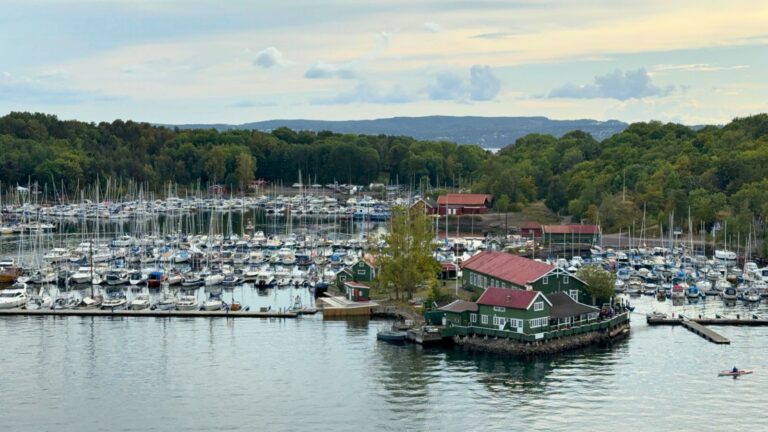
Still, I wasn’t about to waste it.
One of the great things about Oslo is just how easy it is to escape the city without really leaving it. So I headed down to the waterfront and hopped on one of the local ferries to continue my exploration of the islands of the Oslofjord.
I’ve previously visited Gressholmen and Lindøya, both memorable in their own ways. But this time, I chose the closest island of all: Hovedøya. The name simply means “main island,” which hints at its historical importance.
A Summer Favourite Just Minutes from the City
It takes just a few minutes to reach Hovedøya from Aker Brygge, and on a day like this, it felt like half of Oslo had the same idea.
The ferry was packed with people carrying towels, cool boxes, and that unmistakable sense of anticipation that comes with a rare Norwegian heatwave.
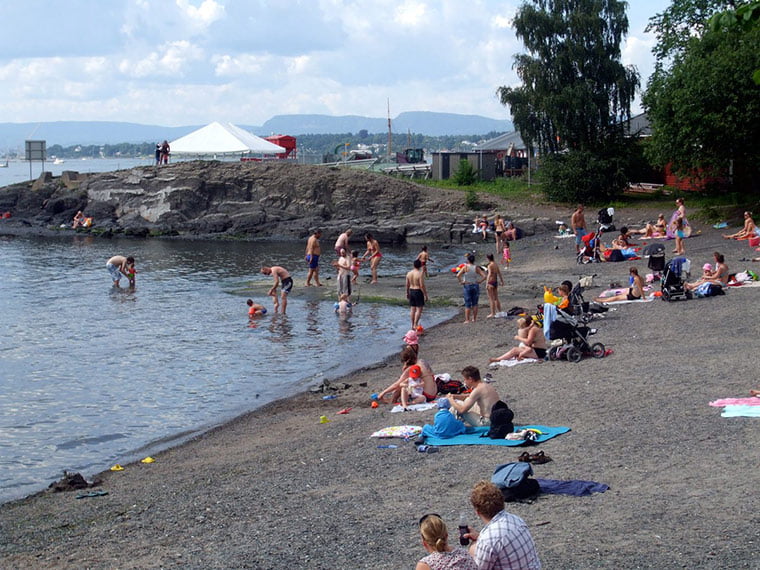
And it makes sense. Hovedøya is one of the most popular swimming spots in the Oslofjord.
There’s a sandy beach on the north side of the island, along with plenty of smooth rocks and grassy patches perfect for sunbathing. The water here is often calmer and slightly warmer than you might expect, especially after a few days of sunshine.
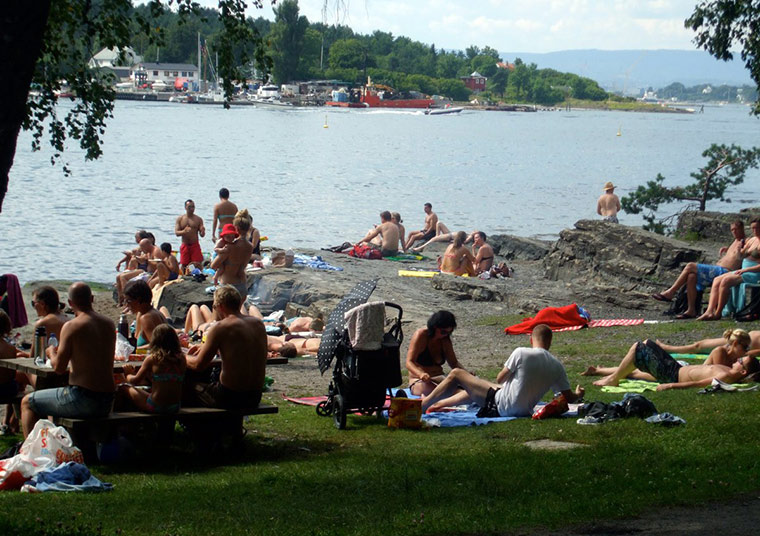
But while many come for the swimming, that’s only part of the story.
A Monastery That Shaped Oslo’s Early History
The most striking historical site on Hovedøya is the ruin of Hovedøya Abbey, a Cistercian monastery founded in 1147 by monks from England.
The Cistercians were known for their austere lifestyle and focus on manual labour, and Hovedøya quickly became one of the most important religious institutions in medieval Oslo.
The monastery owned large areas of land and played a significant role in the economic and spiritual life of the region.
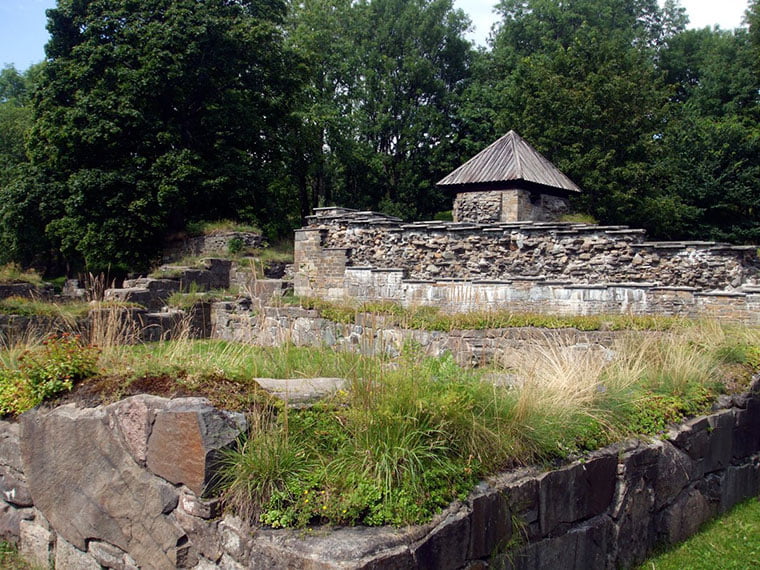
Architecturally, the abbey combined Romanesque elements in its earlier structures with later Gothic additions, reflecting changing styles over the centuries.
For nearly 400 years, the monastery stood as a powerful presence just offshore from the growing town of Oslo.
Its downfall came during the turbulent years leading up to the Reformation. In 1532, amid political conflict and shifting loyalties during the Danish–Norwegian union, the abbey was attacked, looted, and burned. It was never rebuilt.
Today, the ruins are remarkably atmospheric. Stone walls frame open sky, grass fills what were once cloisters, and the quiet setting makes it easy to imagine life here centuries ago.
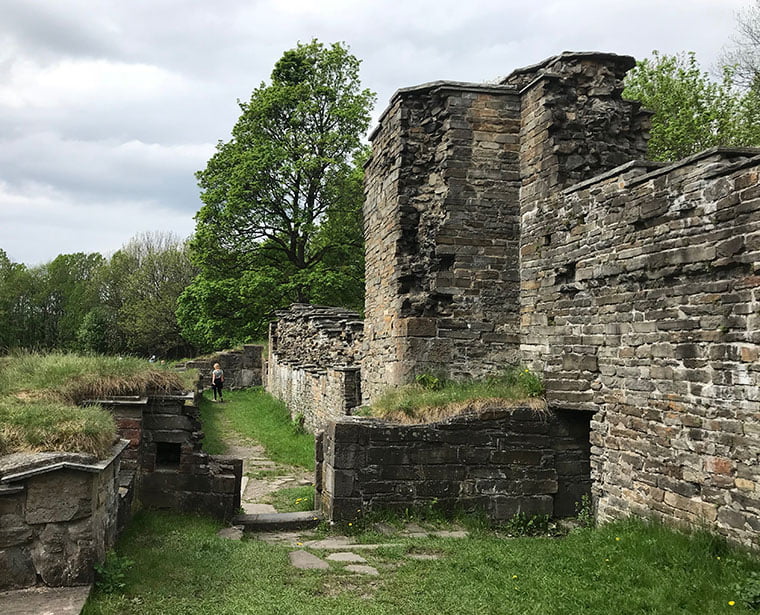
There’s also a seasonal café nearby, open during the warmer months, serving simple food and drinks. It’s a popular stop, although it’s best not to rely on it being open outside peak season.
From Monks to Military: A Strategic Island
After the monastery fell into ruin, Hovedøya took on a very different role.
Given its strategic position in the Oslofjord, just opposite Akershus Fortress, the island became part of the city’s defensive network. From the 17th century onwards, it was used for military purposes, including as a site for cannon batteries and storage for ammunition.
Some of the buildings you’ll come across while wandering the island date from this later period. What feels like a peaceful woodland walk can suddenly reveal remnants of fortifications or former military structures.
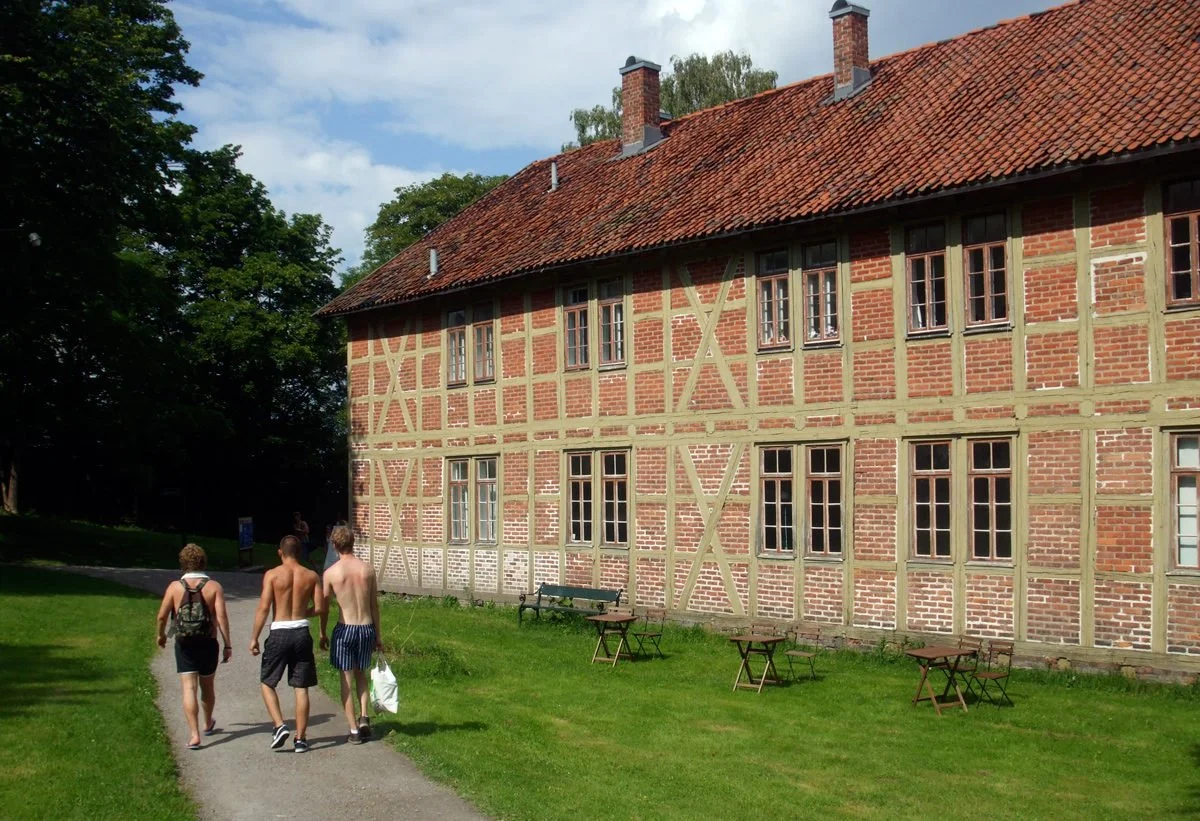
One of the most striking is a restored timber-framed building, now used as an art space. When I visited, it hosted a small exhibition, a reminder of how these historical layers continue to evolve.
The contrast is part of what makes Hovedøya so interesting. Within a short walk, you move from medieval monastic ruins to military history, and then back into nature again.
Nature Reserves and a Surprising Landscape
Much of Hovedøya is protected as nature reserve, and this is where the island really surprised me.
Despite its proximity to the city, the landscape feels far removed from urban life. Dense woodland, open meadows, and sheltered coves create a varied environment that supports a surprisingly rich ecosystem.
The island is particularly known for its rare plants and wildflowers, some of which are uncommon in the Oslo region. In spring and early summer, the meadows are full of colour.
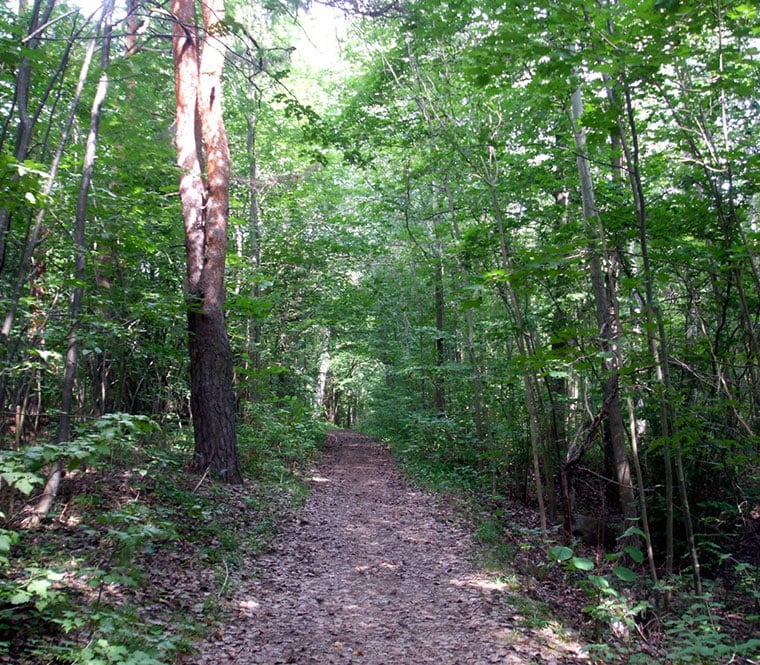
The forests are home to birds and small wildlife, while the coastal areas attract seabirds. It’s also, unfortunately, prime territory for bees and wasps, especially in peak summer. Consider that your warning.
Walking the trails, it’s easy to forget you’re just minutes from Norway’s capital. That sense of escape is a big part of Hovedøya’s appeal.
A Slower Pace of Oslo Life
Even on a busy summer day, there’s a noticeable shift in pace here.
Yes, the main beach areas can get crowded, especially in good weather. But it doesn’t take much to find quieter corners. A short walk inland or along the shoreline is often enough to leave the crowds behind.
There’s something very Norwegian about the way people use the island. Families picnicking, friends swimming off the rocks, others simply lying in the sun doing absolutely nothing. It’s not about ticking off sights. It’s about being outside.
Returning to the City
As I made my way back to the jetty, slightly sunburnt and definitely overheated, I was reminded just how close Oslo really is.
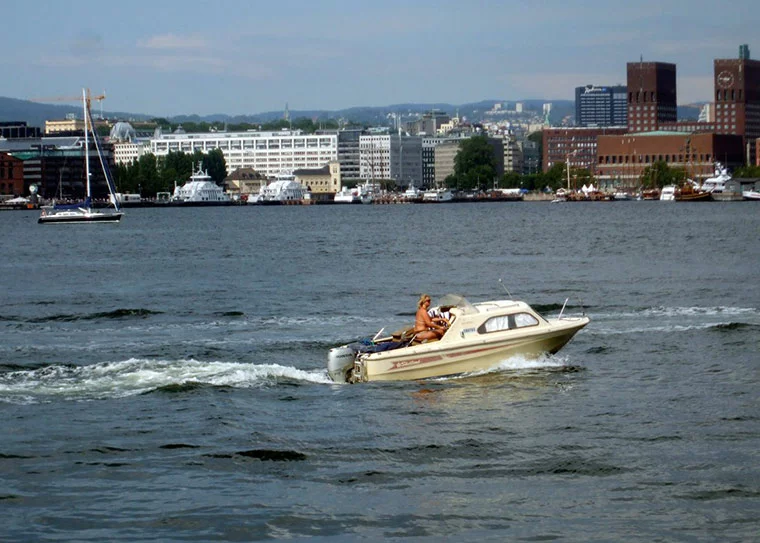
From the dock, you can clearly see the city skyline. A few minutes later, the ferry pulls in and you’re back in the middle of it all.
If you’re visiting on a hot day, come prepared. Shade is limited in many areas, so sunscreen, water, and a hat are essential. And while the café is a welcome bonus, it’s best to bring your own supplies just in case.
How to Get to Hovedøya
Reaching Hovedøya couldn’t be easier. The island ferries are part of Oslo’s public transport system, meaning standard Ruter tickets and passes are valid.
The ferries are now electric, making the journey not only quick but also quiet and environmentally friendly. Departures are from Aker Brygge, right in front of Oslo City Hall. In the Ruter app, look for departures from Aker Brygge to Hovedøya.
The crossing takes around 5 to 10 minutes, depending on the route. Some ferries continue on to other islands, so if you’re heading back, make sure you catch one going to Aker Brygge unless you fancy extending your trip with a bit of island hopping.
If you’re spending time in Oslo, Hovedøya is one of the easiest and most rewarding escapes you can make. It’s a place where history, nature, and everyday Norwegian life come together, all within sight of the city skyline.
Have you been to Hovedøya? Did you enjoy it, or do you prefer one of the other Oslo islands? Let me know in the comments below.